
Montgomery, Alabama is a city rooted in the history of Black and White relations. Montgomery is both the first Confederate capital and the birthplace of the Civil Rights Movement. This dueling history is represented throughout the city with the public memorials and historical plaques.

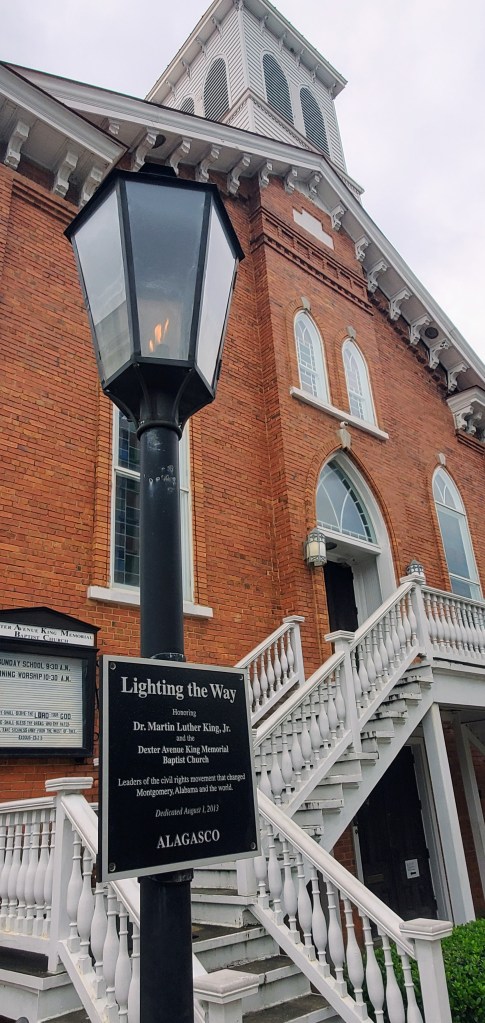
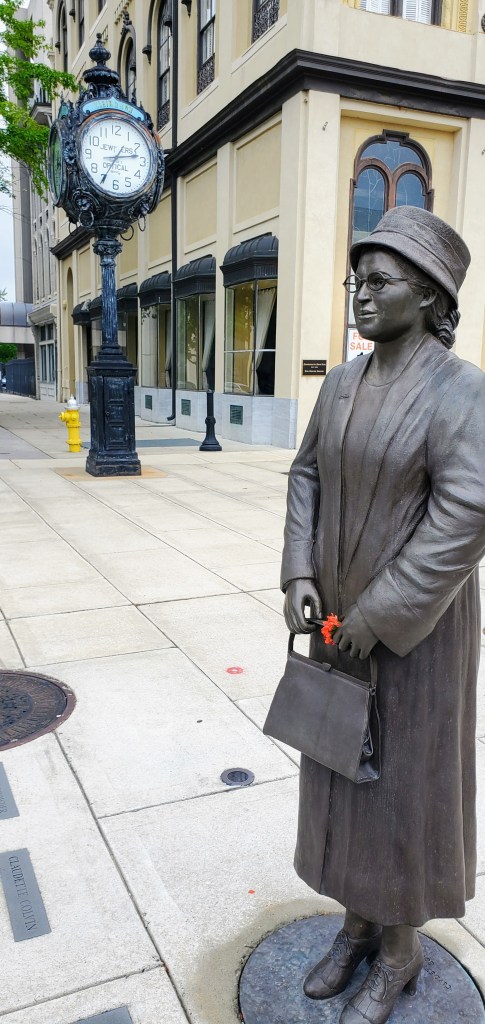
At the top of Dexter Avenue stands the Alabama State Capitol building with a statue honoring Jefferson Davis, the first Confederate president. Just a block away is the Dexter Avenue King Memorial Baptist Church and a monument recognizing the Selma to Montgomery Voting Rights March. At the end of Dexter Avenue stands Rosa Parks Bus Stop with a statue in her honor. The Rosa Parks statue looks over the Court Square Fountain (the site of a slave market) with a Black Lives Matter mural (2020) painted around its base. All of these statues and monuments start a conversation about our American history that is difficult to face but important to discuss.

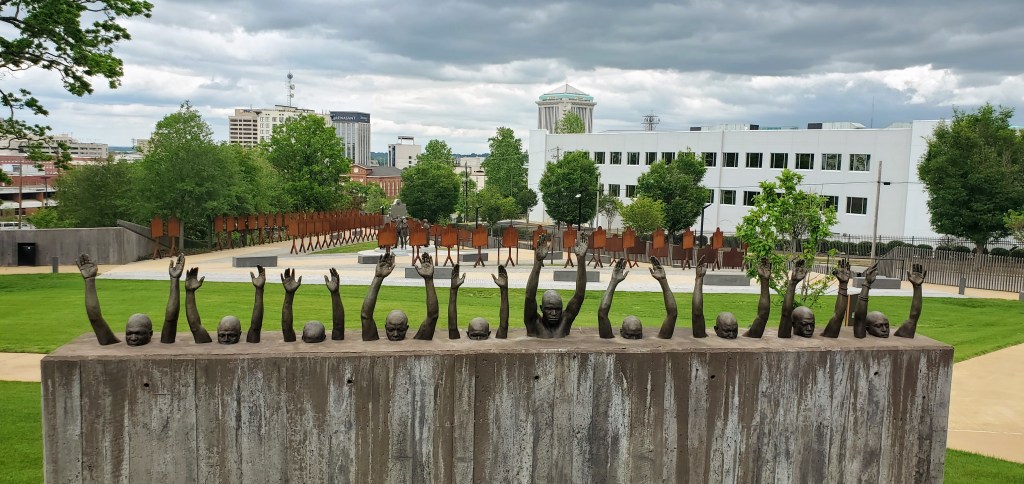
The Legacy Museum illustrates why this history matters. The Legacy Museum takes its visitors on a powerful immersive journey. The first room starts this journey with the sounds and sights of a rough ocean. The waves crash on the wall and make you feel like you are about to drown in its turbulent waters. The second room presents the dire circumstances of clothing and space of life on a slave ship. These 2 rooms set the scene for the centuries of harsh, inhumane treatment that more than 10 million Africans, who were stolen from their homeland and sold into the slave trade in the Americas, had to endure.

This museum is not just a history of the slave trade, however. It is more importantly a narrative of the racial injustices throughout American history, including our current society. One of the last rooms in the museum presents visitors with a series of holographic conversations from prison inmates. While each of these clips are short, the message of injustice lingers. This museum was one of the best museums I have ever visited. It asks its visitors to face history head on, contemplate its ramifications, and begin to think about how to move forward.
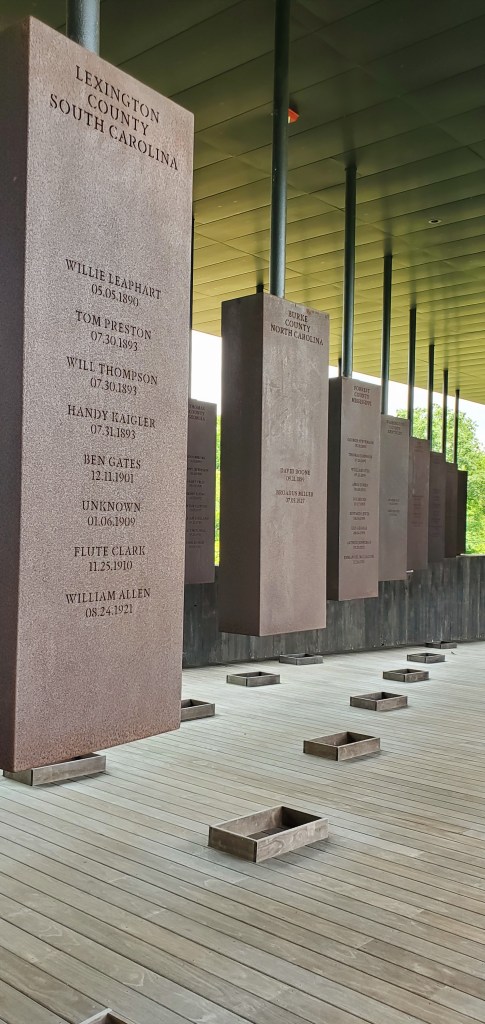
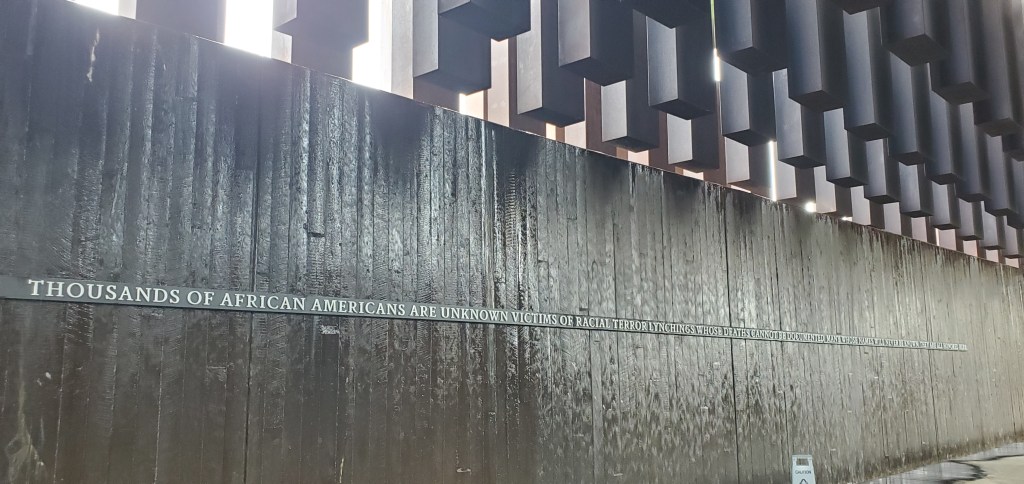
Included in the museum pass is a bus trip to The National Memorial for Peace and Justice. The Memorial consists of hundreds of steel monuments that hang from the rafters. Each is engraved with the names of lynching victims and are organized by state and county. It’s unbelievable how many states are represented, which speaks to the widespread racial violence that has been and still is in this country. As you walk around the site, the path descends into a lower level so that the boxes rise above you. The shadows filtering through the space, the outlines of boxes on the ground, and the waterfall over the memorial to the unknown victims of racial violence all give the space the somber and pensive tone the subject matter deserves.
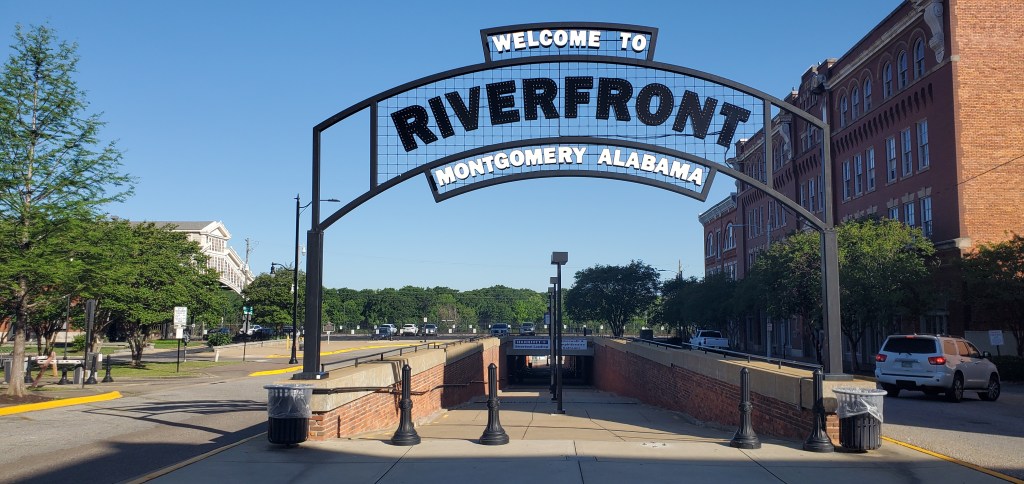
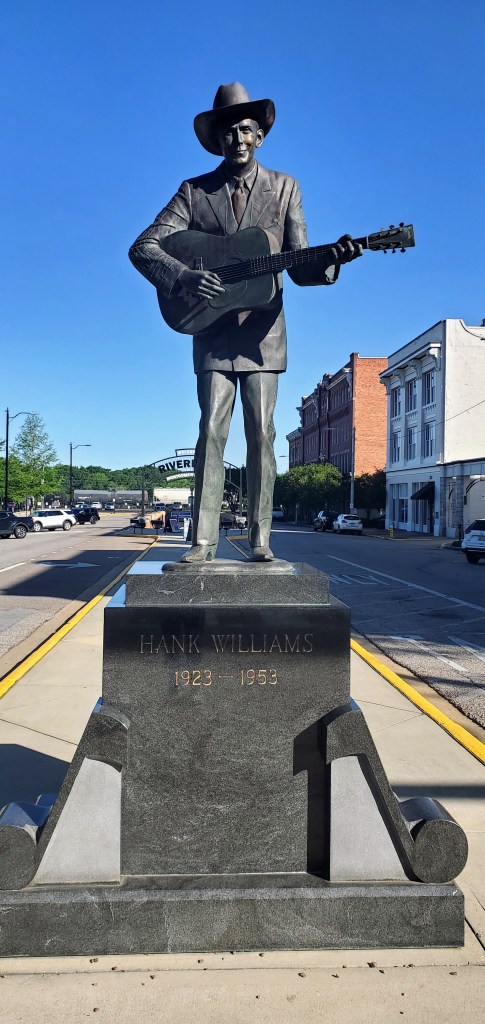
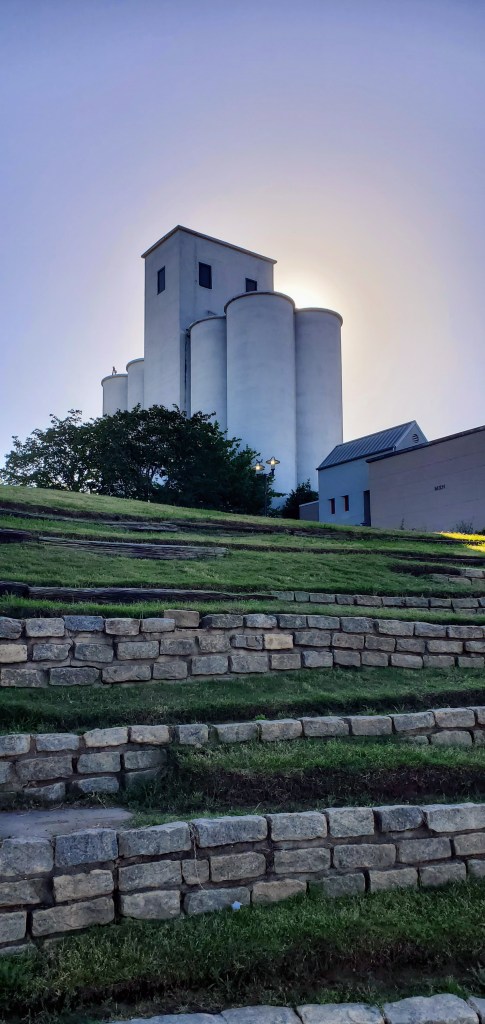
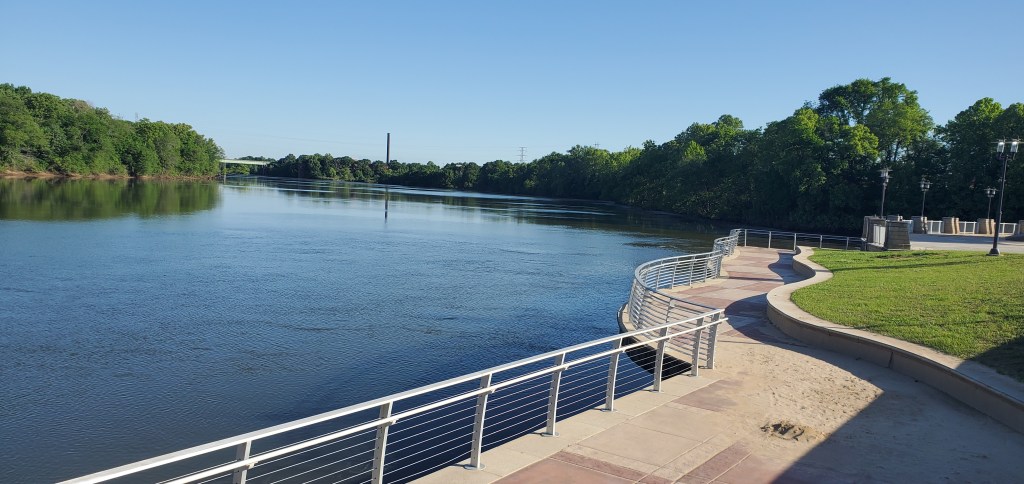
The Legacy Museum is near the center of the city, so it is easy to walk from there to the rest of downtown Montgomery. One way to see the city is through the 2 mile Riverfront Loop the city has created. It takes you along the Alabama River; above the railroad tracks, with a nice view of the city; and through some of the smaller historical sights, like the last car of the Lightning Route (America’s first electric streetcar) and the Hank Williams statue.
Montgomery was my first stop on a mini southern road trip, and my first venture into the famous southern biscuits. I was lucky enough to be there on a weekend when Cahawba House (just a block away from Court Square Fountain) was serving their brunch menu. Their biscuits were everything I could imagine, and their menu (brunch & supper) is filled with other southern classics.
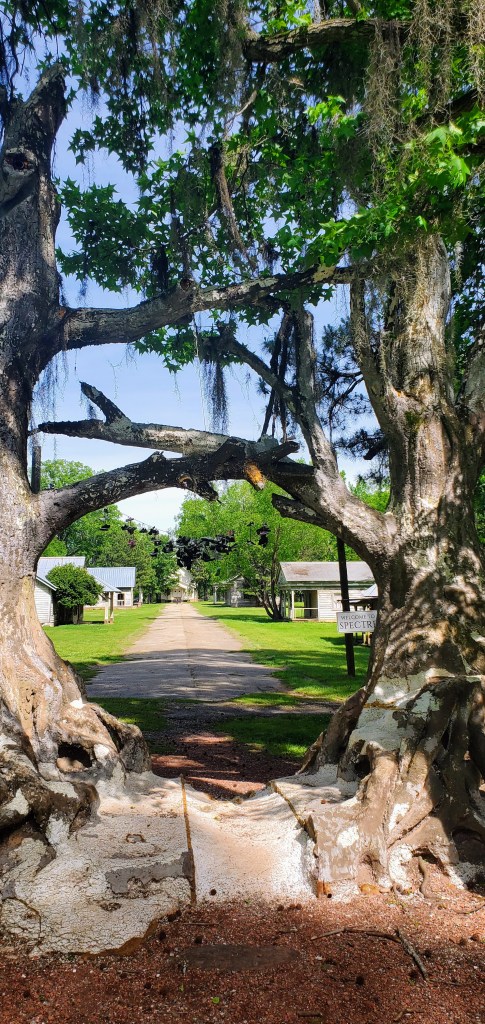
Just a ten minute drive north of Montgomery is Spectre Island (Jackson Lake Island). This is the site for the main street of the fantastical town in Tim Burton’s 2003 film, Big Fish. While the town was set to look like ruins for the film, after 20 years, it is even more rundown; and some buildings have had to be taken down. Still the entrance through the Styrofoam trees with the clothes line of hanging shoes is easily recognizable from the film. Even outside of the film set, the island is worth an afternoon as it provides grand trees for shade, benches and swings to look out over the water, and well worn paths to walk around. The island is accessible by car for a small fee, and people go here to spend the day fishing, hanging with the resident goats, and picnicking.

Google Maps of places mentioned in this post.
 Mac On the Map
Leave a comment