
The Back Bay spans from Massachusetts Avenue to the Charles River in Boston. The area gets its name from the fact that the land it now stands on used to be part of the bay. In the mid 1800s, Boston decided it needed more land, so it filled in this section of the Charles River Basin. Back Bay is one of the three main commuter rail stops in the city, so if you’re coming from the west (like myself) or south of the city, it is one of the easier places to explore without a car.
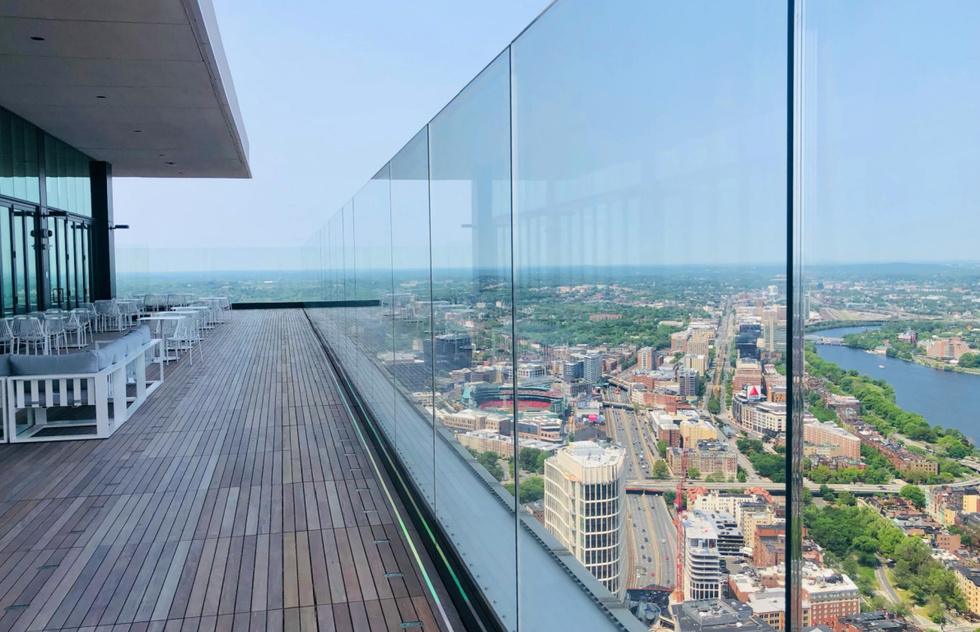
Close to Back Bay Station is the Prudential Center. A hub of indoor shopping, dining, and offices, the Prudential Center works well as a place to be during the colder or wetter weather of the city. If you’re willing to pay for it, it also provides a nice view of the city from its observation deck and restaurant: View Boston.
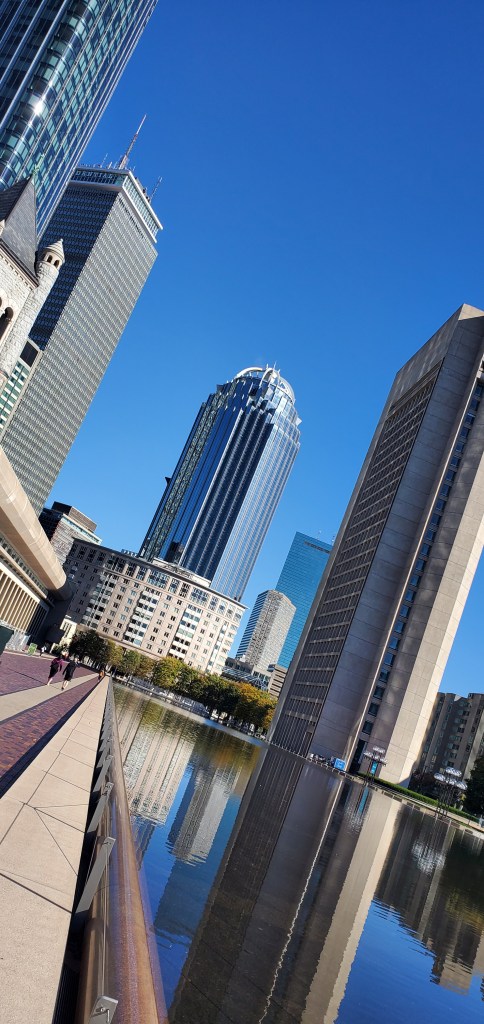
Across from the Prudential Center on Huntington Avenue is the sprawling reflecting pool of the Christian Science Plaza. In the warmer months, people flock here for a break during the work day or to cool off with a run through the classic splash fountain.
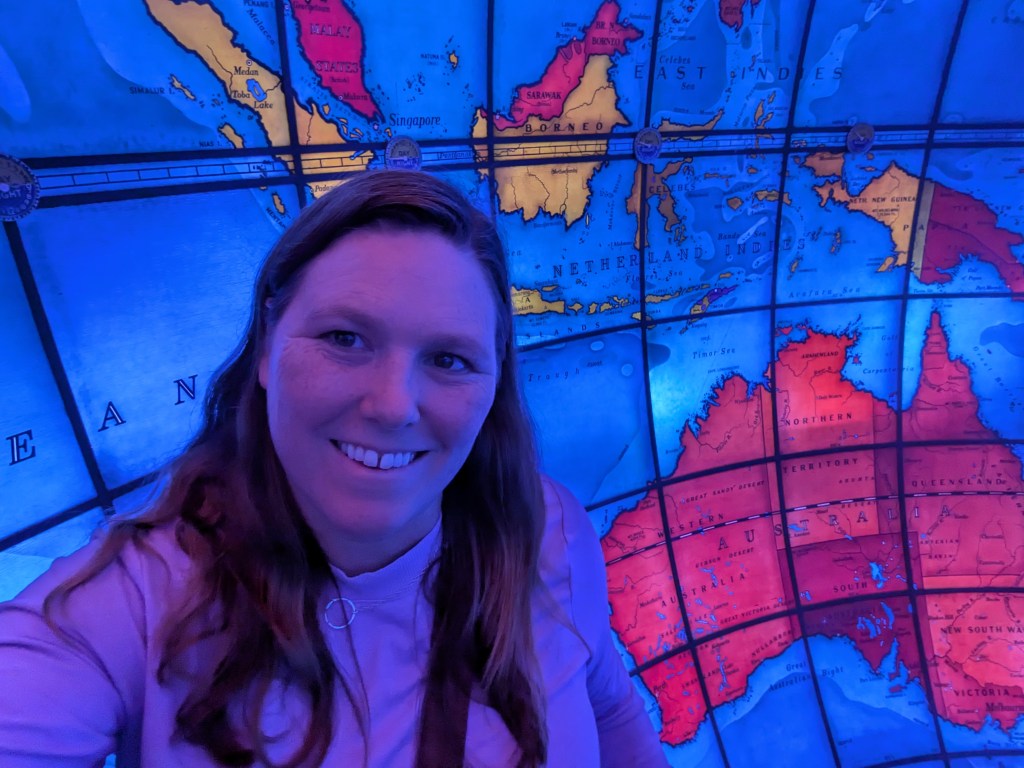
The Christian Science Center is also home to the Mapparium. Part of the larger exhibit about “How Do You See The World?”. The Mapparium is a three story globe of the world; while it was originally supposed to be updated as the world changed, the globe still reflects the world as it was in 1935. The walk through the globe is accompanied with a 10 minute narration about its construction as well as thoughts on progress from global thinkers like Jane Goodall and Wangari Maathai.
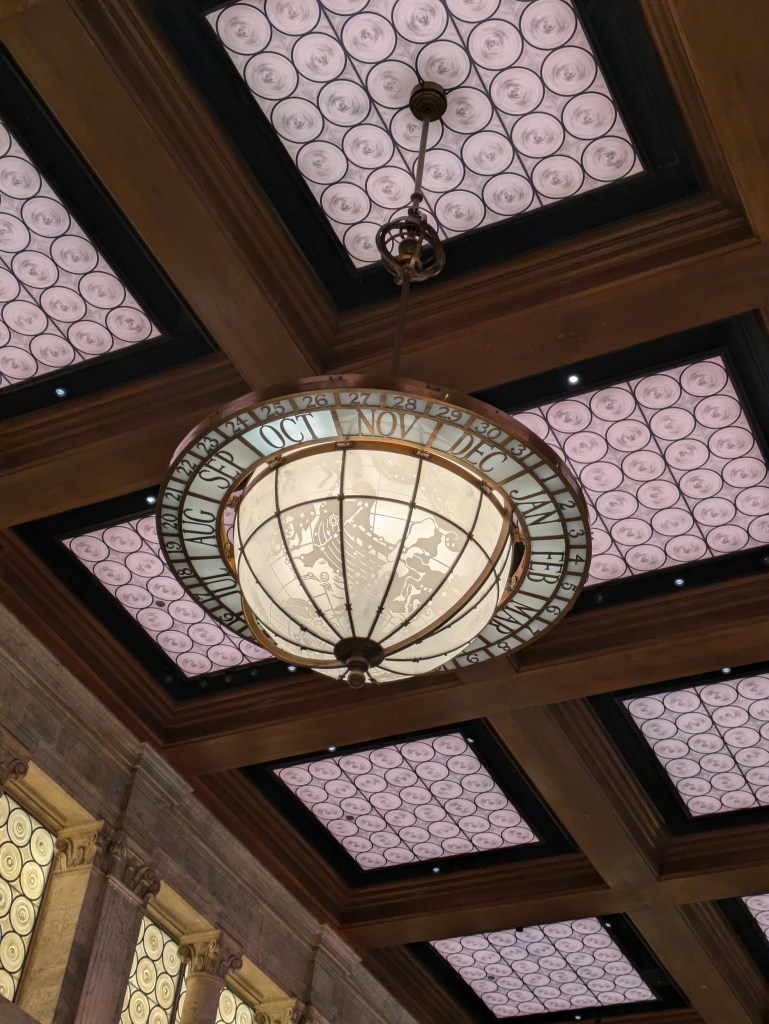
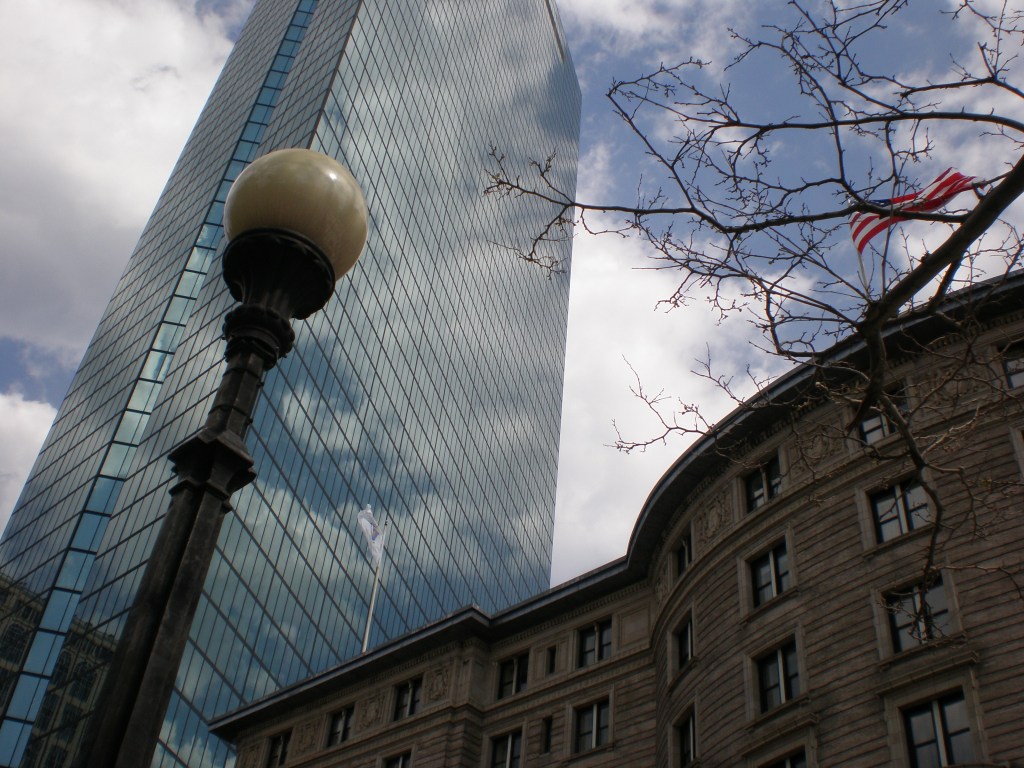
On the other side of the Prudential Center is Copley Square. In the summer months, with the fountain running, music playing, and food trucks out, Copley Square comes alive. It also hosts free concerts and festivals, including one of my favorites: the Boston Book Festival. The Square is surrounded by the Fairmont Copley Plaza Hotel, Trinity Church, the Boston Public Library, and Boylston Street. The contrast between the rough stone of Trinity Church, the mirrored glass of the John Hancock Tower, the smooth limestone of the Fairmont and library reflect the layered history of the city.
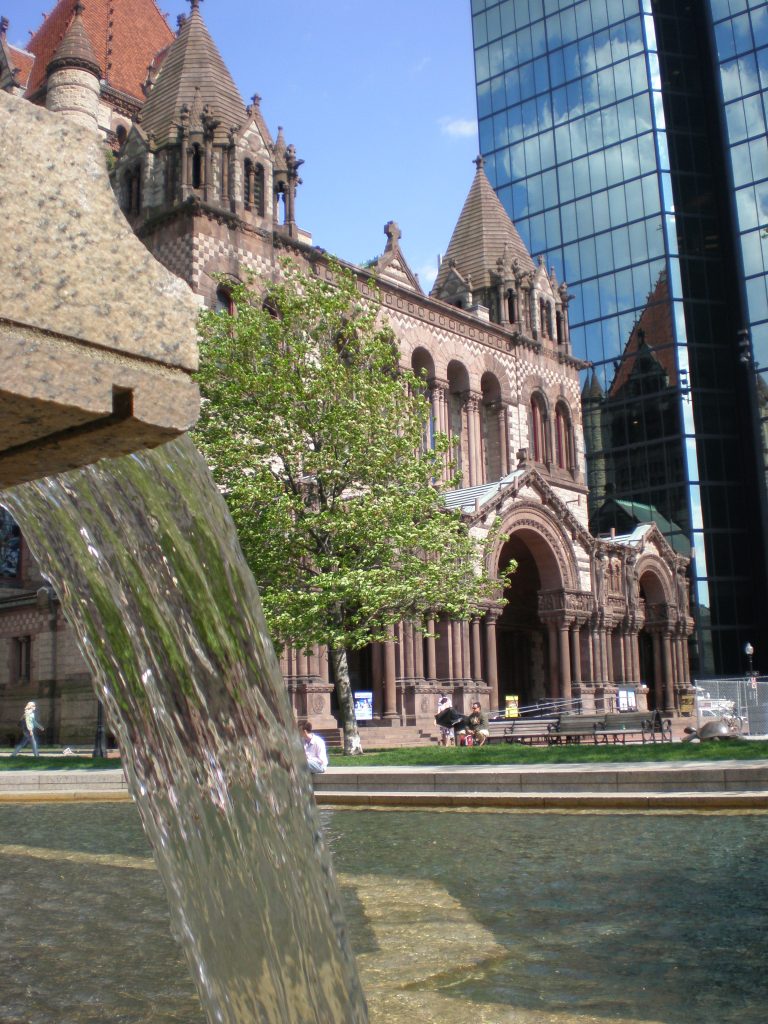
To immerse yourself more in the architectural history, take a look inside Trinity Church. Designed by Henry Hobson Richardson, Trinity Church has been named one of the most important buildings in America. Completed in 1877, the inside walls of the church are covered with hand painted murals, and the stained glass windows over the altar and along the side walls bring colored light to the grand space.
Across the square from Trinity Church is another iconic building: The Boston Public Library. Besides being the oldest public library in the United States, BPL is still one of the largest public libraries in the country. The library is divided into two sections: the McKim building, built in 1895 by McKim, Mead & White, and the Johnson Building, built in 1972 and renovated in 2016.
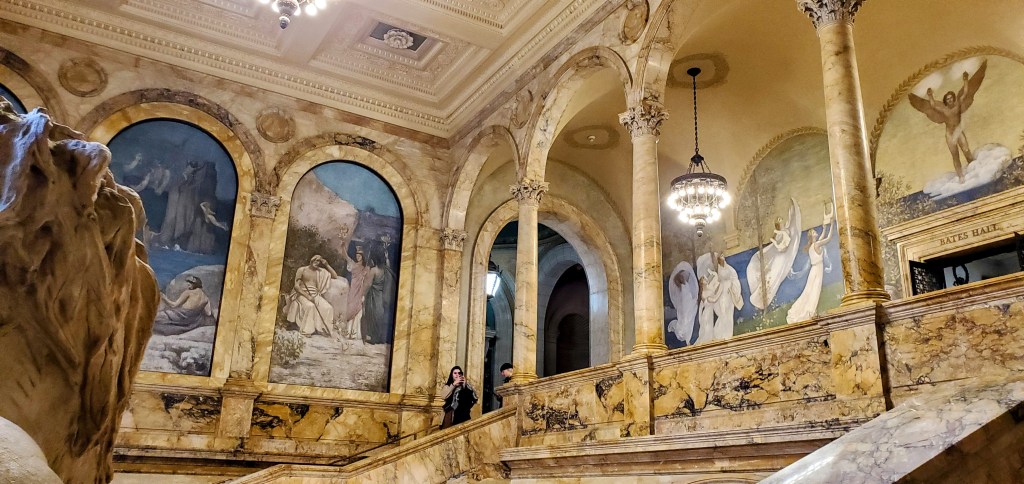
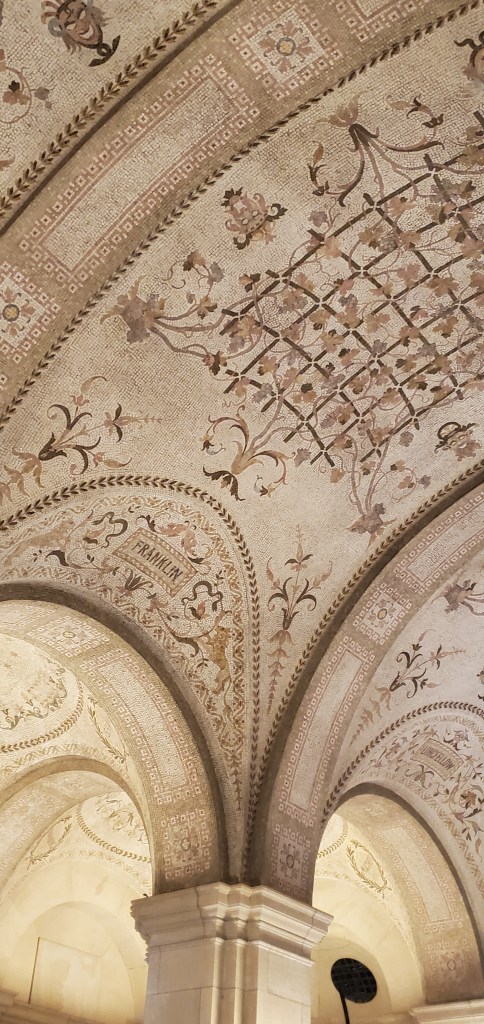
The public has always loved the Renaissance Revival and Beaux-Arts design of the McKim building. With its green copper cornice at the roofline, arched ceilings adorned with mosaics representing famous Massachusetts residents like Emerson and Adams, a grand staircase flanked with lion statues, and murals by French painter Pierre Puvis de Chavannes and American painter John Singer Sargent, The McKim building invites you to look down, around and up.
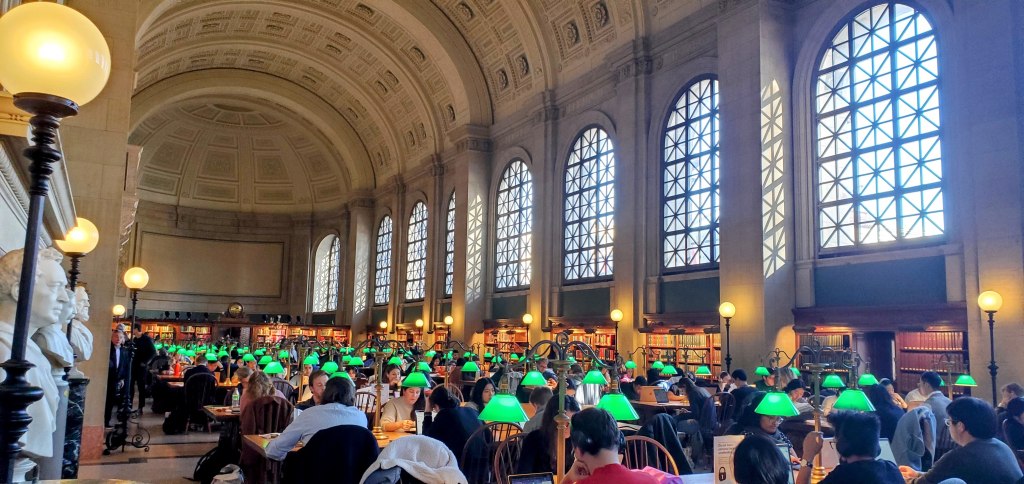
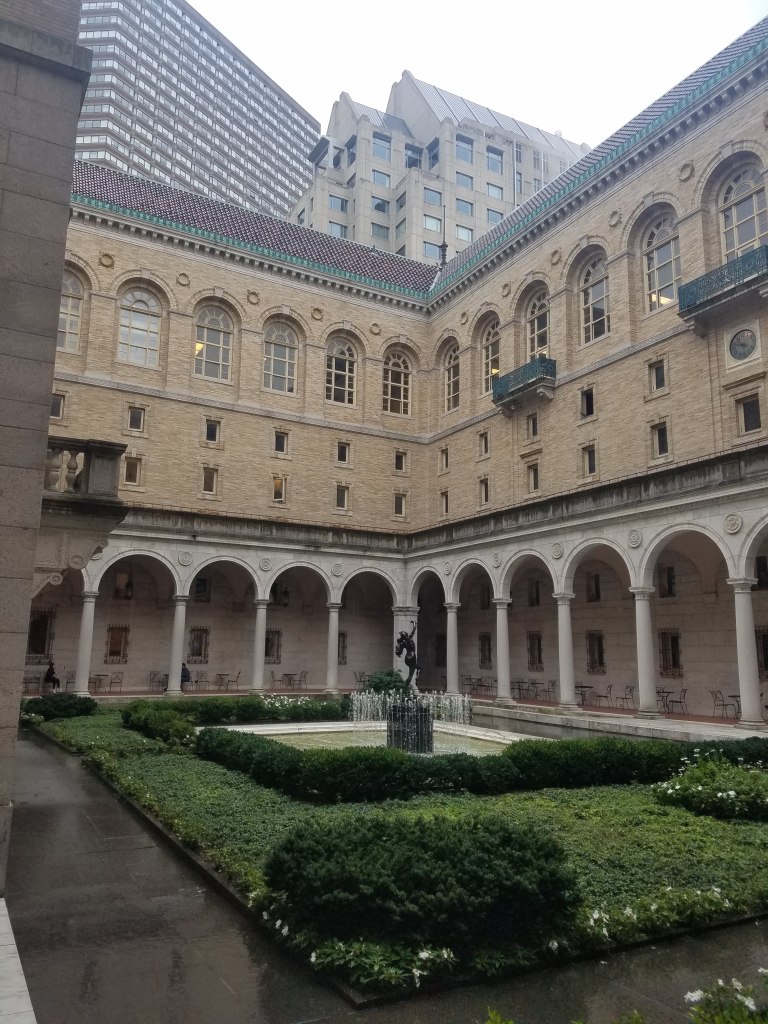
On the 2nd floor of the McKim building is Bates Hall, a grand reading room with 50 foot high vaulted ceiling and original oak tables from the late 1800s. What I love about this space is that it is as much for the locals who are busy studying (or in my case grading) as it is for the tourists. The same can be said for the library’s courtyard. The courtyard connects to a small cafe and the McKim building to the Johnson building, so it’s natural to find people eating a picnic lunch, reading, and enjoying the central fountain and plantings.
Unfortunately, the Brutalist design of the Johnson building didn’t receive the same love as the McKim building. However in 2016, William Rawn Associates and lightning designers Lam Partners redesigned the interior of the Johnson building to bring in light, energy, and community to the space. Now, the two story entryway connects the library to a cafe, informational desk, and radio studio. These elements make this part of the library a livelier space designed for talking and mingling and welcoming in visitors from Boylston Street..
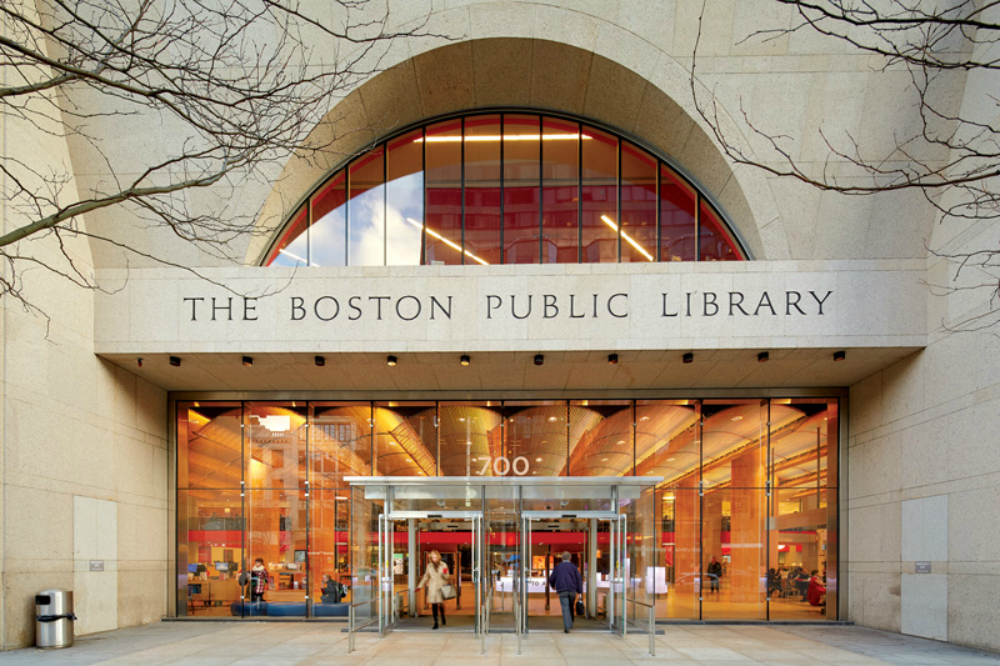
Almost directly in front of the Boylston Street entrance of the BPL is the finish line for the Boston Marathon. At this annual event, people jam themselves in every restaurant and cafe to cheer on the 25,000+ runners that brave the 26.2 mile to get to this final stretch.
Boylston Street serves up a more affordable and casual selection of restaurants and cafes than its neighbor: Newbury Street. Even if you don’t want to shop the high end boutiques Newbury Street is famous for, you should still take a stroll down the busy shopping and dining street. Stores and cafes abound from the basement, street, and 2nd floor levels of the buildings that flank either side of the street. Newbury Street runs from Massachusetts Ave to the Boston Common and each section of the street caters to a different group: near Mass Ave, stores such as Newbury Comics and Vans are geared toward the younger crowd; the middle of the stretch includes pop up shops and vintage stores for the midrange shopper; and near the Boston Common, well established brands like Chanel and Valentino are aimed at wealthier clients.
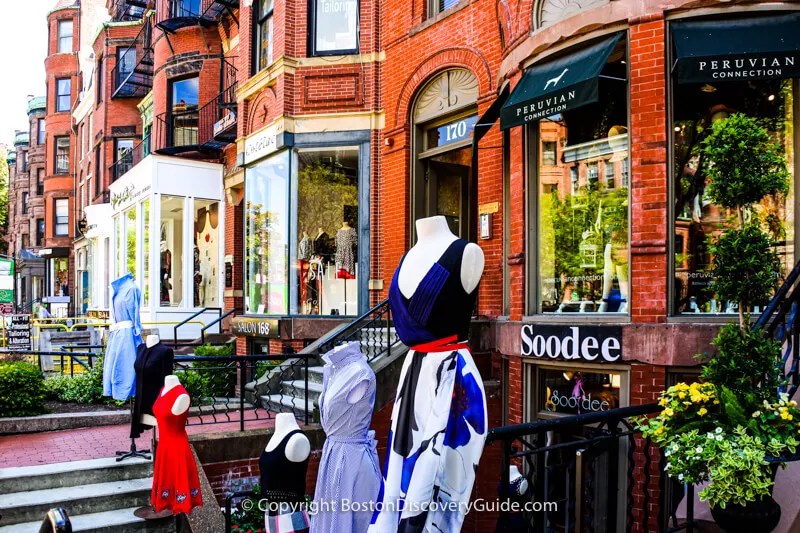
Most of the buildings on Newbury Street are three story brownstones. To get a better look at these iconic buildings, move over to one of the streets parallel to Newbury Street: Commonwealth, Marlborough, or Beacon. While the reddish-brown sandstone that gives these houses their names is not an expensive material, the history and location of these buildings has made these streets some of the most expensive real estate in the city.
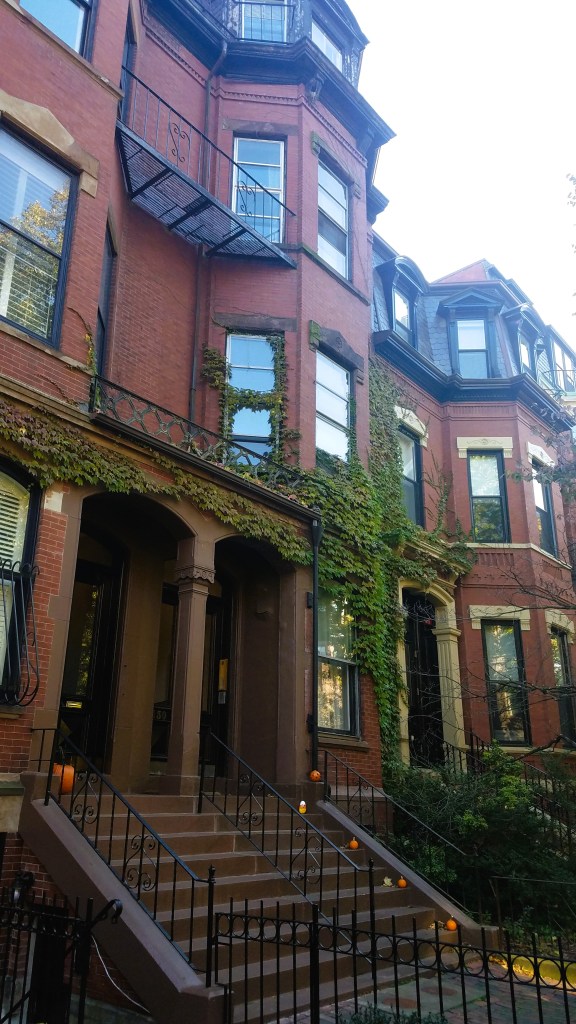
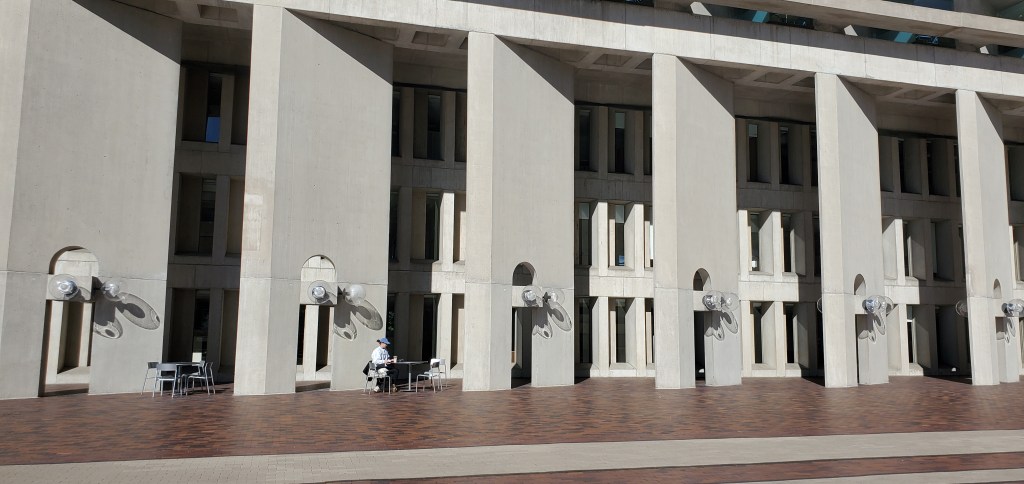
From the Brutalist architecture of the colonnade building at the Christian Science Plaza to the Victorian brownstones of Marlborough Street, Back Bay is filled with architectural history to explore.
 Mac On the Map
Leave a comment