
When I found out I was going to Salt Lake City, I knew I wanted to get a closer look at the lake the city is named after and the salt flats that make it different from other lakes I’ve experienced. The art installation of the Spiral Jetty called my name and brought me off the major highways into the rugged desert of Utah.

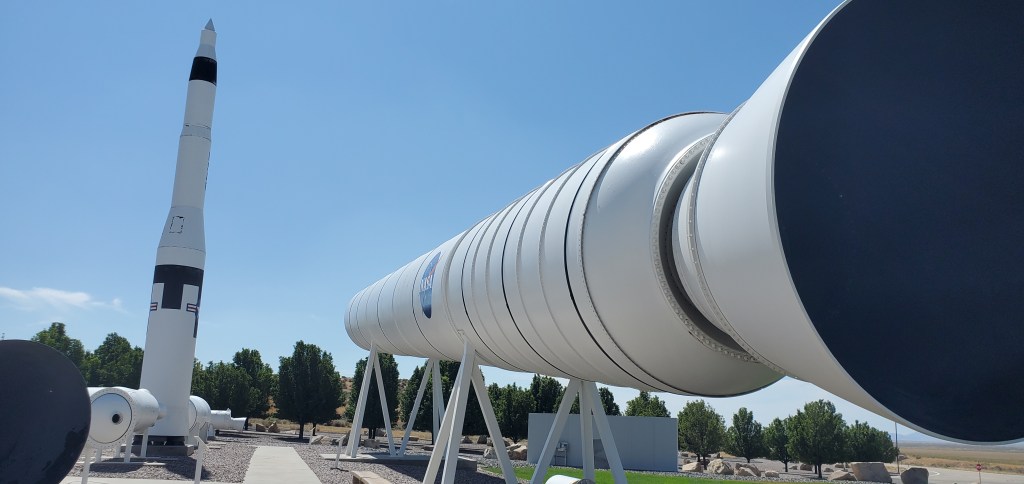
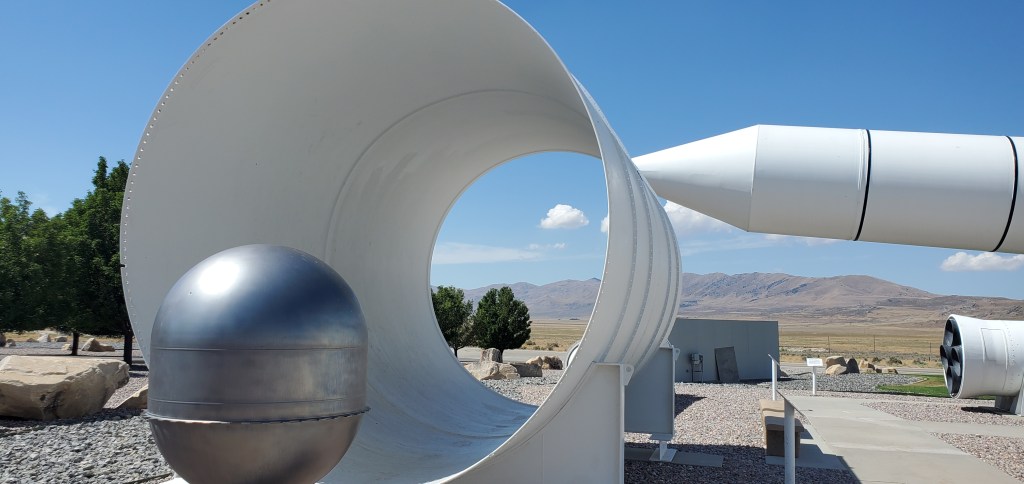
Just before turning off the main road, I passed by this collection of rockets in the front yard of a large office building that I couldn’t resist stopping at. I knew nothing about why this collection existed in what seemed like the middle of the desert, but the informational plaques gave me my answer. The sparse Utah desert is the perfect place for rocket and missile companies to test their products without the fear of hurting anyone. This building was once the home of the Morton Thiokol company, who infamously made the booster that blew up the Space Shuttle Challenger in 1986. The current occupant of the building is Northrop Grumman, and their Rocket Garden features about 40 pieces, ranging from patriot missiles to booster engines to shuttle rocket boosters.
From here it was another 25 miles to the Spiral Jetty installation on the northeastern shore of the Great Salt Lake at Rozel Point. The road is paved up until the Golden Spike National Historic Park, and signs here warn about the unkept road beyond, but my plan was to stop here on the way back out. If I had stopped and read about the conditions of the road to the Jetty first, I might’ve been hesitant to continue on; but I went into the drive ignorant of what was to come. I only had a small rental car, and the long and bumpy dirt road out to the lake definitely made me feel like my car was going to break down at any moment. Luckily, my little car made it there and back; still, I would caution people to have a sturdier car for this trip – or at least a back up plan since there is also no cell service past the Golden Spike National Historic Park.
The bumpy ride was worth it though. I’ve never seen a site like the salt flats: crystal pink water of the Great Salt Lake plays against the blue of the sky to create an ethereal atmosphere.
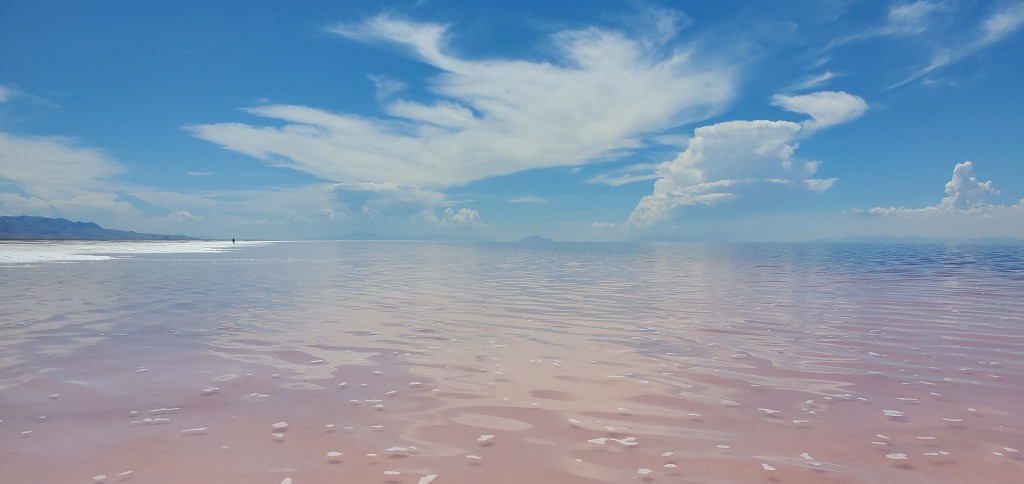
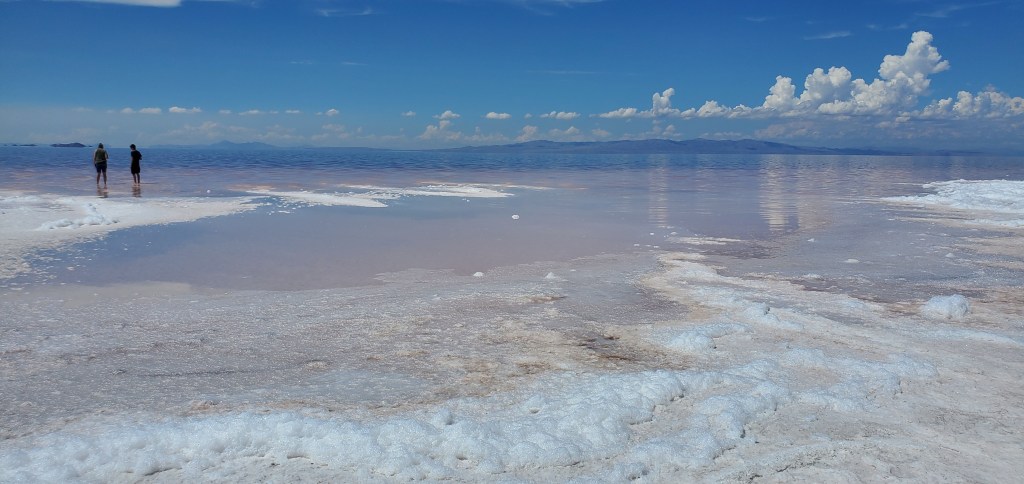
The Spiral Jetty installation is courtesy of artist Robert Smithson, who installed it back in 1970. The 1,500 foot long spiral is made up of 6,000 tons of black basalt rock. The water level of the lake has been declining and is expected to continue to do so, but since the jetty is only visible when the water level is low, I would still double check before making the long drive out to the Spiral Jetty. This also means that the water line of the lake is a fair walk from the parking area, and it was a longer walk than I expected to the water’s edge.


It is said that the Great Salt Lake’s high salinity makes it easy to float in, but with my blisters from previous days’ hikes, all I experienced was the burn of the salty water on my feet. Still, the white frothed salt edge, pink glassy water, and silvery surface of the lake bed awed me with its colors.
On the way back from the Spiral Jetty, I stopped at the Golden Spike National Historic Park, which commemorates the completion of the Transcontinental Railroad. In May 1869, the Central Pacific and Union Pacific railroads met and unified to create a route that spanned from Iowa to San Francisco. With the completion of the train, people could now travel across the country in the span of a week instead of a month. This opened up commerce and development in the west and forever changed the American landscape – for both the good and bad. The park features a replica of the two trains and a small museum and gift shop. Daily, the park runs the locomotives according to the times they arrived on site back in 1869. At each of the scheduled arrival & departure times, actors play out the events of the day. Before my visit, I made sure to be here at one of the scheduled times to experience the live action reenactment of the event.

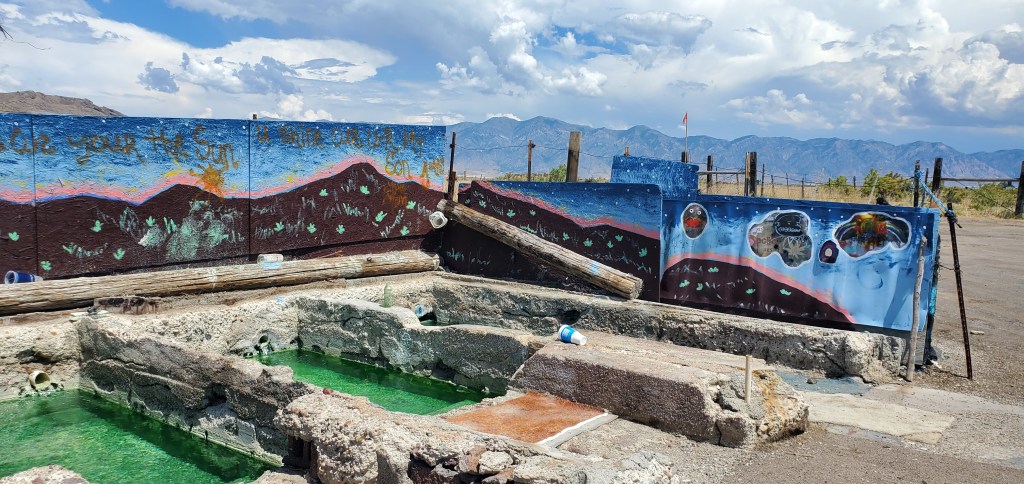
One of the things I really wanted to experience during my three week road trip was a natural hot spring. While I had researched a few before my trip, I ended up not having time to fit them into my trip up until this point. Before setting out for this leg, which was my last major day of driving, I found that there was one just off the highway, so I knew I had to stop and try it out. I knew it was called Stinky Springs because of its sulfur smell, but I didn’t expect that its surroundings would contribute to this name. Composed of three small basins surrounded by crumbling cement walls, defaced plywood barriers, and trash strewn around, Stinky Springs was less than inviting. In the end, I couldn’t make myself try it out, but I did stick my hand in to feel that it was legitimately hot. I would say to experience this one at your own risk.
 Mac On the Map
Leave a comment