
Jamaica Plain (JP) and Roslindale (Rozzie) are indie neighborhoods in the southern part of Boston. JP is accessible by the last three stops on the orange line MBTA (Stonybrook, Centre St, and Forest Hills), and Rozzie is accessible by the Needham branch of the commuter rail. It makes sense that these neighborhoods value their greenspace as they feature the largest sections of the Emerald Necklace that spans Boston’s neighborhoods.
The Emerald Necklace was designed by well-known landscape architect Frederick Law Olmsted, who also designed Central Park in New York City.
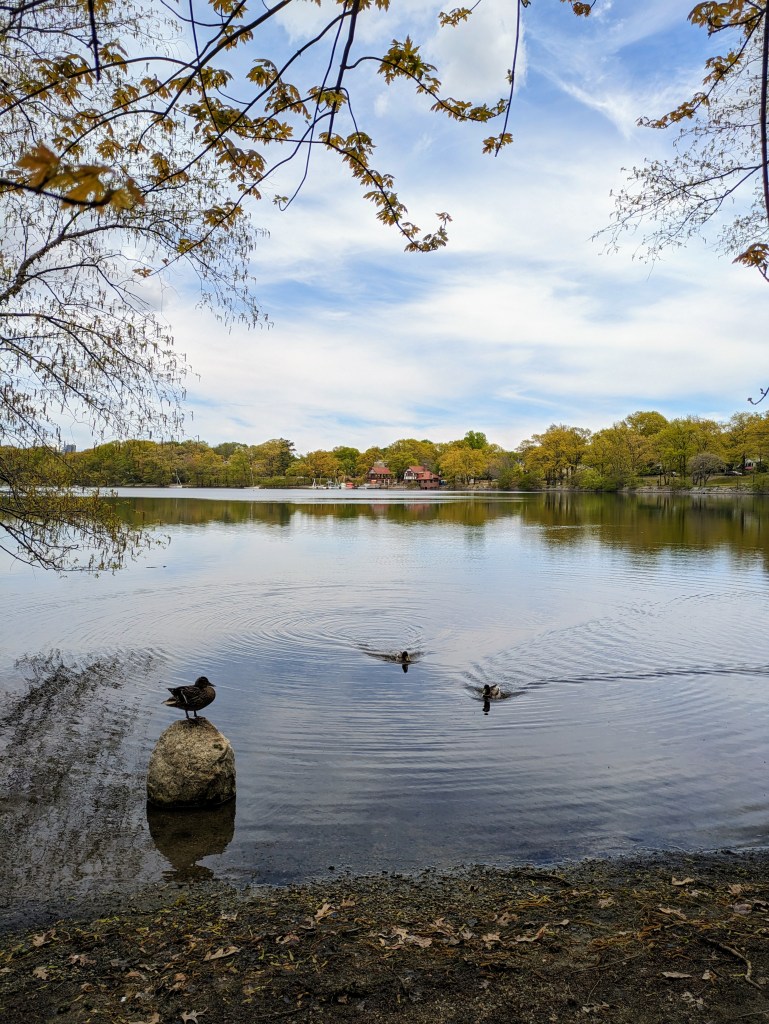
The first section of the Emerald Necklace in this area is Jamaica Pond. Jamaica Pond is a glacial kettle hole and the largest standing body of water in the Emerald Necklace. To enjoy the pond, you can walk the 1.5 mile path around, fish from the shores, or rent a sailboat for a quick sail around the lake. Each October, Spontaneous Celebrations (who also run some other lovely events in the area) organizes the annual lantern parade. Since 1984 people have brought/created lanterns and walked around the pond. It is a magical night of flickering lights and community gathering.
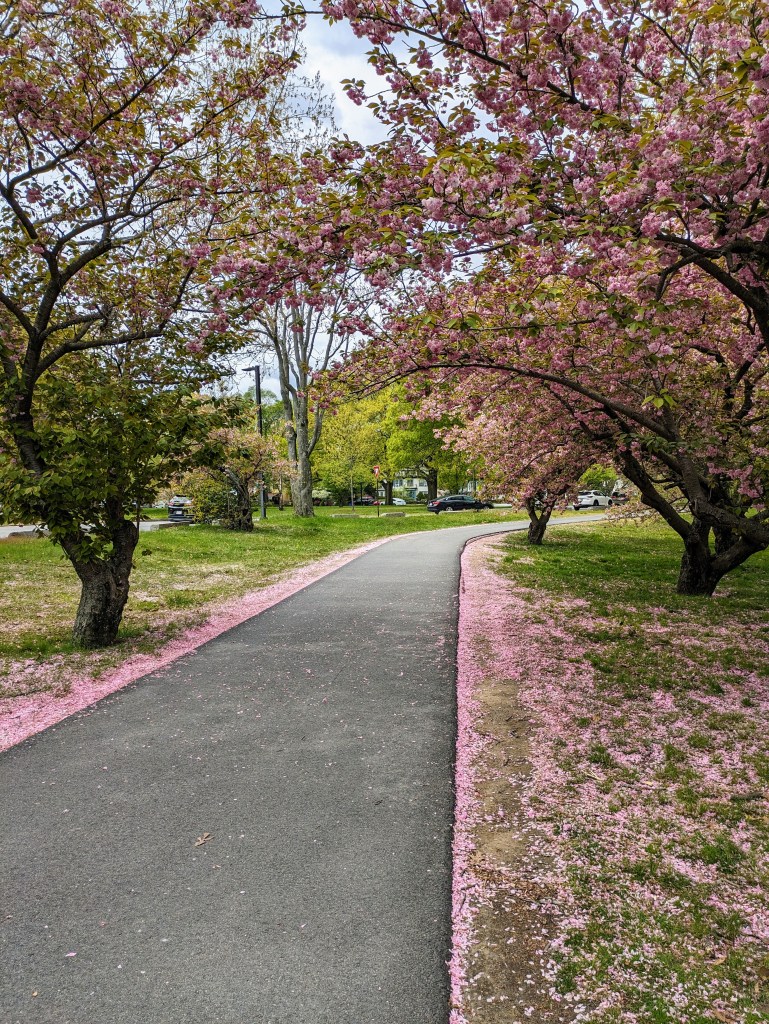
Continuing south on the Emerald Necklace takes you to the Arnold Arboretum of Harvard University. Established in 1872, the Arnold Arboretum is the oldest public arboretum in North America. The over 250 acres include manicured trails, rolling meadows, informational tree and plantscapes, and art exhibition.
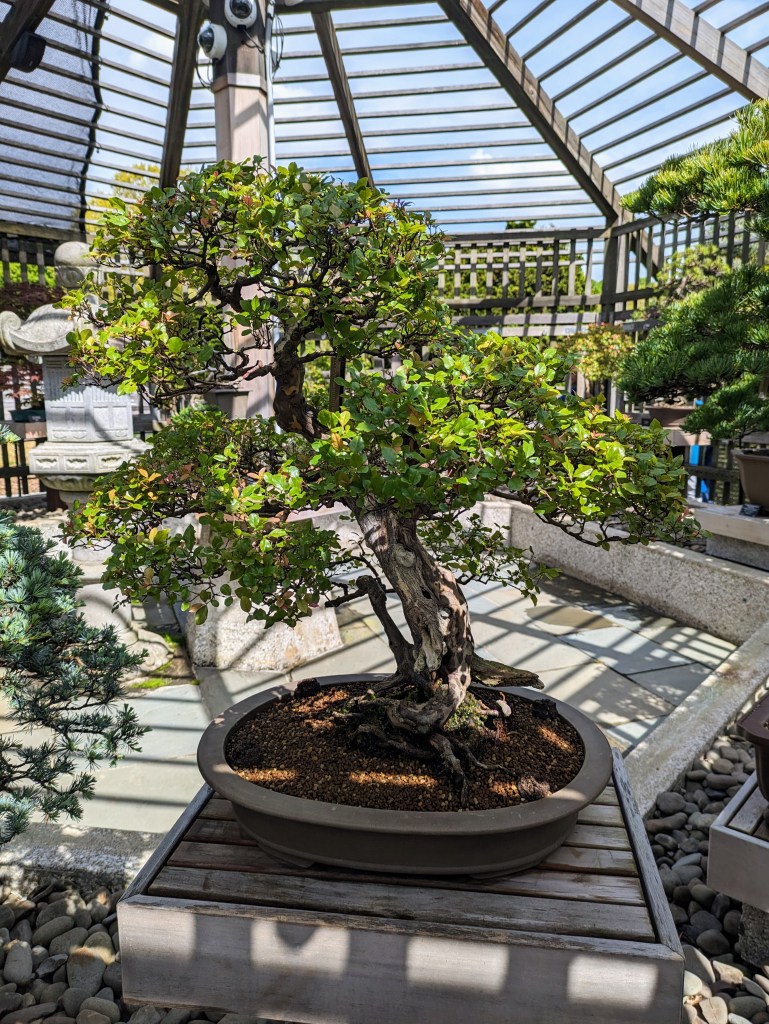
The Larz Anderson Bonsai Collection houses bonsai that date back to the 1700s; the Explorers Garden features unusual plant species collected from around the world; and Peters Hill offers views of the surrounding towns and the Boston skyline.
While picnicking is not usually allowed, every Mother’s Day, the Arboretum hosts Lilac Sunday with tours of the grounds, activities for children, and open access for picnicking. The space comes alive with families smelling the flowers, running through the fields, and celebrating their mothers. The Arboretum features lilacs in shades of white to vibrant purples that lent a sweet fragrance to the atmosphere.


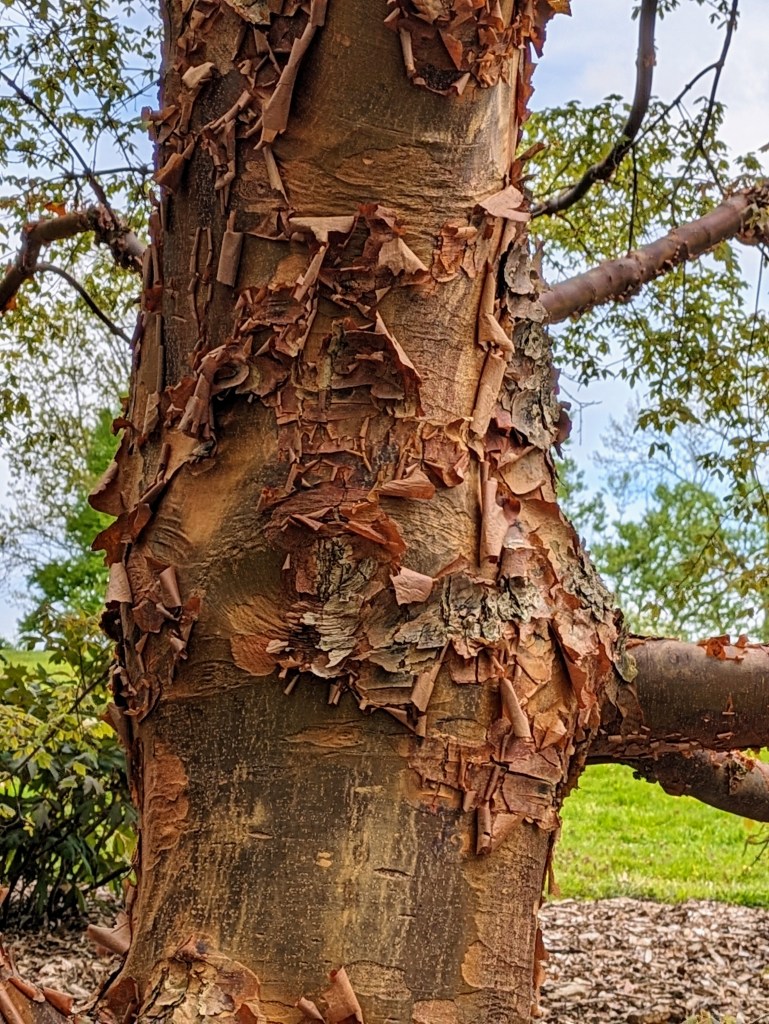
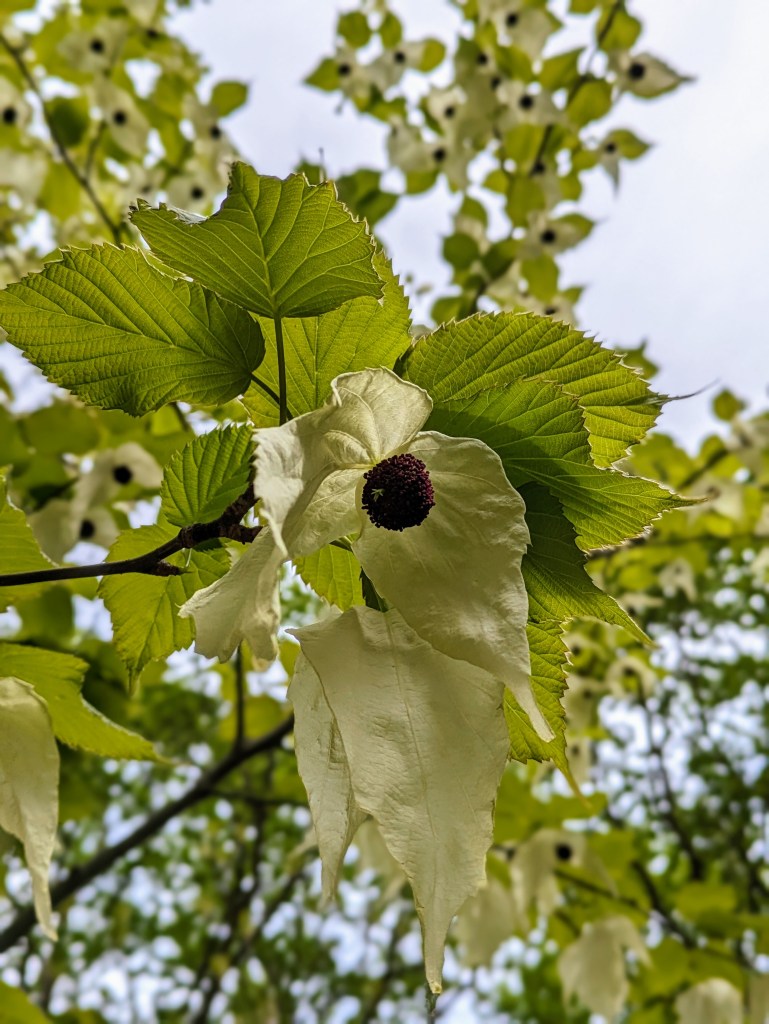
If you’re not able to make one of their scheduled tours, they also have Arnold Arboretum Expeditions – accessible by QR code on some of the informational plaques or by app – that provides on the spot tours of the Explorers Garden, Arboretum’s history, or stories and information about specific plants. Some of the plants that intrigued me were the Chinese redbud tree where the flowers grow out of the trunk instead of the branches, the paperback maple tree whose bark is almost orange in color, and the dove tree whose flowering petals look like wings.

The next stop on the Emerald Necklace is Franklin Park, which is the largest of the chain of parks. It is a multiple use space that houses a golf course, a zoo, a cemetery, a stadium, and a series of hiking trails. The park is easily accessible to the abutting neighborhoods and the network of trails traverse some hilly terrain and meander past some interesting ruins.
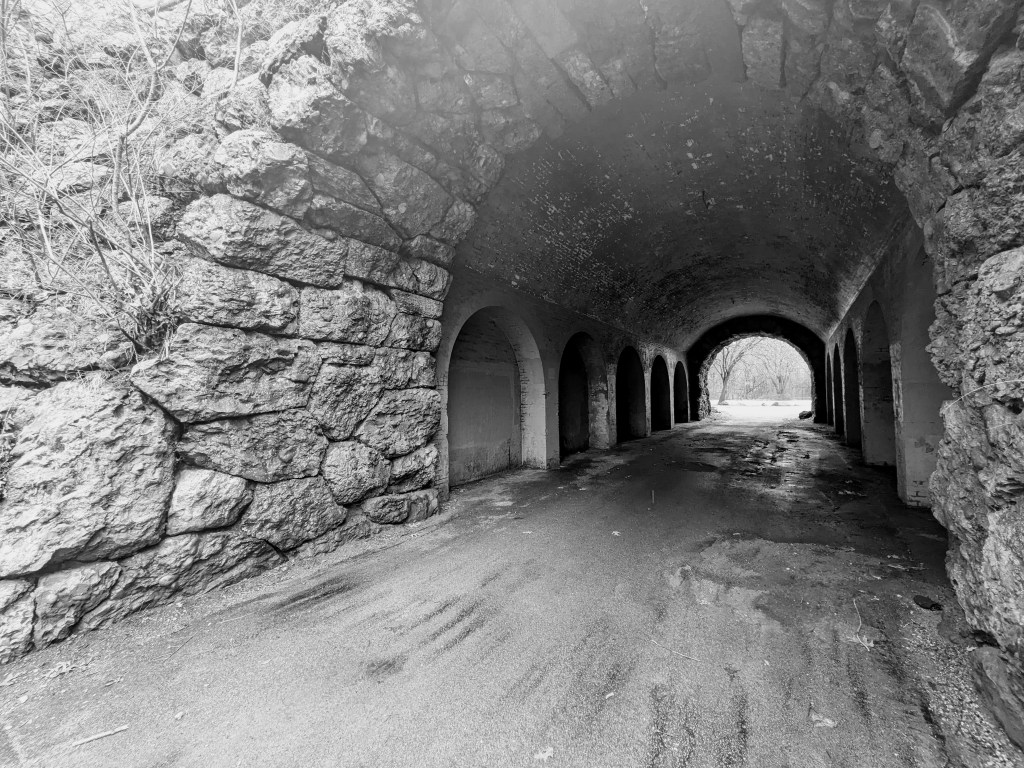
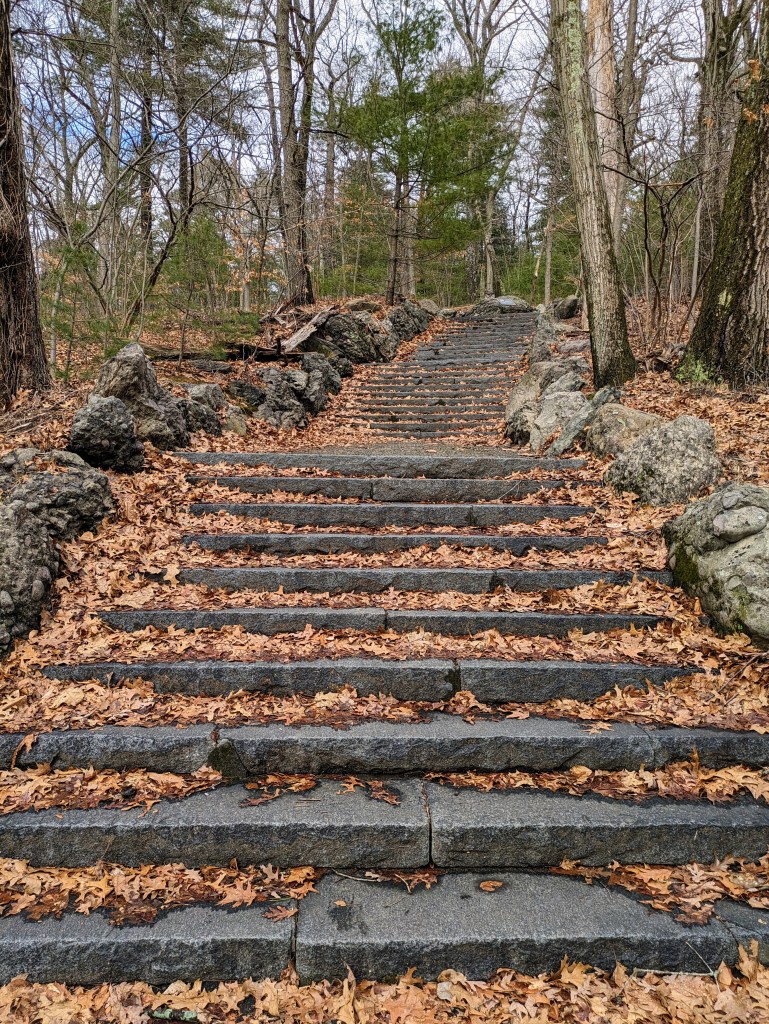
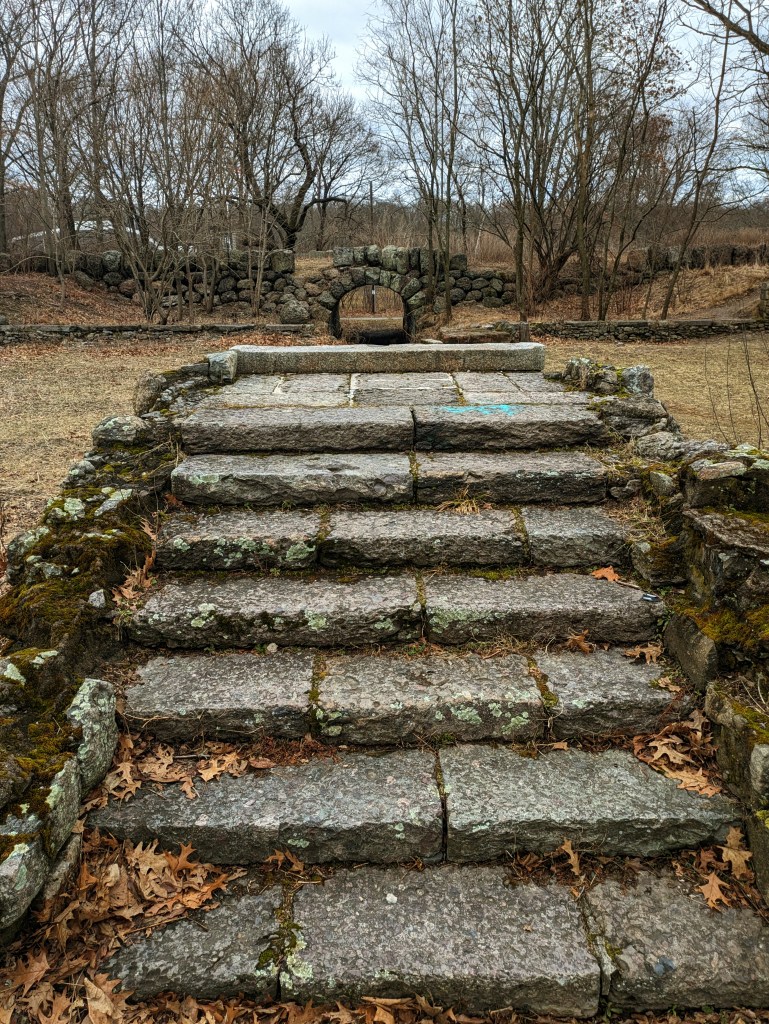
The Ellicott Arch and 99 steps built in the center of the park represent Olmstead’s vision of blending architecture and nature. The puddingstone arch works as a passageway for walkers to bypass the access road above. The 99 steps wind up the hill and bring hikers to the 65 acre native oak forest section of the park.
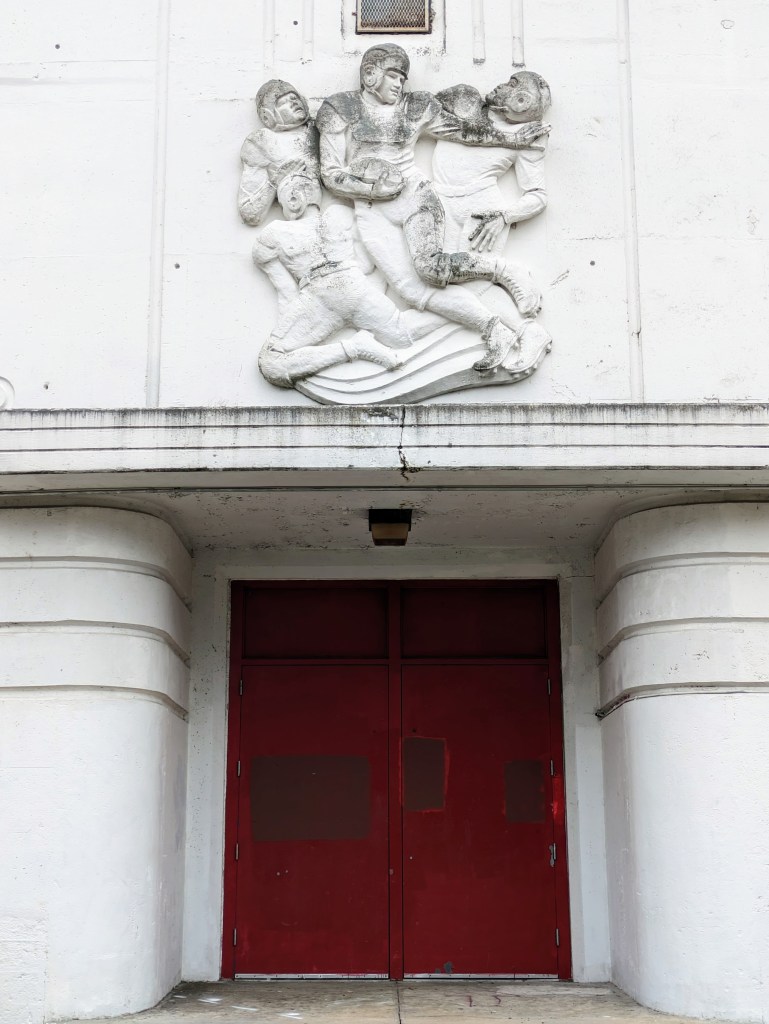
In the Playstead area of the park sits White Stadium. Built in 1945 as the George Robert White Schoolboy Stadium, White Stadium can hold up to 10,000 spectators for Boston Public School events. However, because it is in need of repair, the stadium sits vacant and is closed to the public. Hopefully, the city will be able to gather the funds to revamp the old stadium before it falls to ruins like the next two areas of interest.
Near the closed stadium are the ruins of a field house designed by Olmsted. While the fieldhouse burned down in the 1940s, staircases and archways from the building still remain.
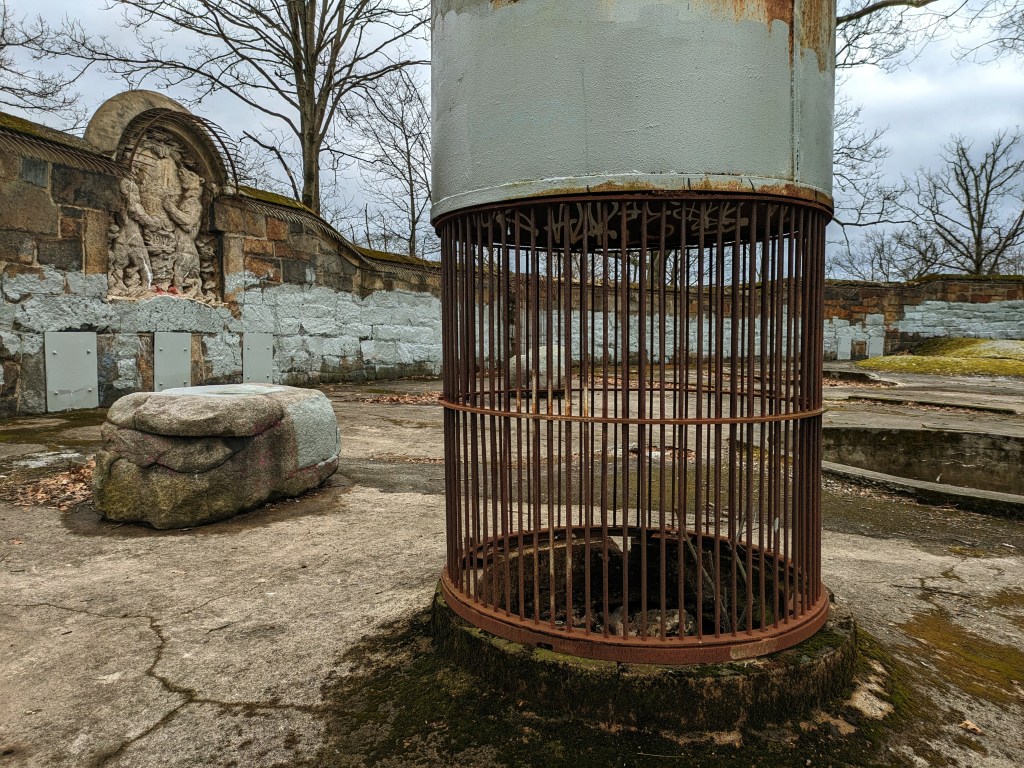
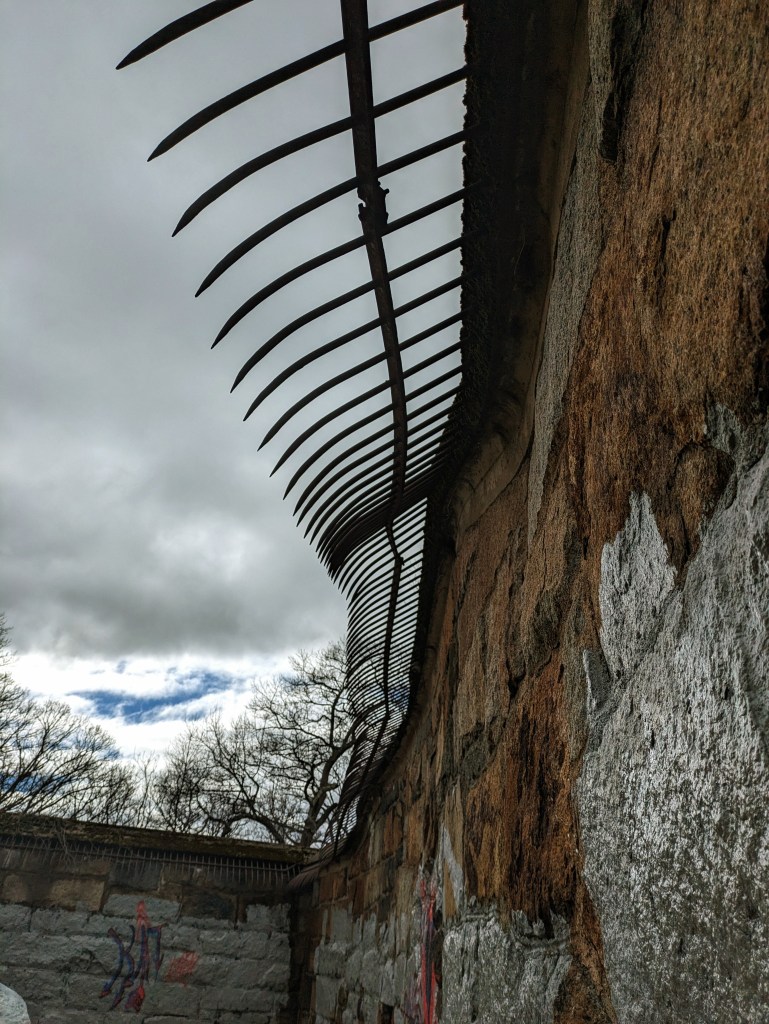
Close to the north edge of the park is another set of ruins — those of bear cages. When the bears were relocated to new cages at the Franklin Park Zoo in the 1960s, their former home was set to ruin. Now, the iron bars of the cages only partially enclose the spaces and a tree has grown through the feeding cages. The rusted metal and crumbling stones make this a place to use caution. Standing inside of the cages gave me a different perspective of what it means to be an animal in a zoo; it made me appreciate being free to explore wherever I want. Just outside the bear cages is a small vista where the Boston skyline is visible.
Across the street from Franklin Park is the historic Forest Hills Cemetery. Not only does this cemetery include the burial grounds of famous writers and leaders, it is also an arboretum and sculpture garden. The grand entrance gate begins the experience and the paths that meander through the forests, around a lake and up the hills continue it.
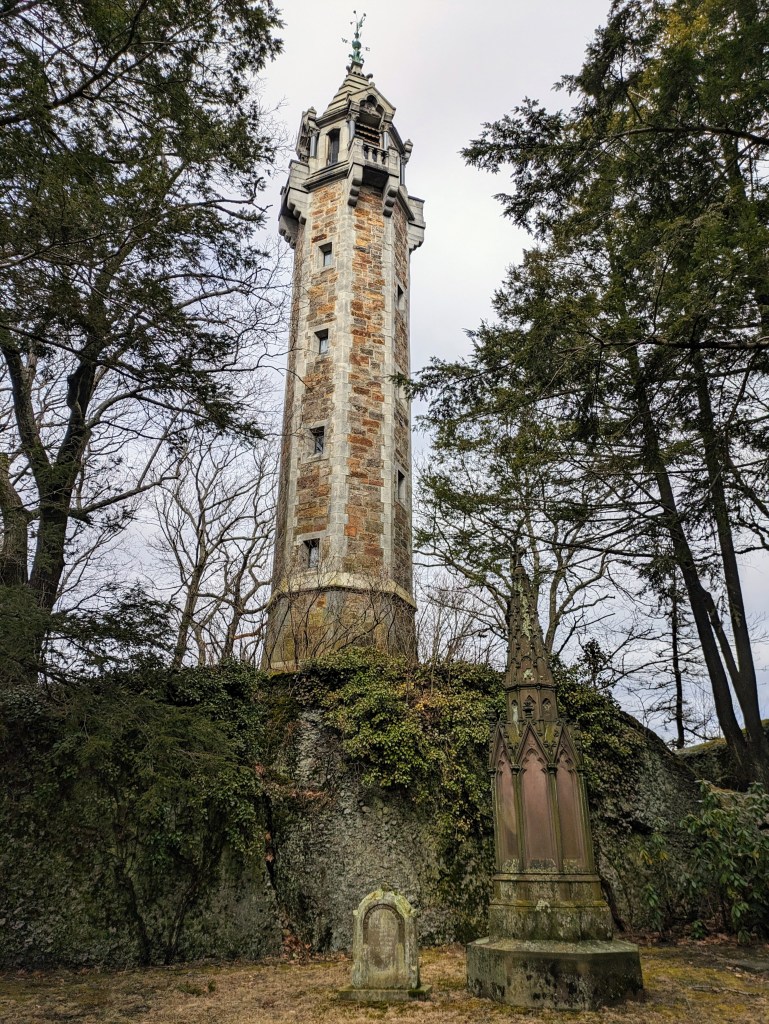
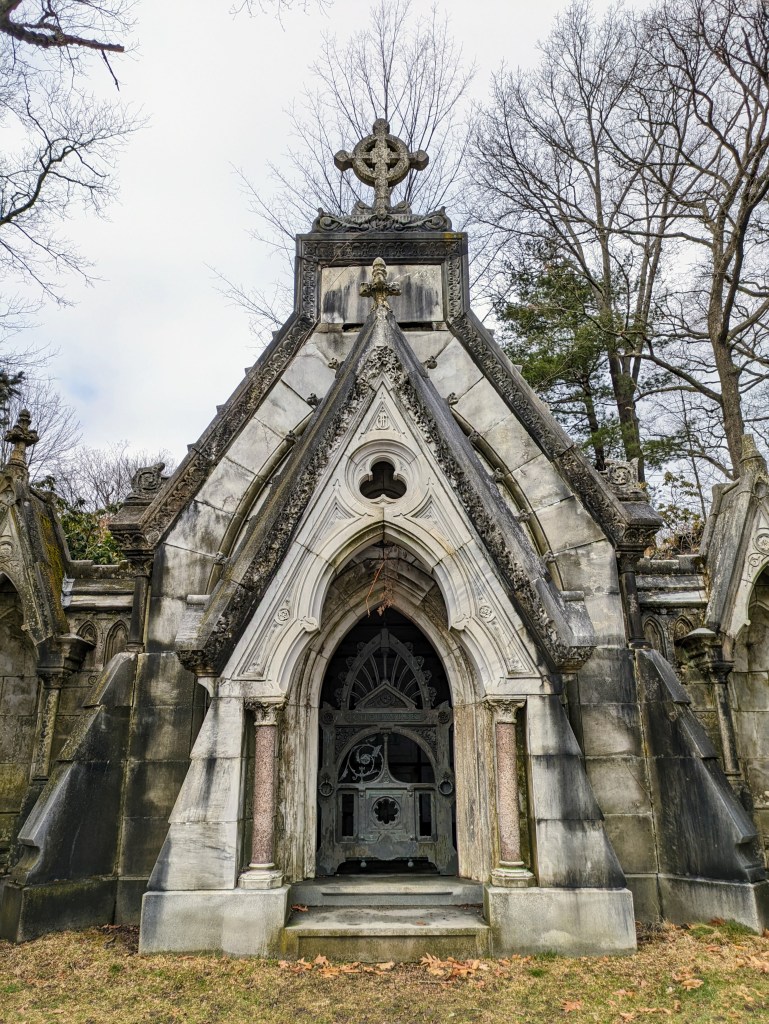

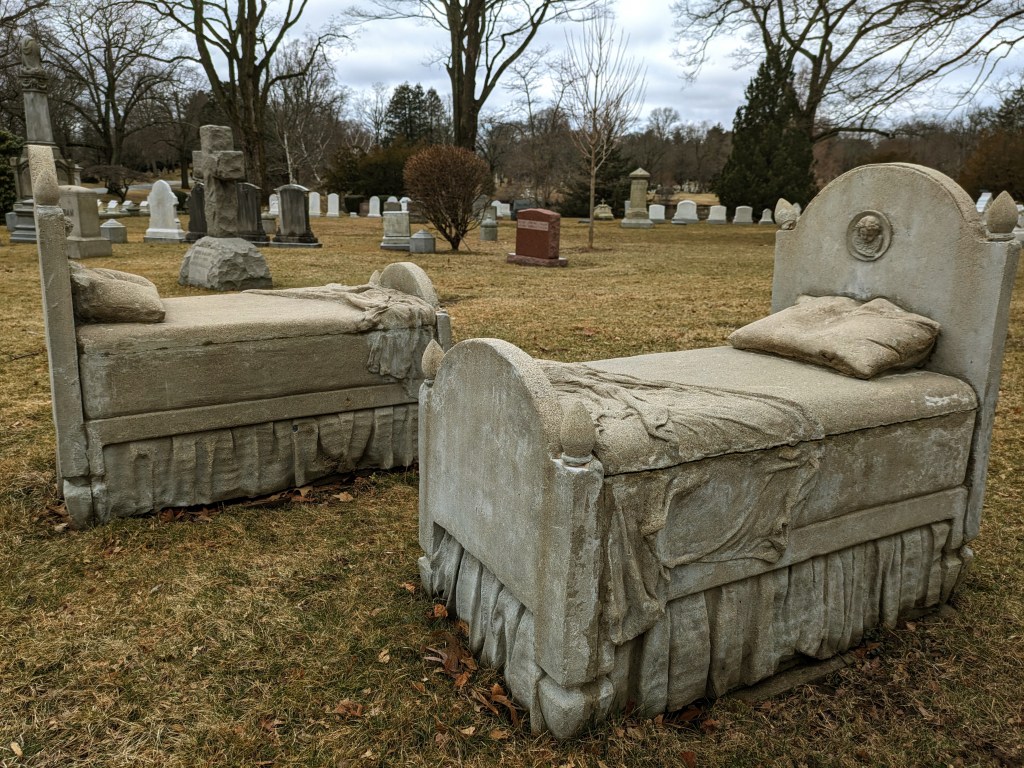
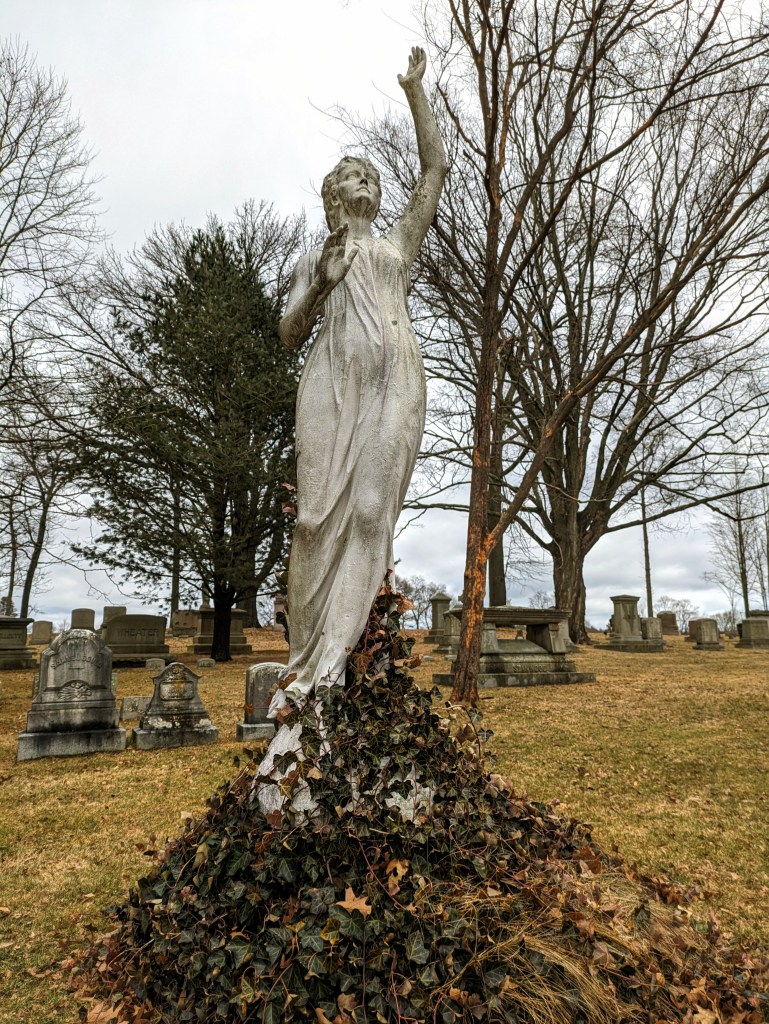
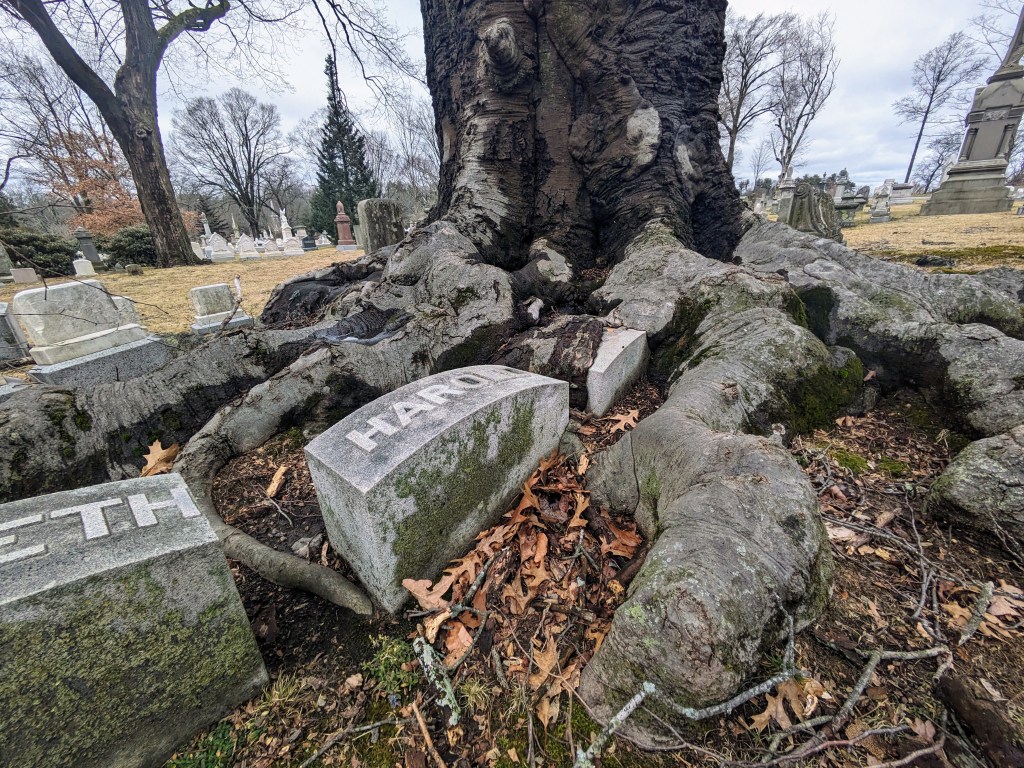
While the cemetery offers many classic marble gravestones and crypts, it also has some more creative ones — like a set of beds, a tree trunk, and a piece of paper molded to the surface of a rock. Nature also has made its presence known here as trees have grown around gravestones, ivy grows up the side of a statue, and moss has camouflaged the miniature village that was built into the hillside.
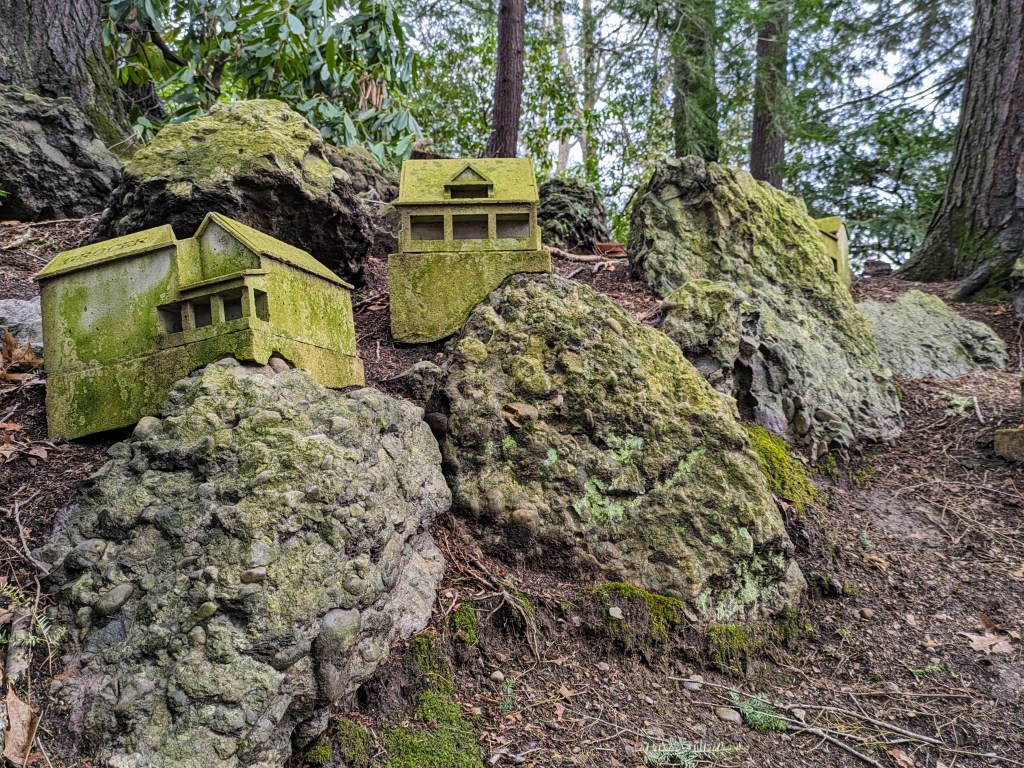
One section of the cemetery has been named writers hill as it houses the final resting place for famous writers like e.e. cummings, Anne Sexton, and Eugene O’Neill.
Sound has also become a part of the experience here as wind sculptures rotate in the wind by the pond and a xylophone installation has become a permanent fixture near the entrance way. The sounds of the sculptures, beauty of the art installations, and peacefulness of the landscaping make this cemetery one that feels like a retreat for the living as much as a resting place for the dead.

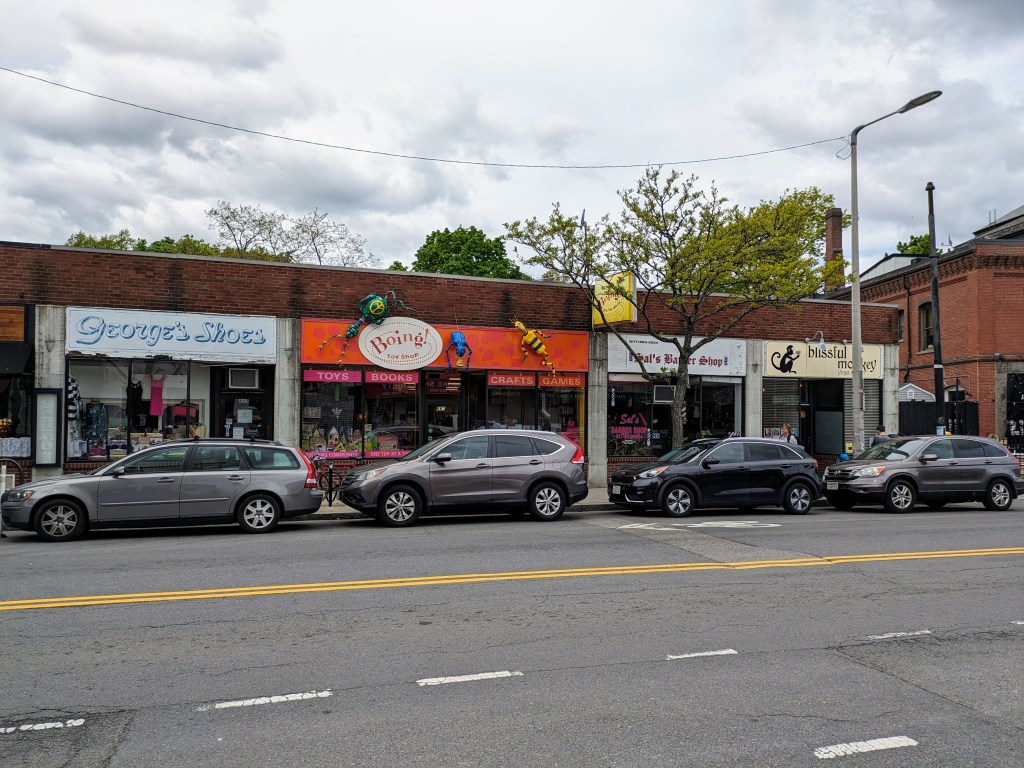
While in the area, spend some time walking Centre Street in Jamaica Plain or Roslindale Village in Roslindale. Both offer many eateries, local businesses, coffee/ice cream shops, breweries/pubs, and cute/handy clothing and home goods stores. They are both centers designed for locals, not tourists, which I think makes them even more charming.
 Mac On the Map
Leave a comment