
Savannah is the shadiest city I’ve ever been to – and I mean that in the best sense. I was worried when the temperature called for high 80s during my trip, but the green spaces and lush trees covered in Spanish moss kept me comfortable even in the height of the day.
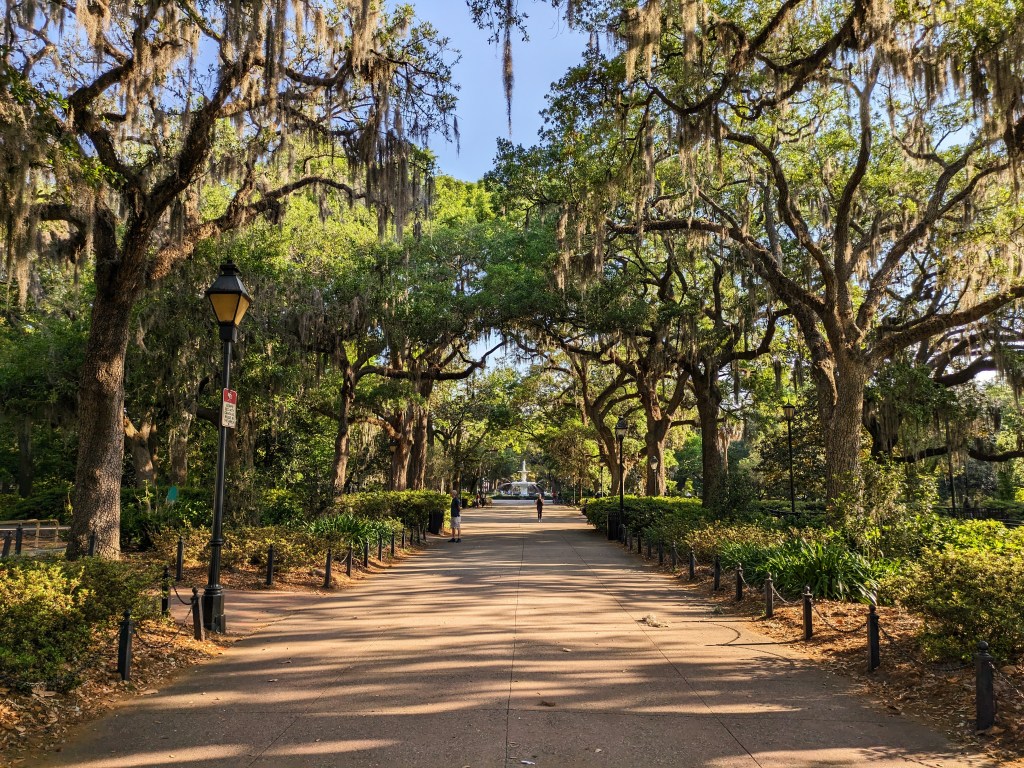
Benches and shade in the iconic Forsyth Park provided a serene atmosphere for relaxing and taking a break. Most known for its iconic fountain (installed in 1858), this 30 acre park serves as a public space for recreation, concerts, picnics, strolls, and flower smelling, and tree gazing.

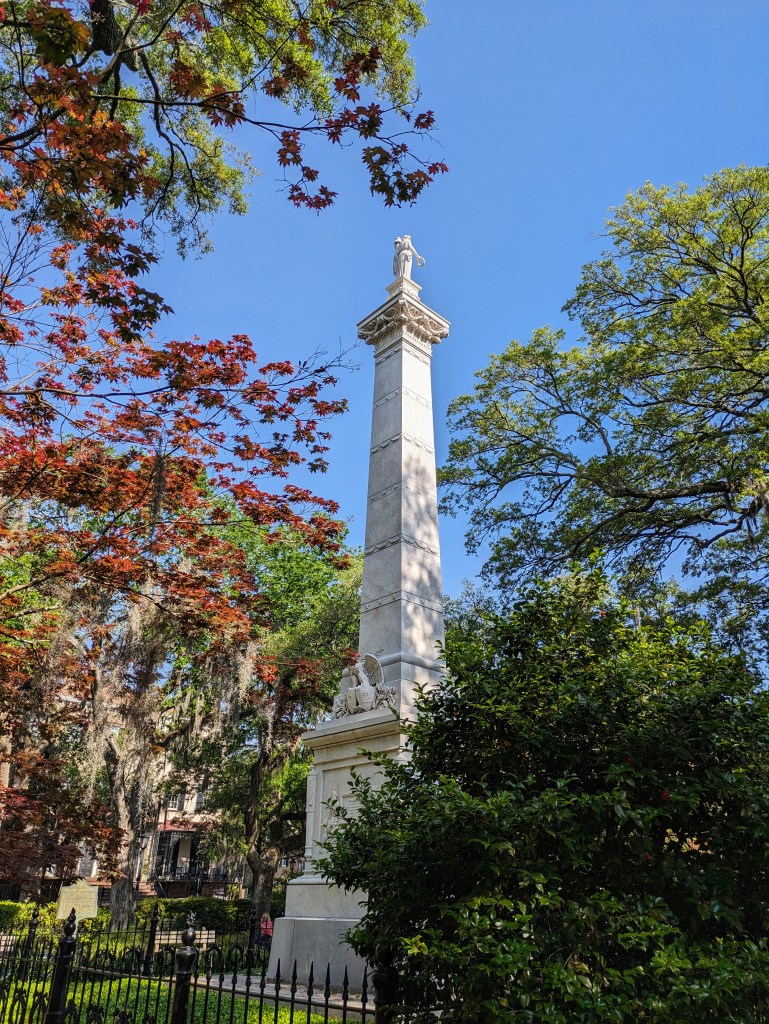
The memorial to Confederate soldiers that stands tall in the park reminds the public of the park’s original use as a parade ground for confederate soldiers. The mock fort constructed for training purposes has since been converted into a small garden for the blind. I loved the concept of this, but I was a little disappointed in the condition of this garden during my visit. Nearby is also an arboretum of trees, and while there is one sign that explains the types of trees, it was hard to follow the layout of the species. Both of these elements are thoughtful in theory but could use some finesse to make right. On the other hand, the large stage for outdoor concerts attached to a bustling cafe and snack window – with awesome public bathrooms inside – was a design hit.

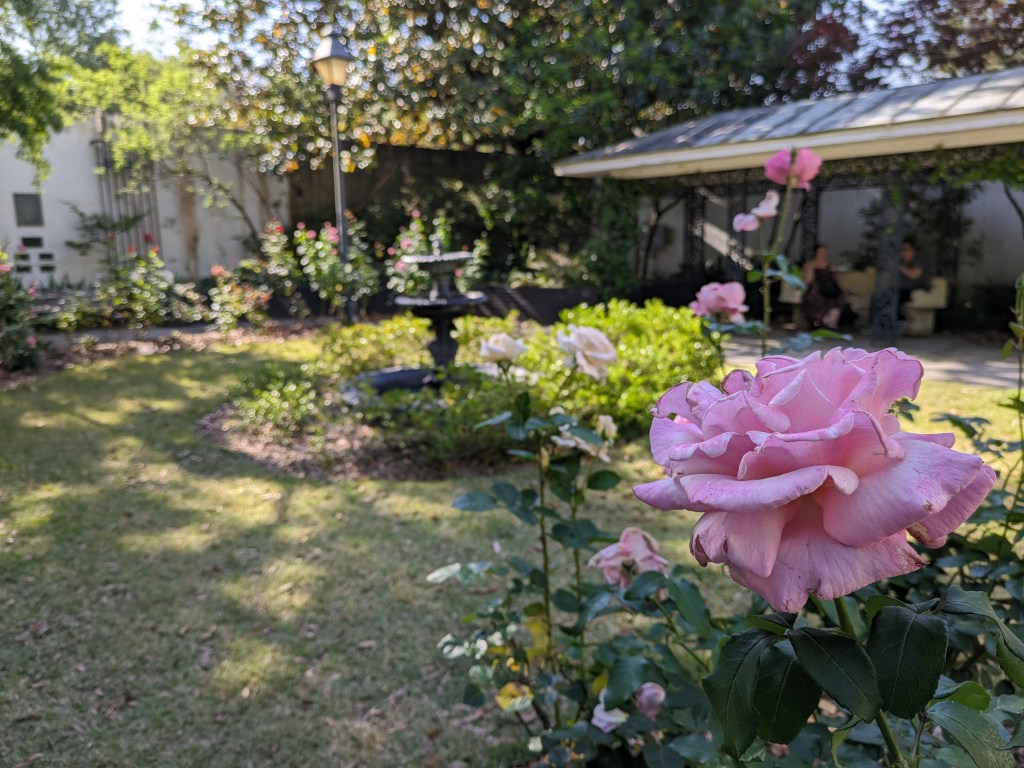
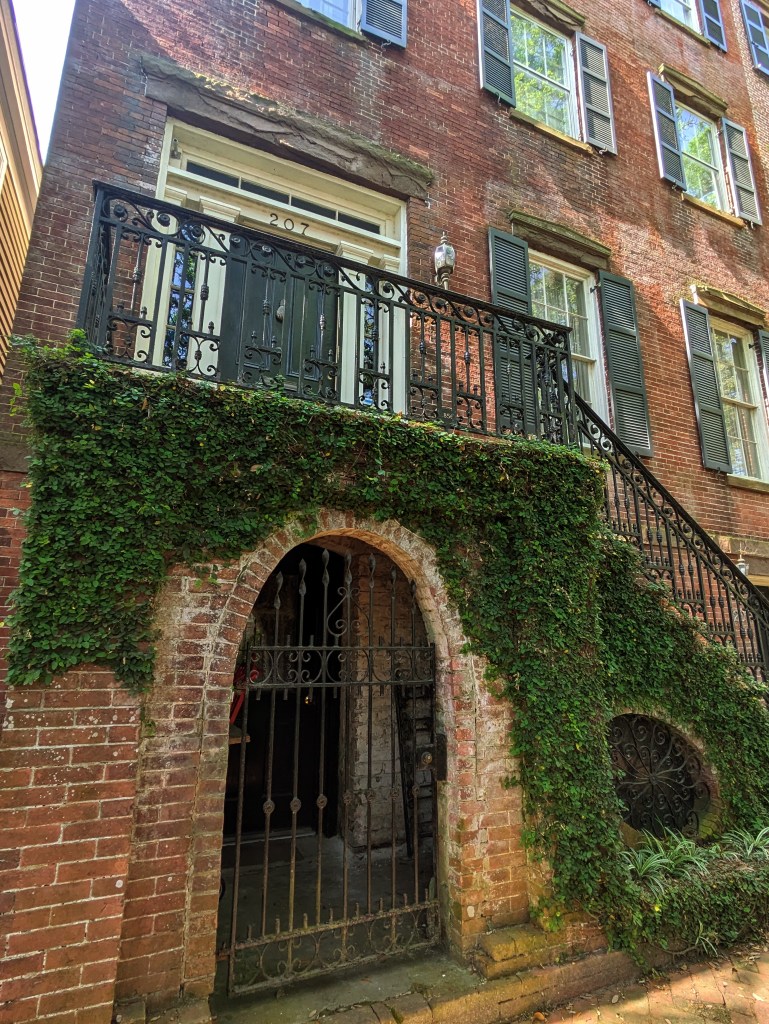
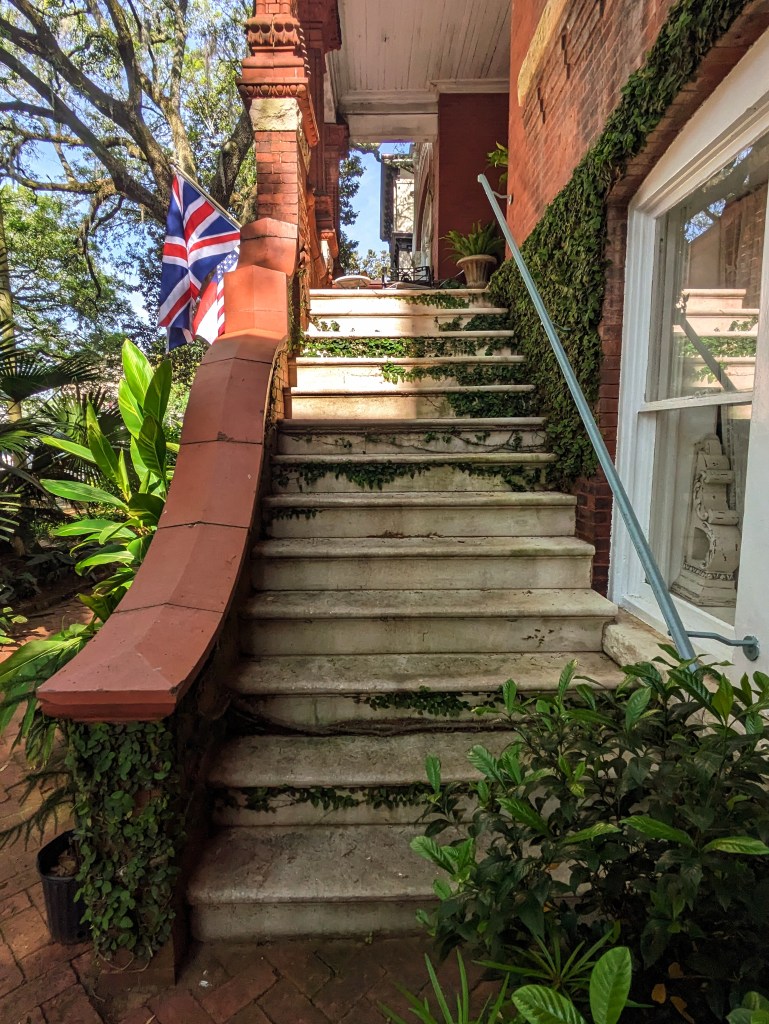
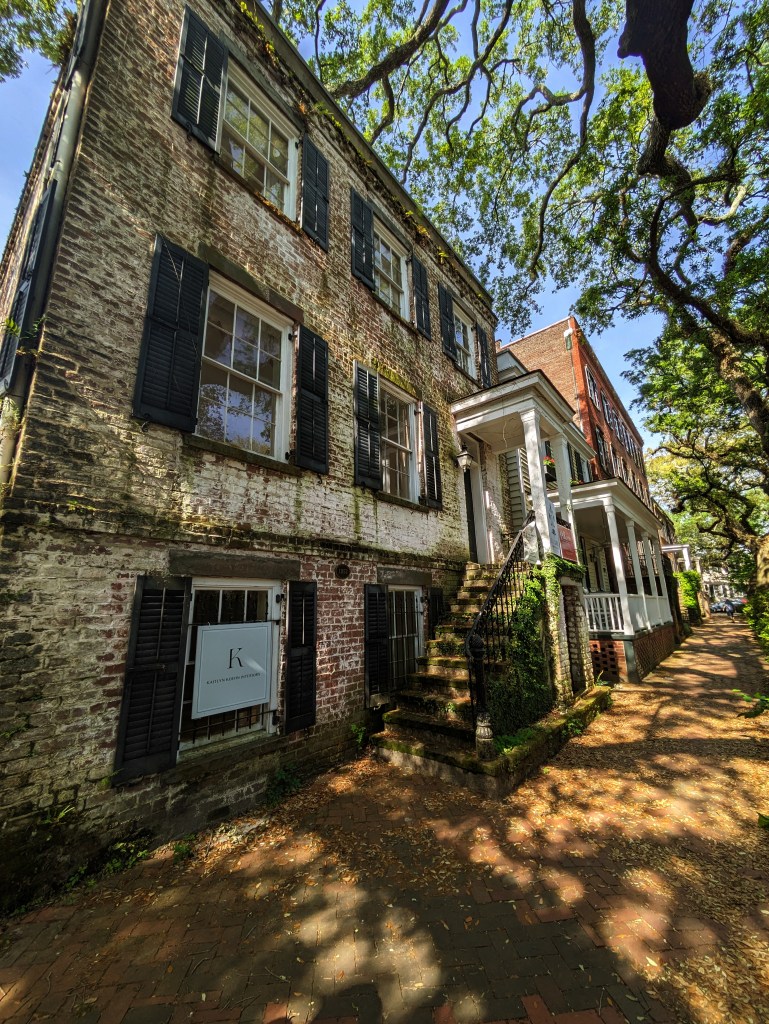
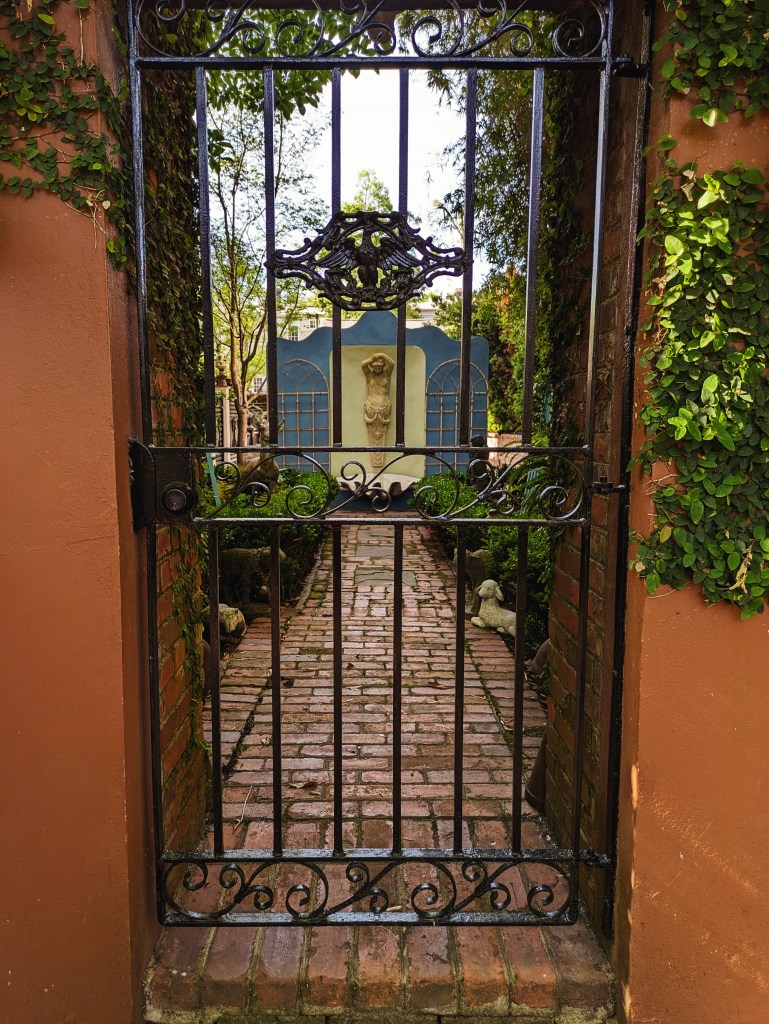
Another massive hit was just a few blocks north of Forsyth Park. While I had heard that Jones Street has been called “the Most Beautiful Street in America”, I didn’t know if it would live up to the hype. Located in the heart of the Historic District, the picturesque Jones Street definitely awed me with its beauty. The large Southern live oaks on either side of the red bricked street frame the space and make it feel like a world unto itself. Historic Colonial and Georgian homes rise up on either side with massive grand staircases that seem to separate the lay person from the world of the rich and powerful. At street level, all you can do is let your eyes follow the wrought ironwork and grand staircases to the formal entry porch and wonder at the glamor behind the doors. Instead of delicate flowers and landscaping, the houses are adorned with lush greenery that seems as historic as the homes themselves. The bright greenery creates a contrast with the redbrick of the wide sidewalks and walls of the homes. Some of the greenery even makes its way up the banister and risers of the staircases.

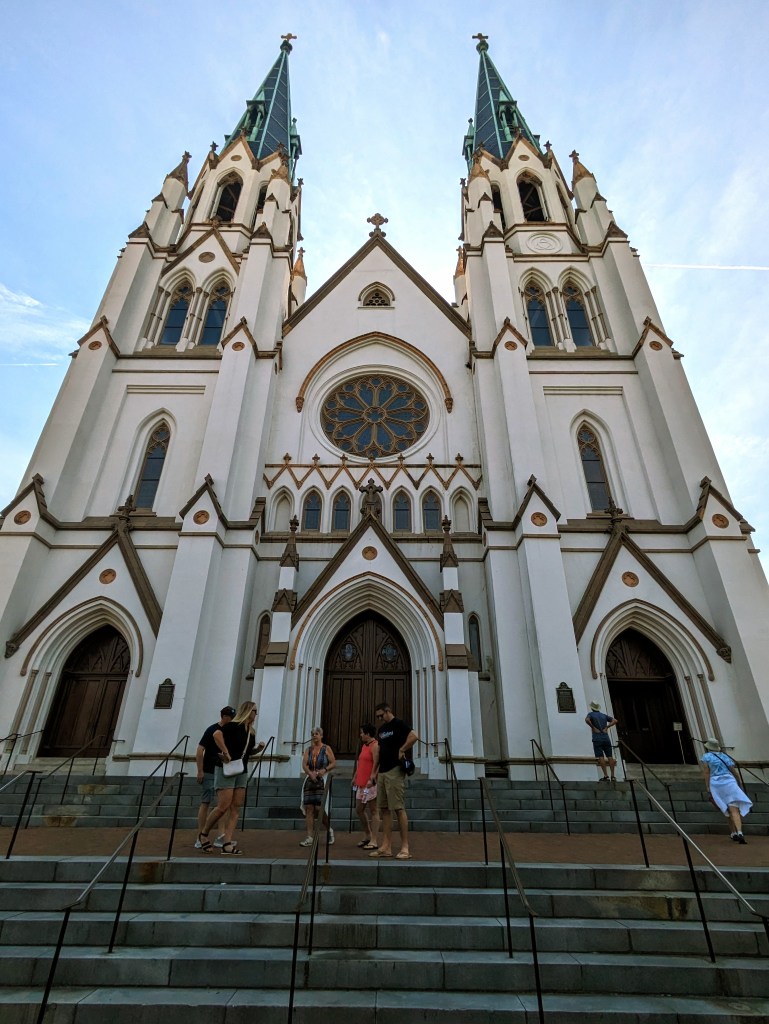
Throughout the Historic District are a series of squares that each create a space for resting and relaxing. Most are centered around a monument or fountain honoring the history of the city. From Lafayette Square – honoring Marquis de Lafayette, who aided the Americans during the Revolutionary War – the white facade of the Cathedral Basilica of St. John the Baptist rises up through the trees.
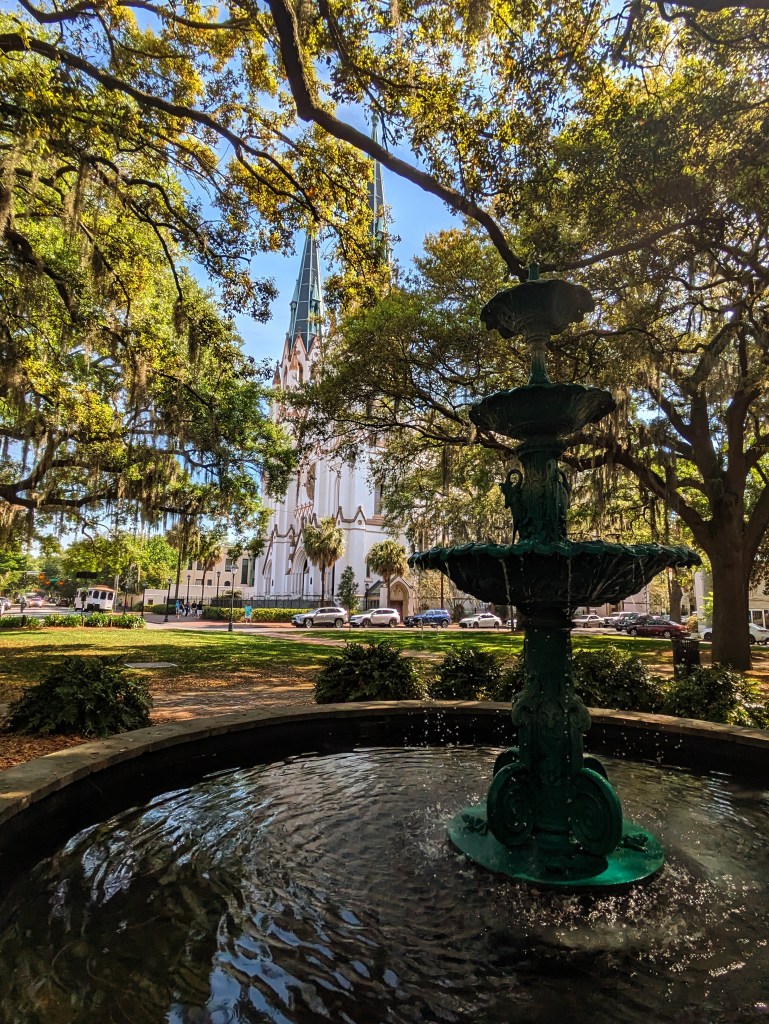
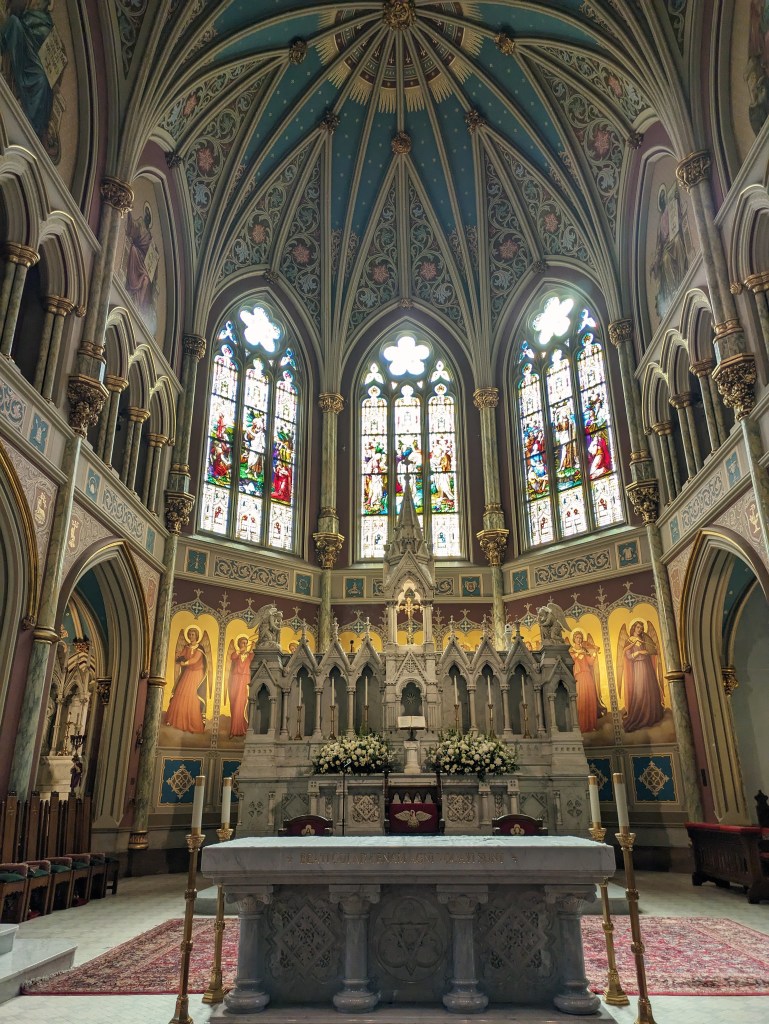
As you walk closer and closer, the twin spires and the marble stairs continue to climb into a sky not covered with oak trees. The contrast between the shade and coziness of Lafayette square and the bright and openness of the church almost blinds you and prepares you for a very different atmosphere. Inside this oldest Roman Catholic Church in Georgia (1876), the towering columns that lead to the many arched ceilings seem to be even higher. I don’t think I’ve ever been in such a grand church; however, the space is only overwhelming in its beauty. The calming blue of the ceiling, gold accents of the crosses and edges, and intricate details of the stained glass windows and painted murals all took my breath away.

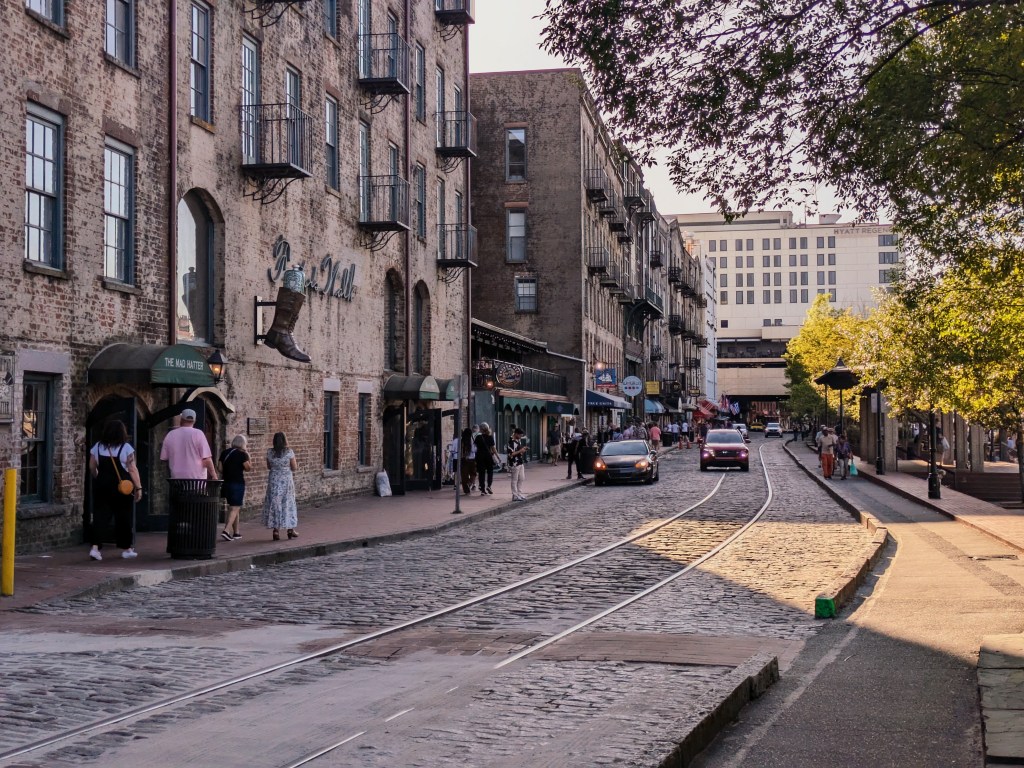
The Historic District extends all the way to the river and the tourist haven of River Street. Down the steep and sketchy stairs, River St. spans several blocks of the harbor. Tourist stores and restaurants line the bottom level of four story factory buildings and cruise and tour boats line the waters edge. The Riverwalk is bracketed by the Waving Girl statue at the East end and the Plant District at the West end. The Waving Girl Statue is in honor of Florence Martus, who greeted ships for over 40 years (1887-1931) hoping to welcome back her long lost lover.

At first I thought that the Plant Riverside District would be a basic warehouse turned into a restaurant/shopping/nightlight space, so I was completely surprised by the shimmering colors that greeted me at the door. The interior is a two story open space with brick walls, and brass, iron and steel fixtures from the original power plant. Hanging from the ceiling is a metallic replica of the Maraapunisaurus (one of the largest dinosaurs to have been discovered), serving as a backdrop to the hotel desk are a pair backlit amethyst pieces that look like butterfly wings, and standing as sculptures in the middle of the space are 6 foot tall geodes (which are more than 4 million years old). Metallic colors and lights bounce off these installations making it hard to know where to look. Near the large geodes are videos and displays to learn more about the gems, dinosaurs, and the history of the power plant. There are also a few viewing boxes inserted in the floor designed to give people a glimpse of the original steel tracks used to cart coal into the factory. Besides being a feast for the eyes and a history lesson, the space includes small glass walled shops, art galleries, restaurants and bars..

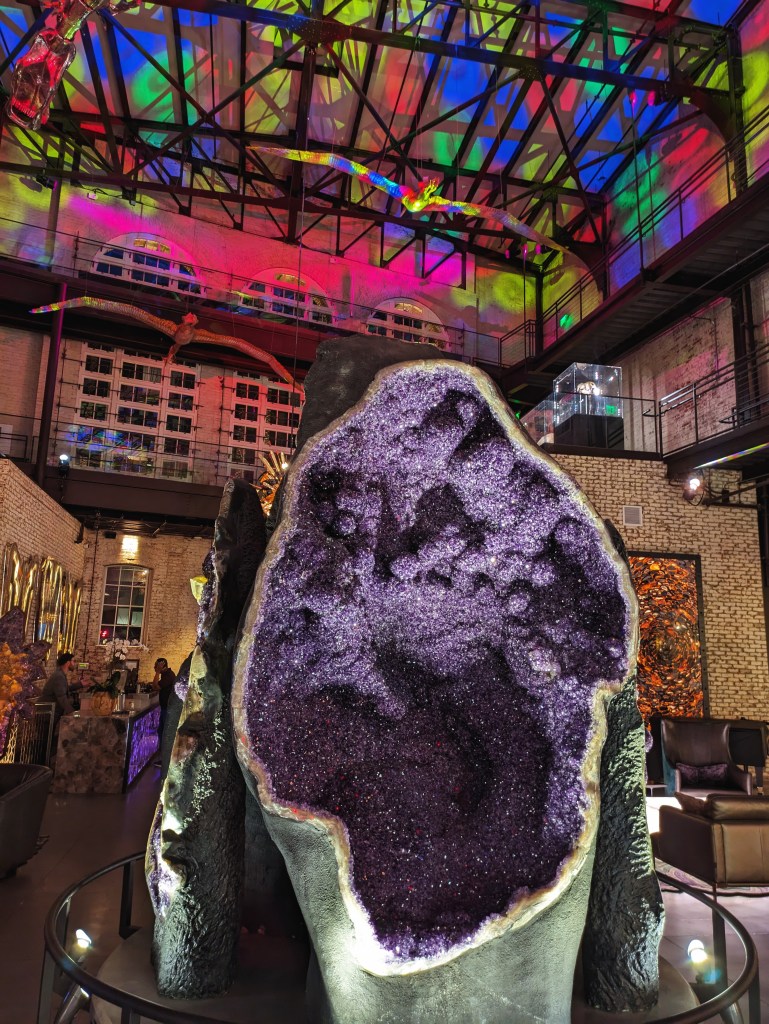
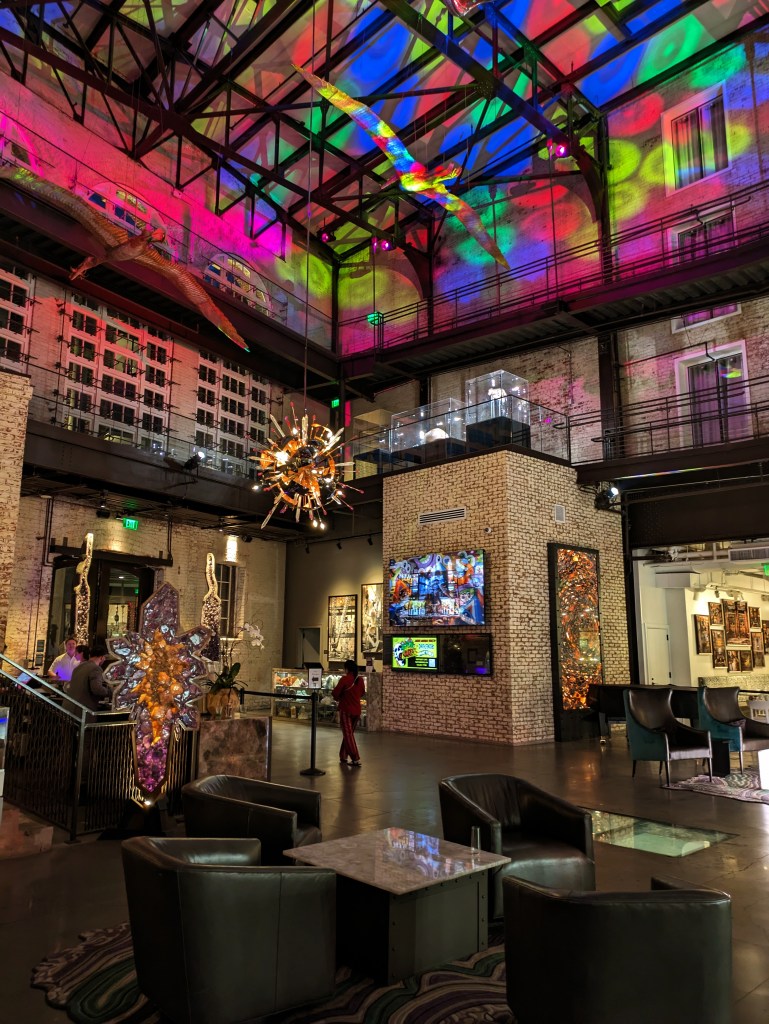
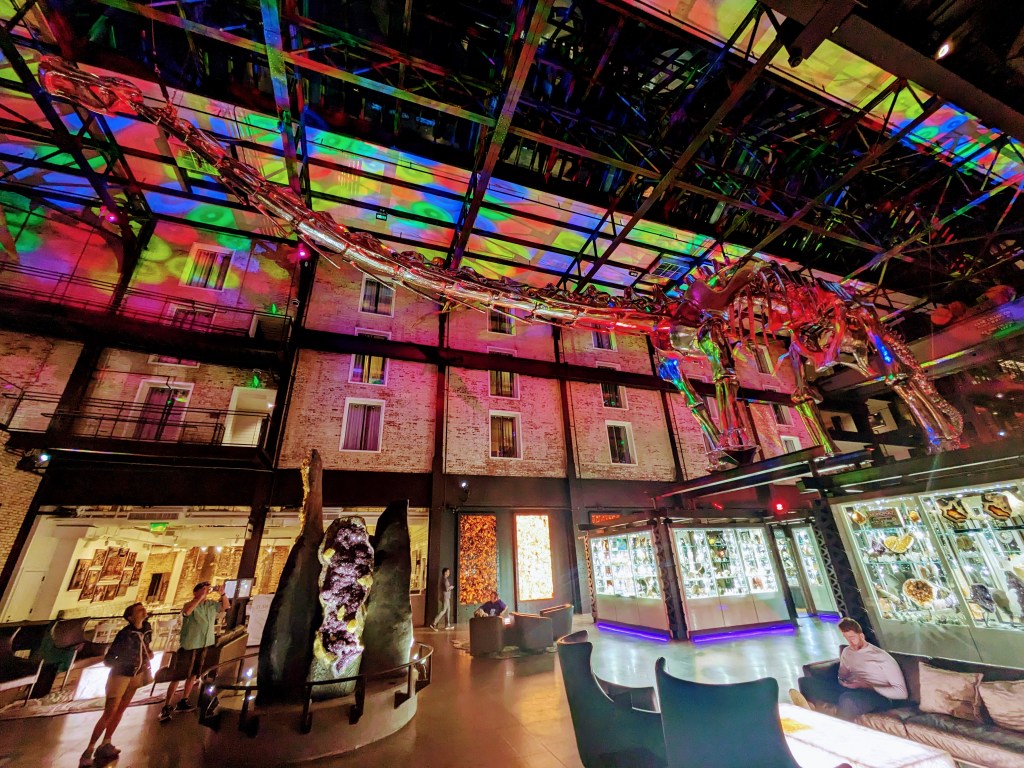
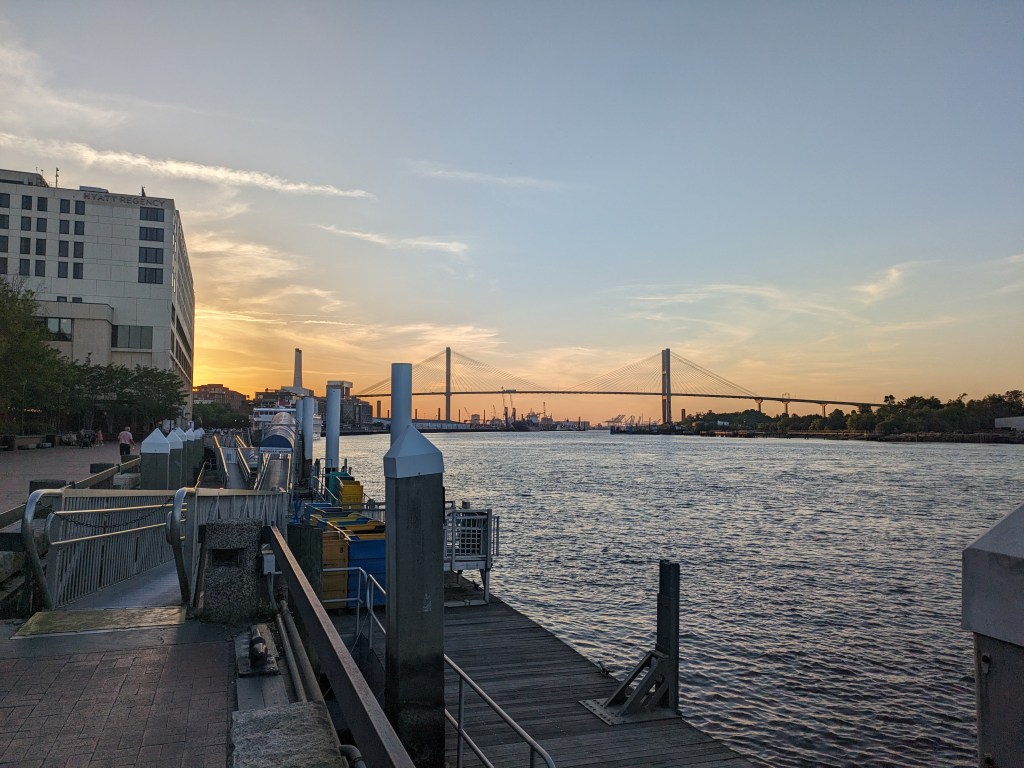
At this point in the night, I was on my quest to check out rooftop bars, so I made my way to Electric Moon and the Moon Deck. While there is a staircase that joins the two spaces, sliding down the short slide was a much more fun way to travel. It was also a nod to the adult playground vibe of the Moon Deck. Each rooftop bar I checked out had a distinct vibe, from trendy to timeless, sophisticated to casual. Most importantly, the riverfront rooftop bars were great places to enjoy the sunset, massive container ships traveling by, views of the bridge, and the night lights of the city.

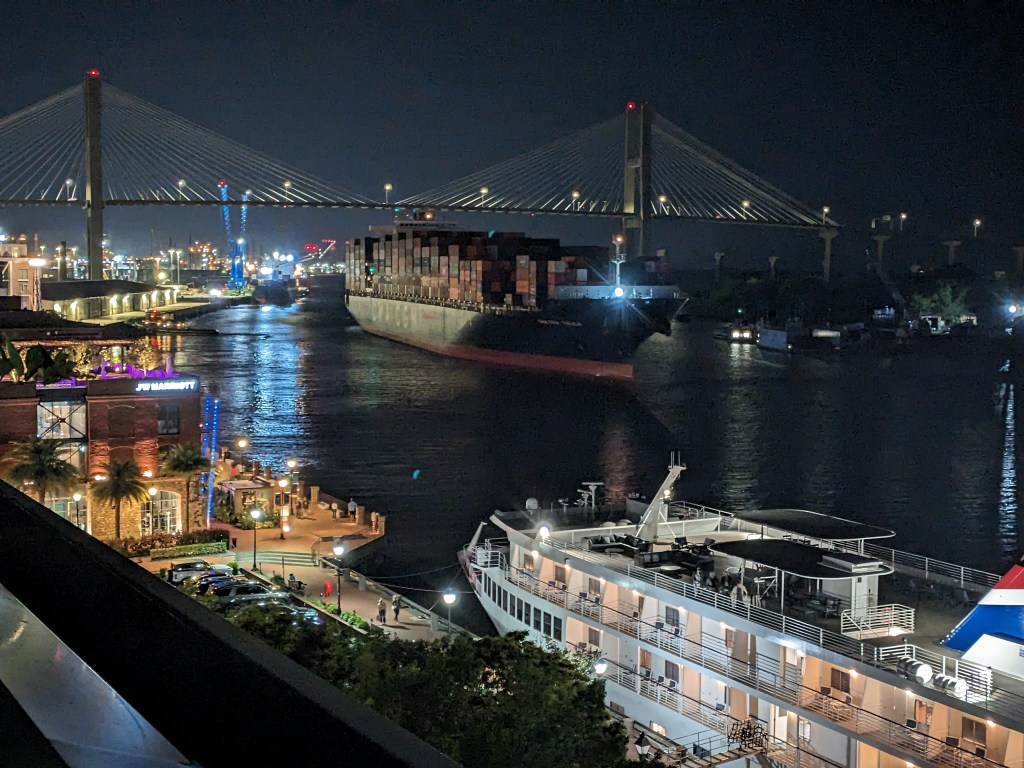

The Plant District’s renovation aligns with Savannah’s connection to modern art. Home of SCAD (Savannah College of Art and Design), the city vibrates with art. The SCAD art museum was a nice way to immerse myself in this part of the city’s culture. While the museum is small, it is immersive and ever changing. Every few months, the whole museum undergoes a complete reimagining as not only the exhibits change but the layout of the museum changes with it. And the exhibits are not just paintings hung on white walls – walls are painted, architectural elements are added, floors are treated – to represent the vision of the artist.

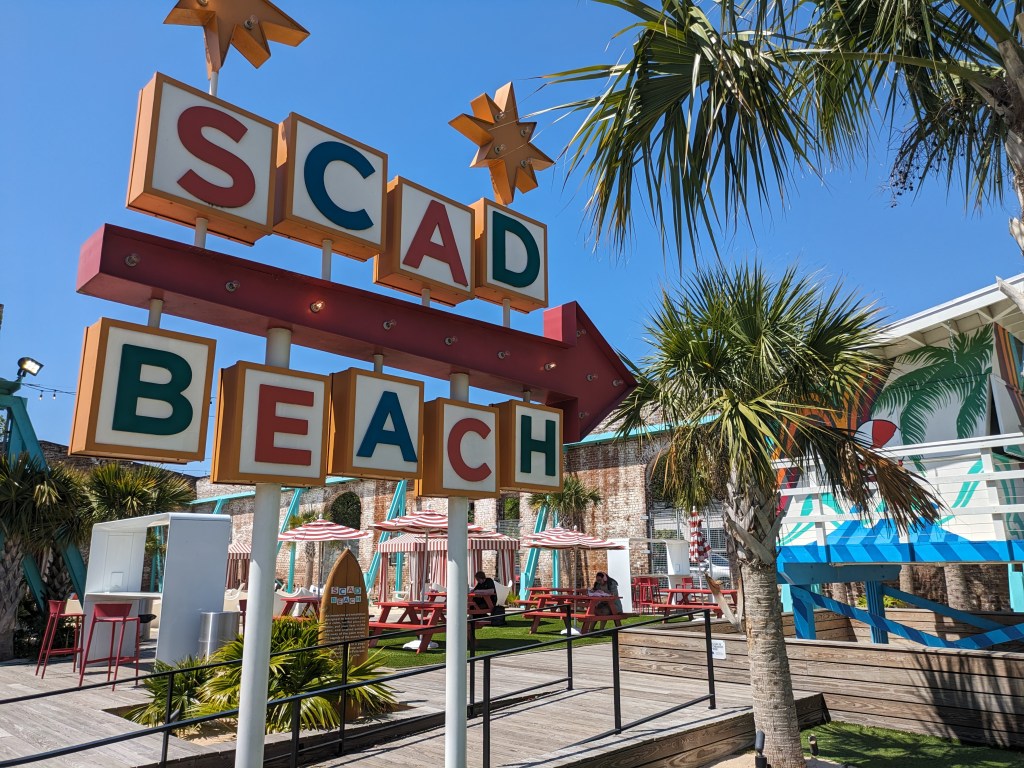
Outside the museum is SCAD Beach. While I thought this was just another exhibit connected to the museum, it is actually a more permanent student space for the college. Very much in line with the Barbie movie, SCAD beach creates a beach aesthetic in the middle of the city. With sand, cabanas, lounging swings, and a full size lifeguard stand, it was easy to get swept up in the mirage. If I went to school here, I can imagine spending whole afternoons just chilling at the beach.

From the historic architecture and nature to the modern art and design. I feel like I was awed by the variety of beauty in Savannah.

 Mac On the Map
Leave a comment