
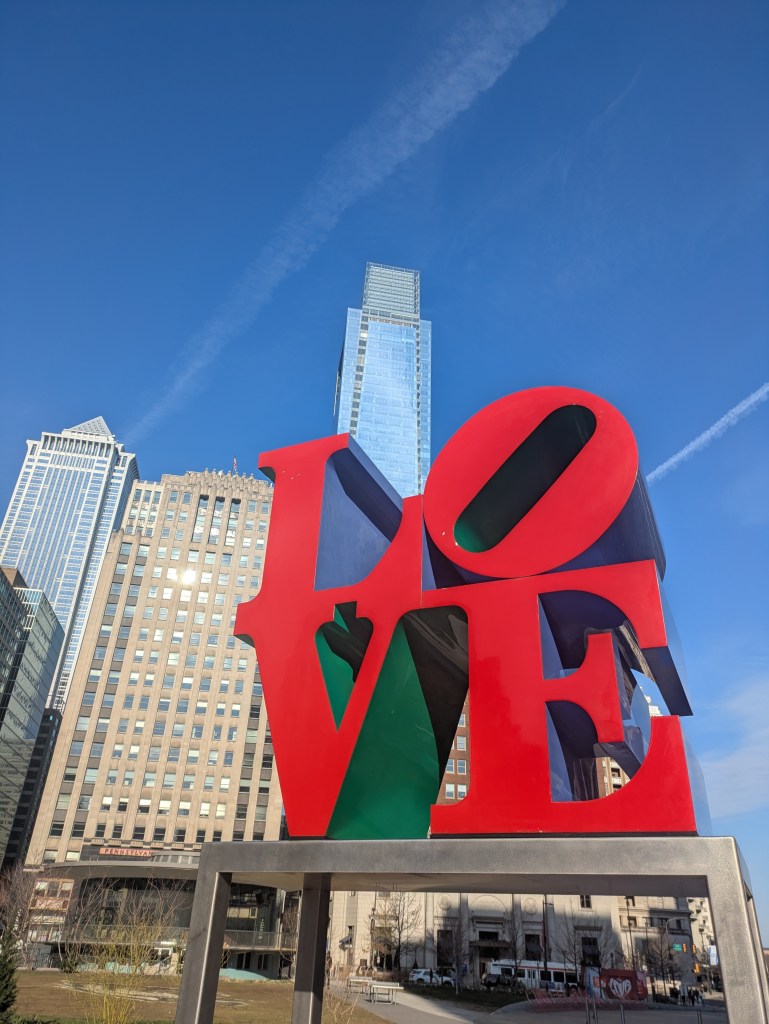
Philadelphia is named Love City – and the iconic LOVE sculpture by artist Robert Indiana can be found at JFK park. Fun fact: this park and several others in the city can be credited to Kevin Bacon’s father, Edmund N. Bacon. This is where I started my day of exploring the center of Philadelphia. Besides the LOVE sculpture, the park tends to be used as a social space with bistro tables set up around the square.
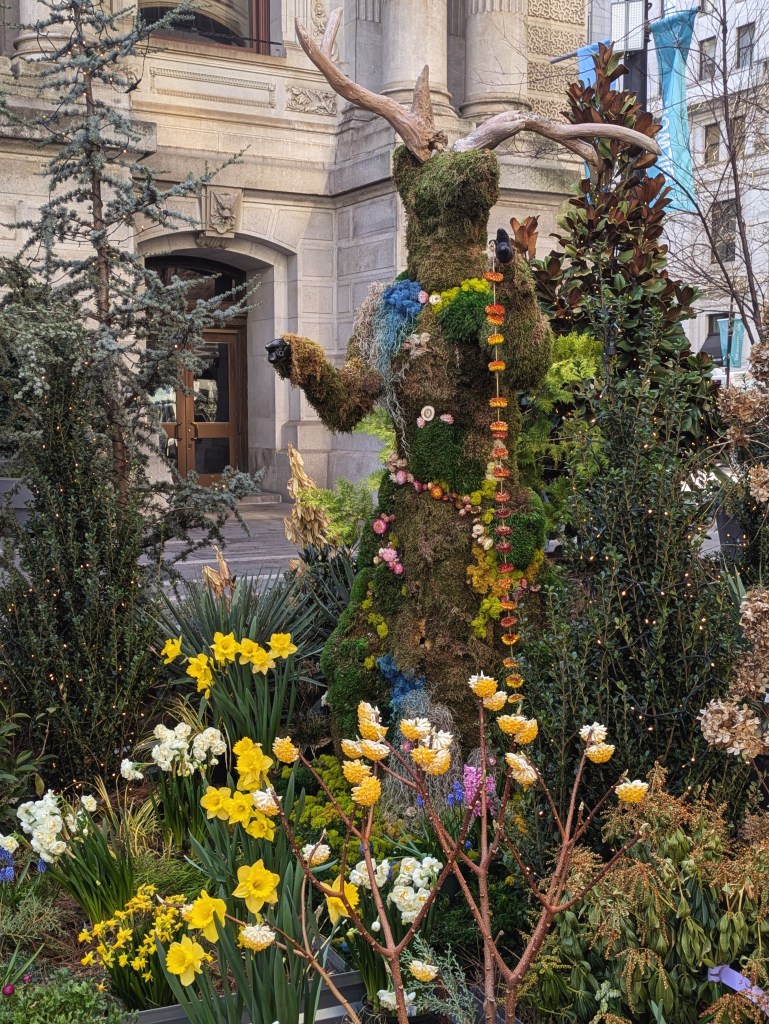
Just a block away from JFK plaza is the City Hall and Dilworth Park. I fell in love with this space right away. The fountain display brings the eye up to take in the ornate details of the impressive building. On the other side of the arch, a garden of natural animal sculptures, twinkle lights, tree stump stools and flowers create a magical reprieve from the hard lines of modern buildings.

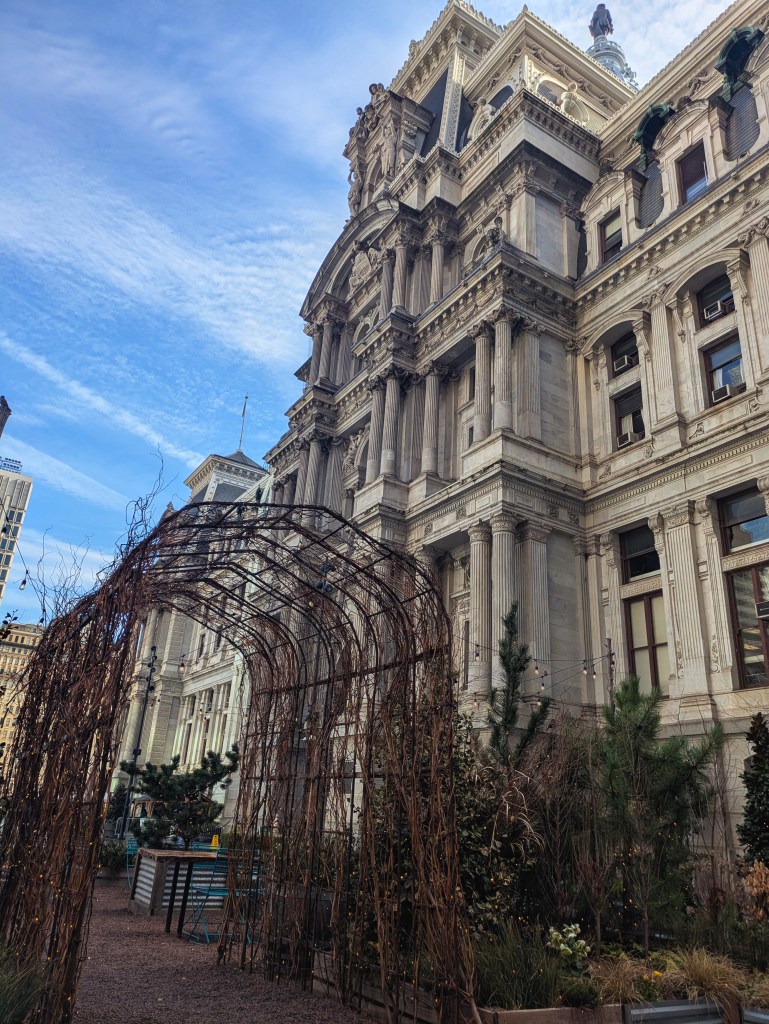
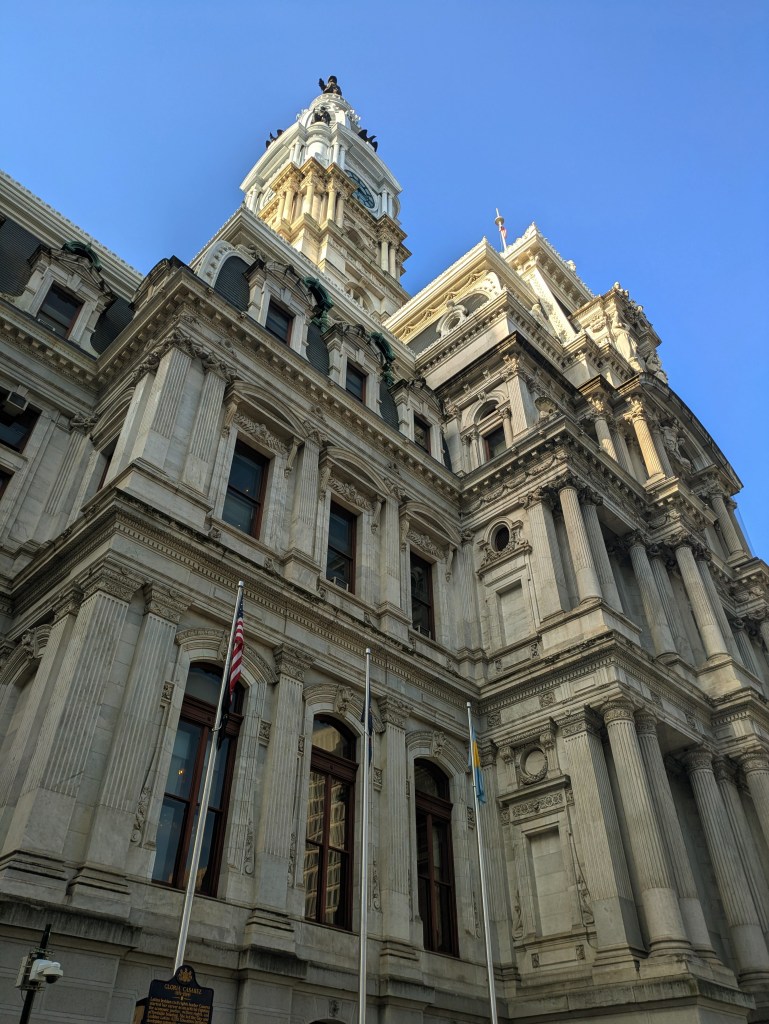
Philadelphia’s City Hall is the largest city hall in the country. The central tower with the statue of William Penn at the top rises 548 feet tall. The Second French-Empire mode of French Renaissance Revival building, designed by William McArthur Jr and completed in 1901, is the tallest masonry-bearing building in the world. Tours are available for the interior spaces and the observation room in the tower for a fee, but there are several interesting spaces to explore just by walking around the building. The building offers over 250 sculptures between the interior and exterior spaces. Each area of the building has a different theme – some representing the parts of the world, moral values, and elements of government.


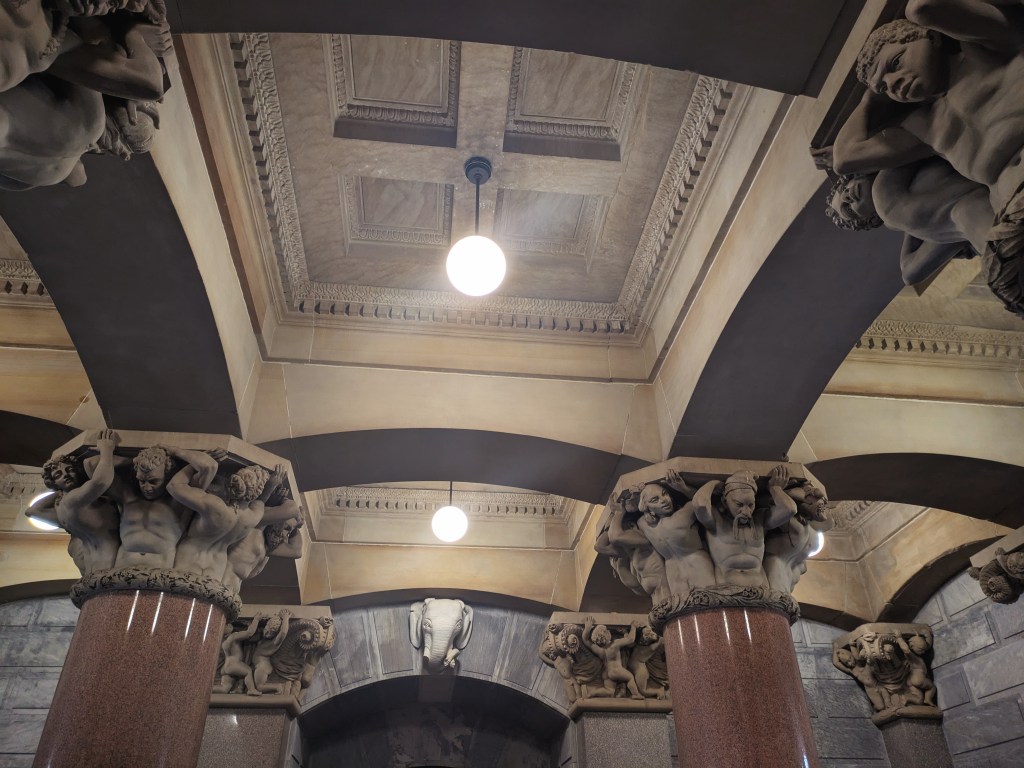
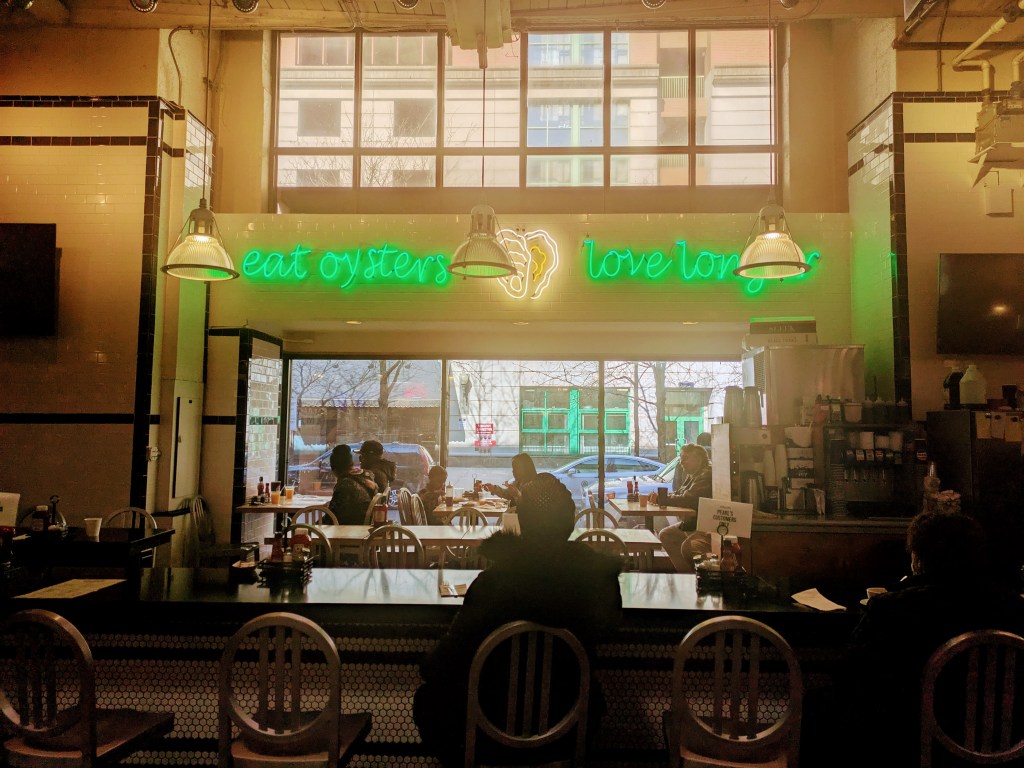
A few blocks away is the massive Reading Terminal Market. Opened in 1893, the market served as a place to buy produce, meats, and other groceries; while those stalls are still here, there are now a large collection of prepared food stalls, and a small collection of artisan and home goods stalls. The more than 80 Stalls offer all different cuisines and meals. From Asian to Amish, cheese steaks to oysters, there is food for any palate and any time of day.

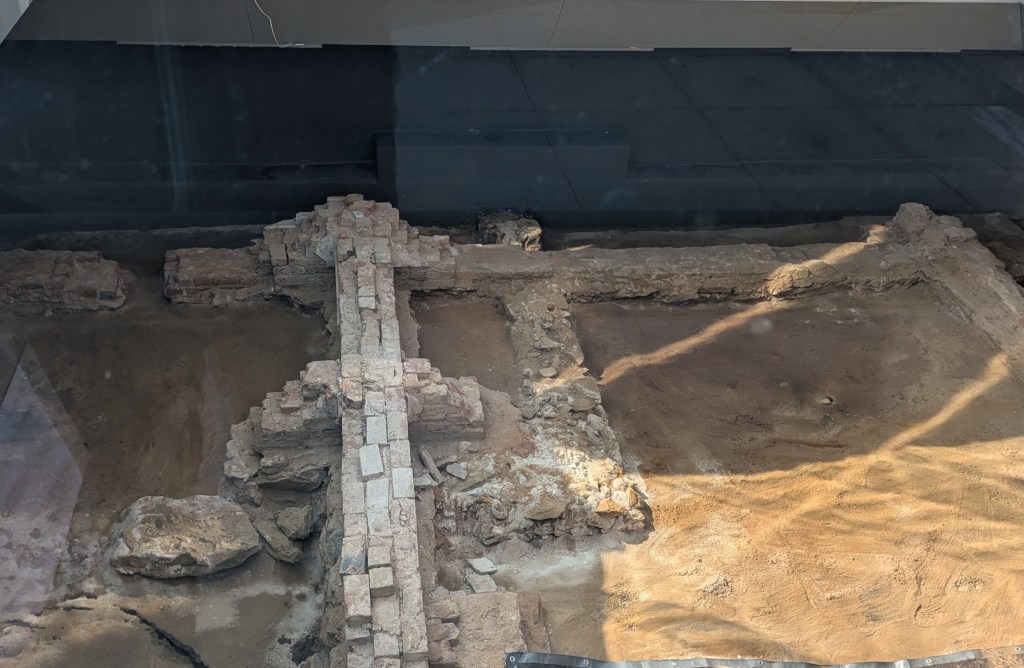
Philadelphia is a city with a lot of history behind it. Set as the first capital of the United States, the foundations of the American government are honored in the buildings and archives on display at Independence Hall. Run by the National Park Service, Independence Hall, the Liberty Bell, and several other historic buildings are all free to the public. I’ve heard it said that the Liberty Bell is the most disappointing tourist destination, and I can imagine that if you have to wait in a long line to see it, it would be pretty disappointing. Coming from a state that has the disappointing Plymouth Rock, my expectations are set pretty low for historic artifacts, and I think that the Liberty Bell is worth a visit. Before entering the building, I checked out the foundational remains of the presidential house where George Washington and John Adams resided during their terms in office.
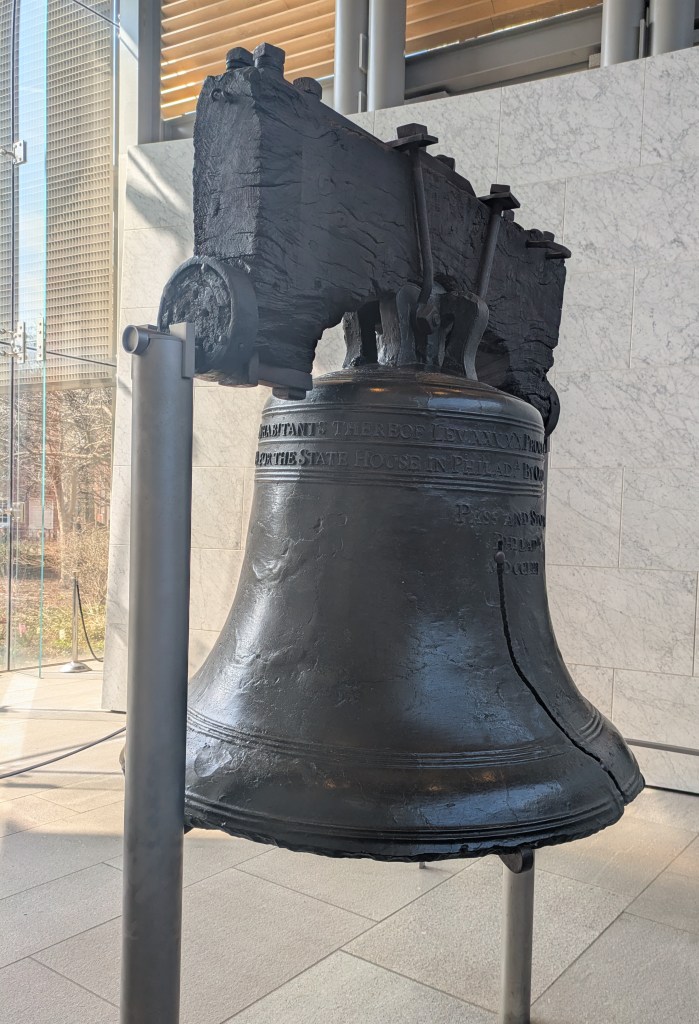
Inside the Liberty Bell Center, a series of informational plaques leading to the bell tell the story of the original crack, the attempted repairs, and the final decision to keep it as a symbol of freedom – despite its flaws. The morning light made it hard to capture a picture of the iconic crack in the bell – maybe another factor that adds to people’s disappointing experience here.
Across the street, the red brick buildings and white cupolas stand vibrant among the towering skyscrapers of the city. Made up of three buildings – Independence Hall, Congress Hall, and the Essentials exhibit in the West Wing – Independence Mall is where America was founded. While an advance timed ticket is needed for Independence Hall, the Essentials exhibit, where you can see the original documents like the Articles of Confederation with handwritten notes under very dim light, and the Congress Hall, which gives 15 min talks, can be accessed without planning. The park ranger who led the Congress Hall talk was knowledgeable and able to thoroughly answer questions from the visitors. While the furniture and decor inside is not original to the building, it has been designed to replicate the shape, material, and feel of the original space.

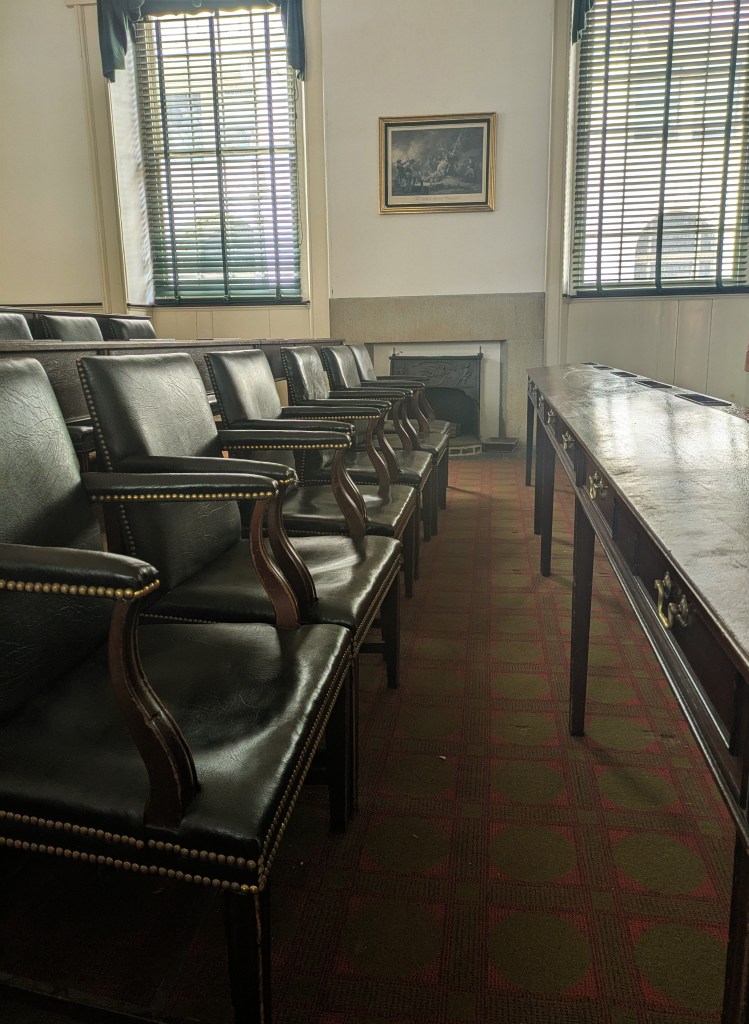
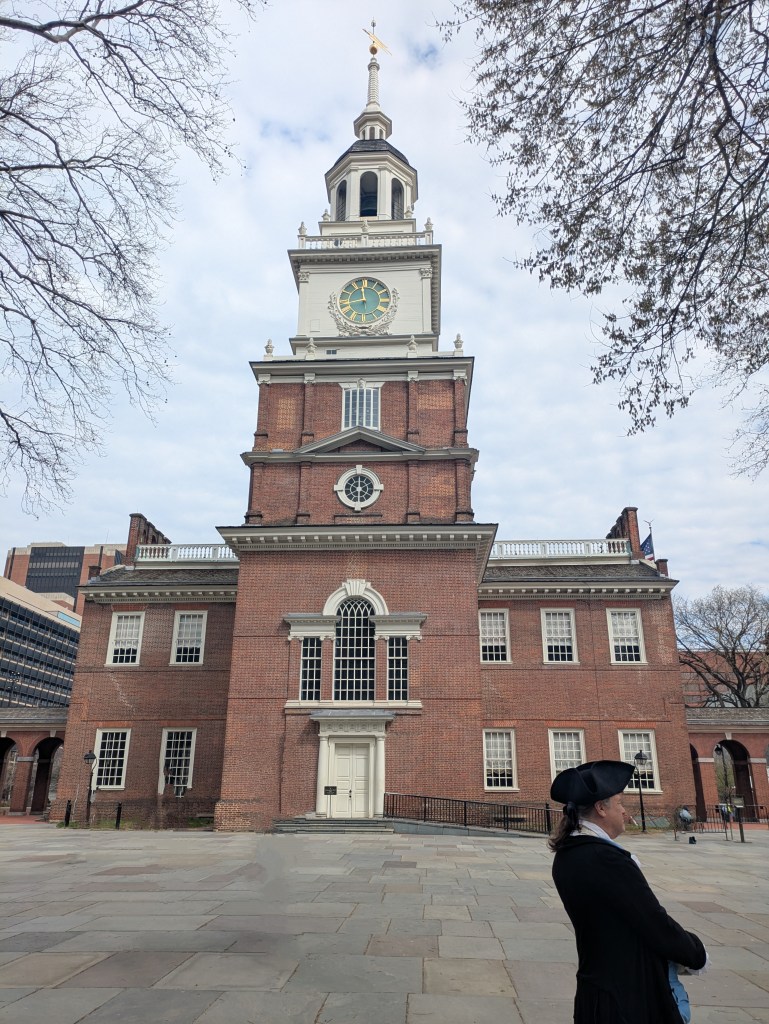
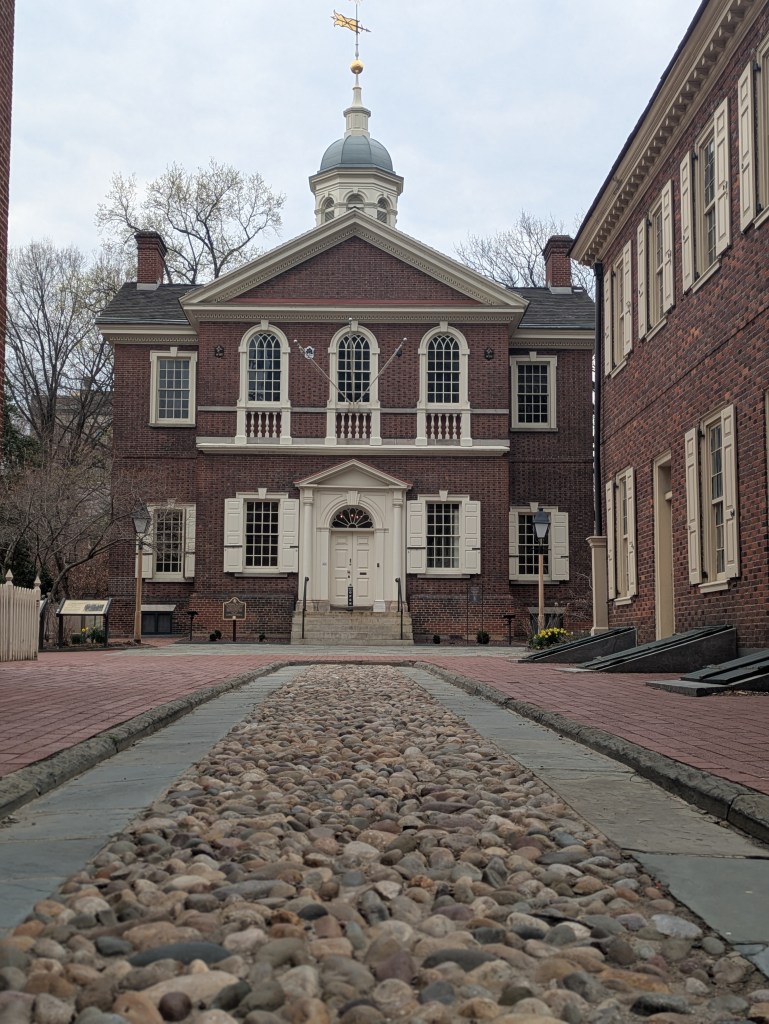
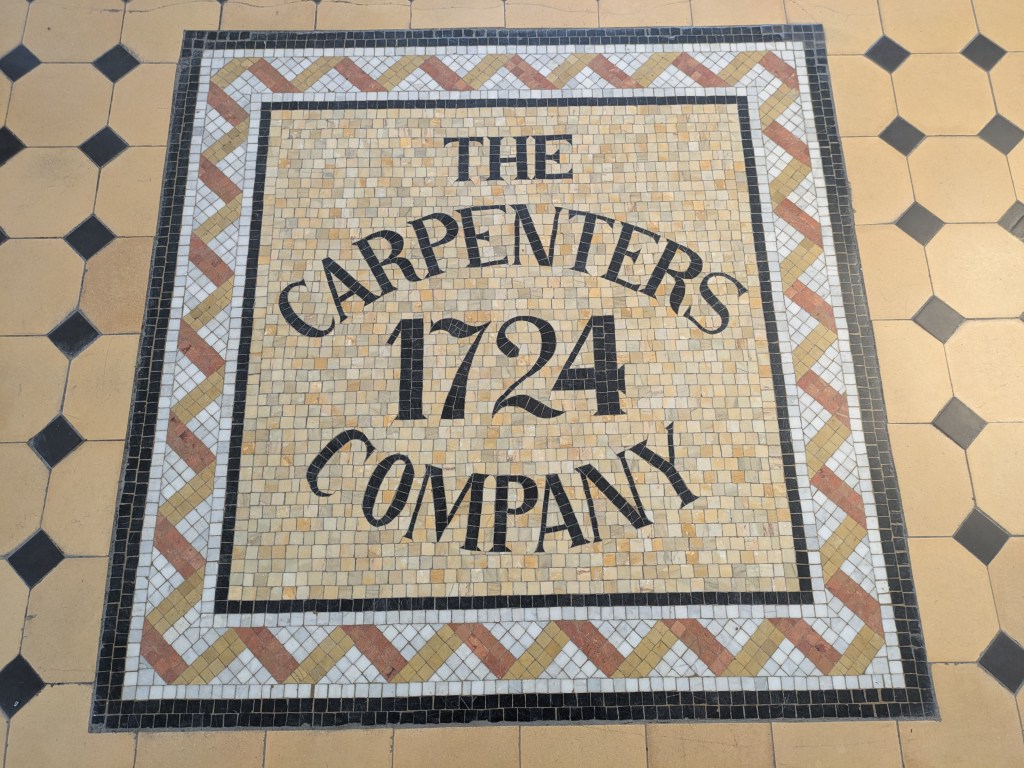
The green space, cobblestone carriage paths, and historic architecture of Independence Hall created interesting tableaus for photographs, as did the details in the floor and mantle of the Carpenter’s House and the impressive exterior of the Second Bank. Because of funding, many of the buildings in this historic district are not open to the public, and after reading up on the budgetary issues, it seems that it’s not just a lack of staffing, but significant repairs that would have to be made to make them safe and visitable.

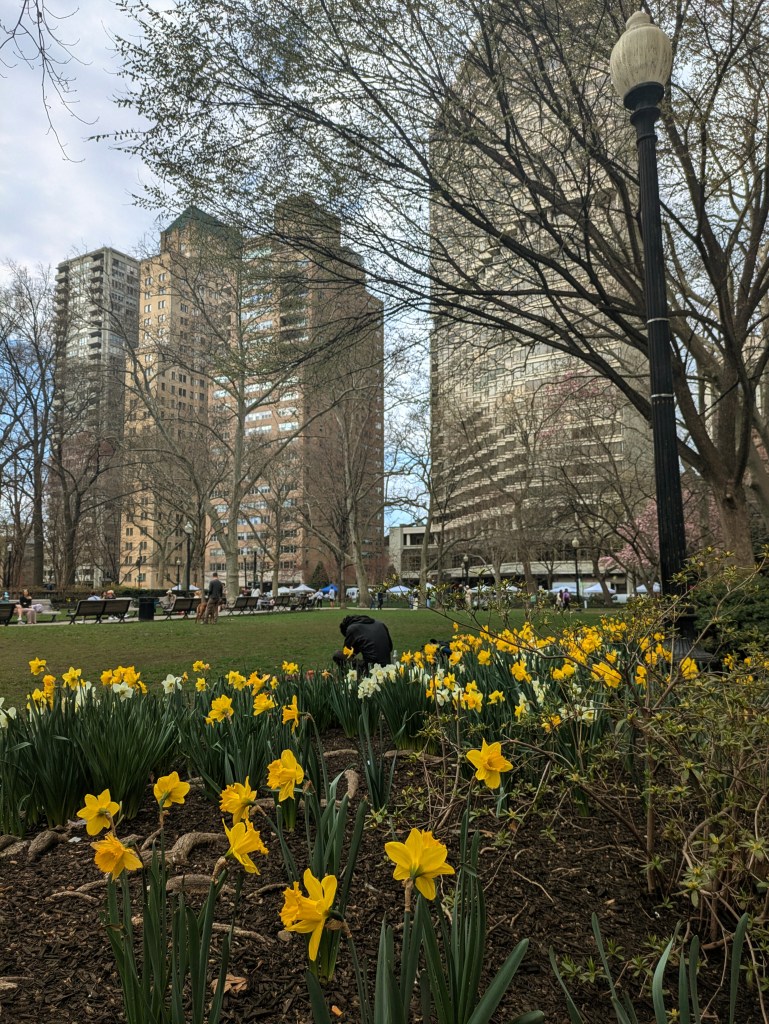
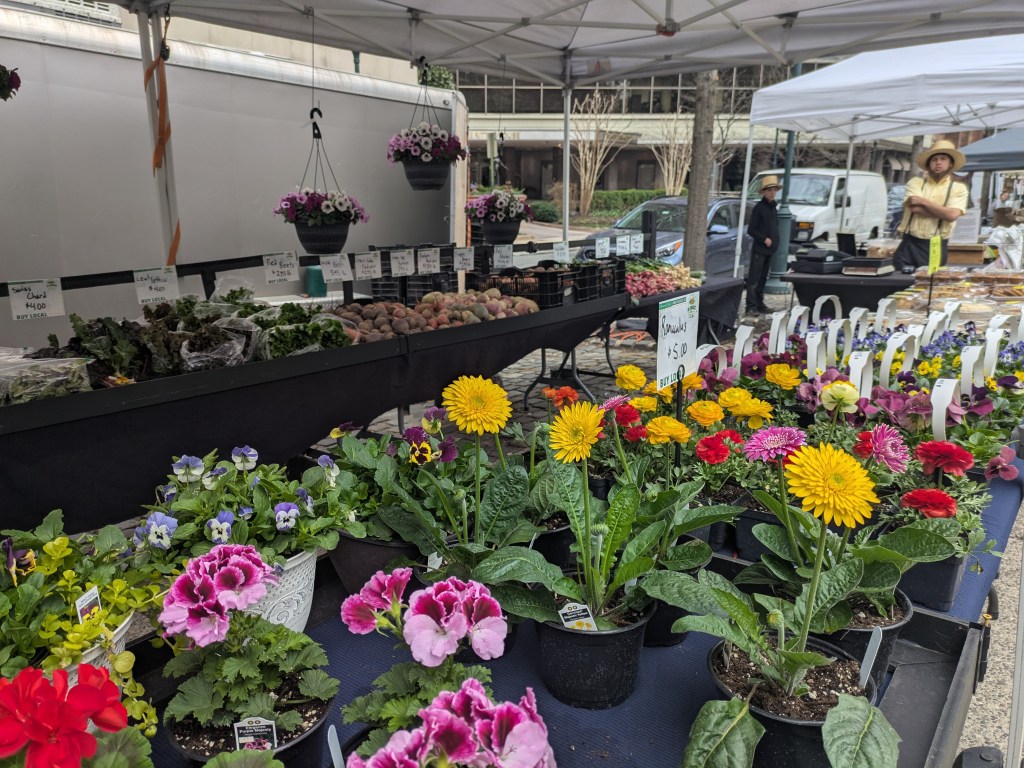
Another iconic green space is Rittenhouse Square. As one of the five squares planned by William Penn, Rittenhouse Square has all the history and peacefulness that makes city parks so appealing. Visiting on a Saturday, I was able to enjoy their weekly farmers market that featured flowers, local produce, handmade pasta, crafts, and pastries. It was nice to pick up a snack and enjoy some time on a park bench taking in the spring colors with some live music as a backdrop.

 Mac On the Map
Leave a comment