
The Great Smoky Mountains National Park is a lot larger than I expected it to be, so while I gave myself two full days to explore the park, it offers much more than I was able to see in that time.
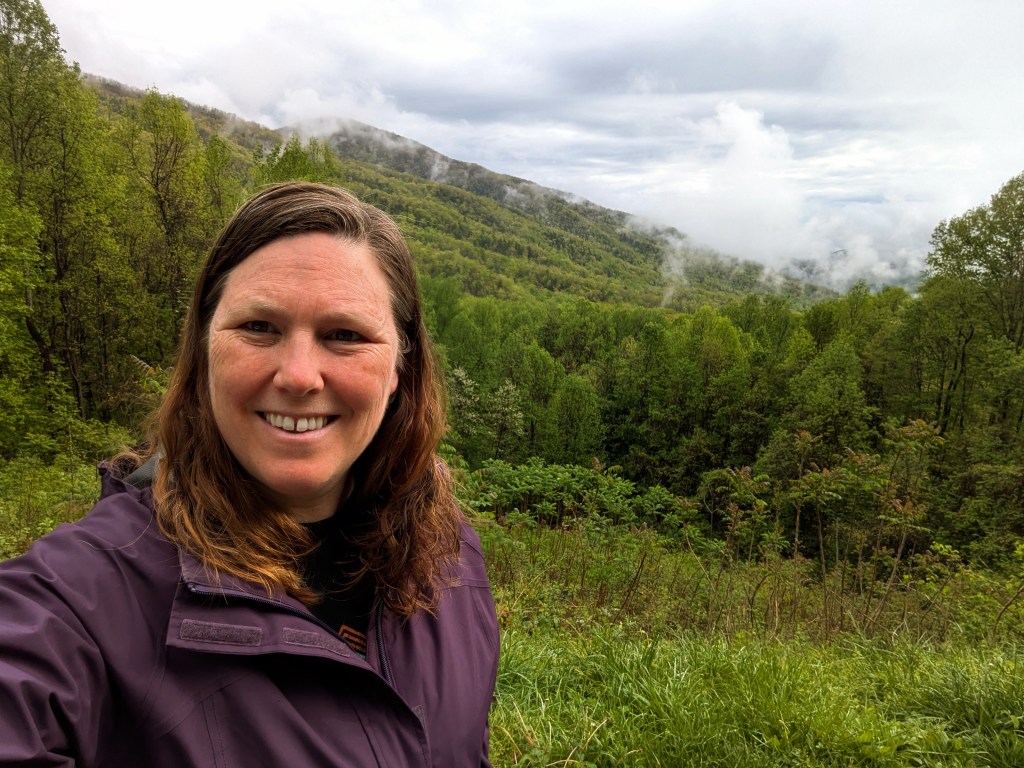
I’m an early riser – by tourist standards – so I’m ready to get started on my days by 8am. This meant that I arrived at the Sugarlands Visitor Center before it opened for the day (daily hours are 9am – 5pm). In the long run, I’m happy that I got there early because on the second day, I tried to stop in later in the day, and I couldn’t find a parking spot.
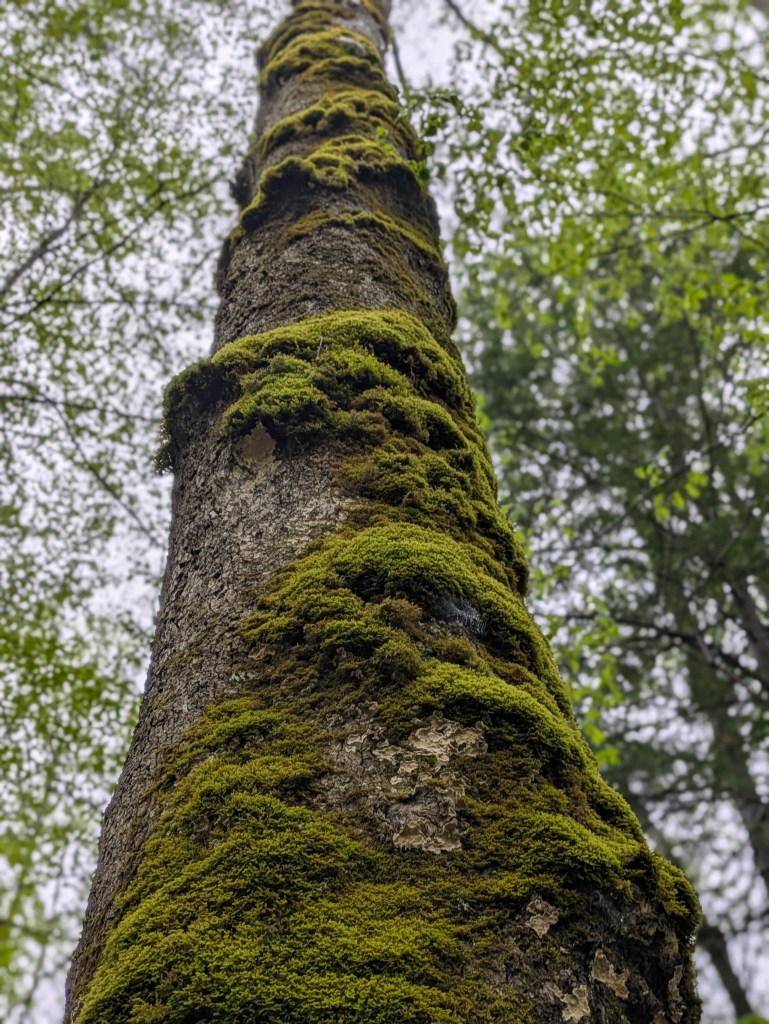
The first task was to buy a parking pass. Unlike other National Parks, the Smoky Mountains don’t charge an entry fee, but they do charge a parking fee ($5 per day in 2025). If you’re planning on spending any time hiking within the park, you’ll want to purchase one; unfortunately, there are only a few places in the park that offer kiosks to do so. Because I knew that I would be in the park more than 1 day, I bought my parking passes for the whole visit. I would highly recommend doing this as the place I went to go hiking the next morning had no options to buy a pass, so I would’ve had to either skip a great hike or chance getting a ticket.
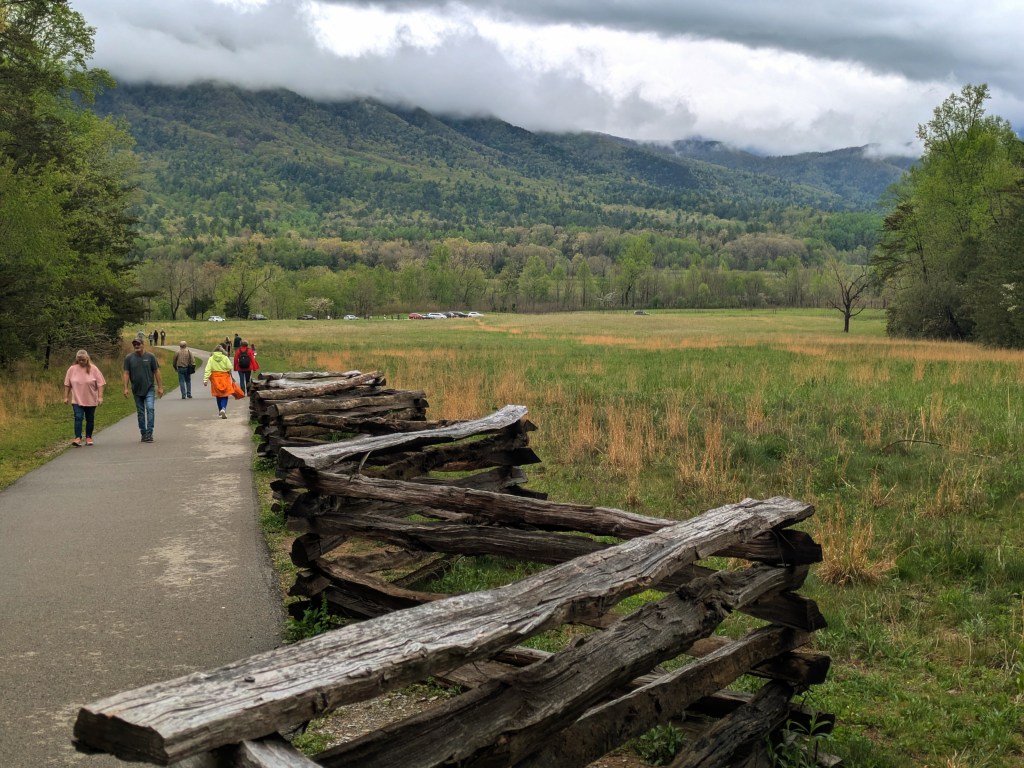
I did want to go inside the Visitor Center to talk to park rangers about possibilities for my visit, so to pass the time, I hiked the short trail (1.1 miles round trip) to Cataract Falls. The trail leaves from behind the restrooms called The Nature Trail, and there’s easy signage to direct you to the Cataract Falls. While the path is flat and wide, it does have tree trunks and some rocks, so it is important to watch your step. The trail parallels and crosses a small creek, so the calming sound of running water – coupled with last night’s rain falling from the trees – was perfect for a meditative morning walk.

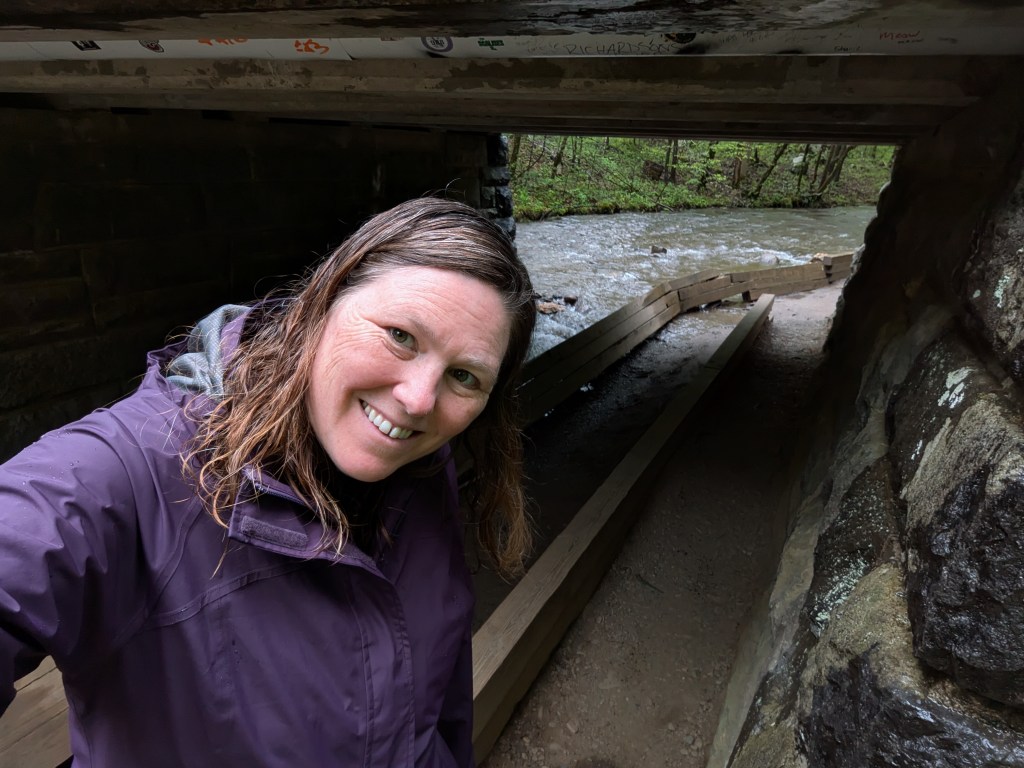
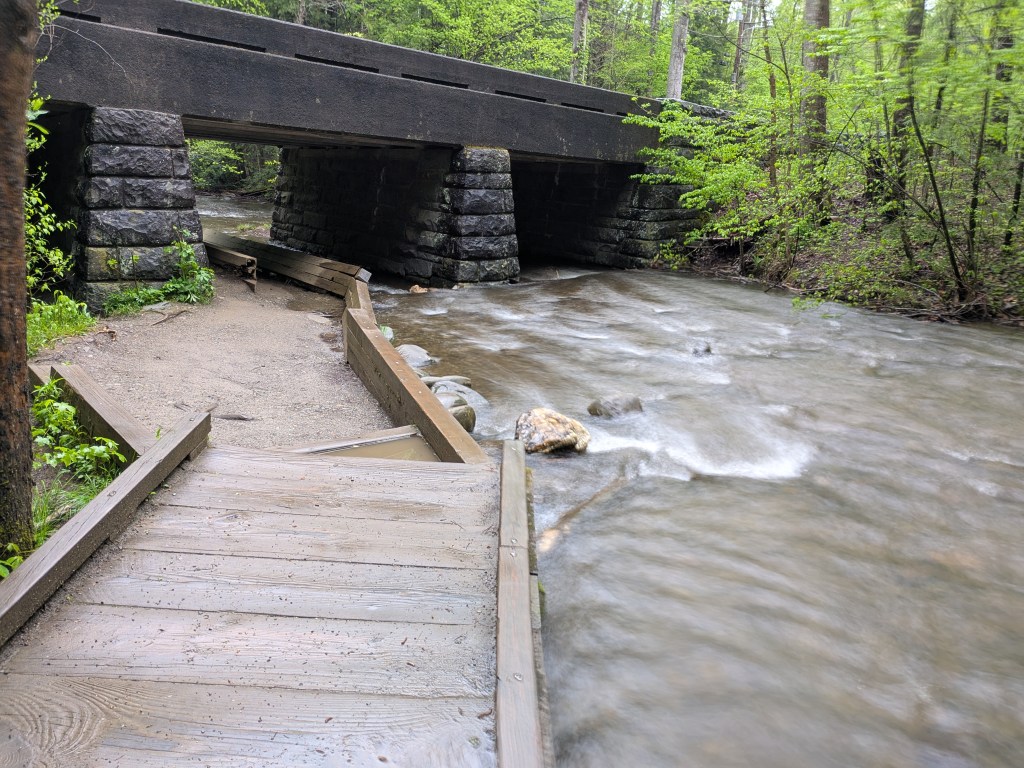
An unusual part of the walk was when the trail descended down to the riverbed and went under the road; this section felt a little like a troll bridge. The falls cascade down the rocks for 40 ft, and while they’re not as tall as nearby Laurel Falls, Laurel Falls were closed for the 2025 season.
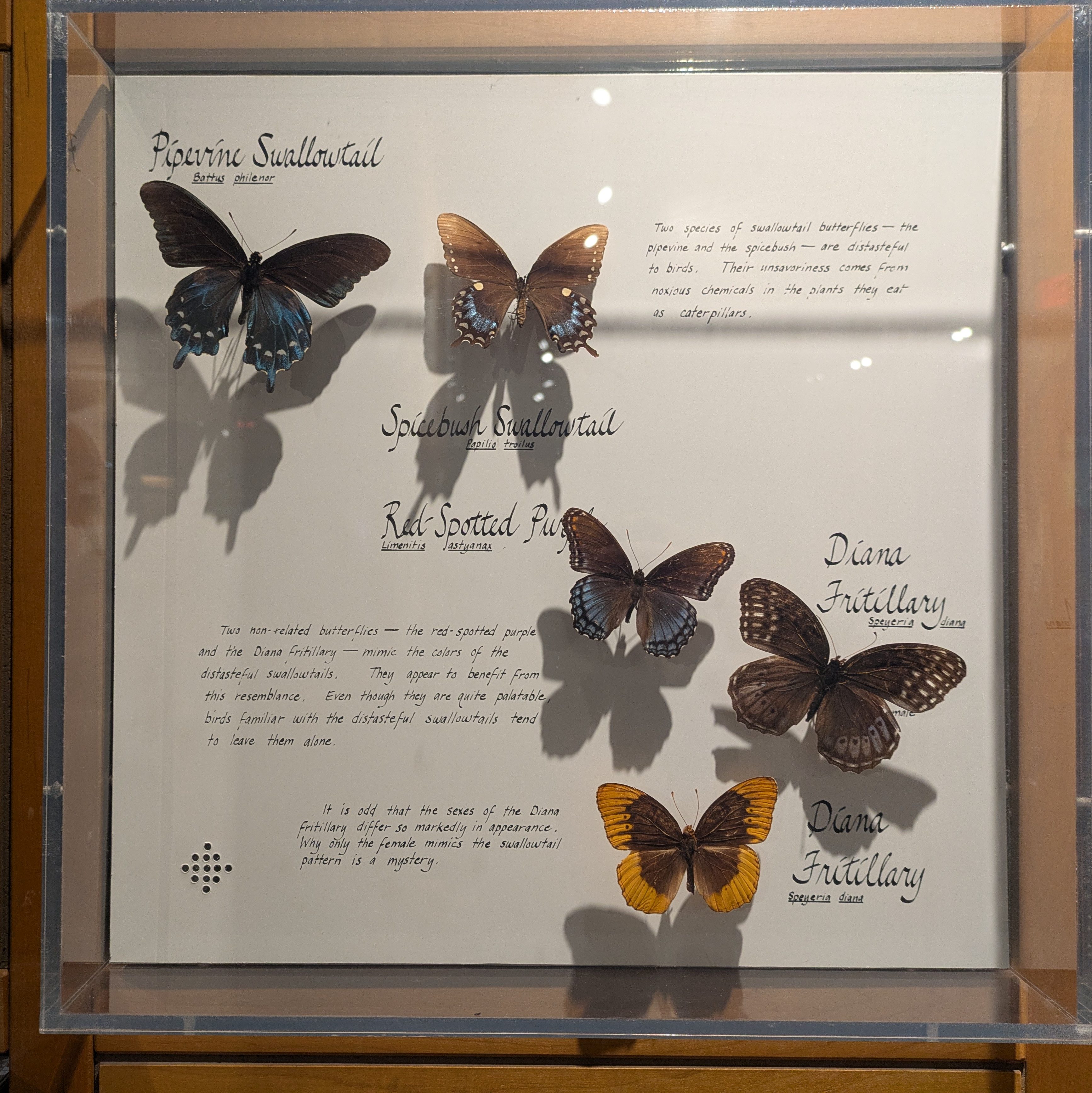
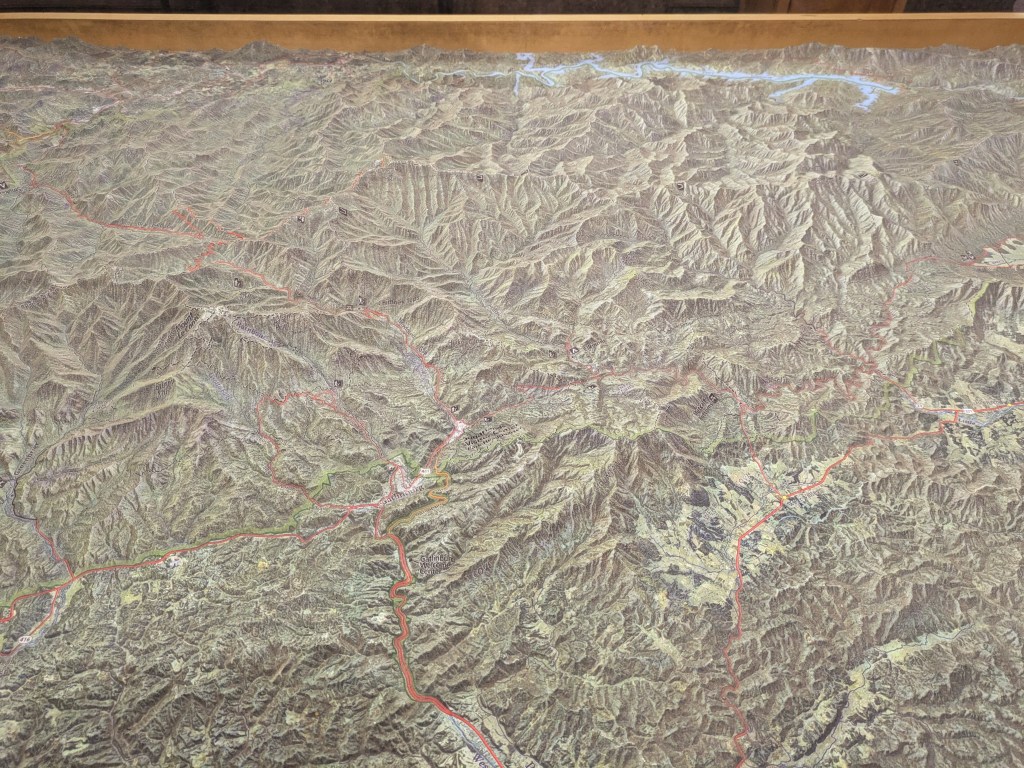
Back at the visitor center, I spent some time in their small natural history exhibit that showcases the flora and fauna of the area. Drawings and life size models of the animals and plants give a preview to what you might see in the park. There is also a small gift store and park rangers on hand to talk you through options for your visit. The park offers free newspaper style maps, but for just $1, I opted to buy a sturdier version.
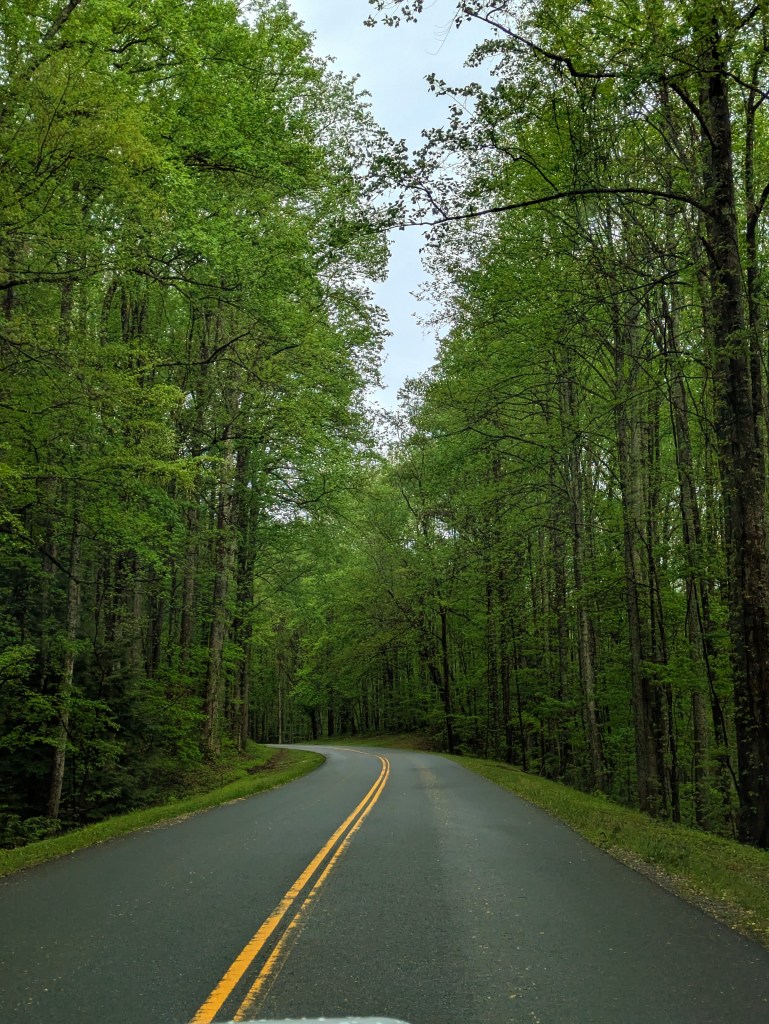
The plan for this day was to drive the long windy Little River Gorge Road to the Cades Cove loop. From the Visitor Center to Cades Cove campground is 25 miles, and the Cades Cove loop is 11 miles. While there are sections in the park where the speed limit reaches 45 mph, most are 35 mph and below; and if you’re anything like me, you’ll go even slower so as to not miss the beautiful sights and possible turn offs. This means that you want to plan more time than you think for this route. I thought I would be back in Gatlinburg for a late lunch, but I didn’t end up back there till mid afternoon. Luckily, I had some car snacks, and the Cades Cove Campground had some food options to tide me over.

As this was my first day – and first time – in the Great Smoky Mountains, I pulled over so many times within the first part of the drive. The road parallels the small Little River with several smaller waterfalls to admire. I stopped and walked down to the river to see the Mannis Branch Falls, but there are a lot of options.

One of the more substantial waterfalls on the drive is the manmade The Sinks. This waterfall and basin was created back when there was logging in the area.
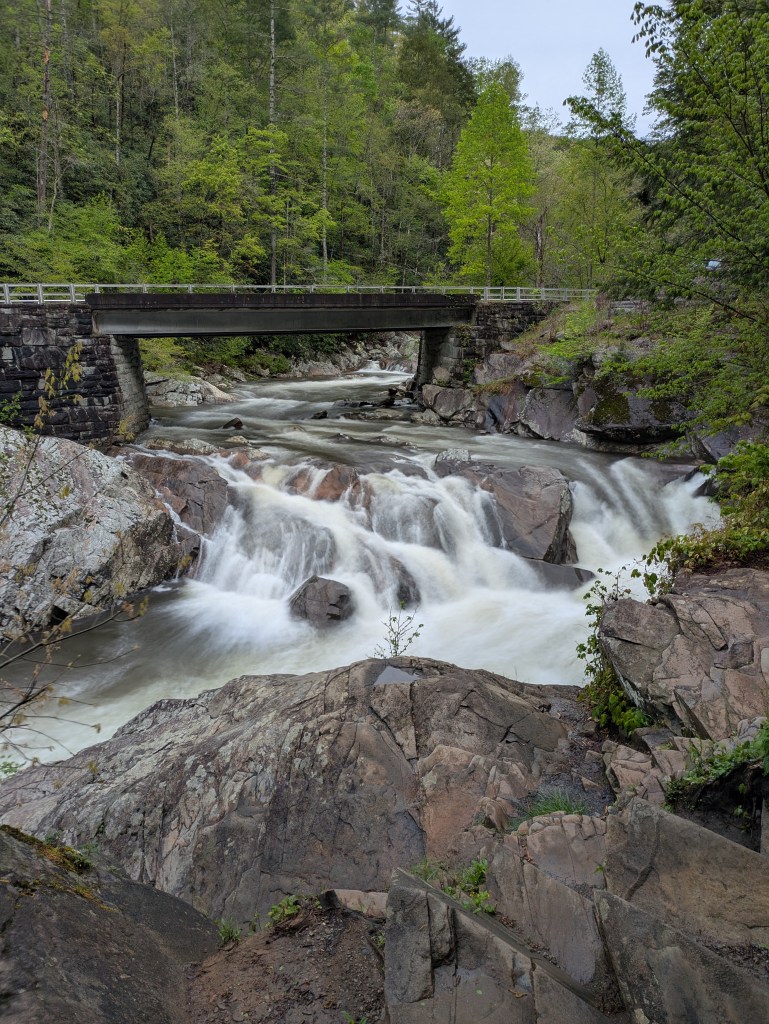
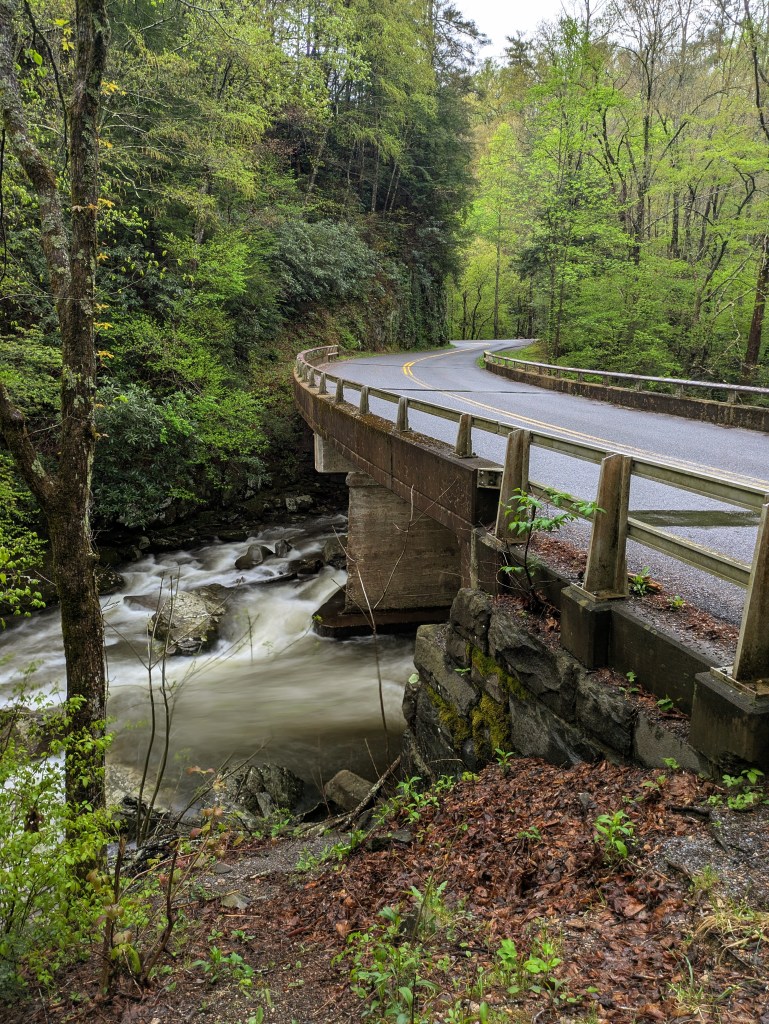
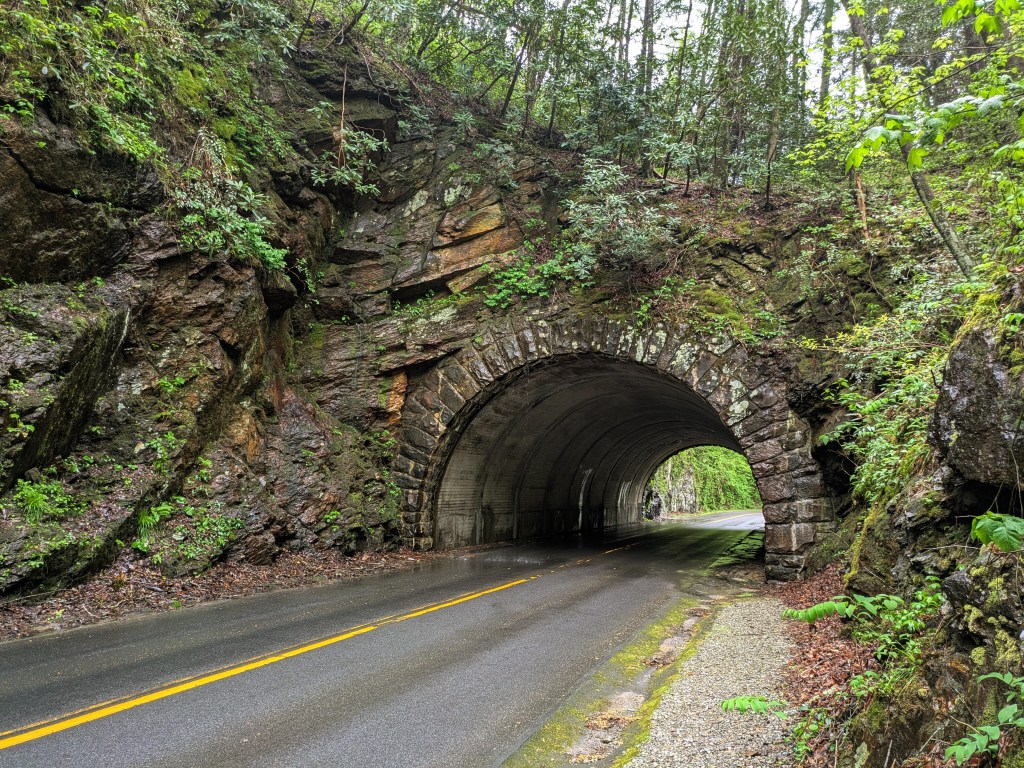
I also enjoyed stopping to take pictures of the bridges and tunnels along the way. It was the beginning of spring during my visit, so the new green shimmering on the trees contrasted nicely with the grey of the stonework and the blue of the river below.
Once I got to the Cades Cove Campground, I was happy to find bathroom and food options. While the store doesn’t offer much, they do offer a small selection of hot items and cold drinks. At this point, I knew that my timing was off, and I knew that this would be the only option for food during my day, so I stocked up before starting out on the 11 mile one way drive around the Cades Cove area. The loop ends here as well, so if you want to wait to get food till after driving the loop, that is a possibility as well.
FYI: Cades Cove loop is closed to automobiles on Wednesdays April-September. You can still walk the road, but if you’re looking to drive it, make sure to go on a different day.
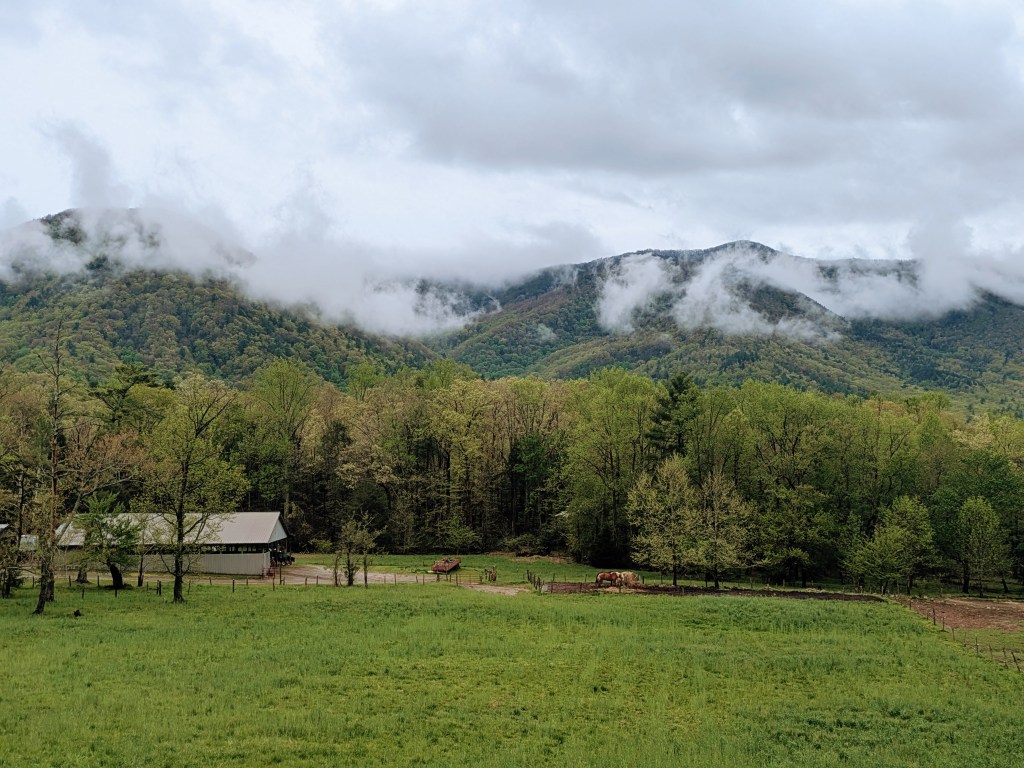
While all of the park is beautiful, Cades Cove combines natural beauty with history. Historic buildings from the eighteenth and nineteenth century are available to explore. While some require a short walk from the parking areas, others are along the roadside, so even if mobility is an issue, there are sights to see. The grassy meadows, like Gregory Bald, also allow for wildlife viewing and picturesque views of the mountains.
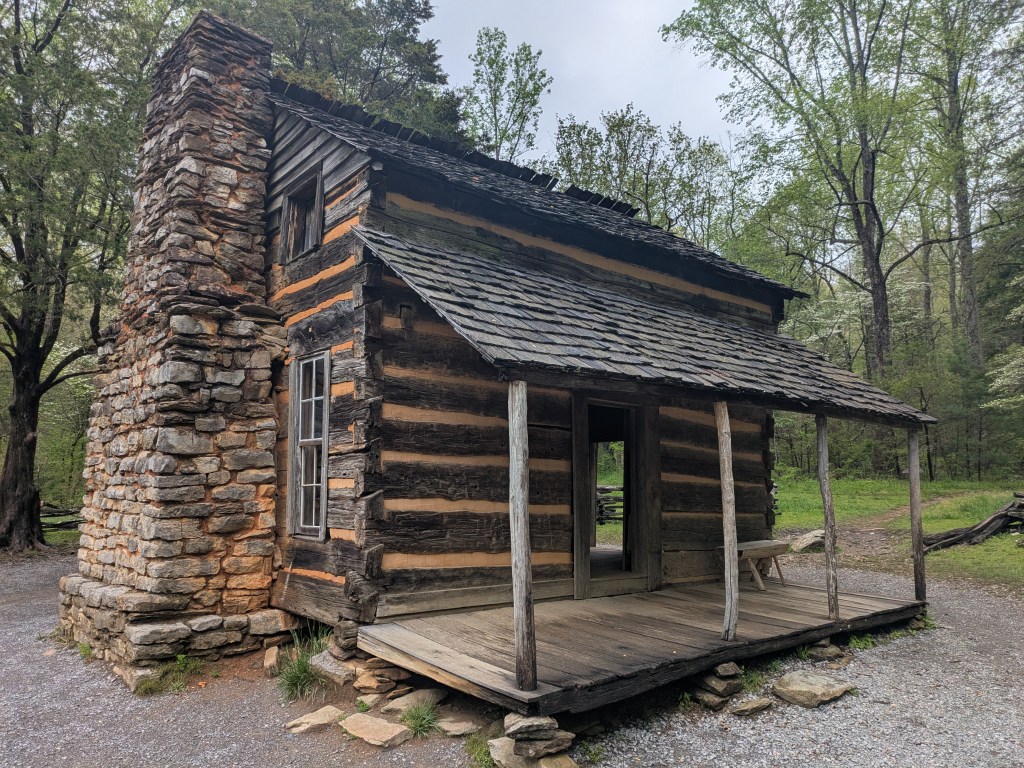
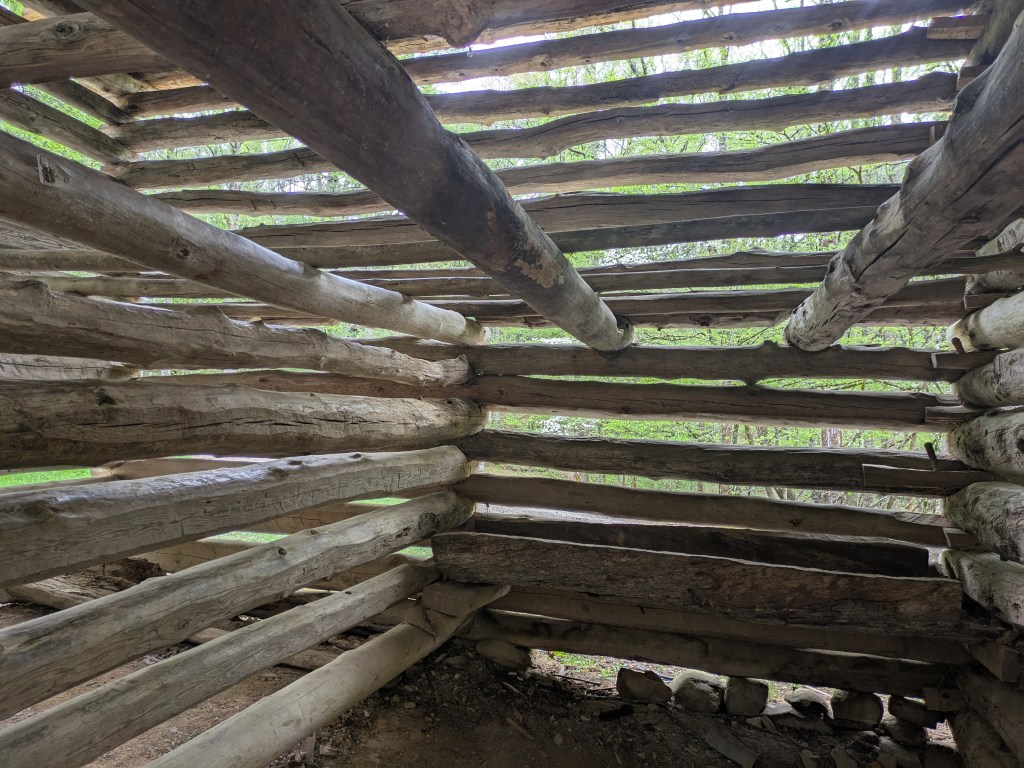
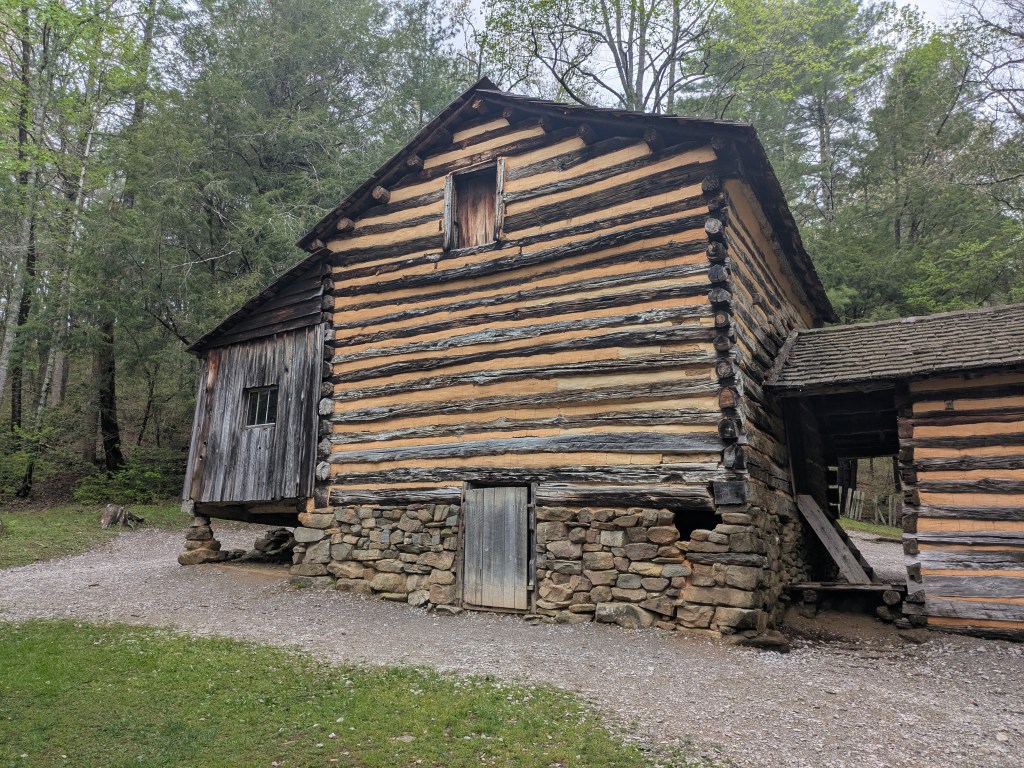
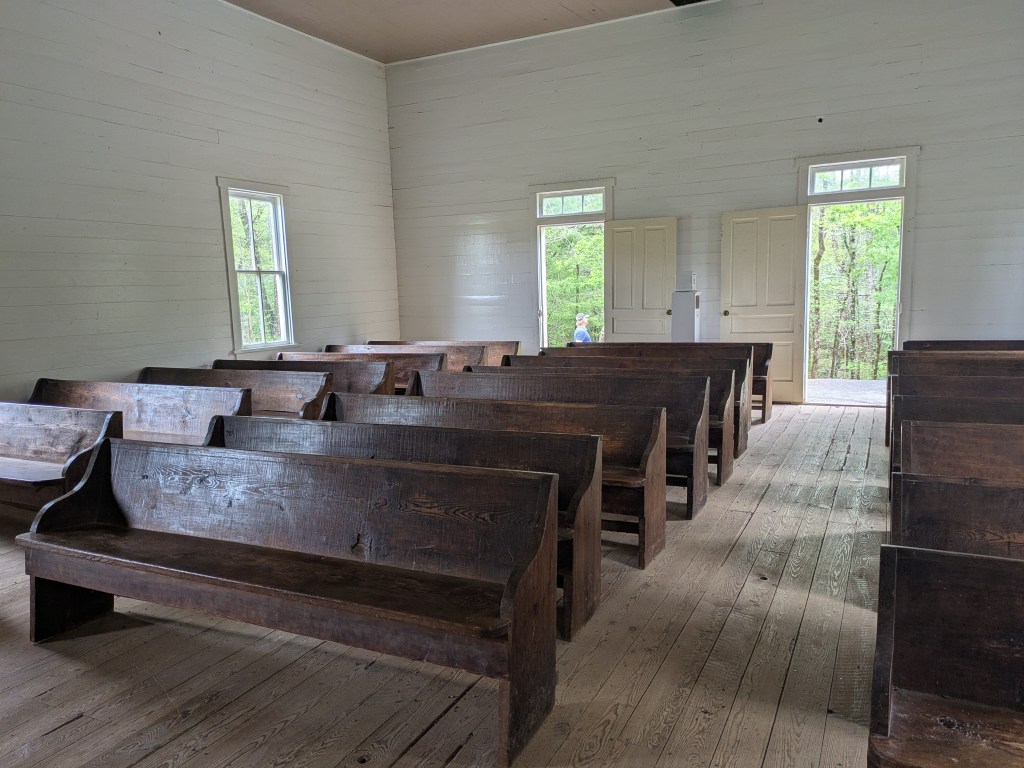
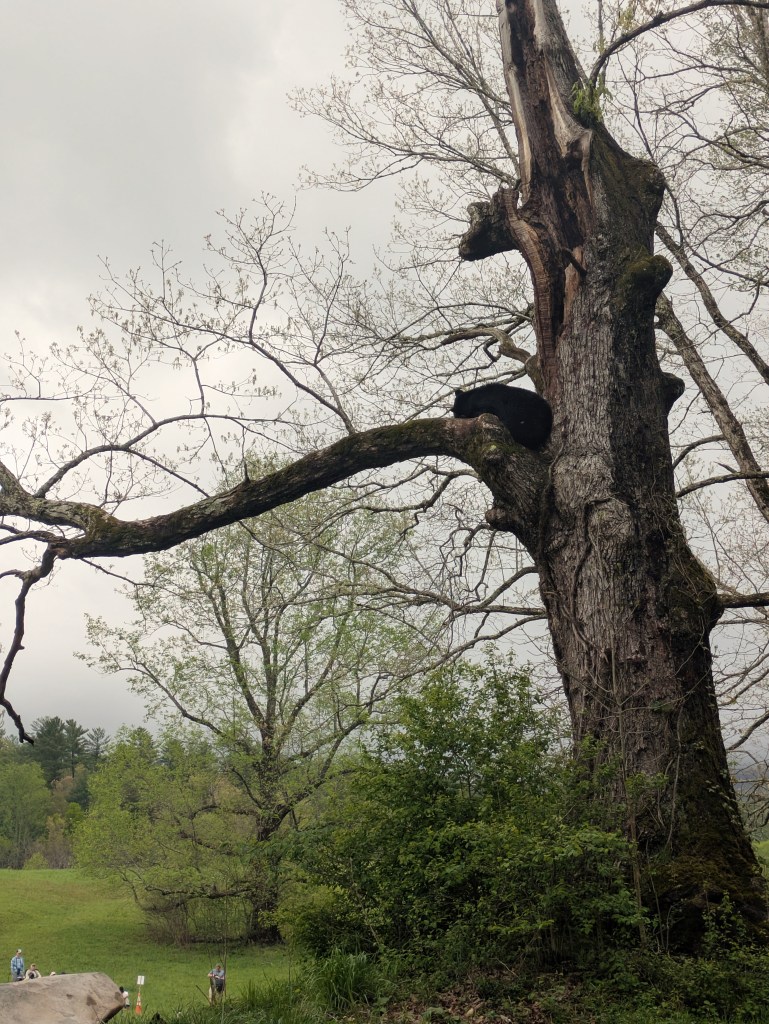
The Smoky Mountains is bear country, and everywhere I went people talked about bear sightings – even in the middle of Gatlinburg. I’m not someone who wants to come across a bear while I’m out walking in the woods, so it worked out that the only bear I saw during my stay was sleeping in a tree just above the Cades Cove loop road. Whenever there’s a bear sighting, the park rangers try to create a safe space around the bear for people to stop and take pictures without risking the bear or themselves. The ranger on sight also was making sure those of us who were driving the loop didn’t miss out on seeing the bear.
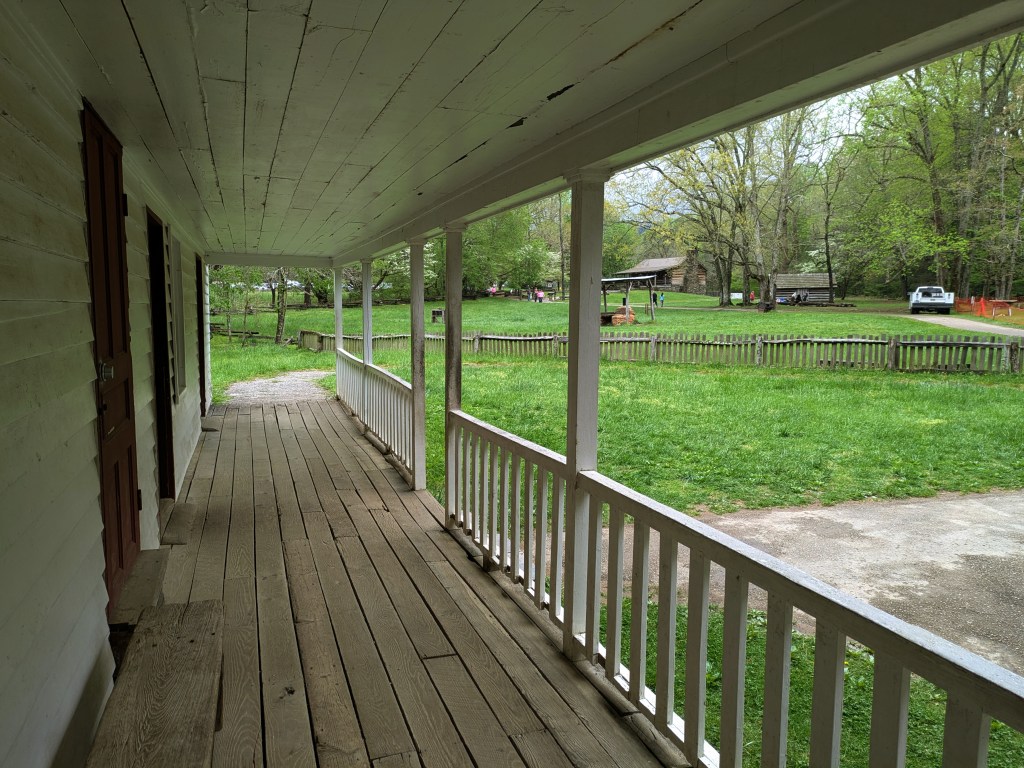
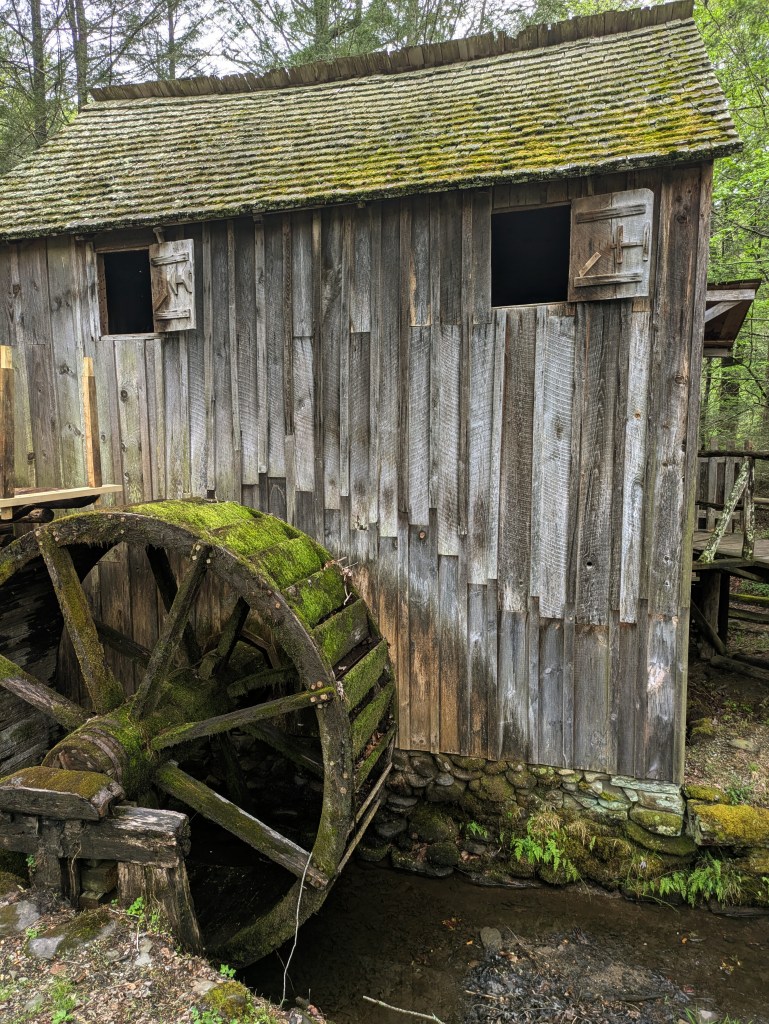
Halfway around the loop is the Cades Cove Visitor Center. Here is another small store, bathroom facilities, and more historic buildings. Rangers are on site to give demonstrations and tours of the area. The informational plaques in the Cable Mill area talk about the lifestyle of the Appalachian communities who set up in this remote area back in the nineteenth century. The grist mill on site is the only working grist mill in the park, and a few times a year they sell the cornmeal made on site.
On the way back out of the park, I stopped at the Elkmont Historic District. These historic buildings are very different from the ones in the Cades Cove area. The area has two sections of historic cabins.
The first is called Daisy Town. In the early 1900s, the Appalachian Club, composed of well-to-do men from Knoxville, leased logging land here to set up their own hunting and fishing camp. As the camp became more successful, they built vacation homes for their families, and the lumber company offered train service to bring people to the area. Even when the train service ended in the 1920s, people still traveled here by car. When the National Park Service purchased the area mid century, they allowed home owners to lease the space for twenty years. In the 1990s the last of those leases expired, and the houses were vacated.
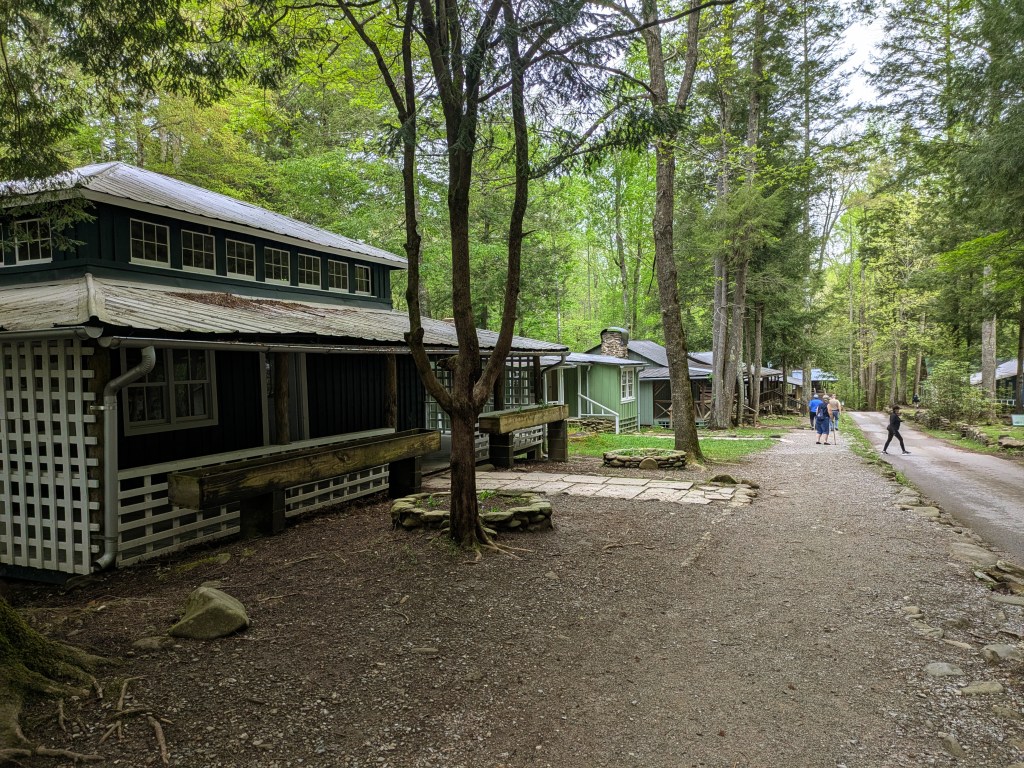
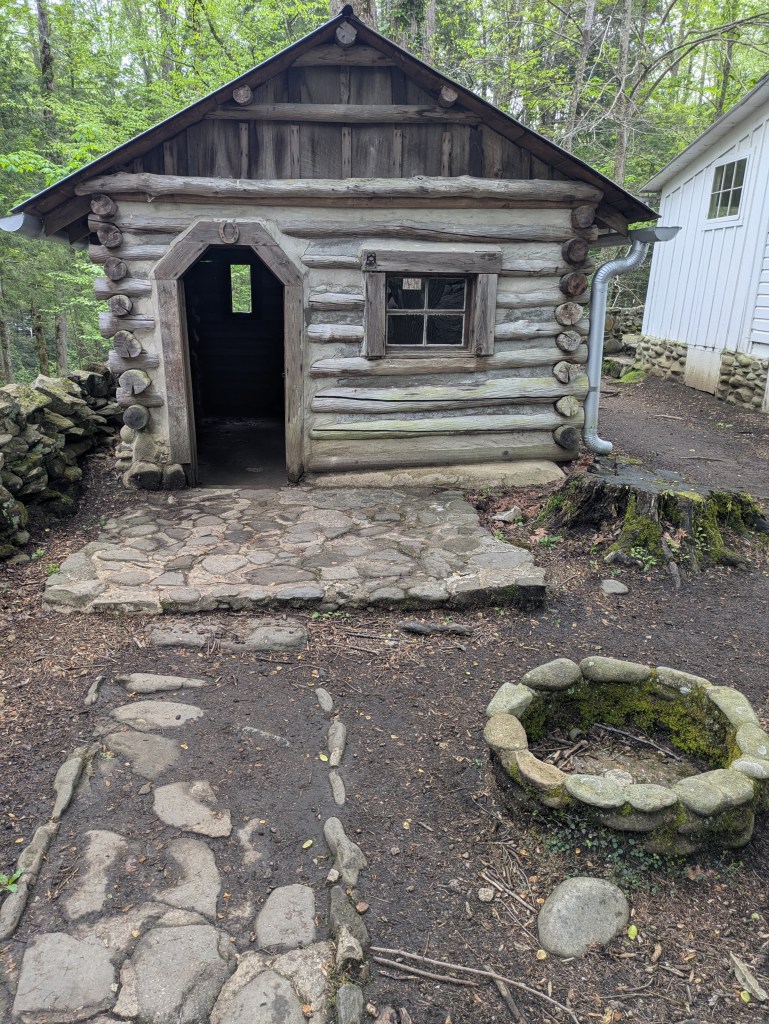
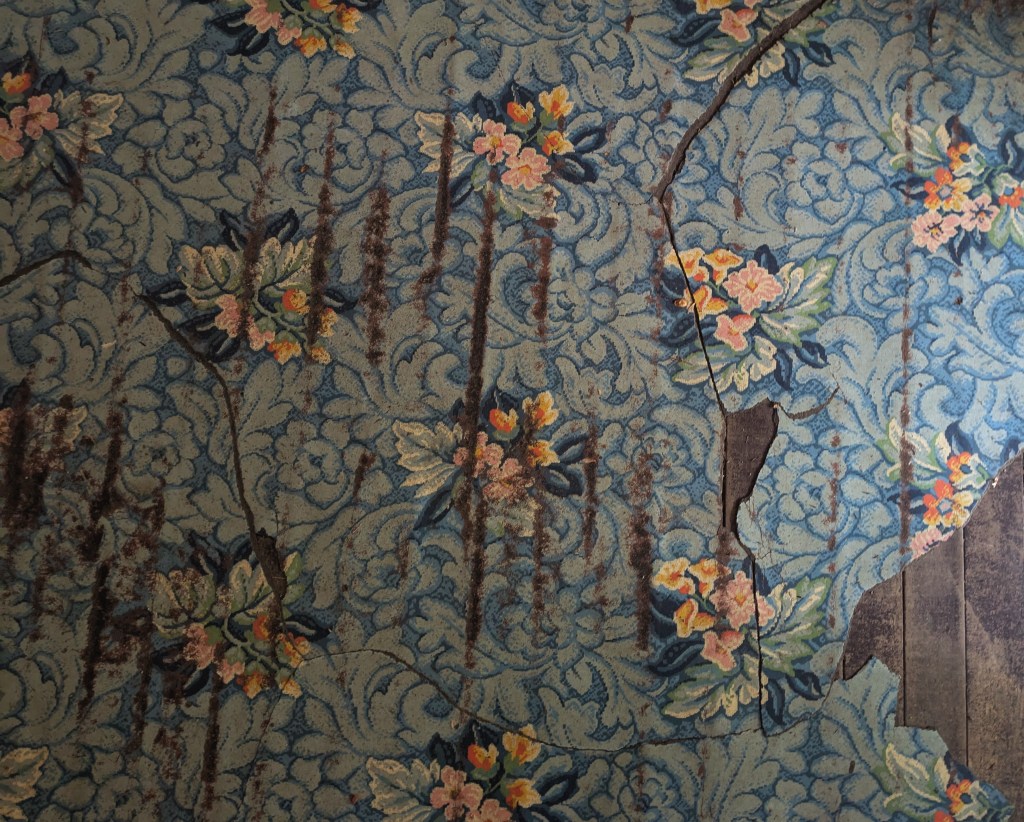
Since 2009, the Park Service has also been stabilizing and restoring the buildings over the last 15 years. Their restorations are designed to preserve the history of the houses, so they still maintain the personal touches of the former occupants. I discovered hand painted hunches, pieces of vinyl flooring, and carved decoration on the porches. Daisy Town offers 16 buildings for the public to explore, but these are just a sampling of the cabins that were on site back in the heyday of the area.
The remnants of the other cabins can be found along the Little River Trail, which begins behind the lower parking lot. The wide flat trail makes its way along Jakes Creek. On both sides of the trail the stone remnants of the demolished cabins are still standing. Tall chimney stacks and foundations pop up from between the trees.

To the right of the path is a more magical relic. Nicknamed the Elkmont Troll Bridge, a small stone bridge traverses a creek in the middle of the woods. The bridge is adorned with short stone pillars and a wire railing, which I find hilarious since the bridge is so short that you can pretty much step onto the bridge from the side.
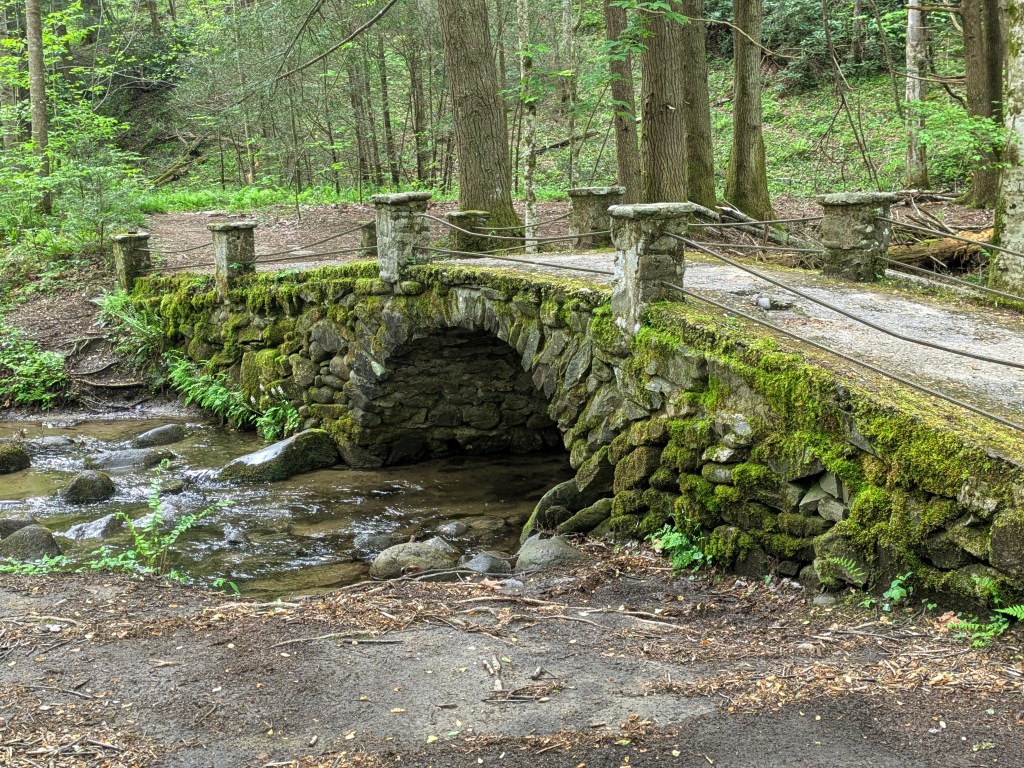
So my day began and ended with some troll bridges. It was a great first day in the park.
 Mac On the Map
Leave a comment