
The Great Smoky Mountains are known for their waterfalls, so I decided to start my second day in the park with a short hike to the only waterfall in the park that you can walk under. The road to Grotto Falls is accessible from the other end of Gatlinburg’s main street. There are only parking spaces for about 10 cars at the trailhead, so if you’re interested in doing this hike, you want to get there early. I arrived at 8am on a weekday during a quieter week in the spring, and there were only 3 spots left. When I returned from the hike, people were parked further down the road for this hike.
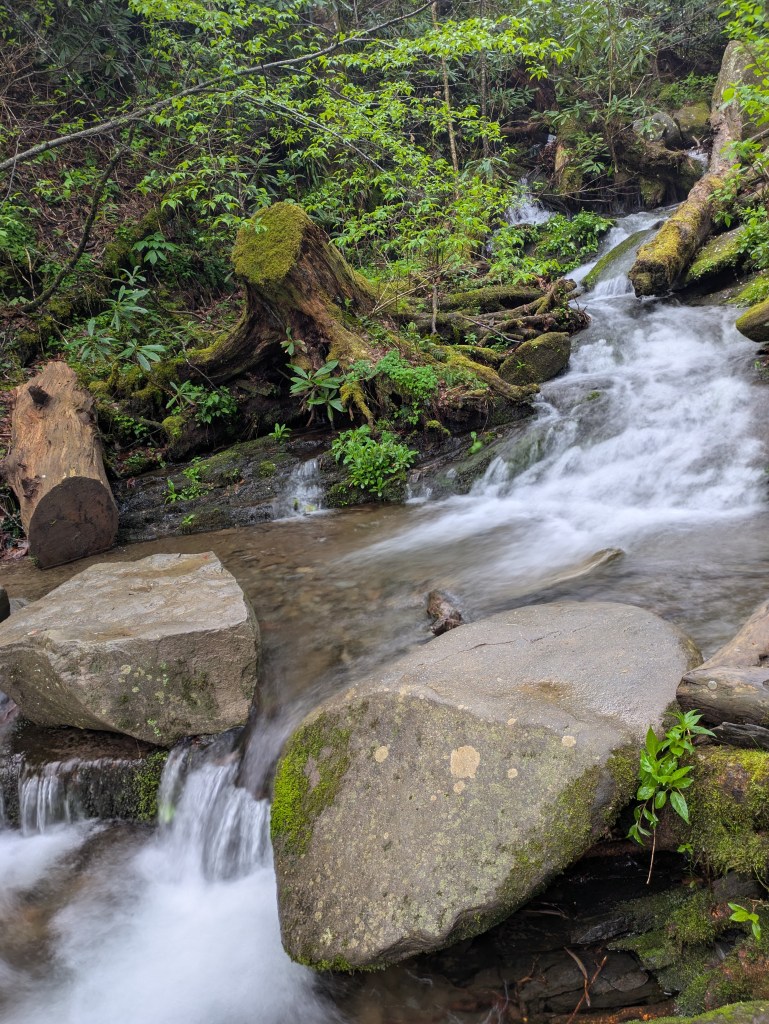


Besides the unique feature of being able to walk under the waterfall, the reason that this trail is so popular is because it is fairly easy – it’s a 3 mile round trip hike with only a slight incline. I worried that the trail would be slippery since there were evening and morning showers, but the roots and rocks along the trail provided places for traction. There is a small river crossing to make, so be prepared to carefully traverse the stones/logs set up or get your feet wet.
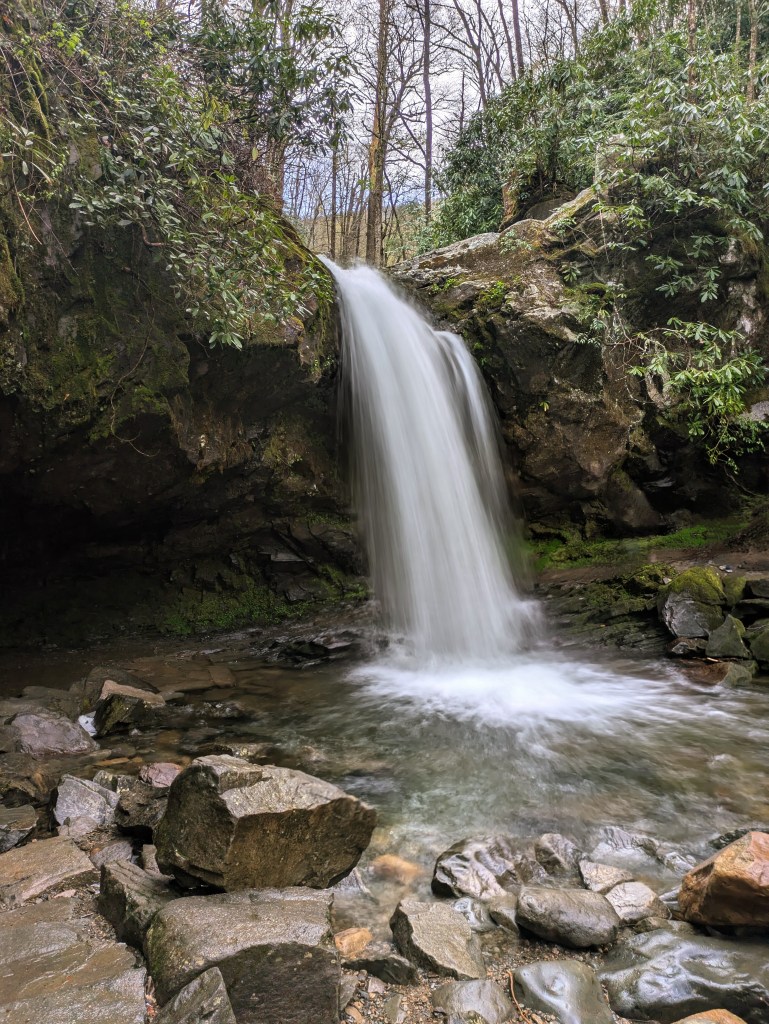
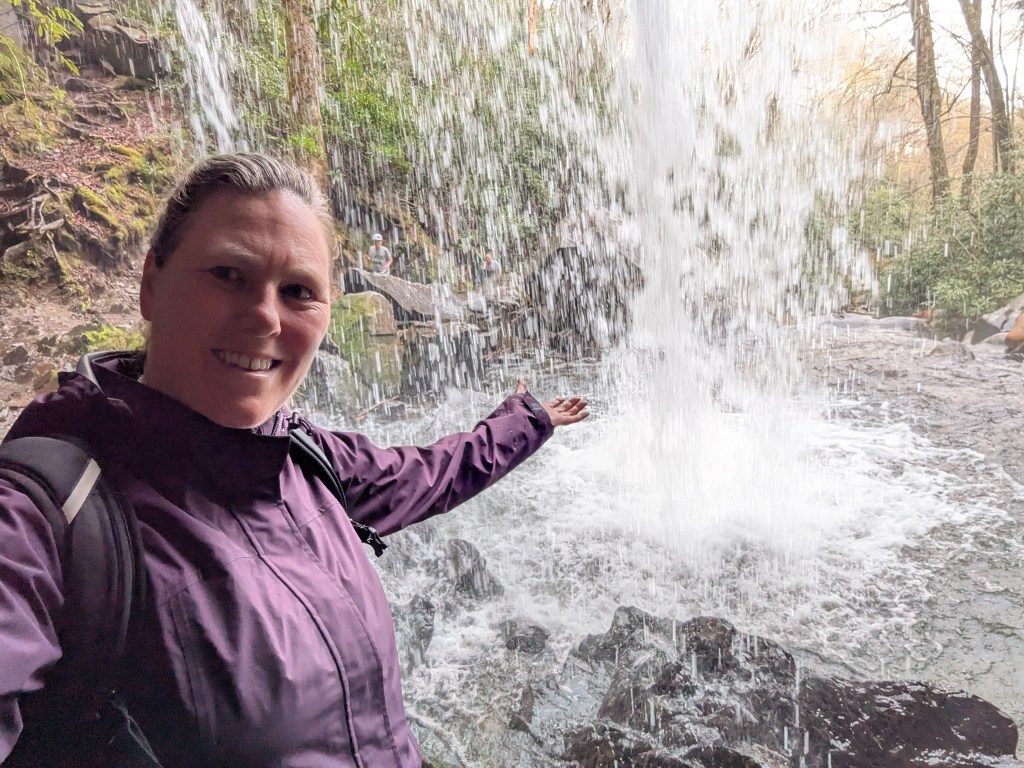
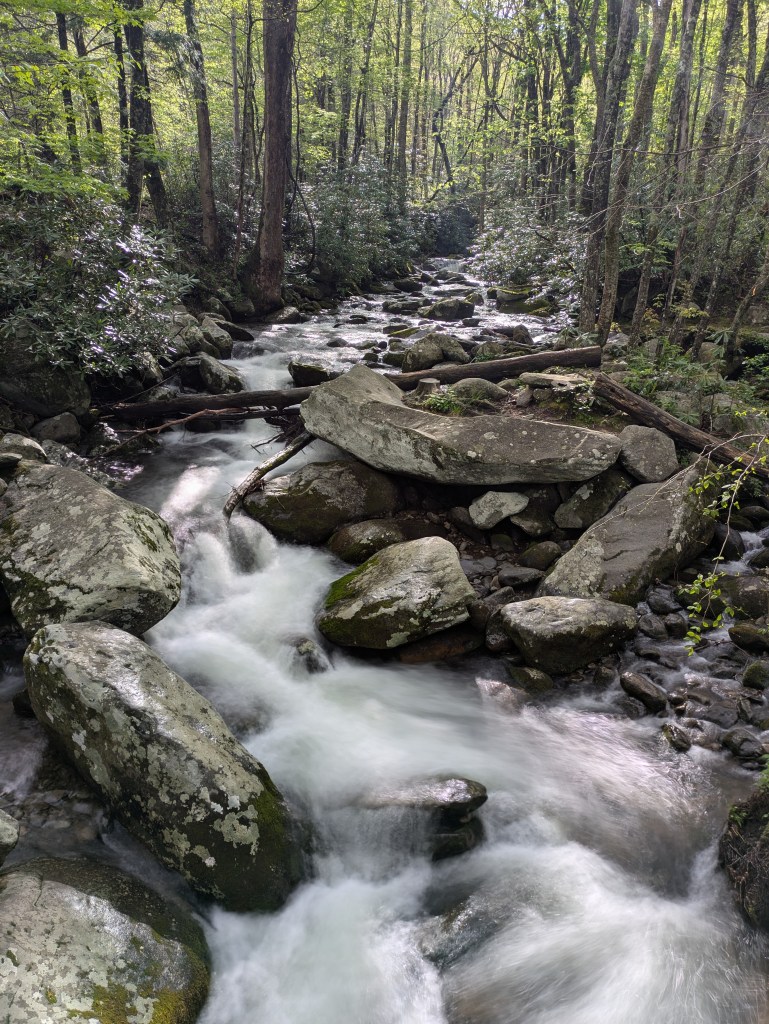
Grotto Falls is along the 5.5 mile Roaring Fork Motor Nature Trail. This one way loop road is worth the drive in itself. If you don’t have time to drive all the way to Cades Cove, I would suggest taking the time to do this loop. The road parallels and crosses several creeks allowing views of small waterfalls – the largest is at the end called The Place of a Thousand Drips.

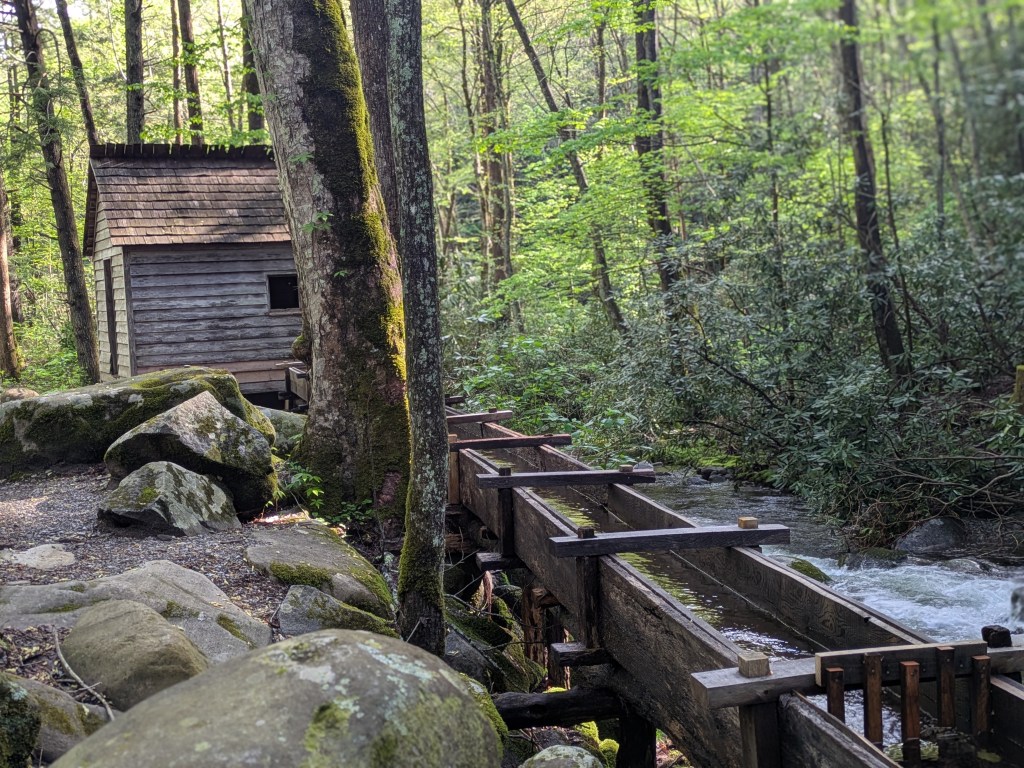
There are also a few historic homesteads along the loop. The first is the Bales homestead, which also holds Alex Cole cabin – the only surviving building from the Sugarlands camp. A little further down the road is Ephraim Bales’ cabin. These empty buildings provide a sense of what life was like for people living here in the early 1900s. Across the road from the Alfred Reagan cabin is the Tub Mill. While it looks a little rickety, the flume that captures the water from the creek is still standing. This mill was used to break down wheat and corn to make flour and cornmeal.

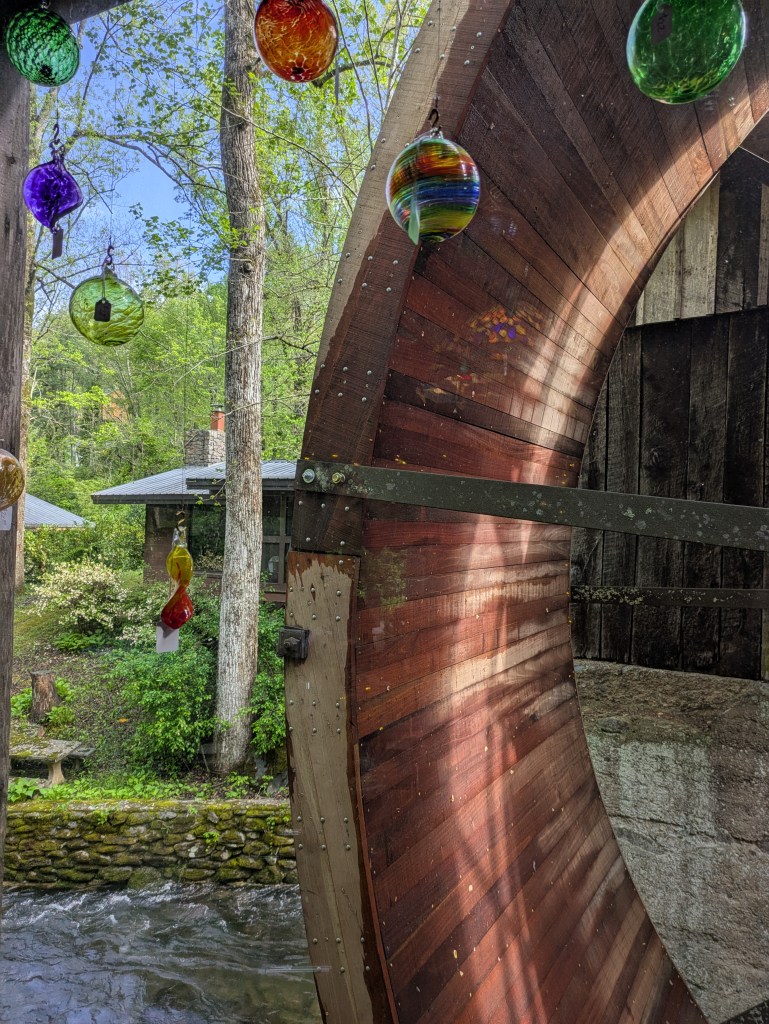
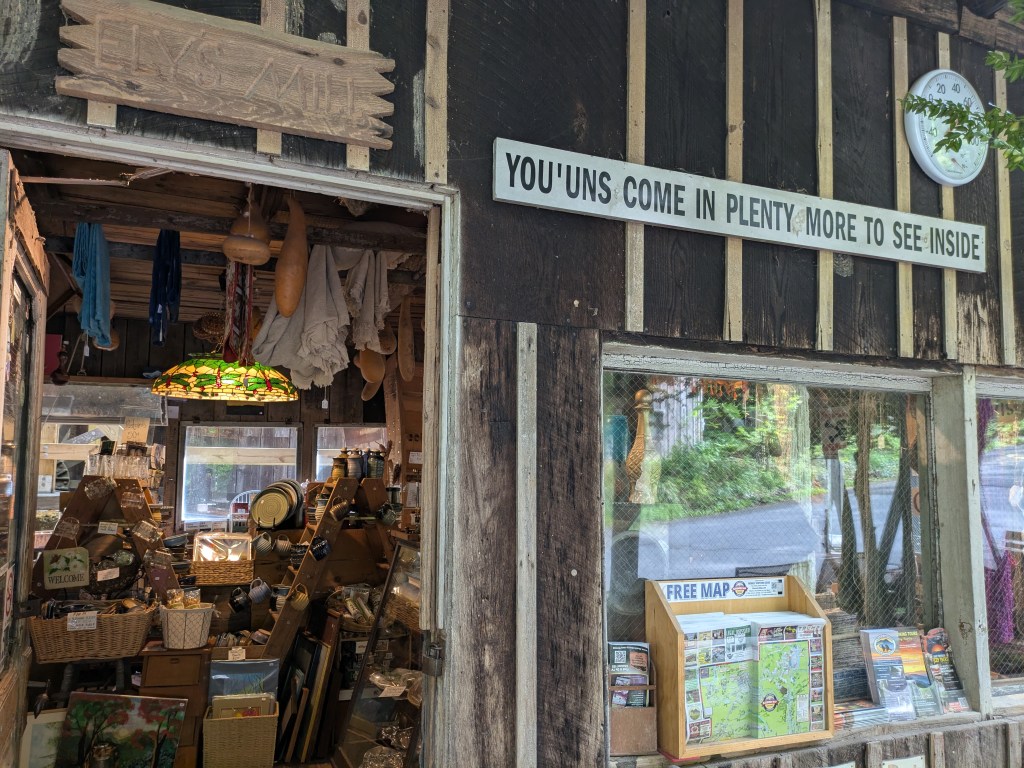
At the end of the road is the Ely’s Mill. Built into the barn of the old mill is an antique and local craft shop. Through the windows of the shop, the water wheel spins and creates sun flares that interact with the stained glass in the windows. Across the street a glassblowing shop is set up selling their wares, and if you’re lucky you’ll see someone in the process of glassblowing.
Back to the Sugarlands entrance, today I drove straight to continue onto Newfound Gap road. This road is the main cut through road for the park, which means there are sections where the speed limit is higher and not everyone driving this road is a tourist. The 33 mile road offers views of the various tree species in the park, beautiful vistas of the mountain range, and lots and lots of turns.

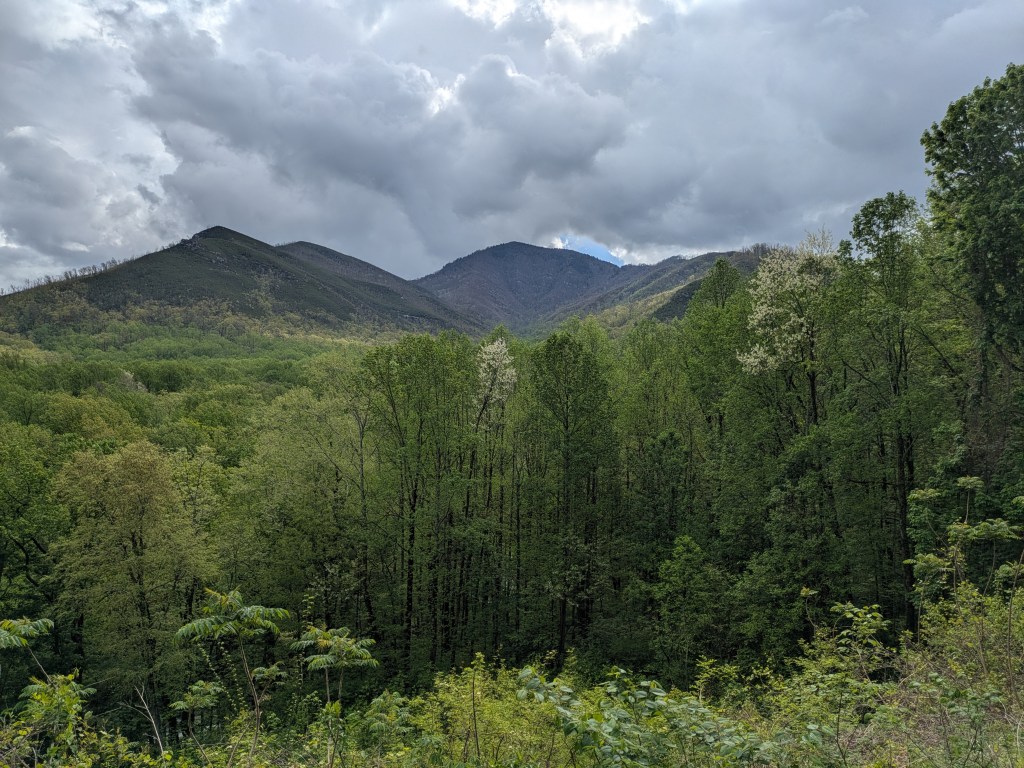
As you can imagine, the Newfound Gap road takes you to Newfound Gap Overlook. At 5,046 feet, the Newfound Gap & Rockefeller Memorial offers gorgeous views of the southeastern side of the park. It was here back in 1940 that President Theodore Roosevelt dedicated the Great Smoky Mountains as a National Park after Rockerfeller’s generous donation of $5 million dollars to buy the land. The Appalachian Trail also runs through here. For those of you that have heard about trail angels that help hikers to reach towns from the trail, this is one of those places that they talk about. I saw several hikers talking to tourists and locals and getting rides into Gatlinburg for a short respite before continuing their 2,200 mile trek from Georgia to Maine. The state line between Tennessee and North Carolina also passes through here, so there’s a lot of interesting reasons to visit this spot.


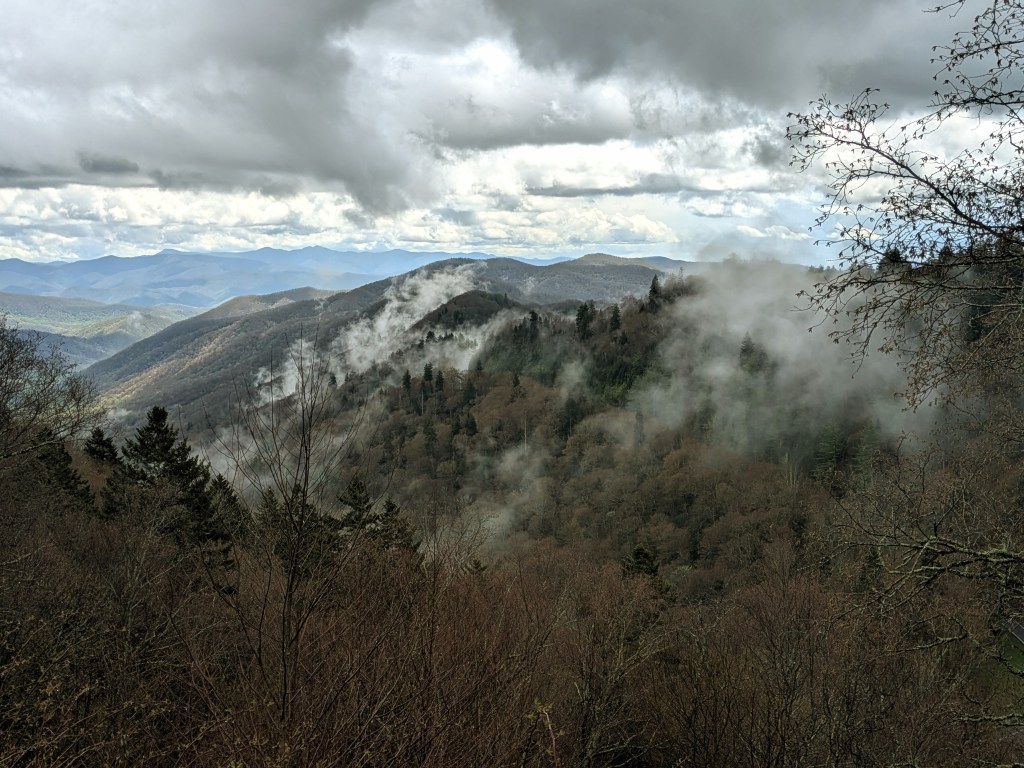
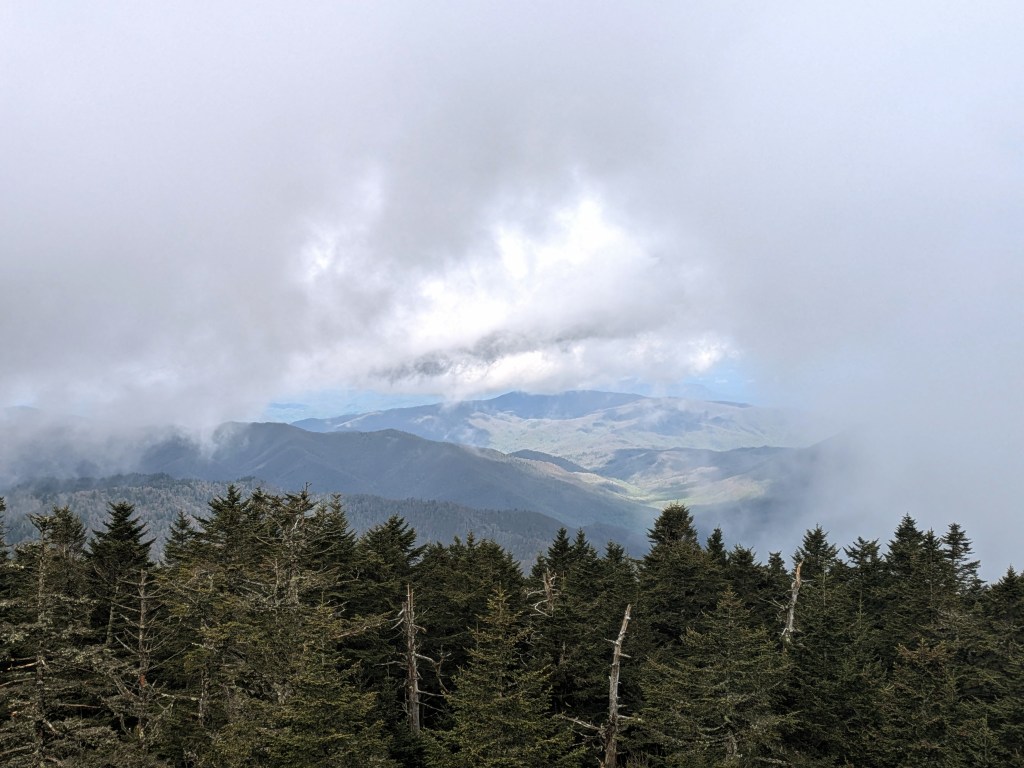
Just up the road from Newfound Gap is the Kuwohi Observation Tower. A steep 1/2 mile walk up a paved road takes you to the highest point in the park – make sure to bring water with you. While I can imagine that the 360 degree views from the top of the tower are amazing, sadly the clouds and rain rolled in on my hike up. Still, the views from the parking area were worth the drive.


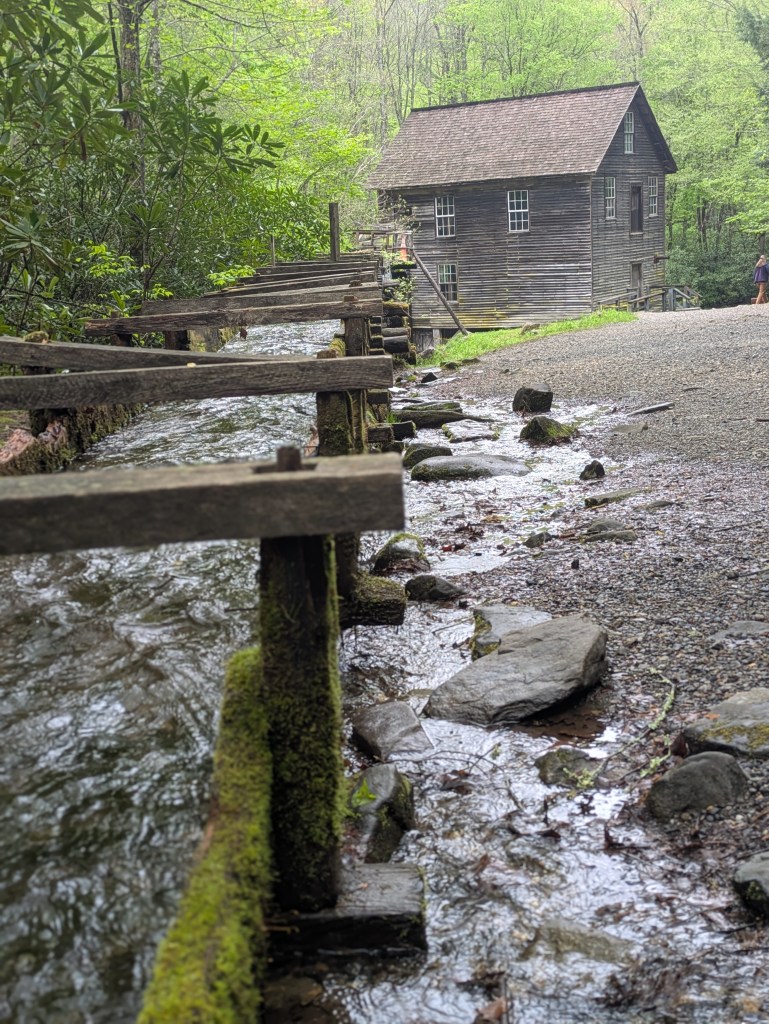
From Newfound Gap viewpoint it’s a 3,000 foot elevation drop to the North Carolina entrance to the park. Just before the visitor center, be sure to stop at Mingus Mill. The grist mill was built in 1886 and after a 1937 restoration is still operational today. What is unique about this mill is that it uses a water-powered turbine instead of a water wheel.
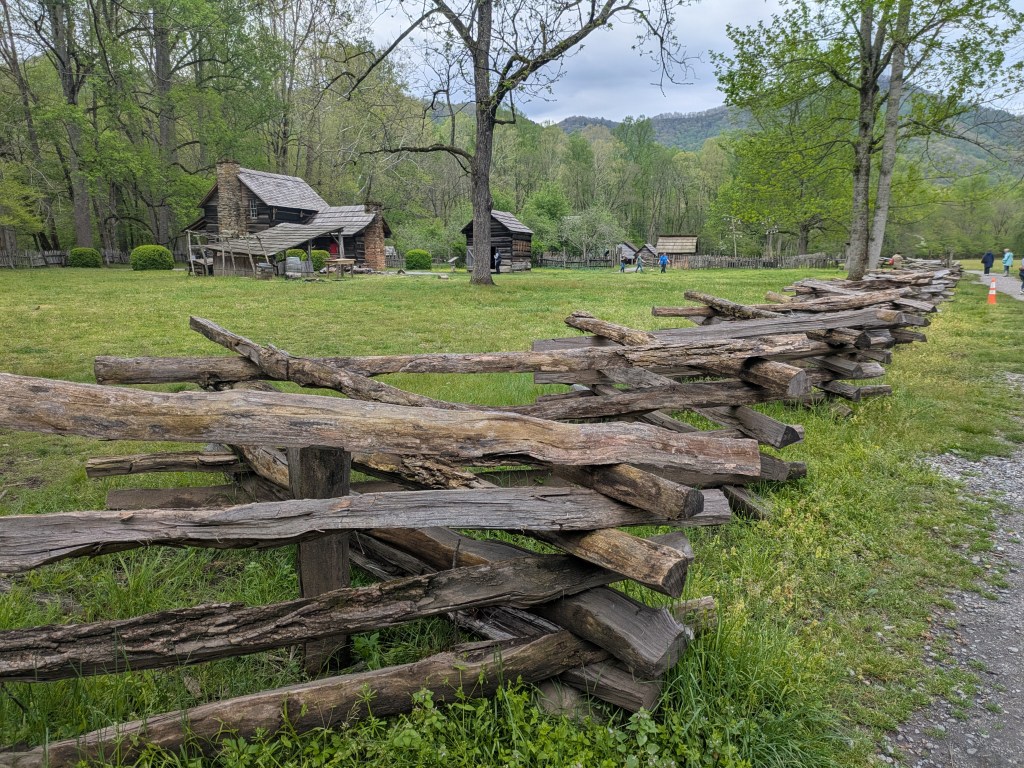
Half a mile away, the Oconaluftee Visitor Center on the North Carolina side of the Smokies. Each visitor center in the park has a different focus: Sugarlands focuses on wildlife and flora while Oconaluftee focuses on the people and trade of the Smokies. Outside of the visitor center is the Mountain Farm Museum set along the Oconaluftee river. While the buildings have all been moved from their original locations throughout the park, the structures are all original. The visitor center offers a self guided audio tour, informational plaques, and guided tours of the various farm buildings. If you’re lucky – I was not – you might also see elk that are known to hang out in the large meadow next to the farm.

I feel like my visit to the Smokies only grazed the surface of what the park has to offer. I hope to come back someday and spend more time hiking, admiring waterfalls, and learning about Appalachian history.
 Mac On the Map
Leave a comment