
Innsbruck is a small city along the Inn River that was busier than I expected. With the University of Innsbruck, there is a large population of young and international people that make the city vibrant outside of the tourist laden old town.
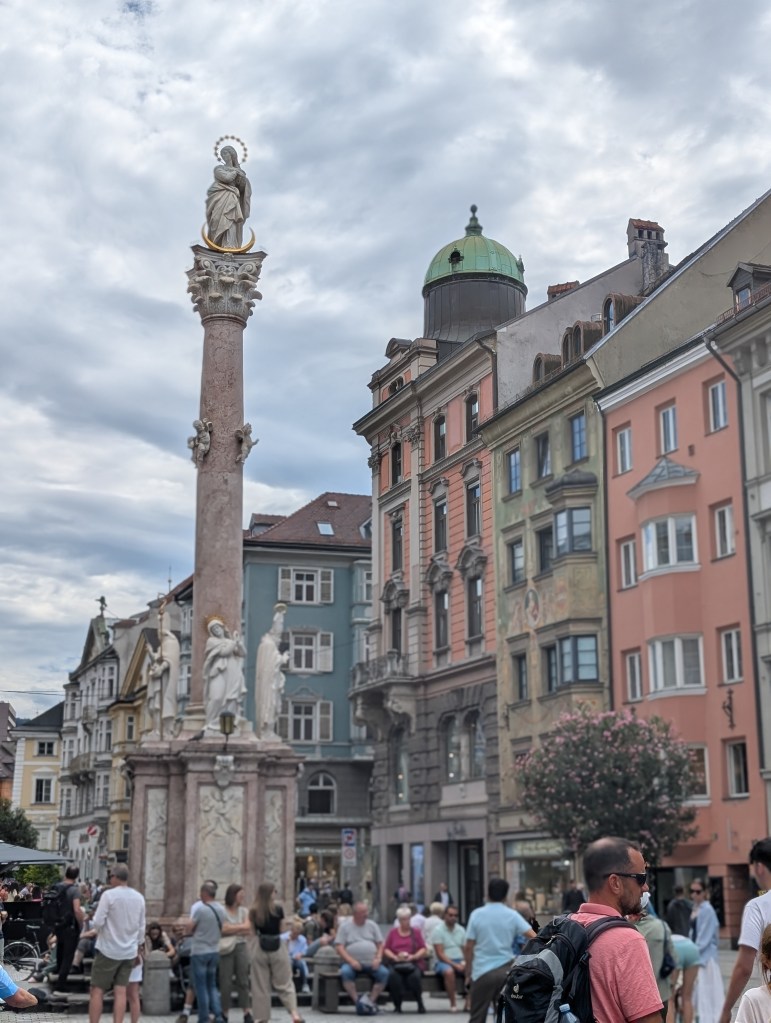
I started my morning wandering around the old part of the city. Maria-Teresien, the large pedestrian plaza, with the tall Anna Column and fountain is set against the stunning views of the mountains beyond.

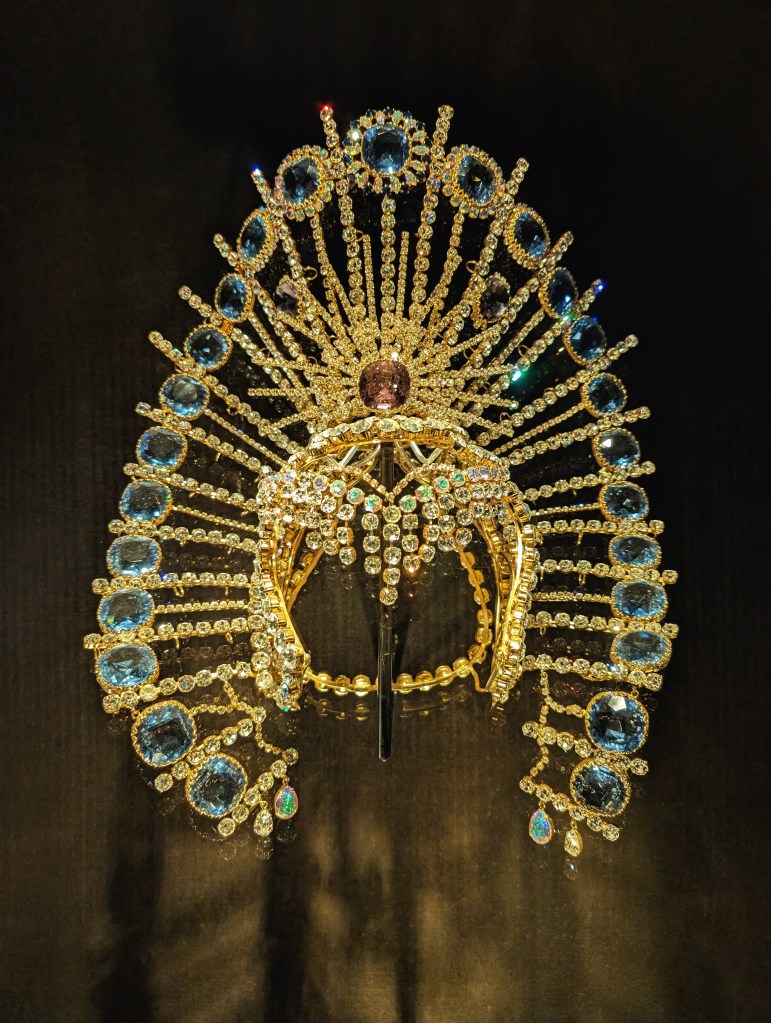
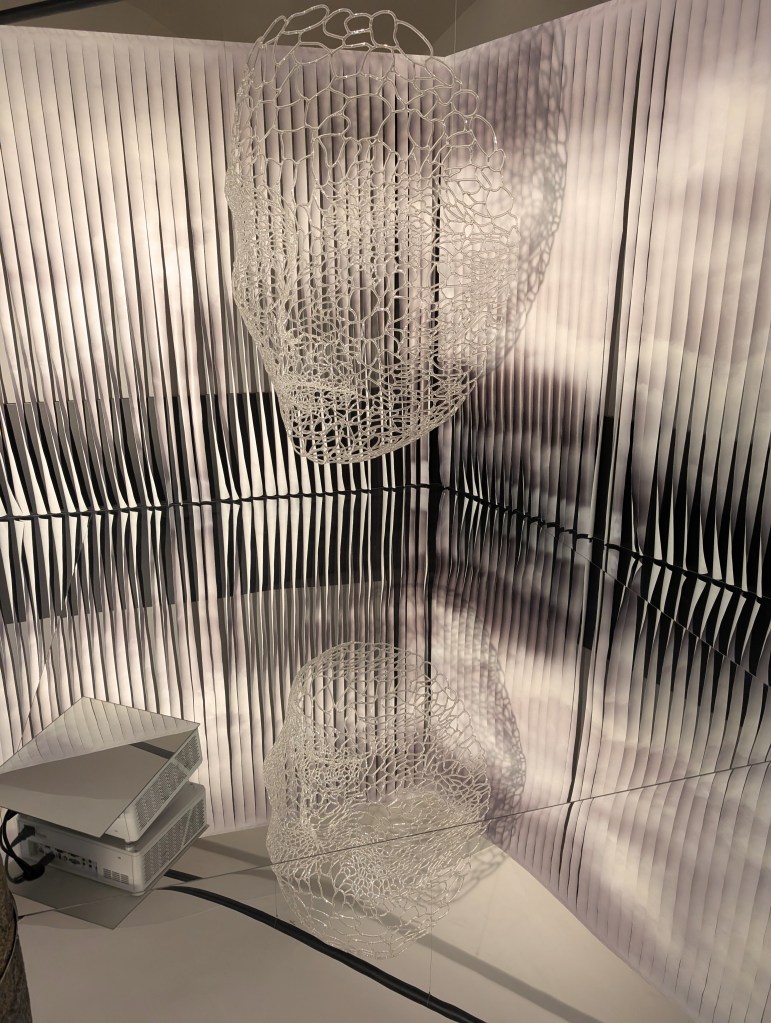
Along this plaza are eateries and global brand name stores, including the Swarovski cyrstal. Swarovski Crystal has been a part of Austria’s legacy since 1895 when Daniel Swarovski invented the first electric-powered crystal cutting machine. While their main factory, with a fully developed visitor adventure is located outside of the city, their city location is also an experience. The displays of intricate necklaces and headpieces, cute themed figurines, and sculptural light and metal displays add glitter to the store.
From here, the pedestrian area narrows to end with the iconic Golden Roof. Built in the early 1500s for Emperor Maximilian I, the Golden Roof contains 2,657 copper shingles that glitter in the sun. Below the roof are painted frescos and sculptural details along the balcony and building.

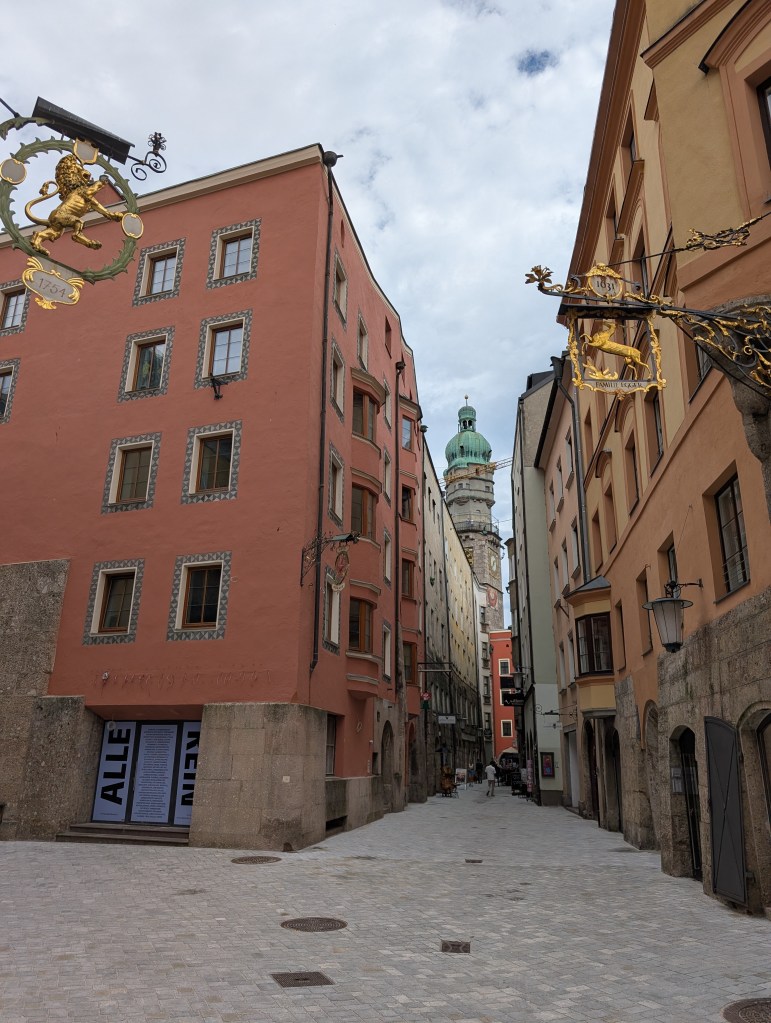
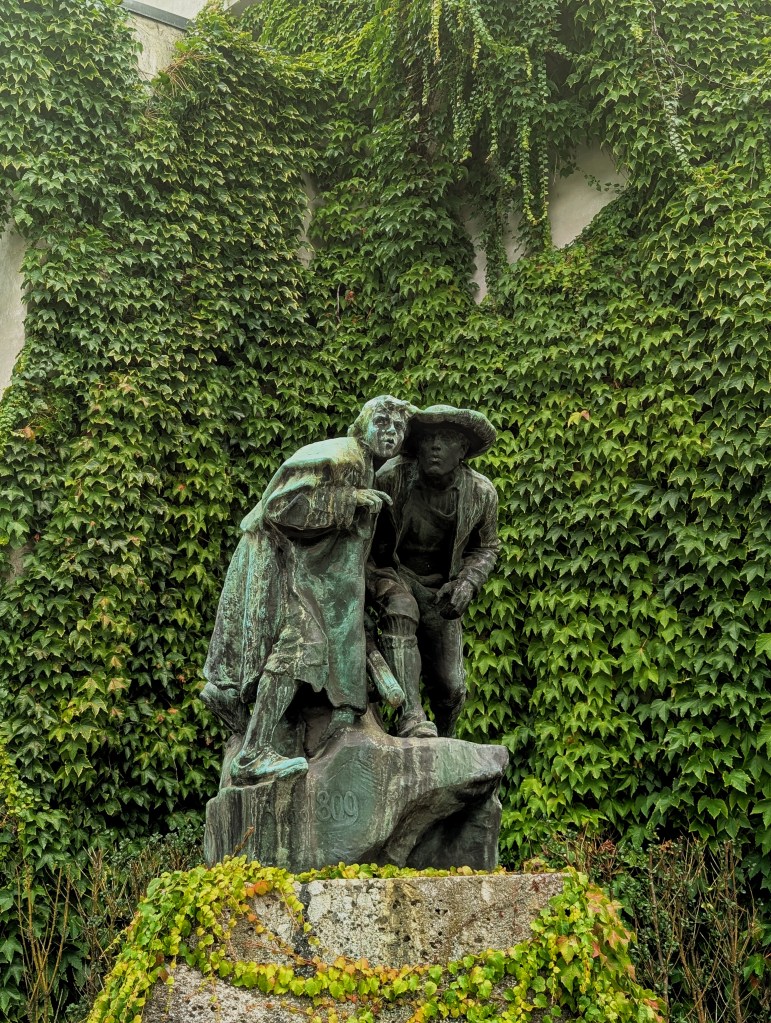
Off the main plaza are a series of small alleyways filled with tourist shops and local wares. I spent a fair amount of time wandering around these and letting myself get a little lost in the process. In my wanderings, I came across the St. Jakob’s Cathedral with its 18th century baroque interior and its iconic Tyrol bells whose sounds resonate throughout the city during the noon ringing of the bells.

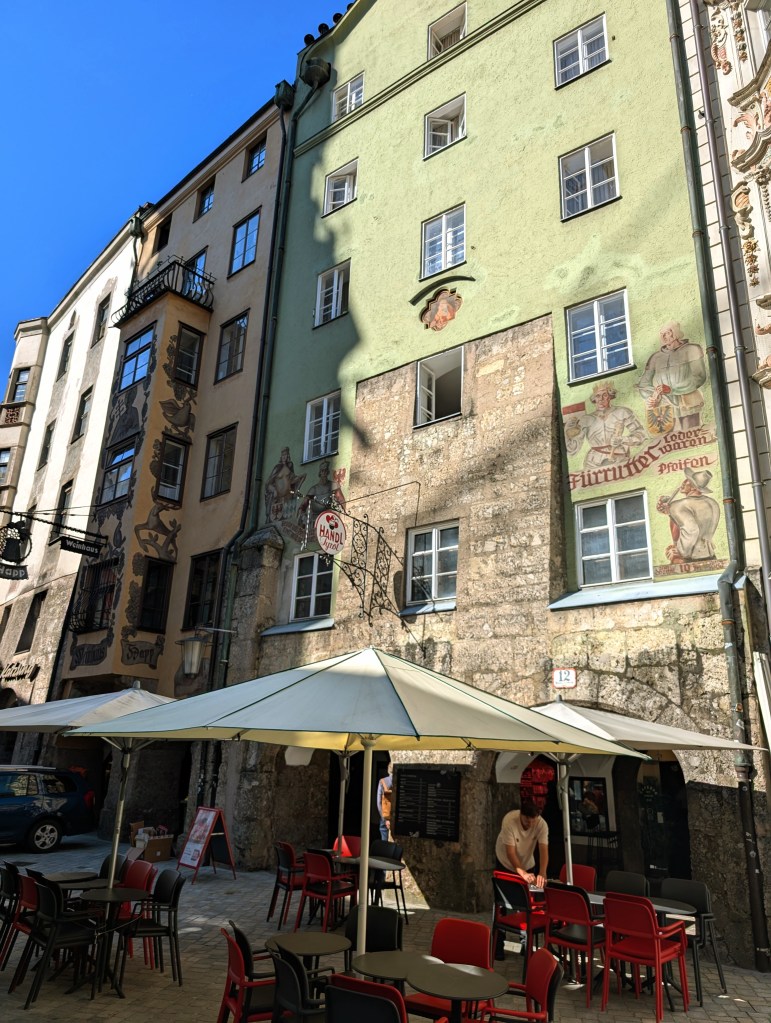
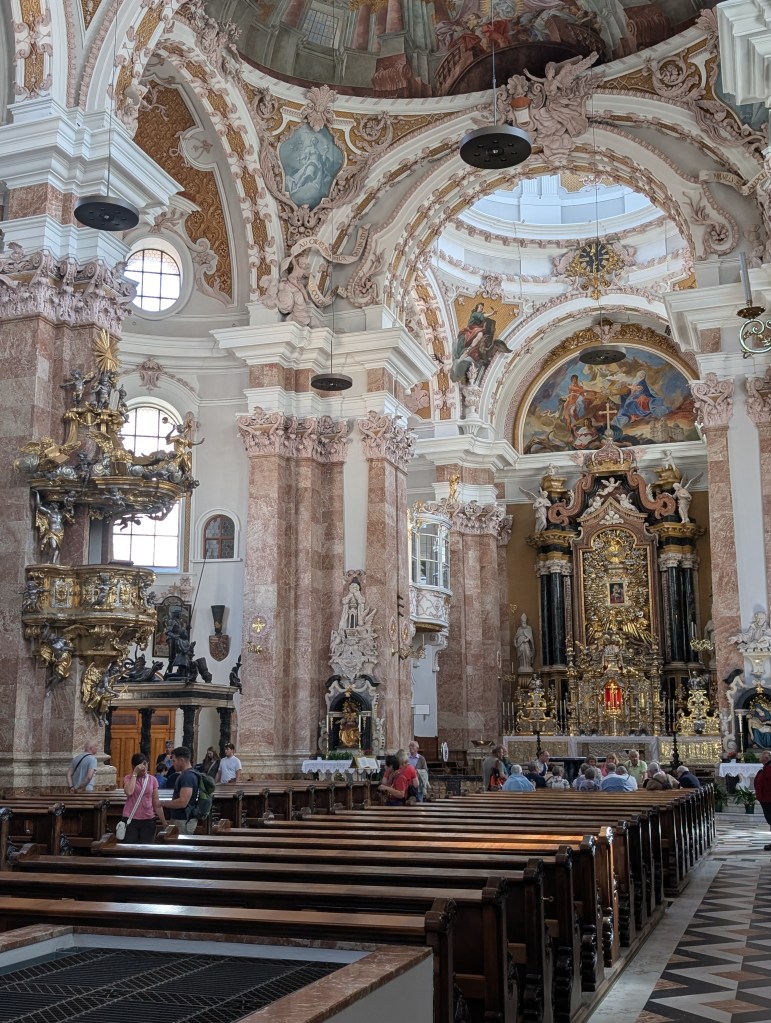
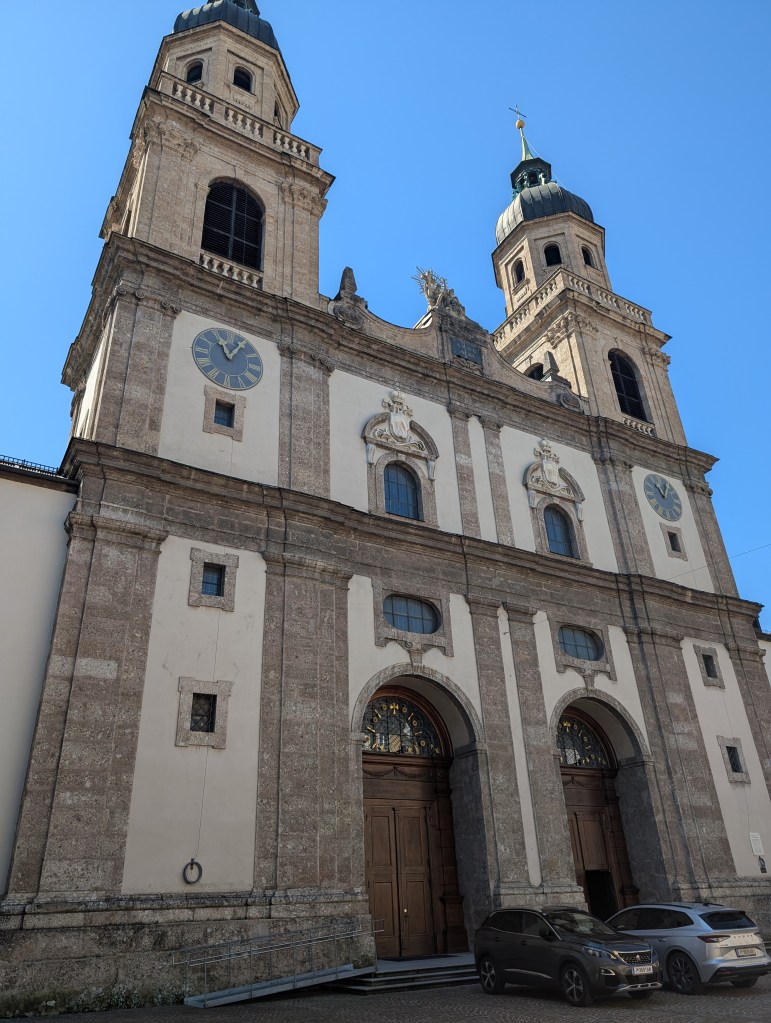
After wandering around the old city, I made my way over to the Inn River where the Marktplatz offers food, drink, live music, and craft stalls along the river.

Directly across the river from the fair are the colorful houses of Innsbruck. These houses date back to the late 1400s. Because Maxmilian I was worried about fire, he instituted new building regulations that required stone buildings to replace half-timbered ones. The construction of stone allowed people to experiment with decoration – including new colors and frescos.
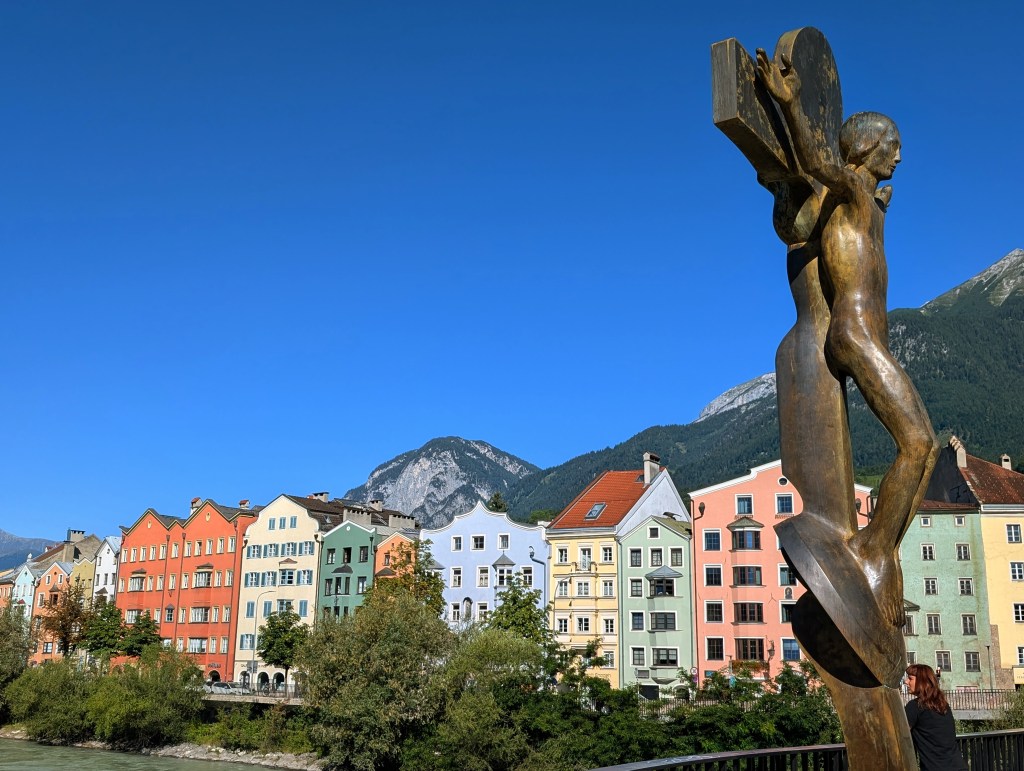
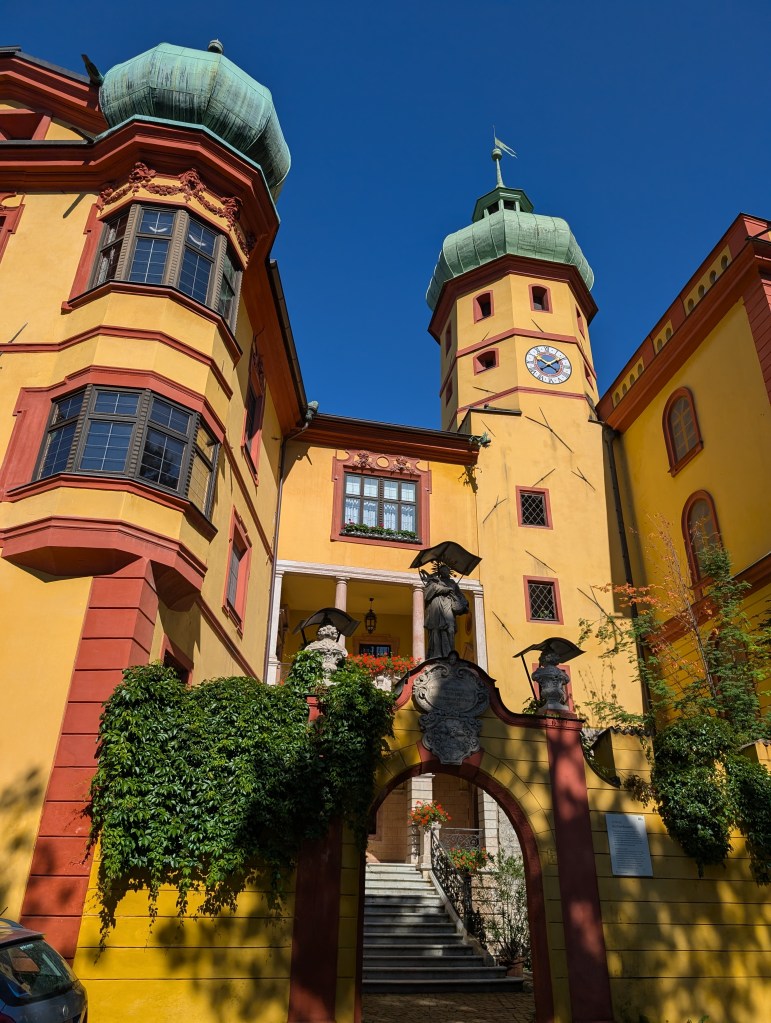
I crossed the river and walked along the river taking myself wherever my eyes and feet decided to go. I started with a small church and then wandered up the hill to the historic yellow facade of the Schloss Buchsenhausen. Once the foundry for the Loffler family who cast bells and cannons, it then became the site of the city’s first brewery in 1642, and the first outdoor swimming pool in 1852. Today, it serves as an artist residence and function hall. While the interior is private, I enjoyed taking in the architectural details from the outside.
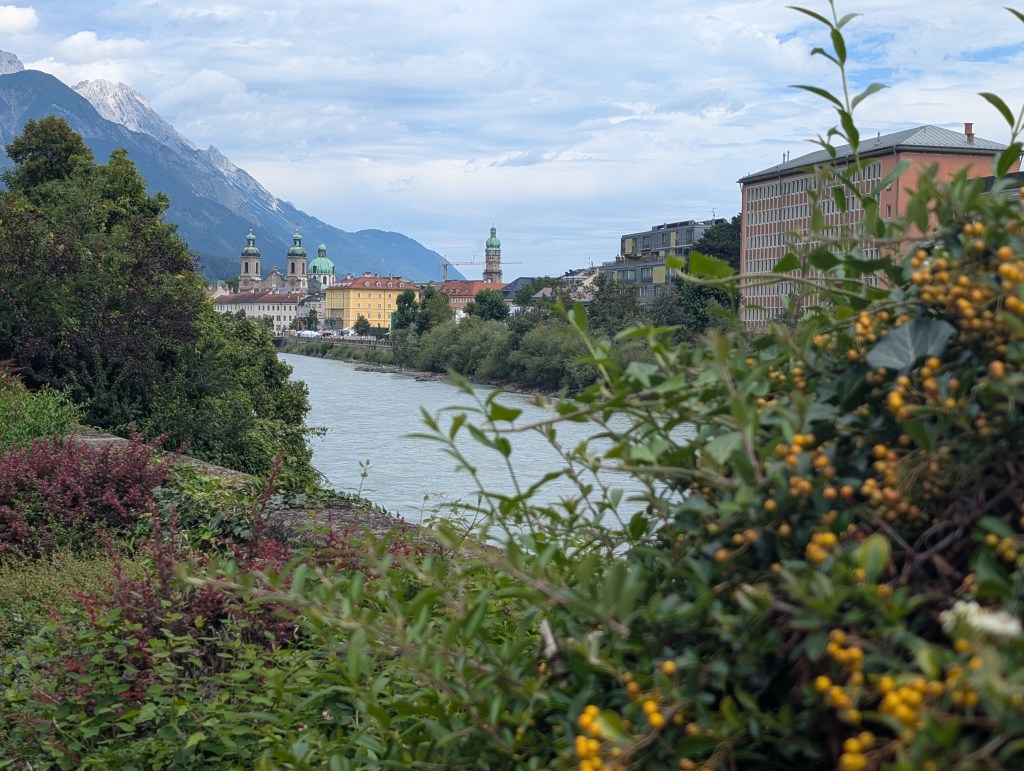
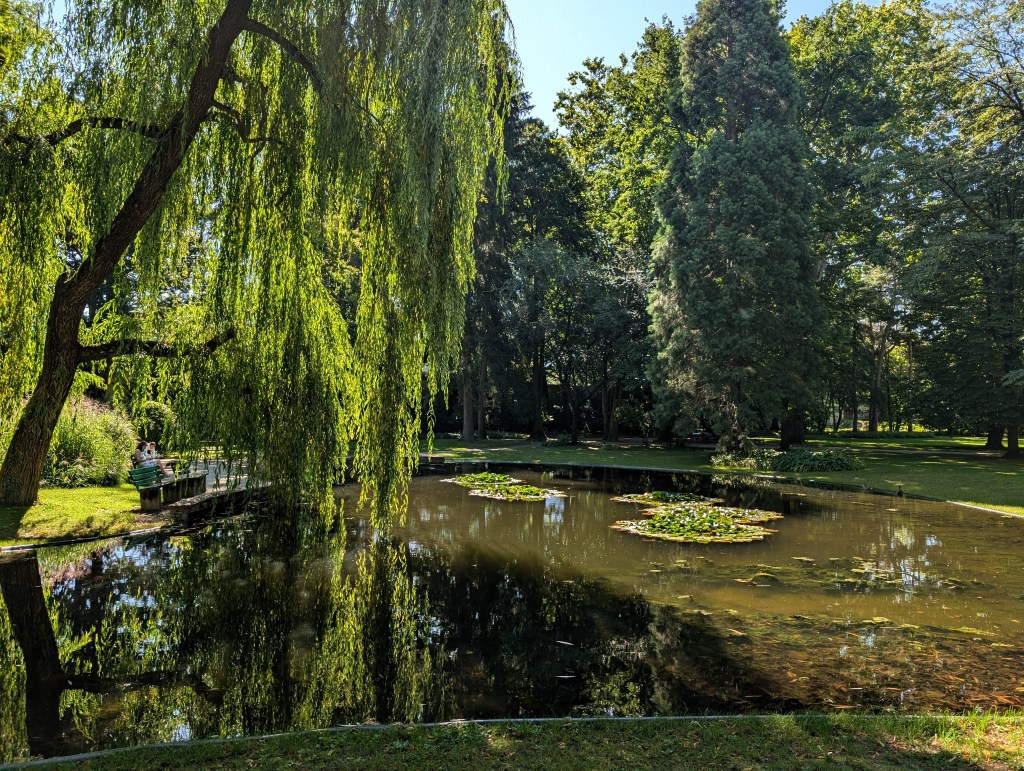
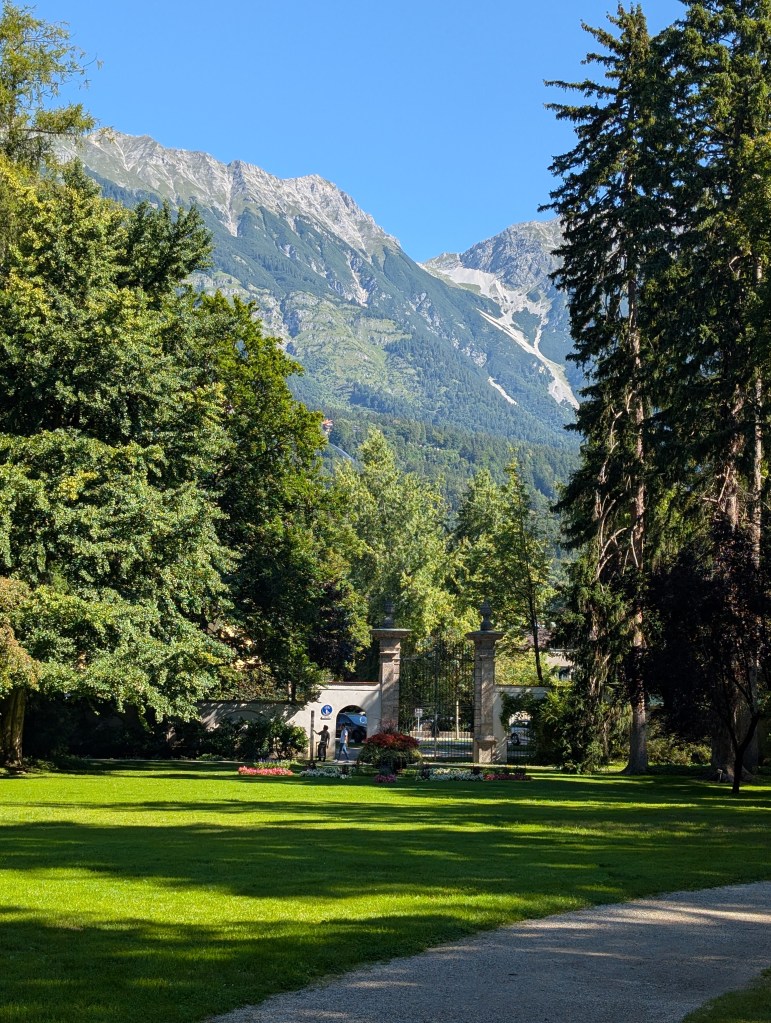
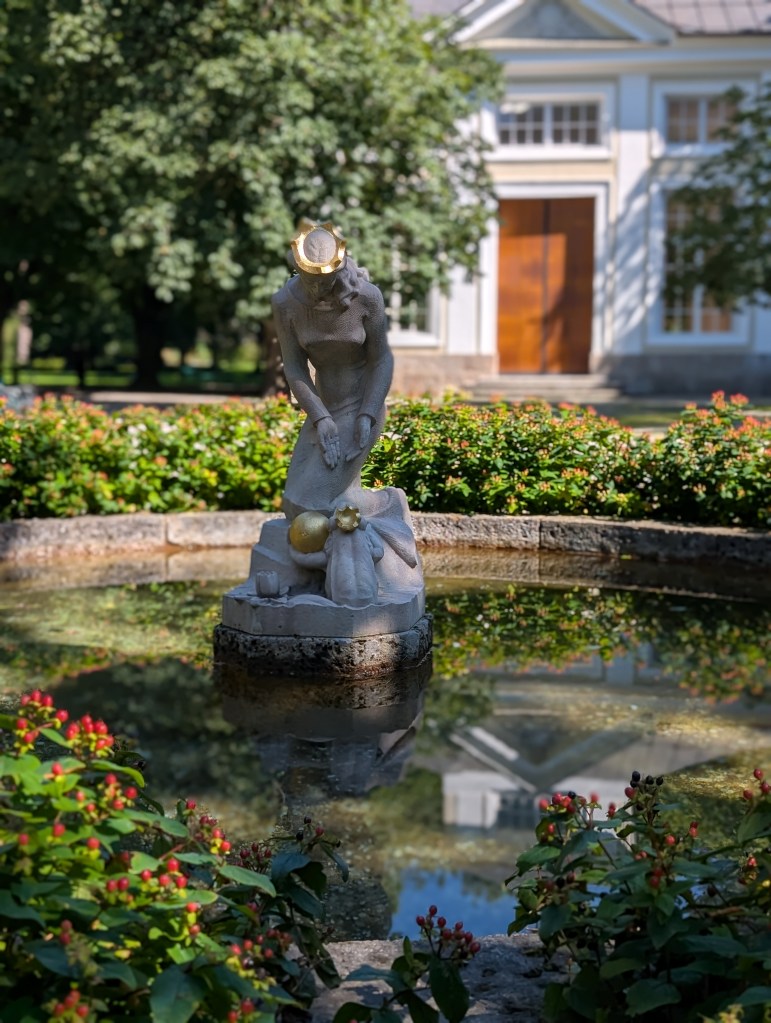
From there, I crossed the bridge to the Hofgarten Innsbruck for a much needed reprieve from walking and the sun. There has been a garden on this site over the past 600 years, and while there wasn’t anything that impressive in the green space, there were some scenic benches, a few water features, and lots of shade.
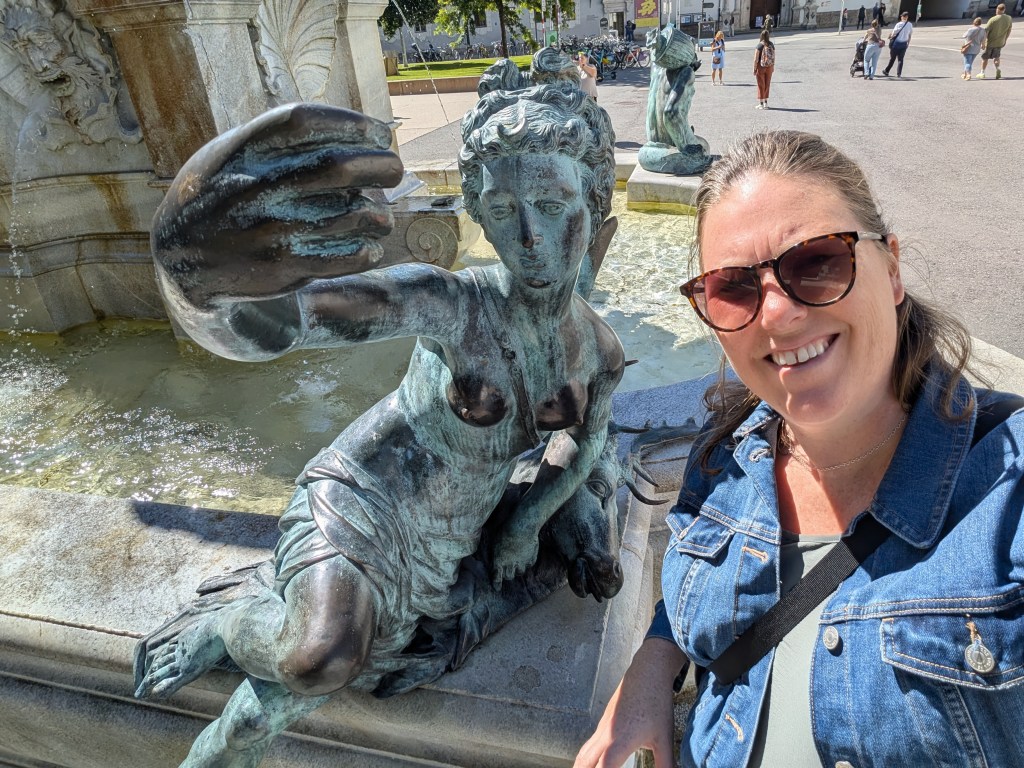
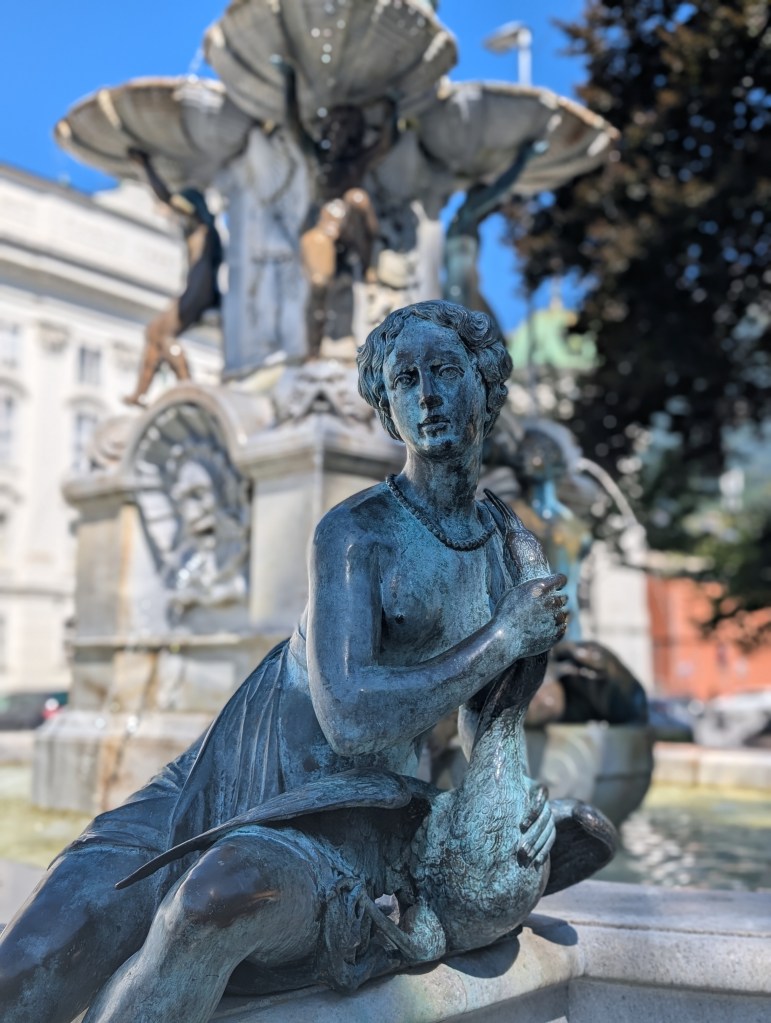
Walking back to my lodging, I passed the massive white facade of the Hofburg Palace with a small city square across from it. I was drawn to the Leopold fountain with its series of figurines posing on its corners; one of woman reminded me of the Selfie pose, so I couldn’t help but follow her lead.
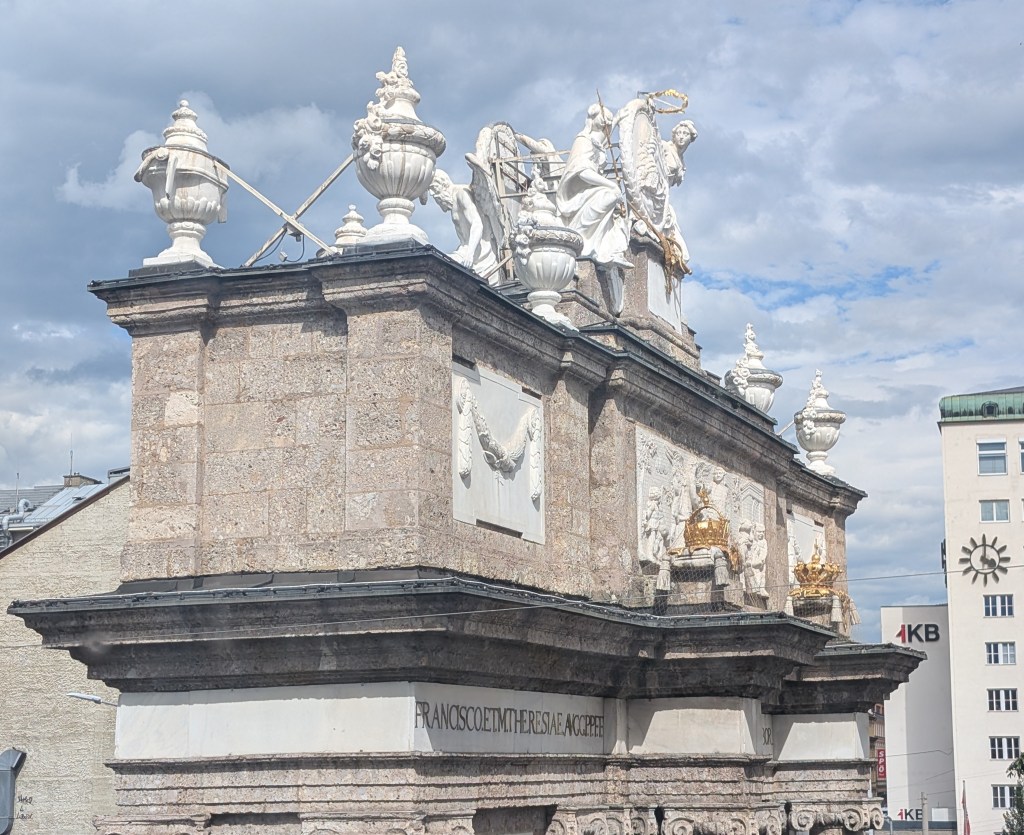
I was fortunate enough to have a close up view of the Triumphal arch from the window of my lodging, so I was able to take in the details of the top of the arch in a way I normally wouldn’t. Built in the 18th century as a wedding arch for Archduke Leopold, it was redesigned to also serve as a symbol of mourning as the groom’s father died during the wedding celebrations.

Besides the Golden Door, Nordkette is the city’s other main tourist attraction. It’s an expensive ticket to ride up the mountain, but the people I was staying with told me about the Nordkette deal where if you leave before 9am in the morning, the ticket is 20% off. Since I was only there for one day, I wanted to make sure to see the old city first and had decided that I would skip this experience. However, when I got back to my place mid afternoon and was looking online, I noticed that they also have the same deal after 3pm, so I decided to add it into my itinerary. While I’m glad I did it, I misjudged the time it would take to get up there and the time that the last cable car leaves the top (6pm), so if I was to do it again, I would definitely start the day with this instead of ending the day.
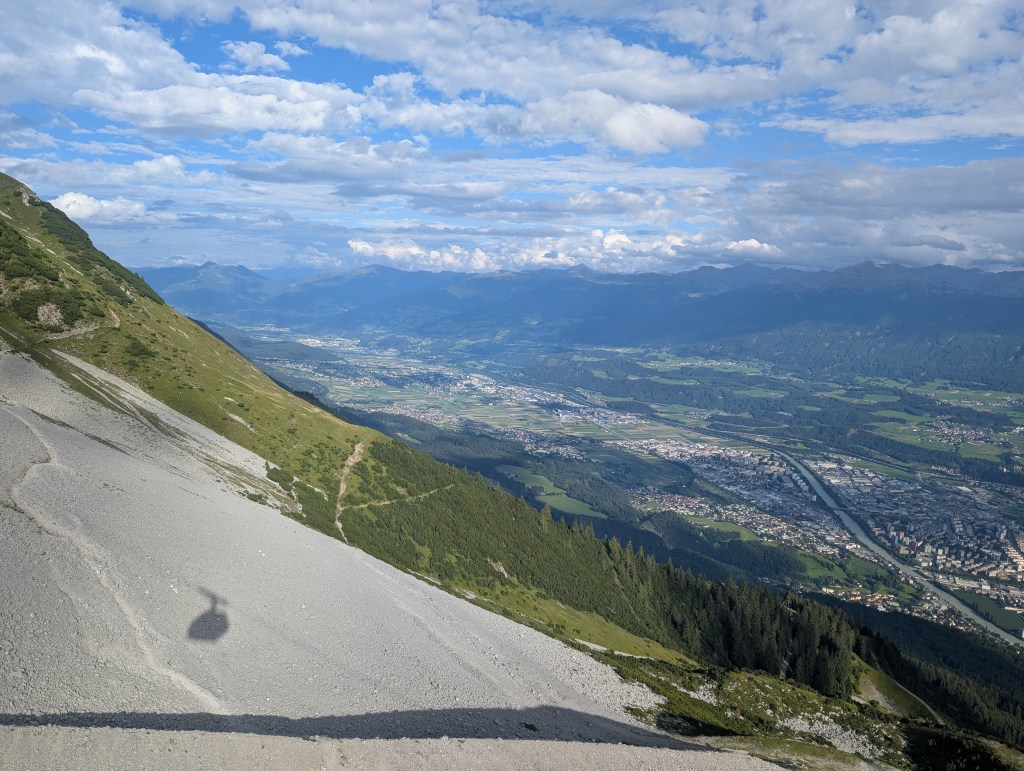
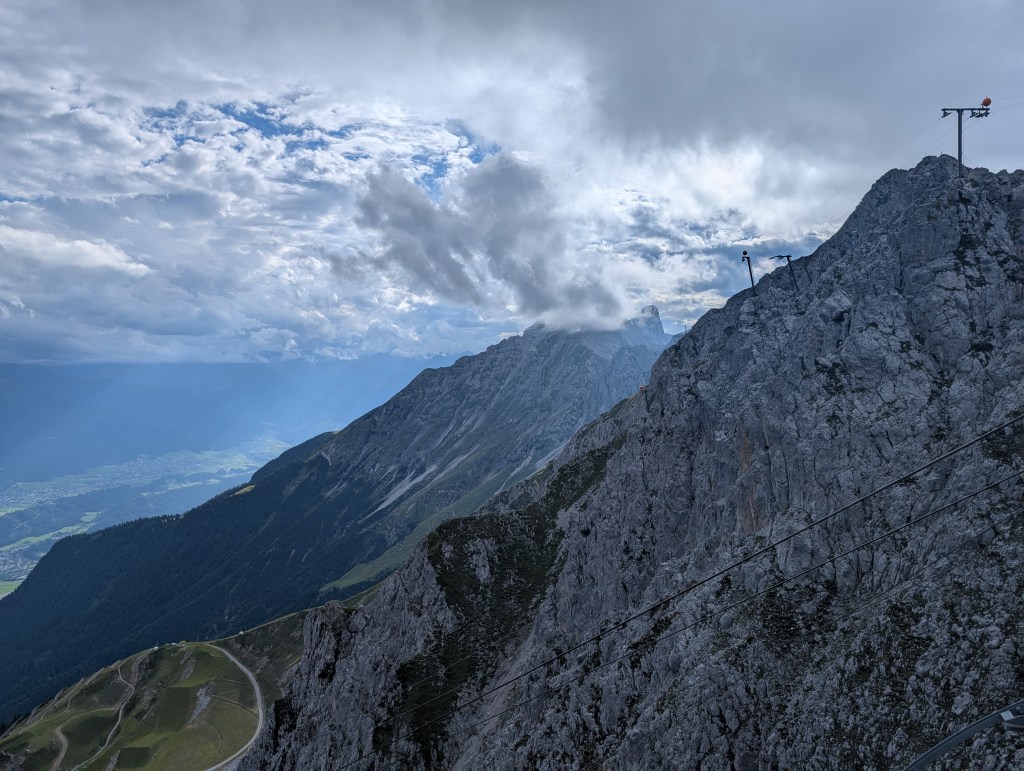
Still, what could’ve been stressful, especially when I didn’t realize I had to change from the train to the cable car at Hungerburg, ended up being a fun bonding experience with the other few people who were in the same situation as me. While we only had 25 minutes at the summit of Hafelekar (7,400 feet/2,256 meters), the cool breeze, tinkle of grazing alpine sheep, amazing views of Innsbruck and the Alps, made the dizzying ride up there worth it. If I had more time, I would’ve climbed the 15 minutes to the summit for the 360 degree views or even ventured a little further afield along the ridge trails.
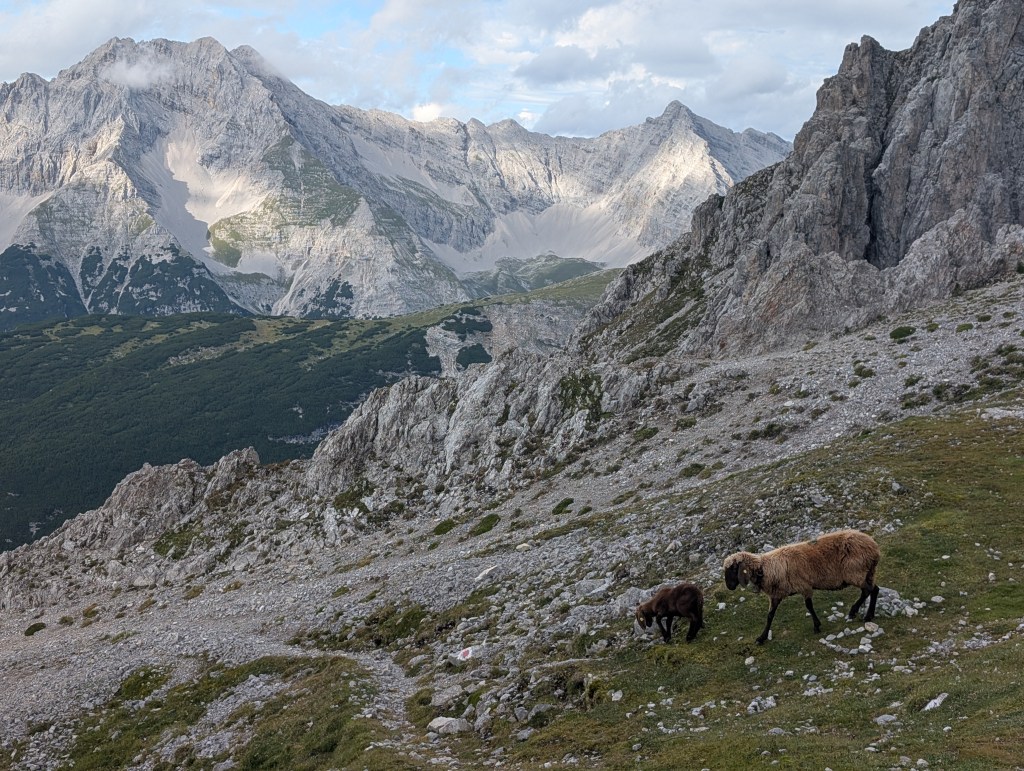

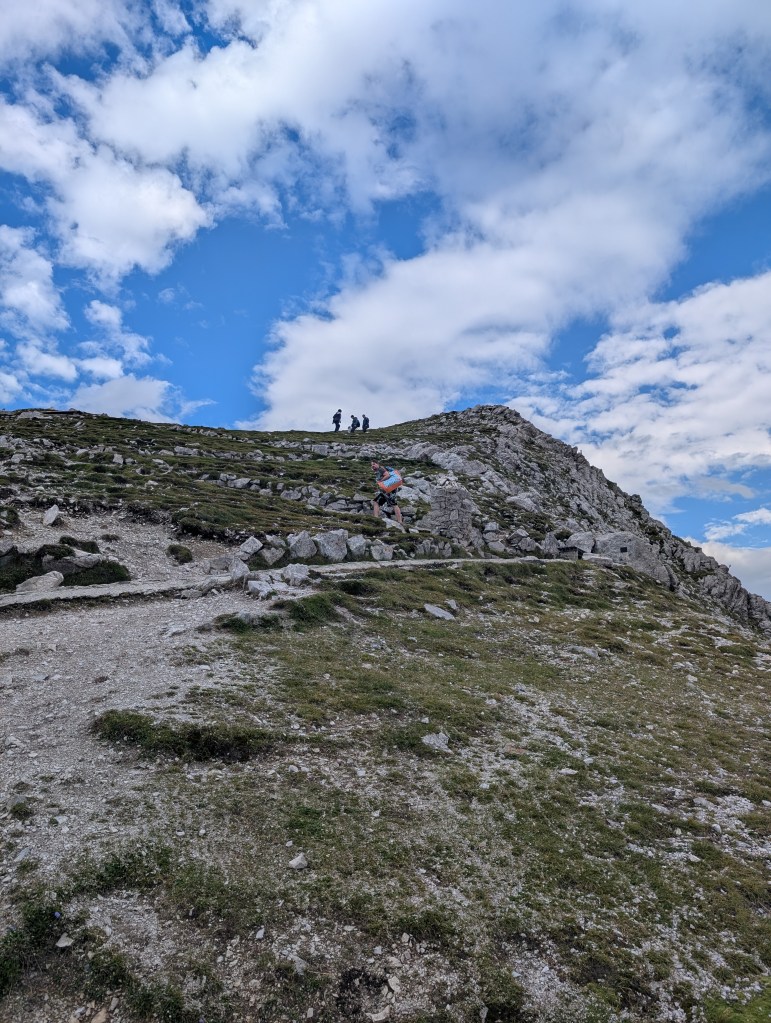
We took the last cable car down from Hafelekar to the next stop, Seegrube, where we had another 25 minutes to enjoy the views here before again taking the last cable car down. This stop is more built up with a restaurant (too late for us to partake), a playground, scenic seats, and an interpretive trail.
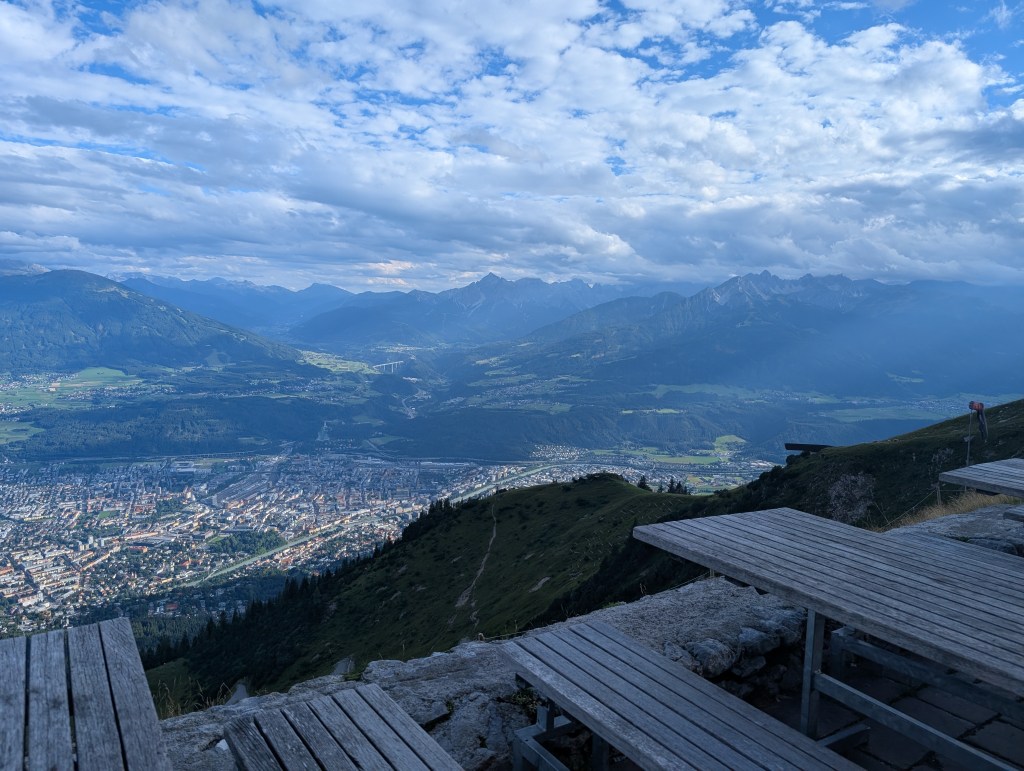

I didn’t know that many people who travel to Innsbruck do so to take in the outdoors. If I was to plan this trip again, I would plan to join them. The mountains above the city offer numerous hiking opportunities with great views.

 Mac On the Map
Leave a comment