
While I like exploring cities, I find that getting outside of cities provides some beautiful views and more local experiences. I also like to be active, so if there’s a hike to a lookout or a bike riding option, I will almost always take them.
After riding the train for a few hours to get to Salzburg, a hike up to one over the city overlooks seemed like the perfect way to stretch my legs and get a sense of the city.
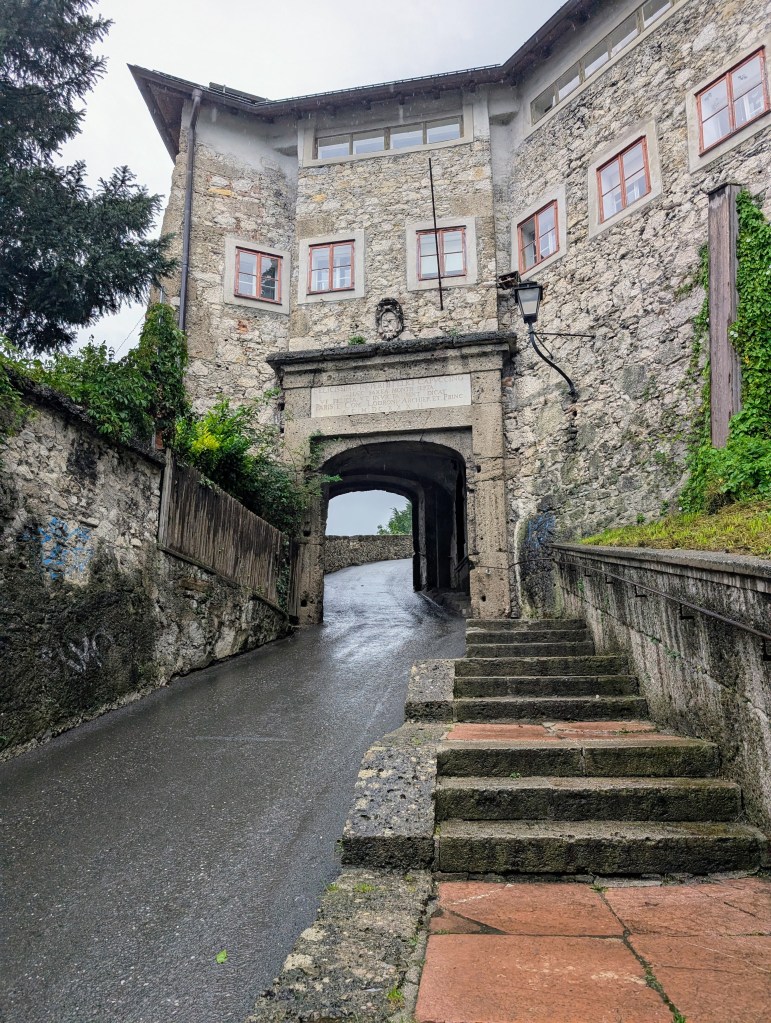
Just off Linzer Gasse, the pedestrian street that leads down the hill to the Salzach River, is the entrance to Felixpforte’s steep historic pilgrimage path up to the Capuchin Monastery. Along the way are six baroque chapels, created by local artists in the mid 1700s, depicting the stations of the cross. It was a rainy afternoon, so I was happy that along the edge of the street was a set of stone steps that provided the necessary grip from the slippery stones.

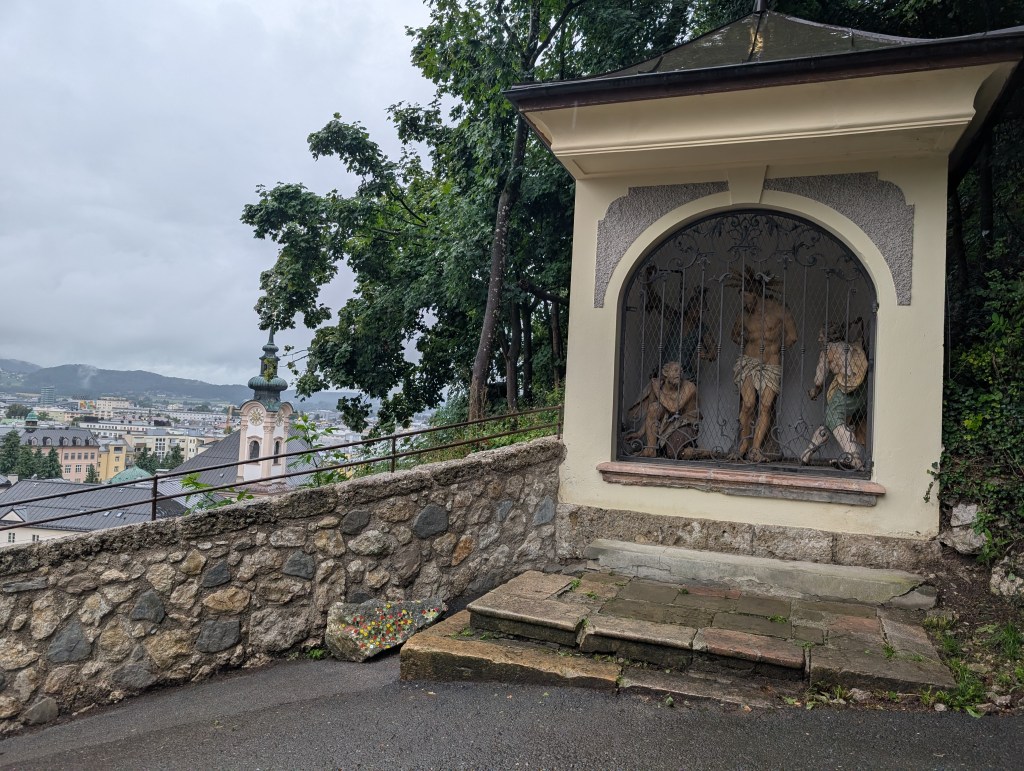
While St John’s Chapel was closed by the time I arrived at the top, the views of the city from the Hettwer Bastion viewpoint were well worth the climb. After the first overlook, I decided to walk along the ridge to the next one, and while the first overlook provided views of the old city, the next one offered spectacular views of the Hohensalzburg Fortress as well.
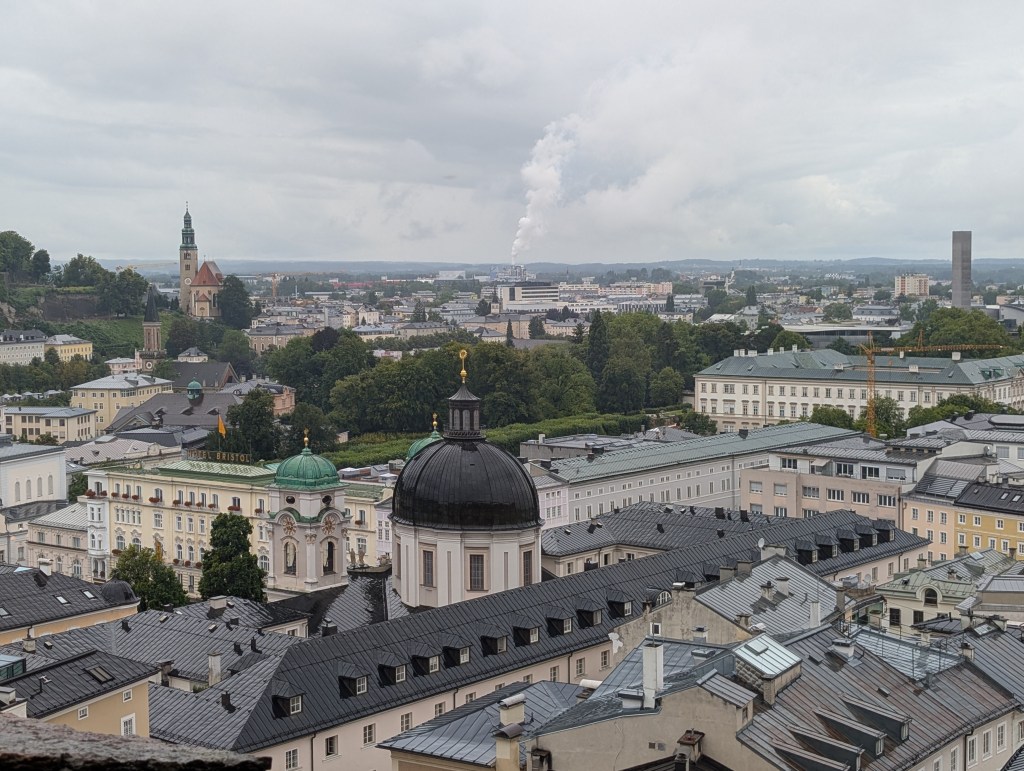
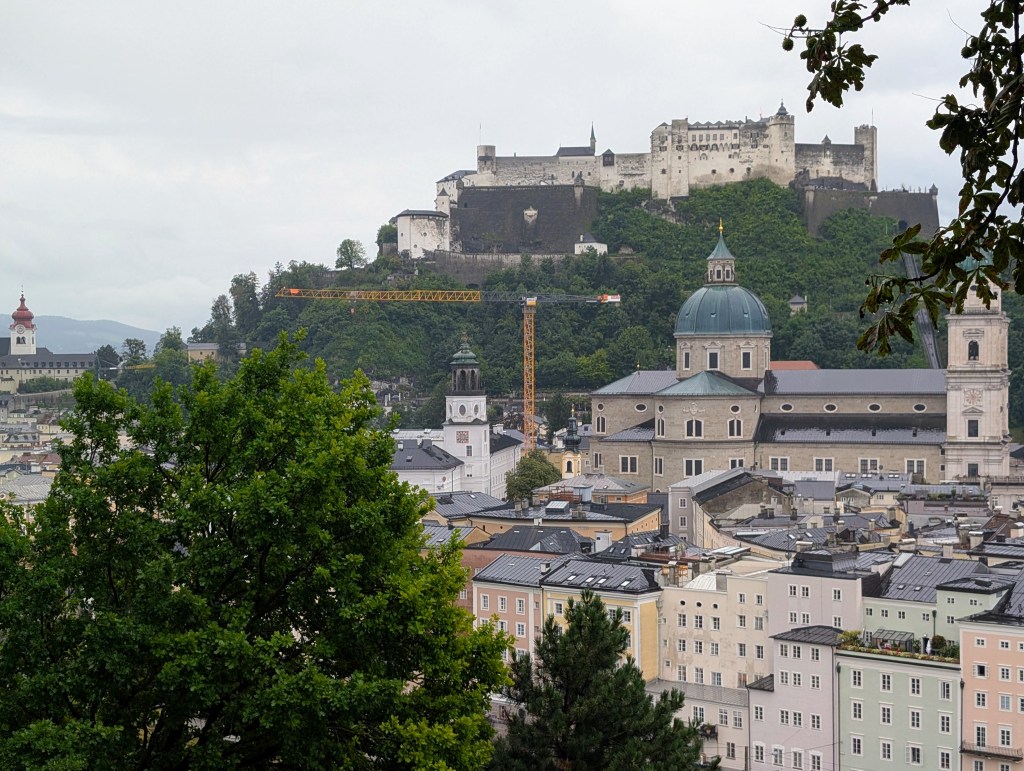
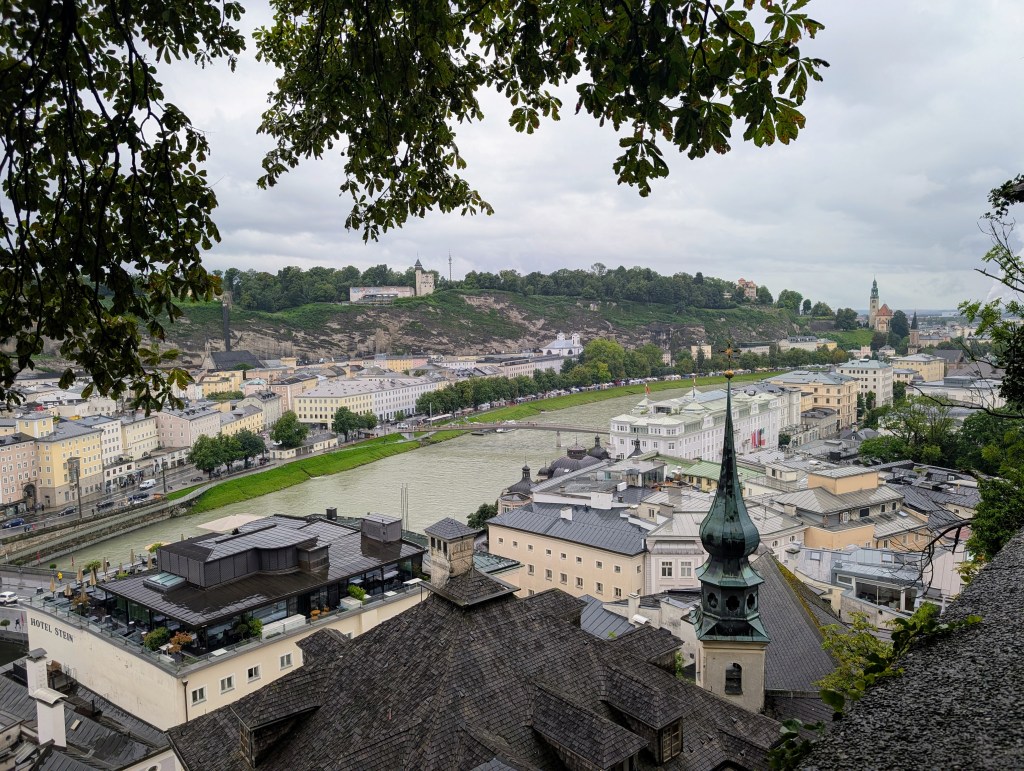
From here, I carefully climbed down the steep staircase of the Imbergsteige to Steingasse below.
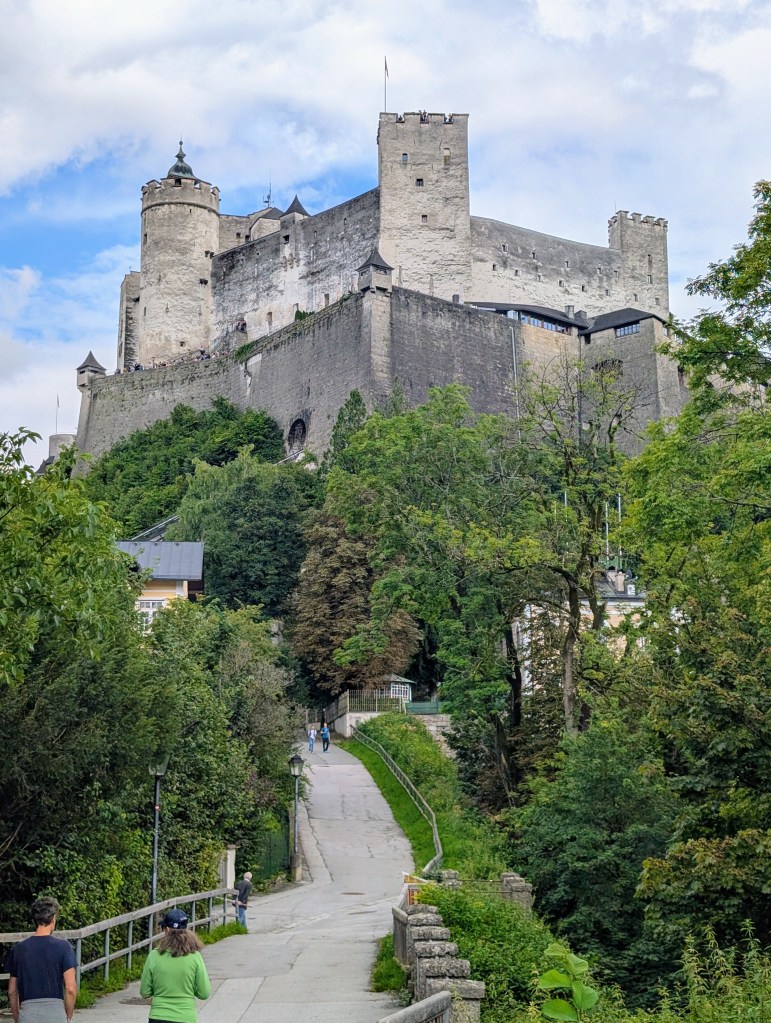
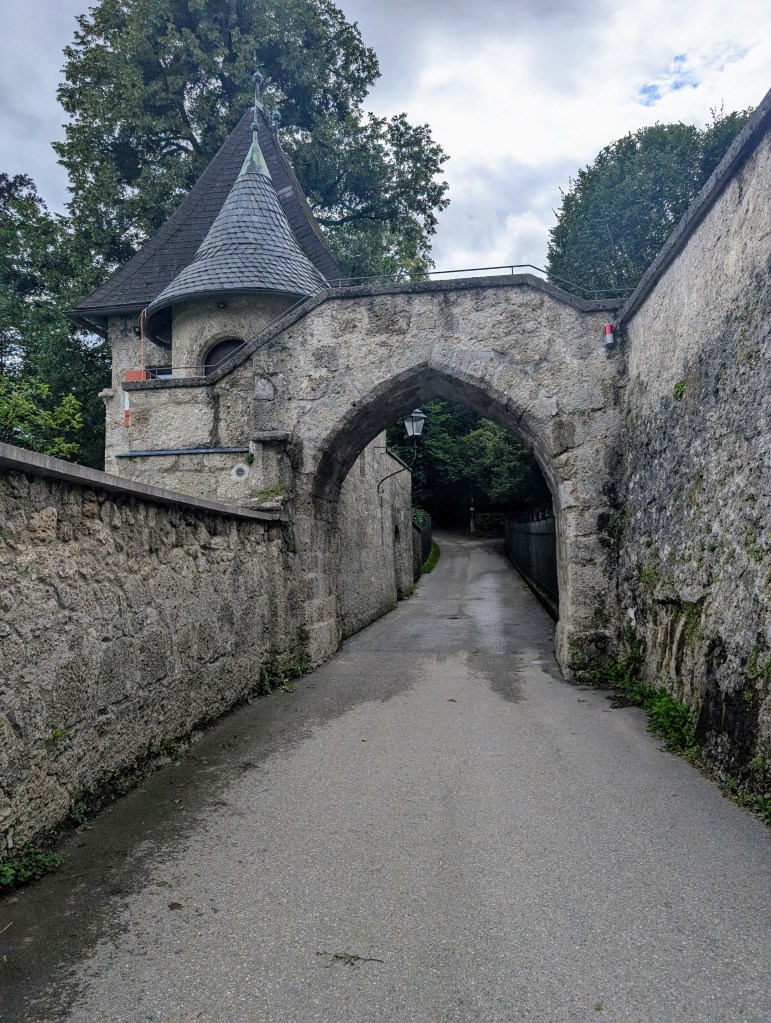
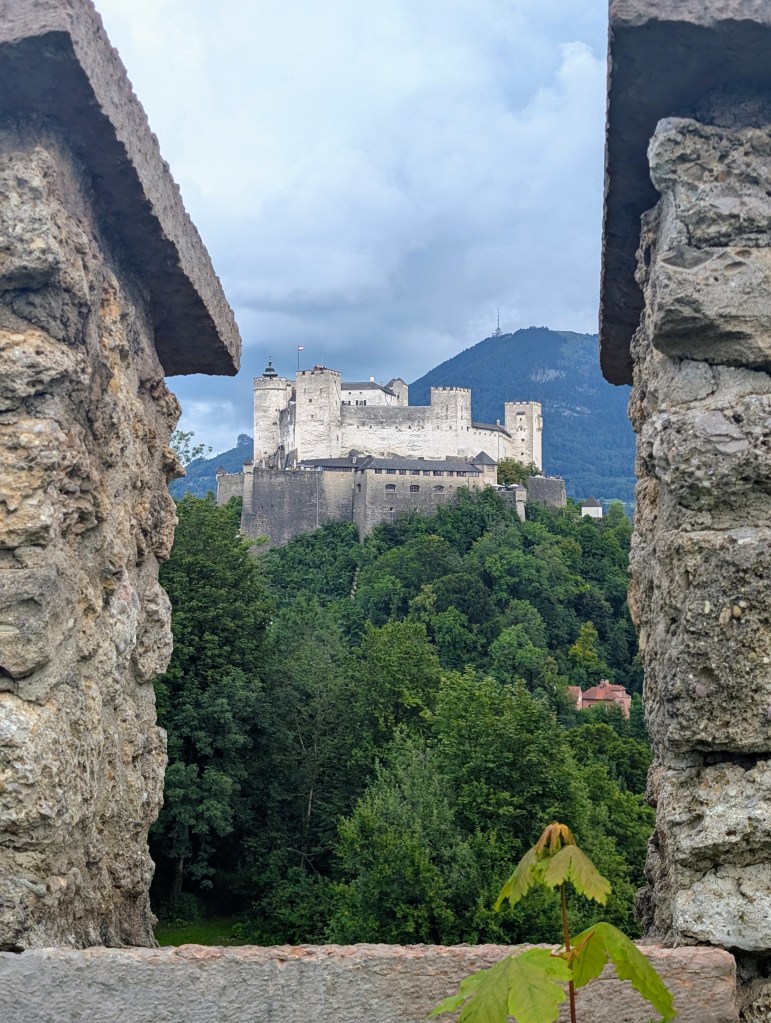
The next day I spent the morning at the Hohensalzburg Fortress. After exploring the interior of the fortress and its musuems, I decided to walk around the Festungsberg (Fortress Mountain) for more views of the city. I followed the Doktor-Ludwig-Prähauser-Weg (named after local teacher and writer) over the ridge of the mountain. The first lookout area, Richterhöhe, was up a small hill after a water fountain (always fun to fill up my water bottle with one of these). It offered its own historic walls and tower but more importantly provided a panoramic view of the fortress with my first look at the Swiss Alps in the distance – I would be heading there in a few days.
A little further along the path, the small Aussichtspunkt overlook provided a view of the other side of the mountain – the modern part of the city. When I’m staying in an old city, it’s easy to forget that the whole city doesn’t look like this, so it’s good to be reminded of the real day to day parts of the area.
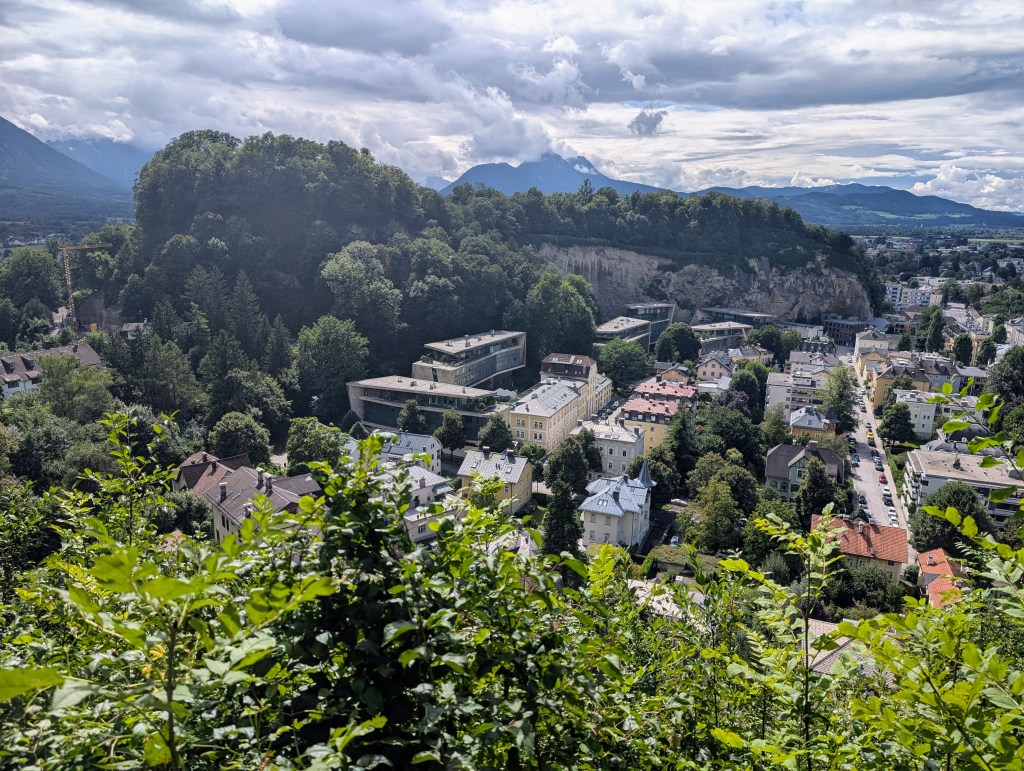
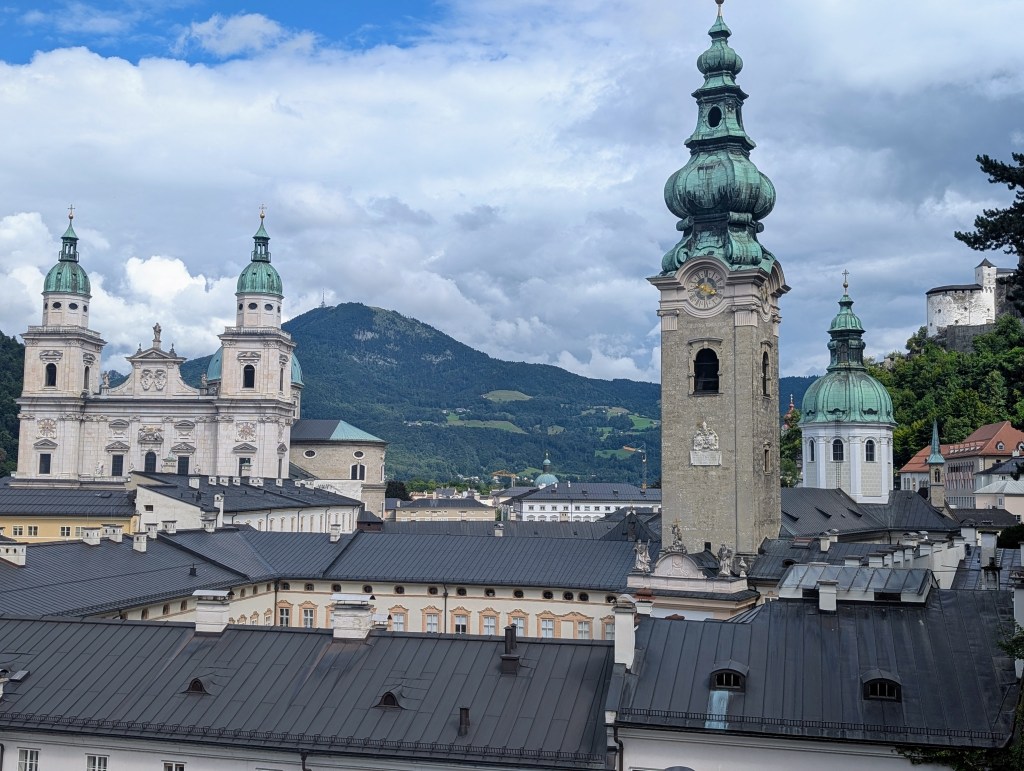
While the path continues and ends at the Modern Art Museum, I didn’t have time to finish it; instead, I turned around and headed back to the old city via the steep, but picturesque, Mönchsbergviertel. As I carefully walked down the slippery path (it rained off and on during my whole time in Salzburg), I made sure to pause to take in the more intimate views of the historic architecture within the city. It’s rare to be this high and close to the upper parts of buildings; this vantage point allows you to see details that you wouldn’t be able to see from below.
On my last day in the city, my train didn’t leave until early afternoon, so I was able to spend the morning venturing outside the city center. I’ve heard that Salzburg is known for biking, and while there were a fair amount of bike shops around, there were surprisingly only two bike rental options – and neither were open on weekends. Luckily, I was leaving on a Monday, so I rented an ebike to ride along the Salzach River to the small town of Hallein. It was obvious from the hour long ride to the town that Austria has a robust biking culture as I saw both long distance bikers with their overloaded packs attached to their bikes as well as local bike commuters. Sadly for all of us, we got caught in some downpours for much of the ride. Still, it had been raining for a few days now, so I feel like we were all used to getting wet at this point.
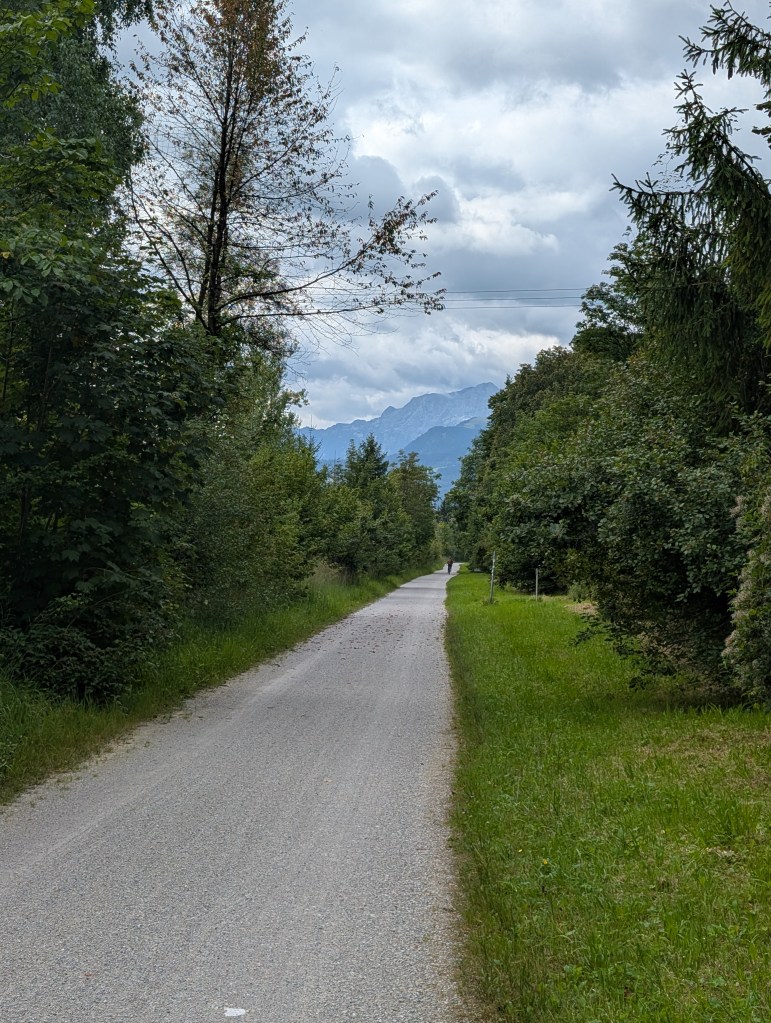
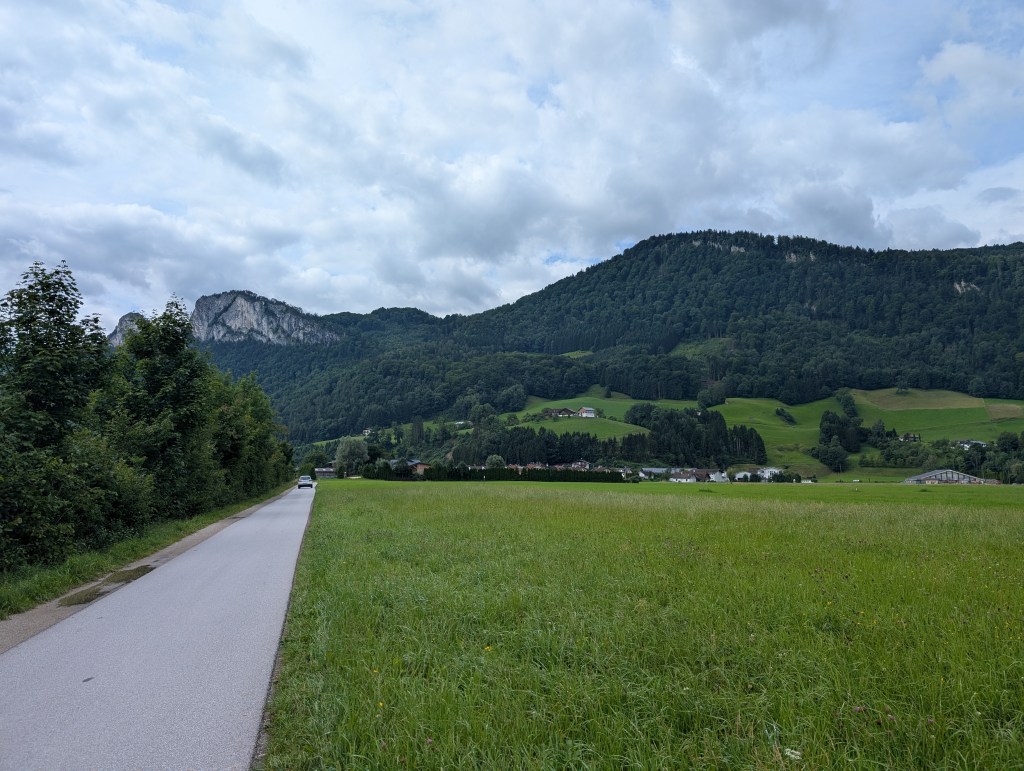

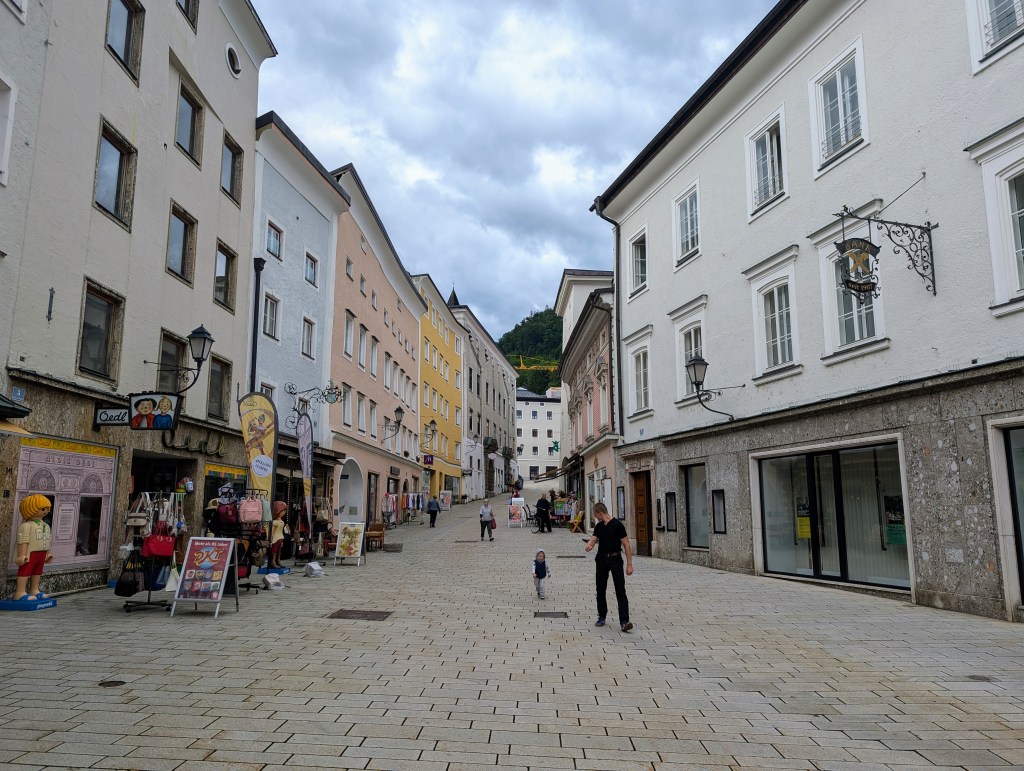
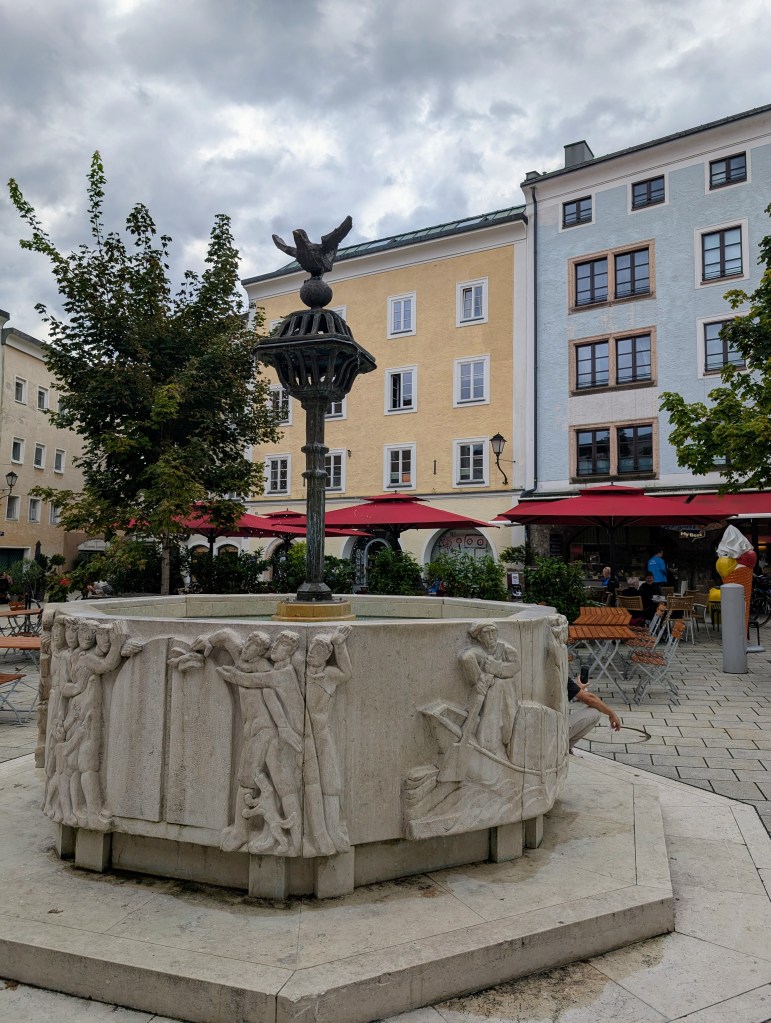
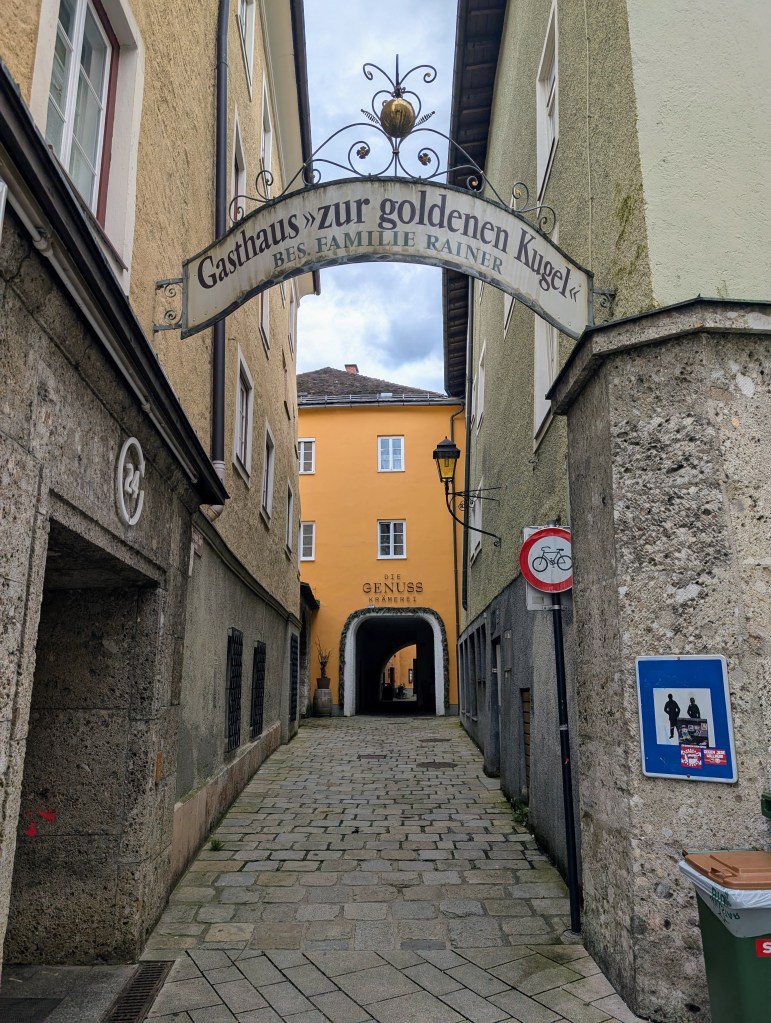
The town of Hallein had a cute pedestrian center with a few cafes and shops. With the time crunch, I only had time for a quick snack break before heading back. If I had more time, I would’ve tried to visit one of the nearby salt mines that the area is known for.
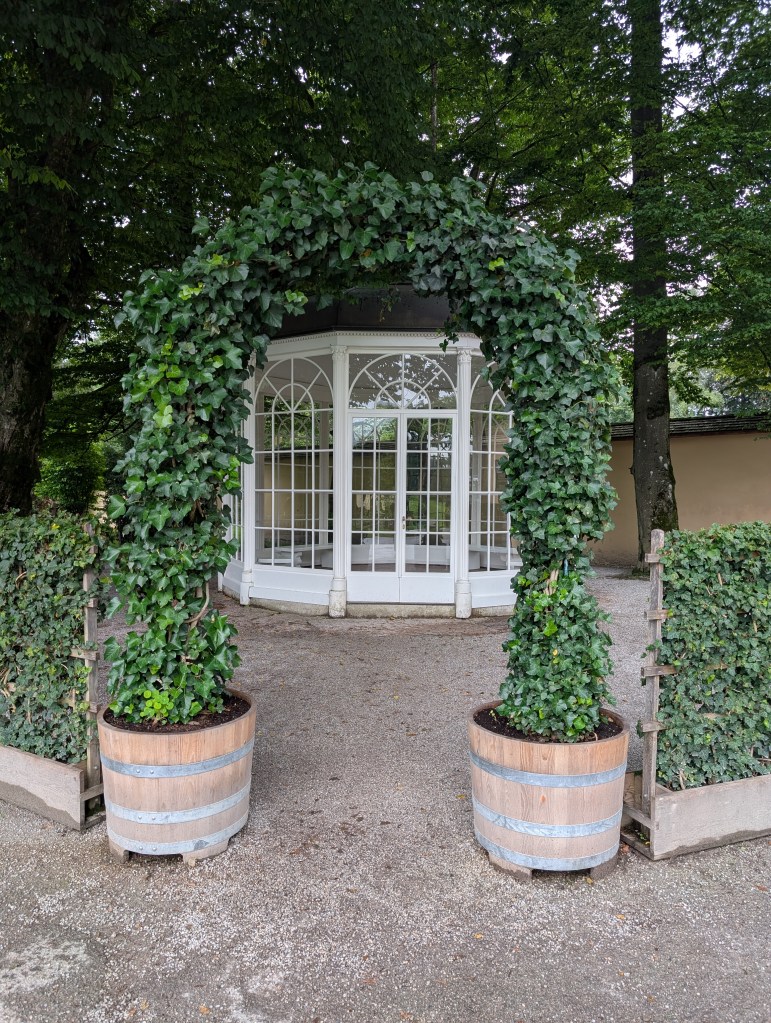
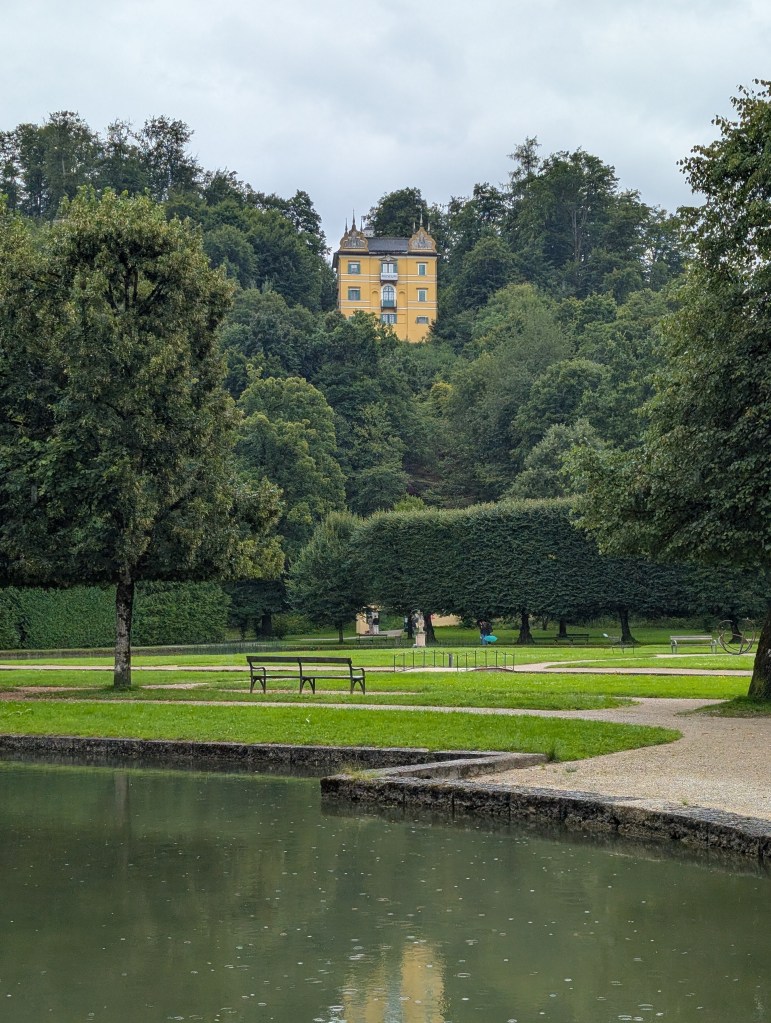
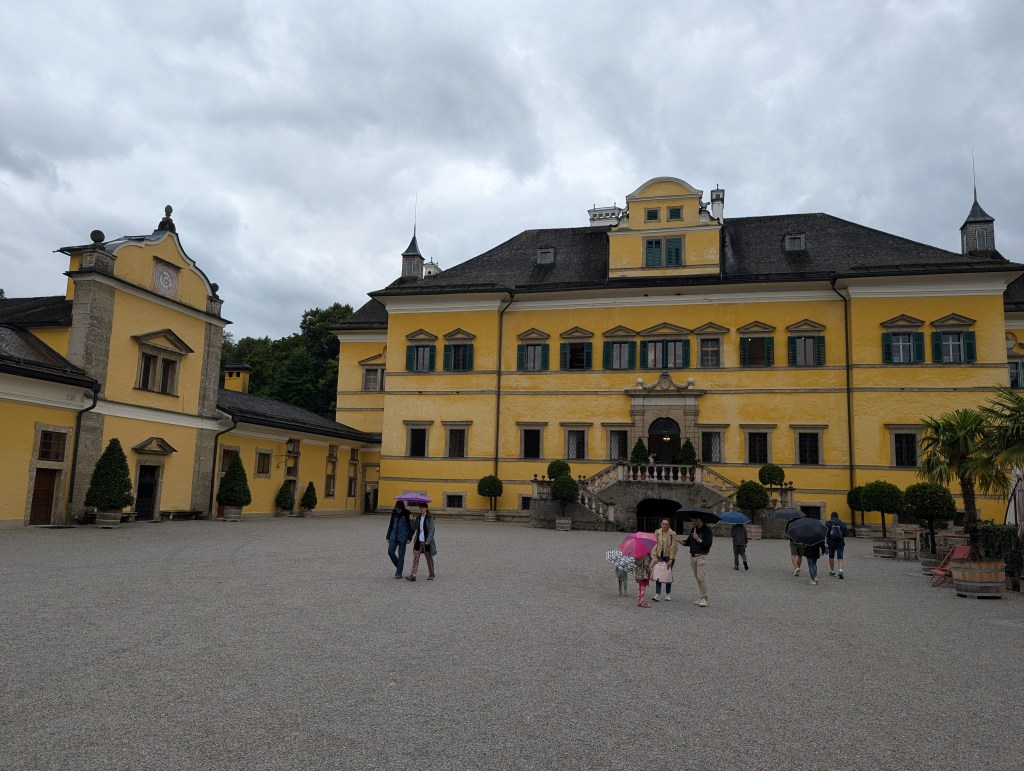
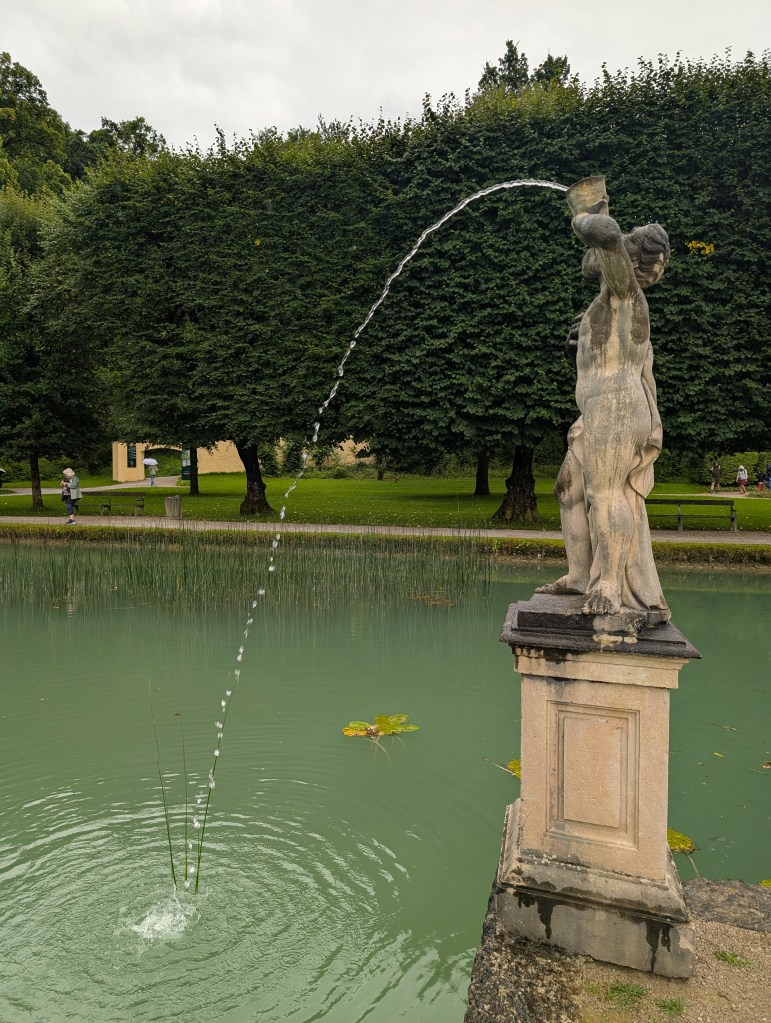
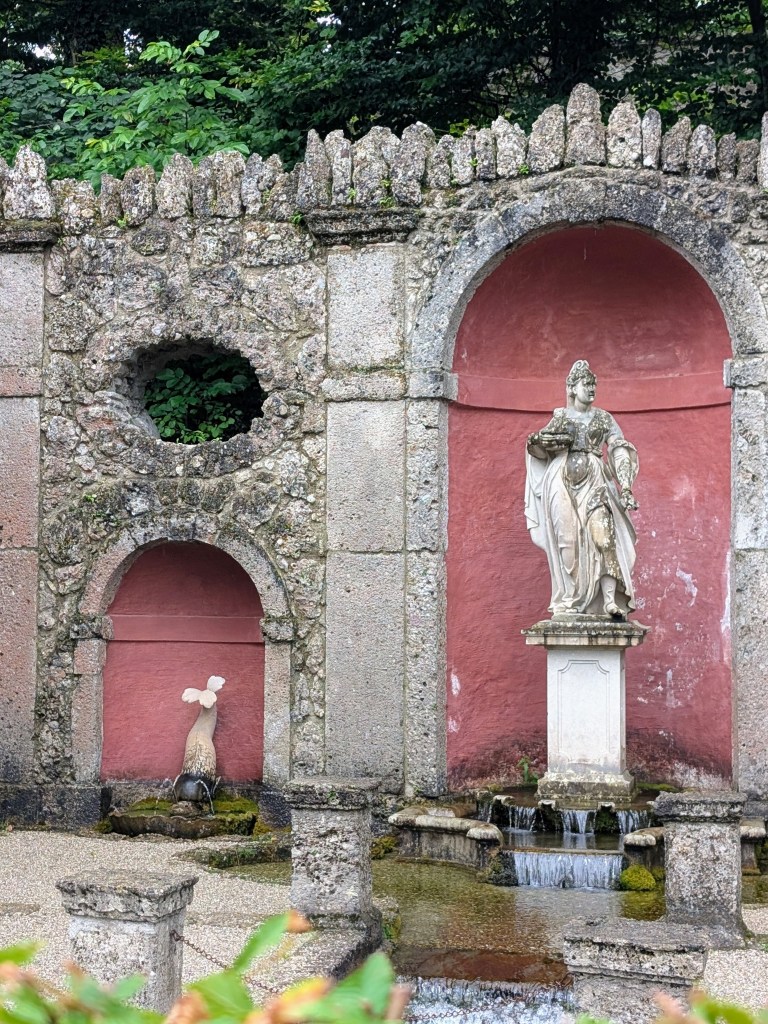
On the way back, I took the detour to see Hellbrunn Gardens. Here is one of the Sound of Music locations: the small gazebo where Liesl von Trapp sings “16 going on 17”. While the gazebo was just a gazebo to me, I enjoyed the other elements of the gardens: expansive green spaces against the hillside beyond, a magnificent fountain framing the palace, the massive trout and sturgeon swimming in the ponds, and the 17th century trick fountain displays.
From Hellbrunn Gardens I biked along the tree arched Hellbrunner Allee through the farms and fields back to Salzburg. 400 years ago, prince-archbishop Markus Sittikus planted over 600 trees along this lane to give him direct access to the city. It now serves as a picturesque walking and bike path for locals.
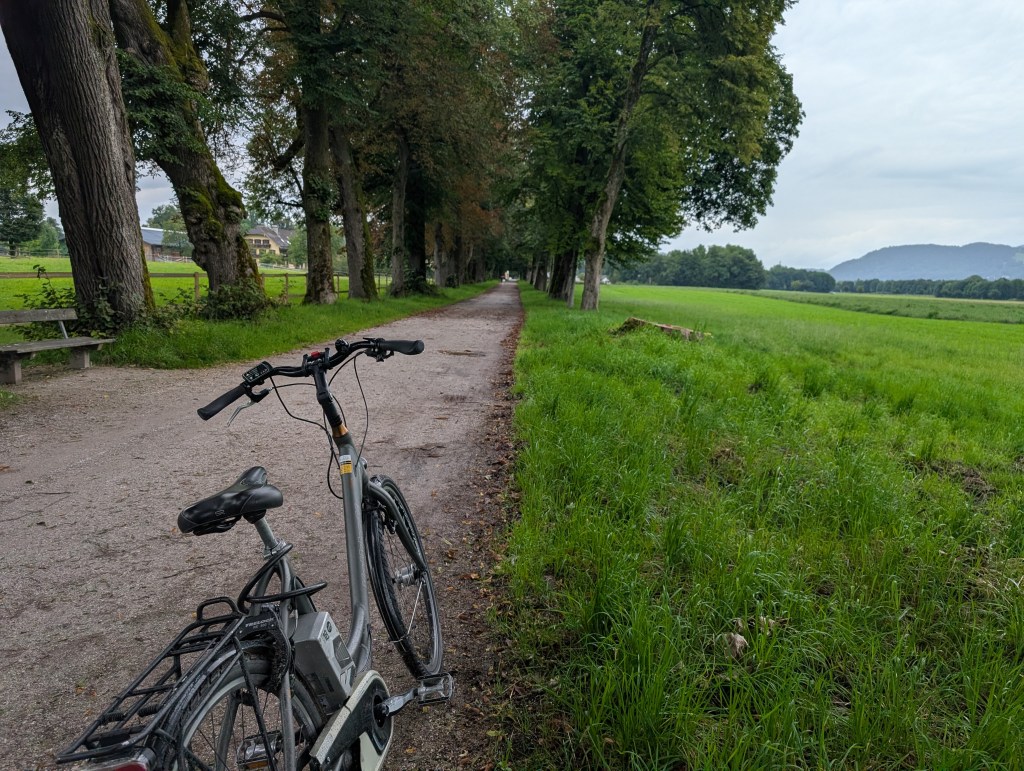
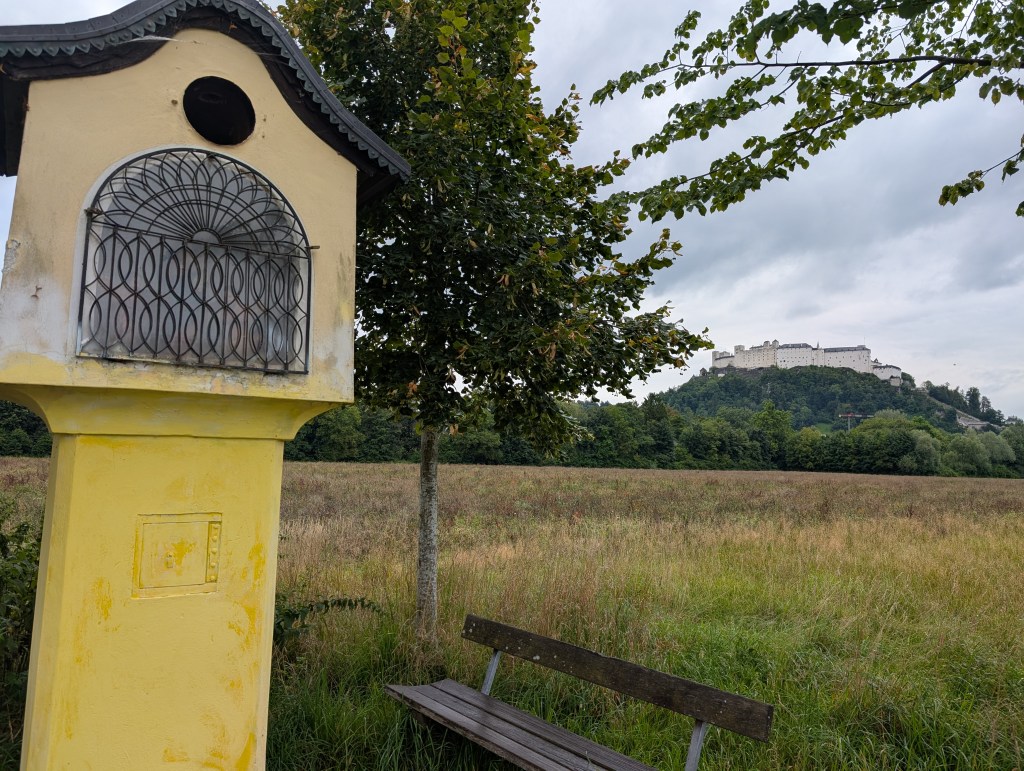
While the ride was short and rainy, it was still nice to get a glimpse of life outside the old city and take in one more Sound of Music site before I left.
 Mac On the Map
Leave a comment