
On the first Sunday of every month from October to March, the state museums in Florence are free. This includes some of the most iconic museums in the city, so when I realized that I lucked out and would be in the city for one of these days, I knew that I had to put on my comfortable shoes for a museum day.
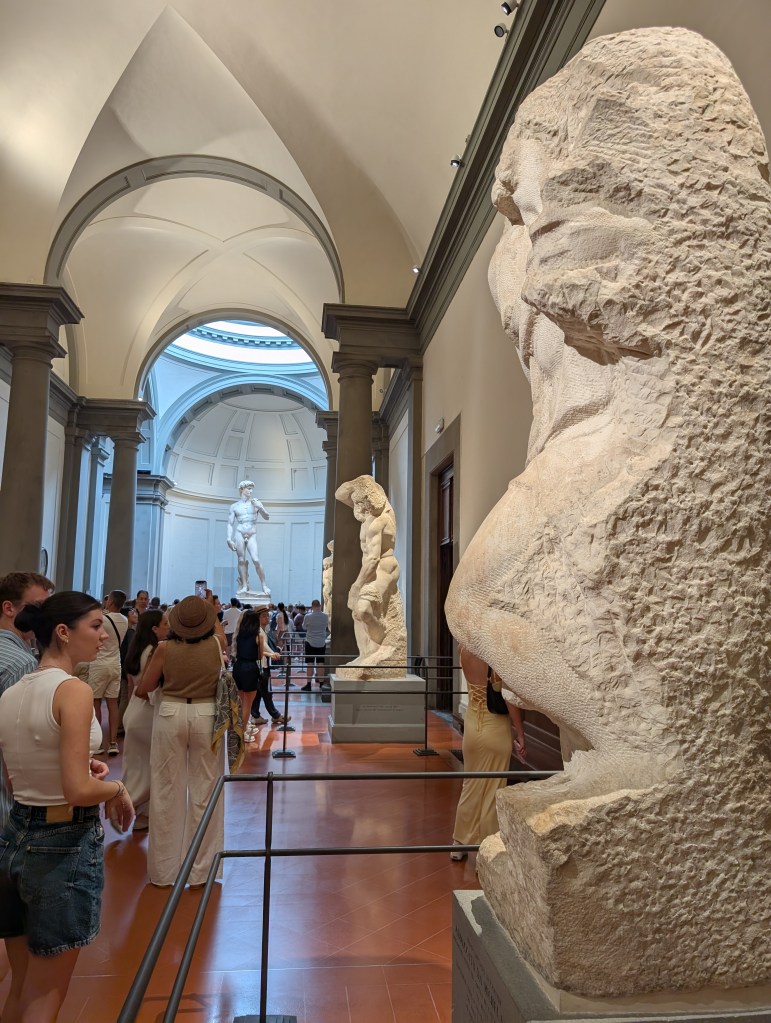
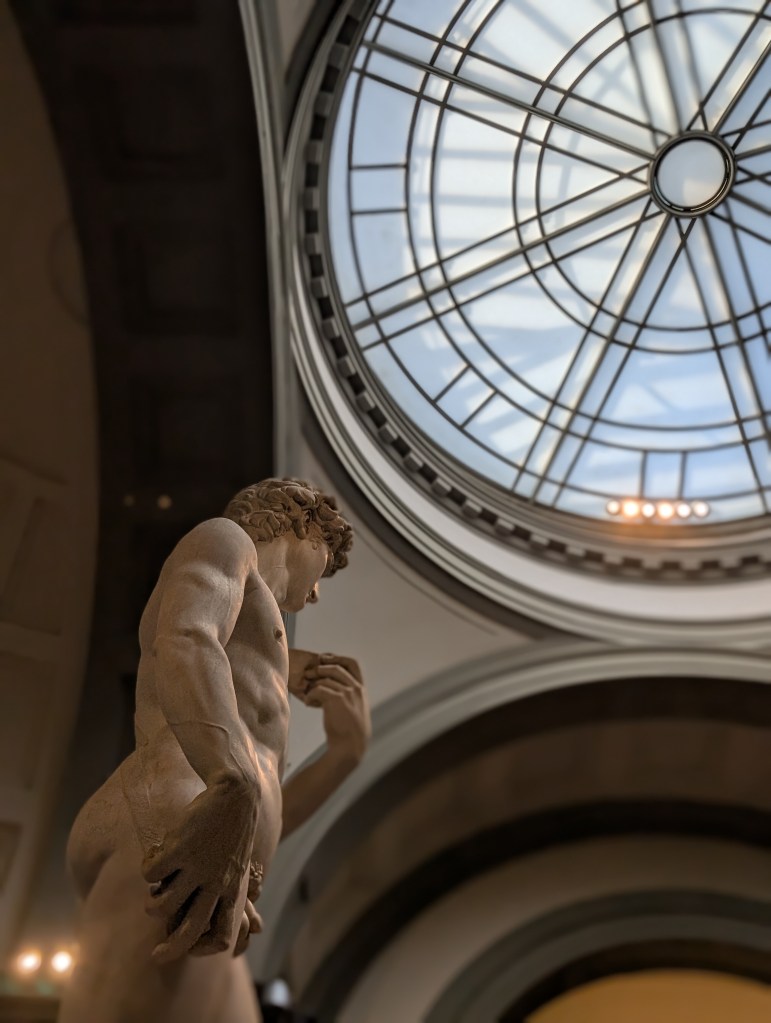
I started with one of the smallest, but most popular museums: Accademia Gallery. When I arrived 10 minutes before opening time, there was already a long line, but it moved quickly, and I was soon within the museum that has essentially dedicated itself to Michelangelo Buonarroti’s sculptures – most notably the sculpture of David. David(1504) stands in the spotlight of the center atrium of the museum; the wide hallway leading to it features the largest collection of Michelangelo’s sculptures in the world, including The Prisoners – a series of unfinished sculptures that were originally commissioned for Pope Julius II’s tomb.
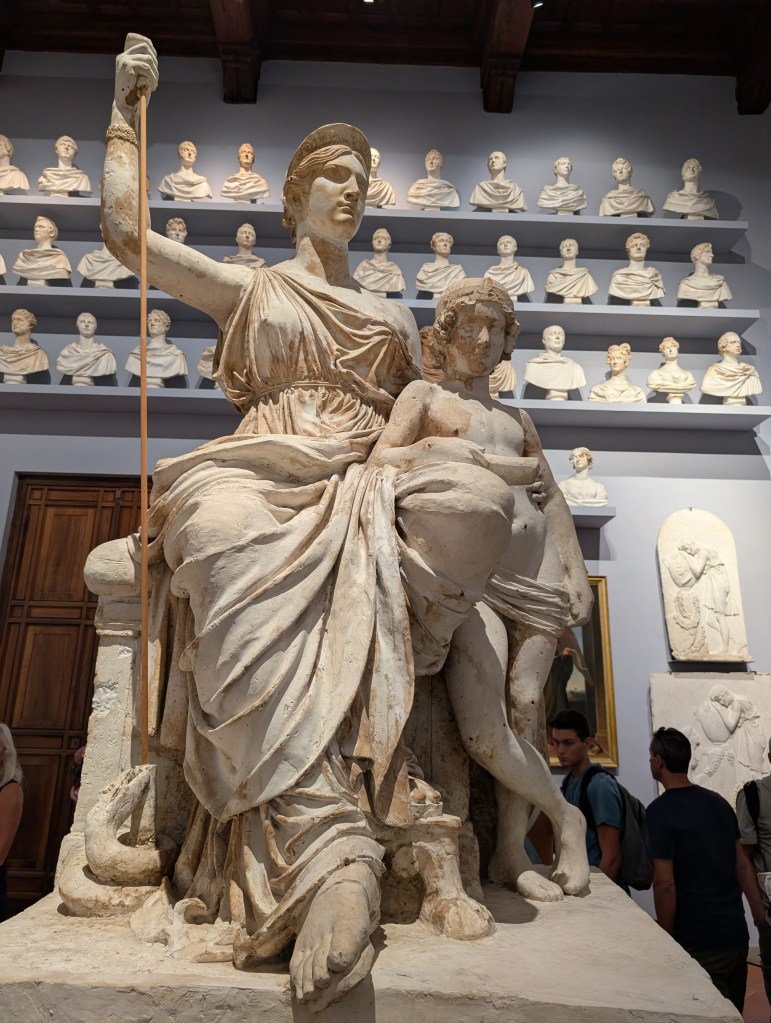
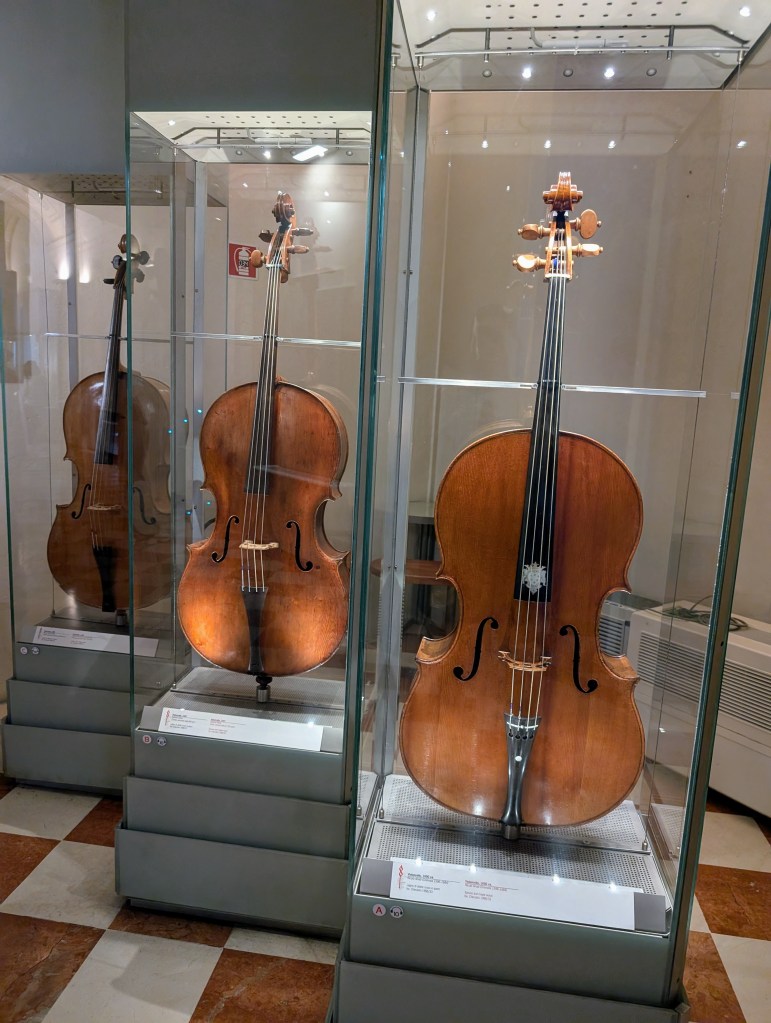
Several of their other exhibits are tangentially connected to Michelangelo, such as the 16th and 17th century altarpieces that influenced Michelangelo’s spirituality. They are also home to a large collection of musical instruments from the grand dukes of Tuscany and a gipsoteca featuring the plaster casts of 19th century sculptor Lorenzo Bartolini.
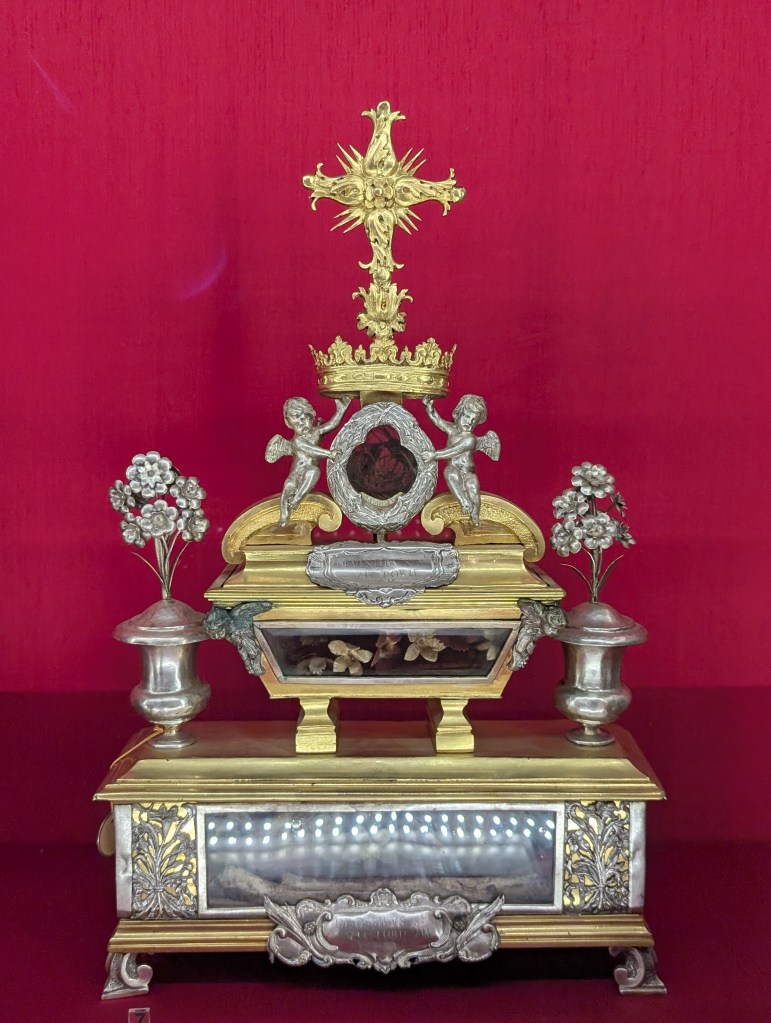
The dark and cavernous crypt of Medici’s Chapel was a stark contrast to the light and bright atmosphere of the Accademia Gallery. The entry level brings you into the dark and somber tombs of the Medici family. Gravestones and reliquaries represent the Grand Dukes and their families.
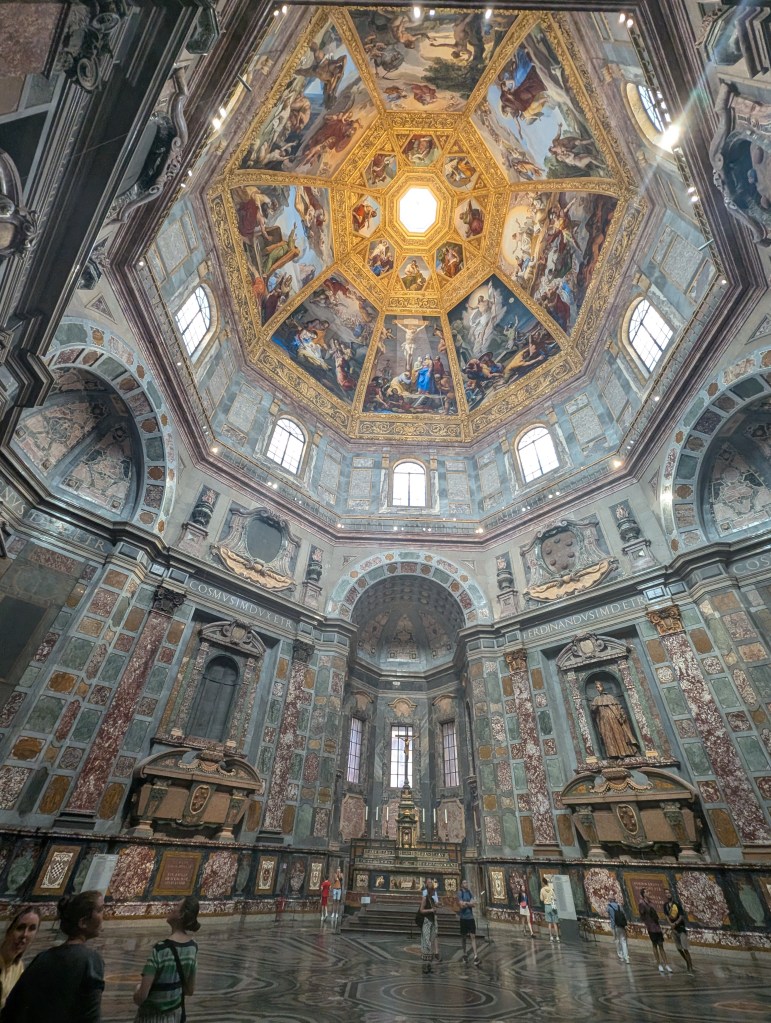
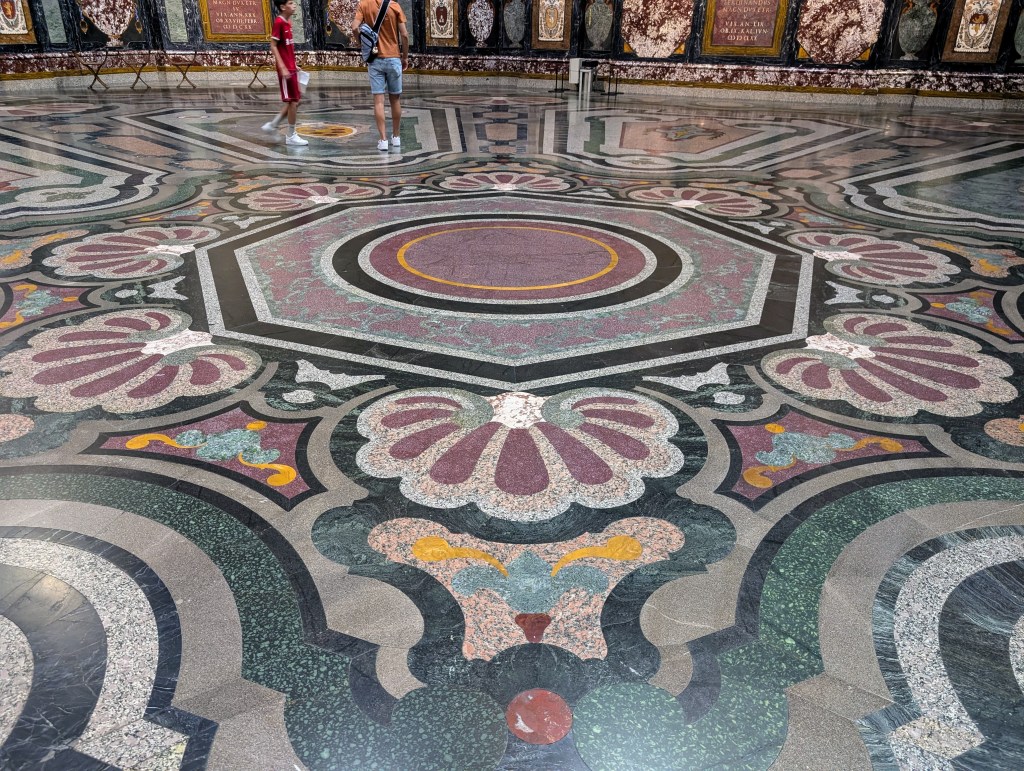
This funereal level didn’t prepare me for the opulence of the mausoleum above. This impressive Chapel of Princes for the Medici family took centuries to design and complete. First designed in 1570, the project wasn’t fully completed until 1962. Decorated from floor to ceiling with rich marble details, sculptures and grand ceiling paintings, there was so much to take in. This was probably the most impressive interior space I saw during my time in Florence.
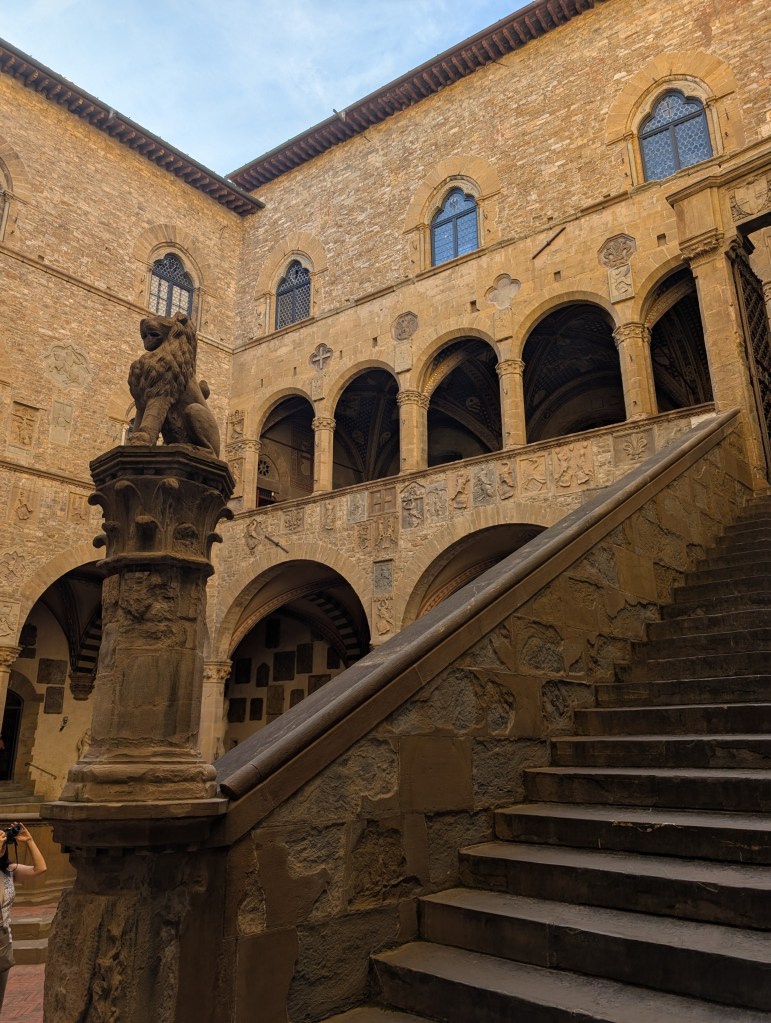
The National Museum of Bargello is a must see for any sculpture and architecture connoisseur. Housed in the oldest public building in Florence (1255), the space began as a palace, turned into a police station, and is now a museum focusing on the Middle Ages and the Renaissance. I enjoyed taking in the architecture of the courtyard, frescoes, and ceilings as I made my way through their collections.
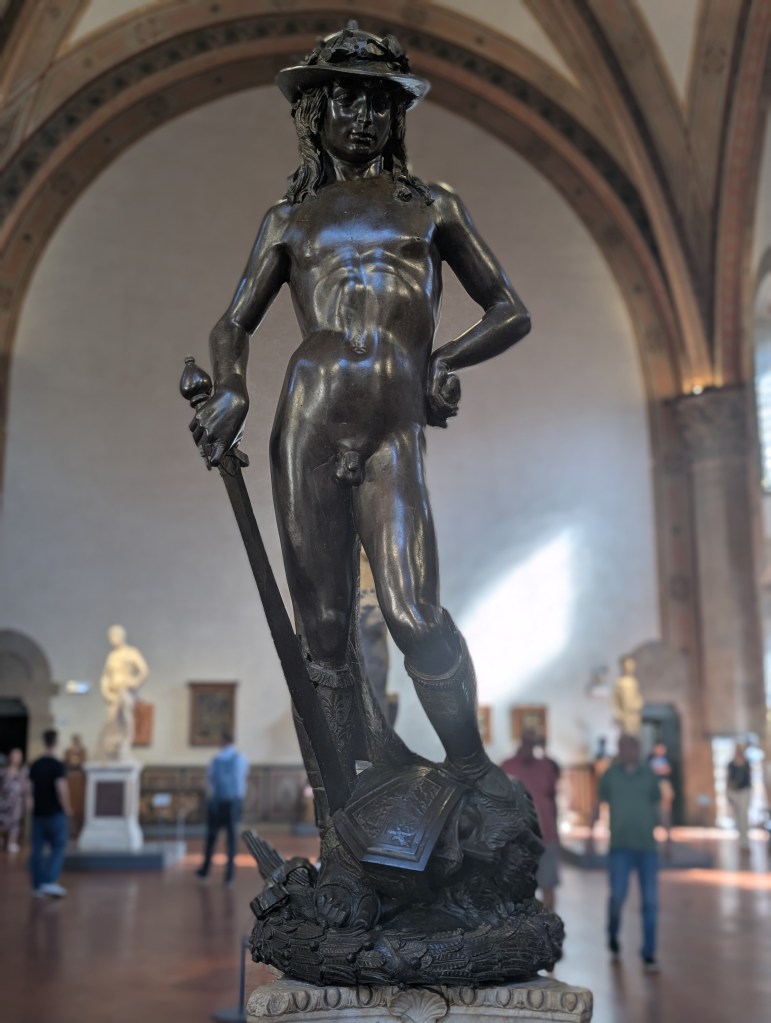
Coming from the young country of the United States, I was in awe of some of the dates: fabrics, weapons, ivories, pottery, etc dating back to the 9th century are on display. The sculpture room features more sculptures by Michelangelo but also includes older sculptors like Donatello (known for his own David sculpture – this one in bronze) and Verrocchio (teacher of Leonardo da Vinci).
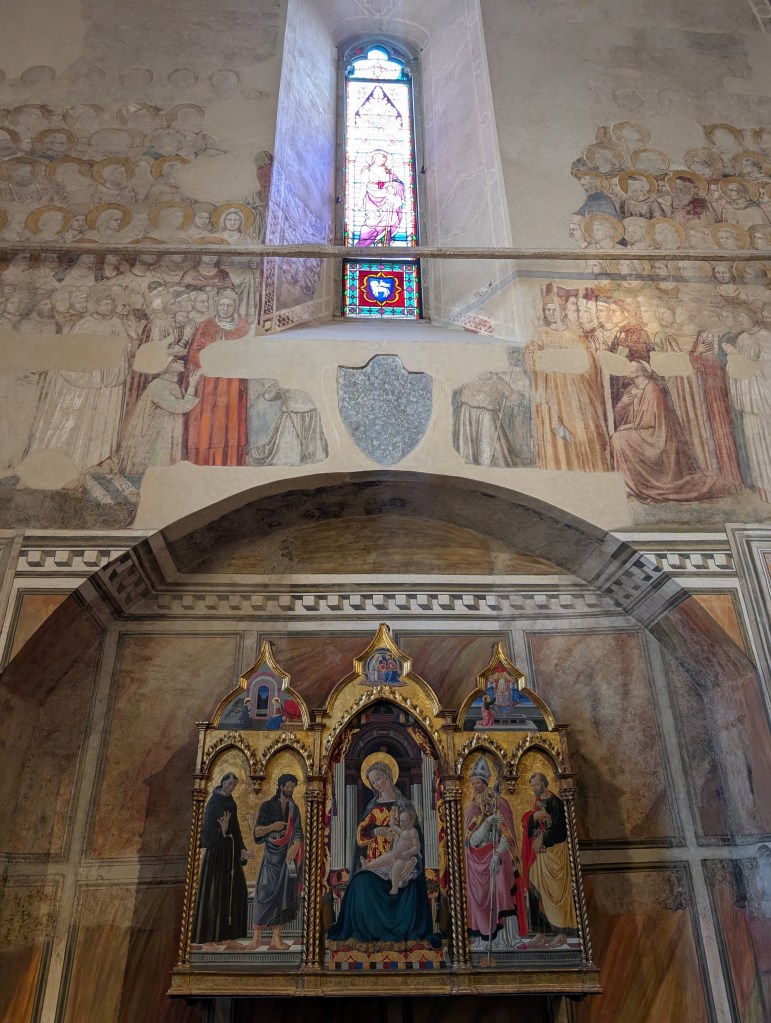
My final stop of the day was the largest of the museums: Uffizi Galleries. If I had to do this day again, I would probably start here as its many floors require more energy than I had left. Thus, I only visited the top floor before calling it a day – surprisingly, the museum has everyone start on the top floor. The massive collection of paintings and sculptures on display here are from Anna Maria Luisa – the last of the Medici line. She bequeathed the collection to the city of Florence as part of the 1737 Family Pact.
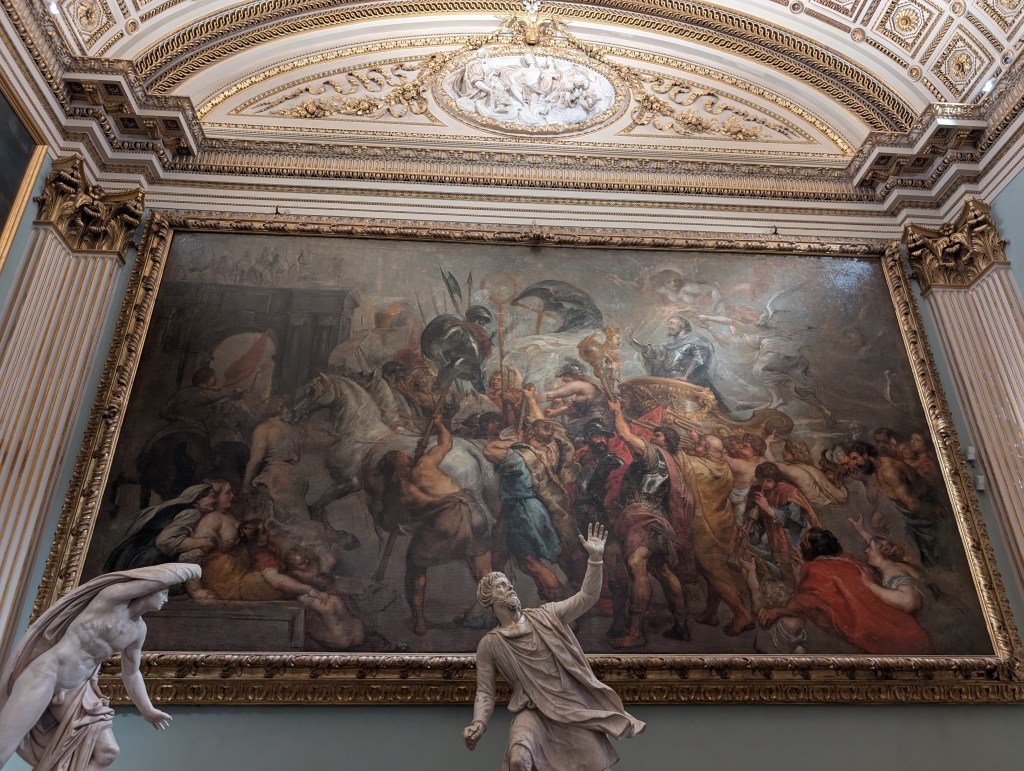

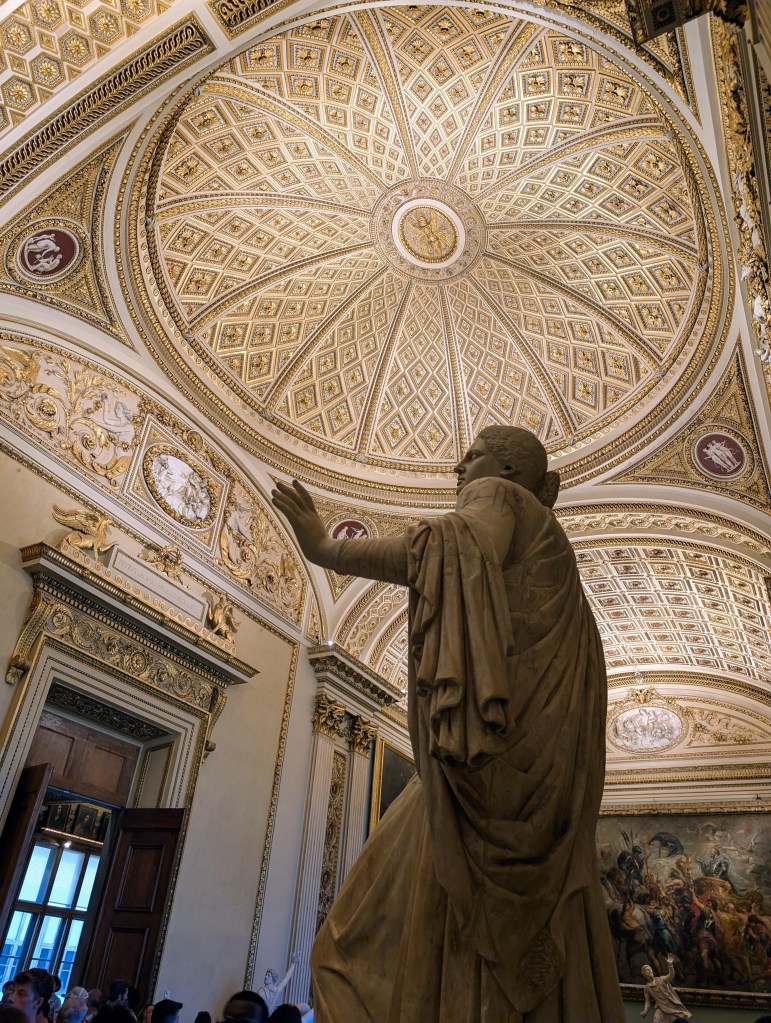
The Vassari Corridor, the main thoroughfare for the museum, is flanked with roman sculptures that drew my eye down the length of the grand hallway. Its ceilings are adorned with 16th century frescoes. The museums created a clear path for visitors to follow that brings them into the various adjoining rooms featuring paintings and sculptures of religious and Roman art. The more notable artists – Botticelli, Leonardo da Vinci, and Raphael – each have their own dedicated room, and the Tribune, an octagonal room designed by Bernardo Buontalenti for the Grand Duke in the late 1500s is cordoned off for only viewings from its doorways.
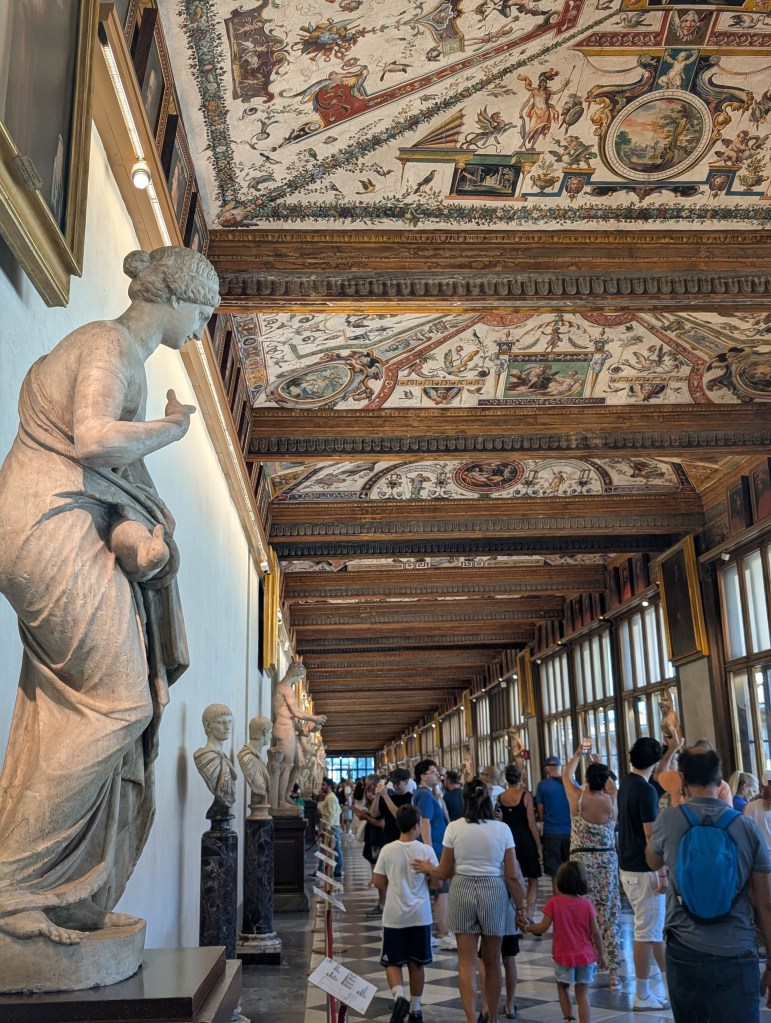
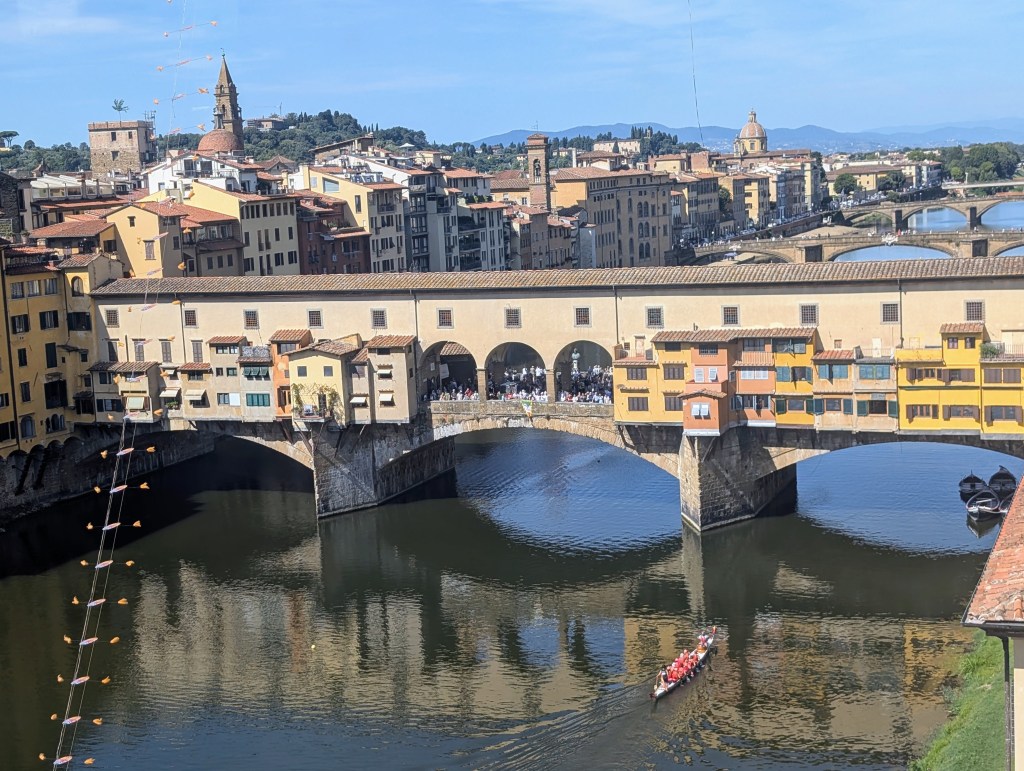
The windows along the Vassari Corridor also provide views of the city – the Arno river, Ponte Vecchio, and the Florence skyline.
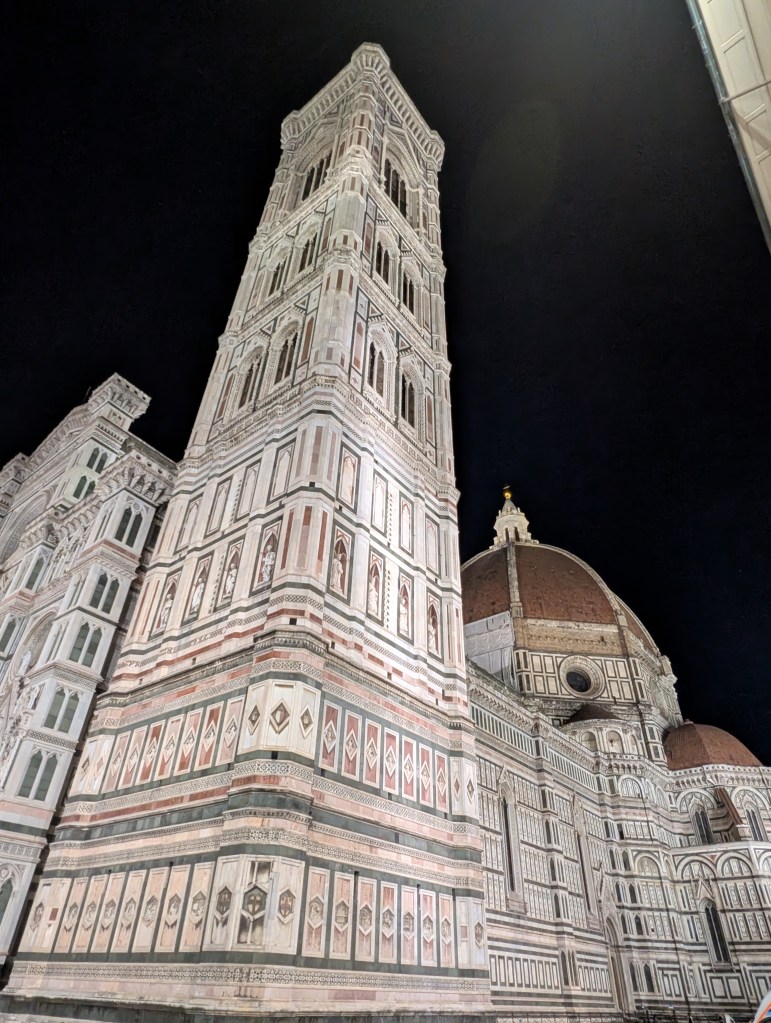
Since the Cathedral is closed to visitors on Sundays, I planned to visit this grand space the following day. Santa Maria del Fiore is probably the most iconic building in Florence and one of the largest churches in the world. The geometric exterior fabricated from white, green, and red marble is unlike any other cathedral I have seen in Europe. Almost every day I was in Florence, I ended up in the shadow of this neo-Gothic cathedral – whether it was listening to live music in the evening or perusing the shops surrounding it.
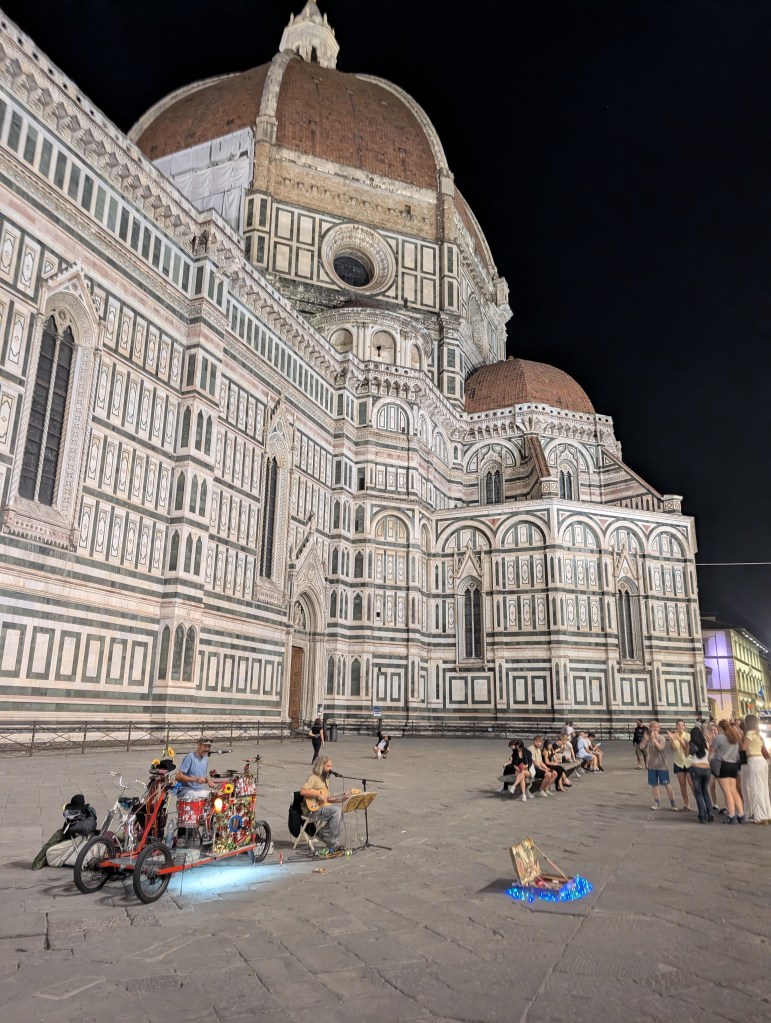
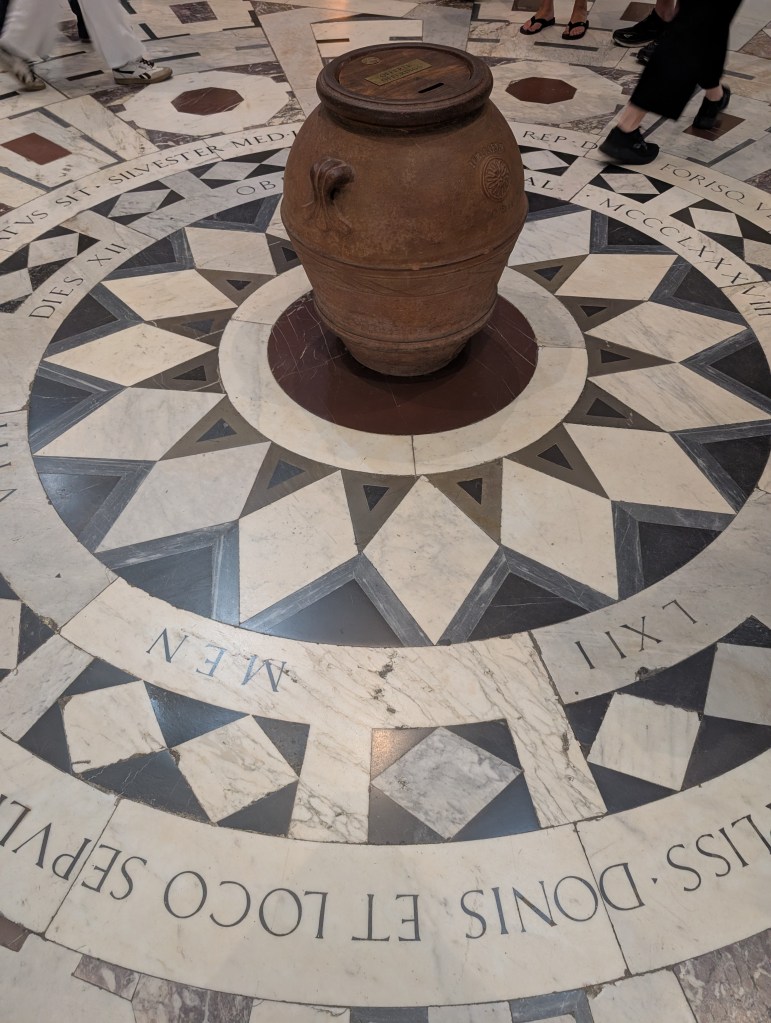
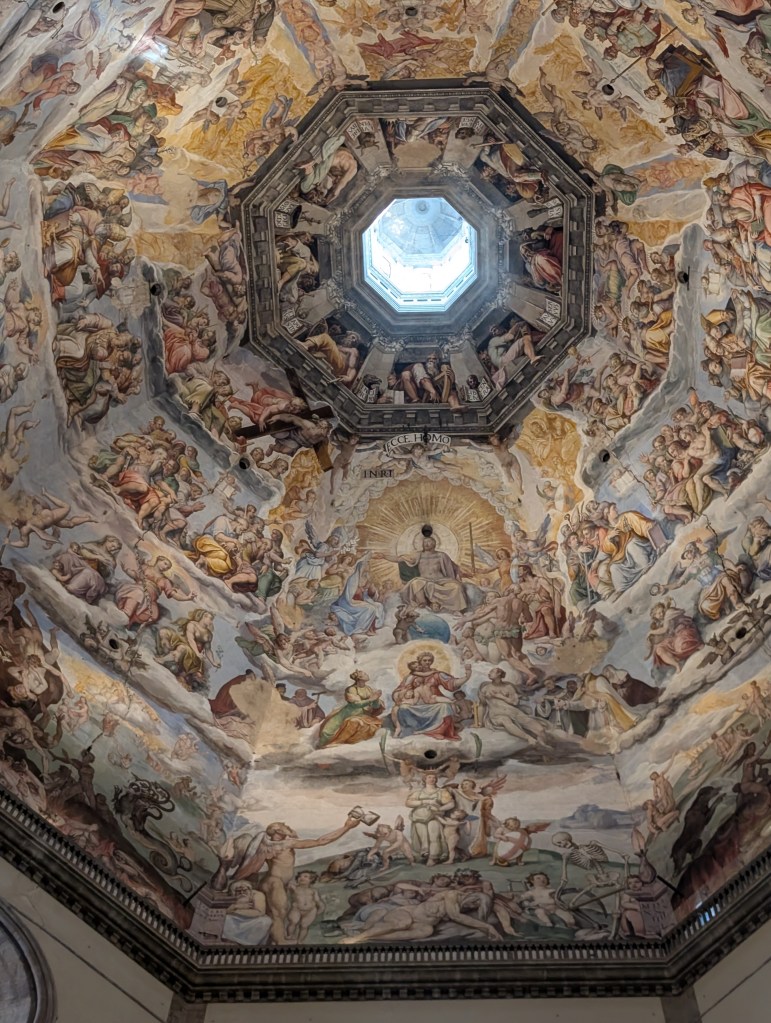
Thus, I had high hopes for the interior; however, after waiting in line for over an hour, I was underwhelmed by the interior of the Cathedral. Unlike other European Cathedrals I have visited, the interior walls, altars, and pillars are muted with whites and grays. I was impressed by its size (153 meters tall), its history (constructed in 1296), the intricate ceiling fresco, and its black, grey, and white inlaid marble floors; but with the crowds, even these were hard to appreciate.
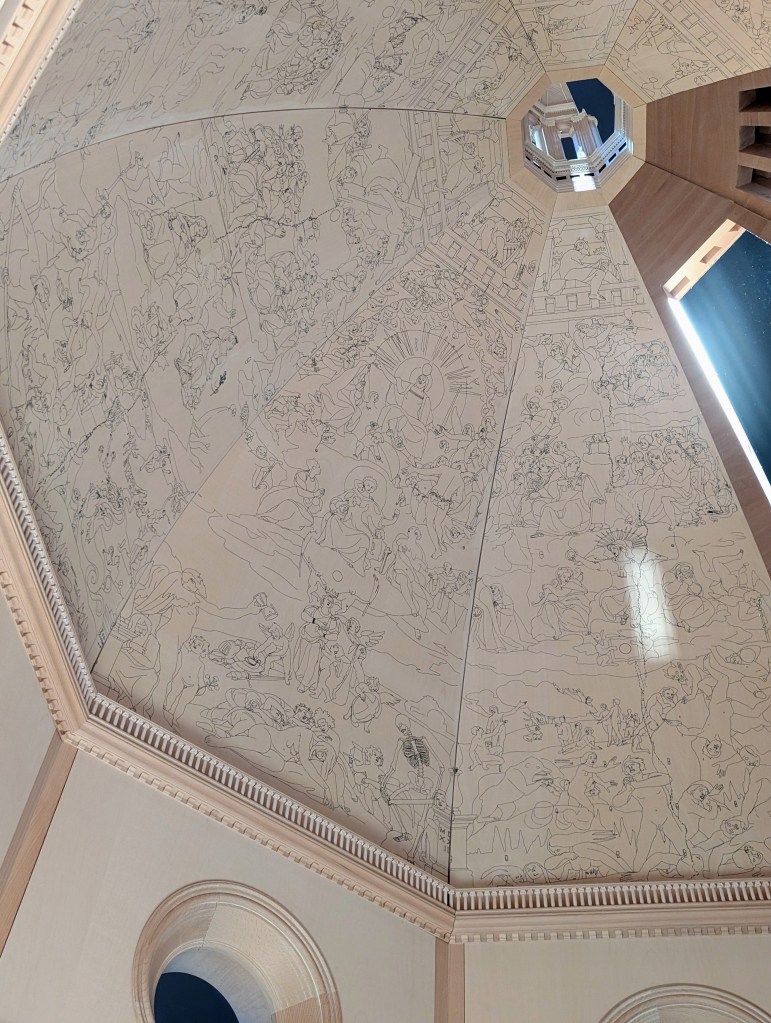
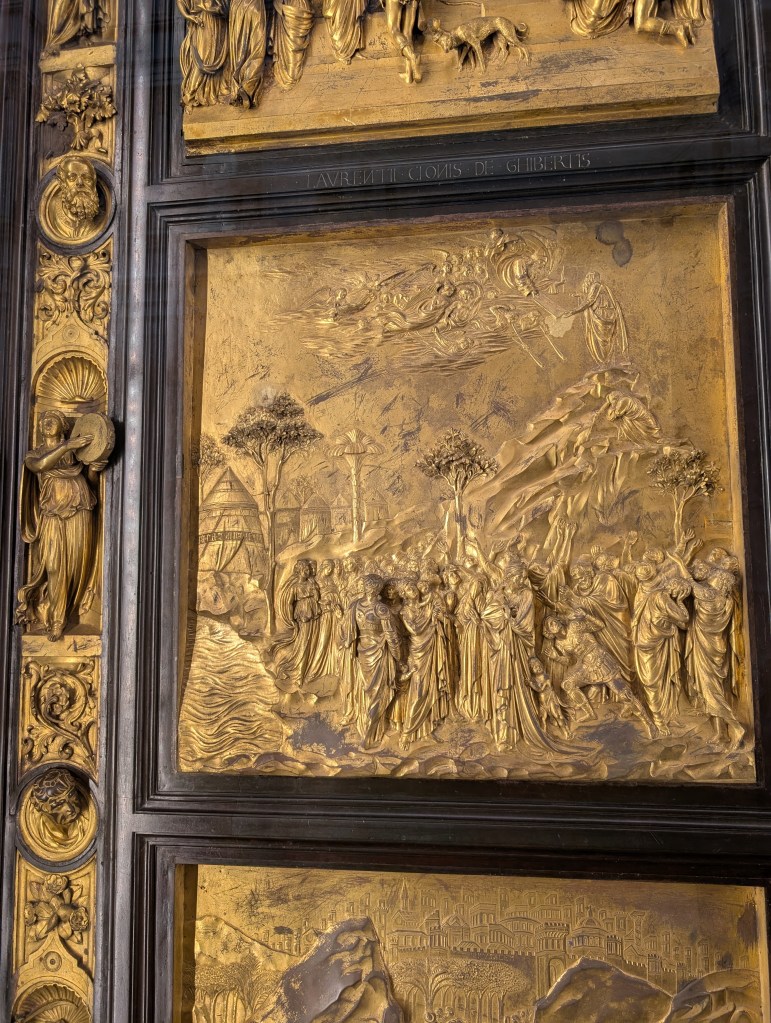
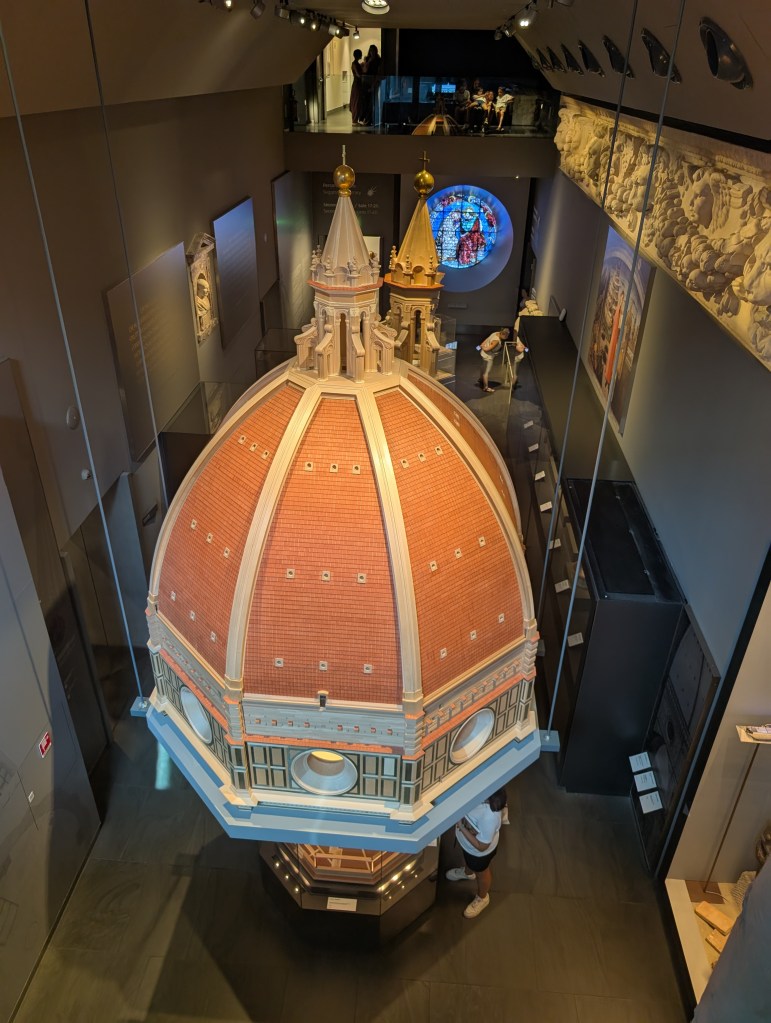
However, after visiting Florence’s Duomo, I visited its corresponding museum, the much more interesting and informative Opera del Duomo Museum. The heart of this museum is a multistory atrium that brings lights and grandness to the space. Along the wall of the atrium are more sculptures by Michelangelo and Dontatello. At the base of the atrium, Lorenzo Ghiberti’s famous gilded bronze doors “Gates of Paradise” narrate the stories from the Bible. Behind the atrium, models of the cupola and facades of the cathedral tell the story of its creation. Being able to learn about the construction and history of the Cathedral gave me more of an appreciation for it.
 Mac On the Map
Leave a comment