
Dubrovnik’s walled old city was the most impressive of the medieval cities I visited during my trip. Set at the base of a mountain along the coast, the city stands alone.
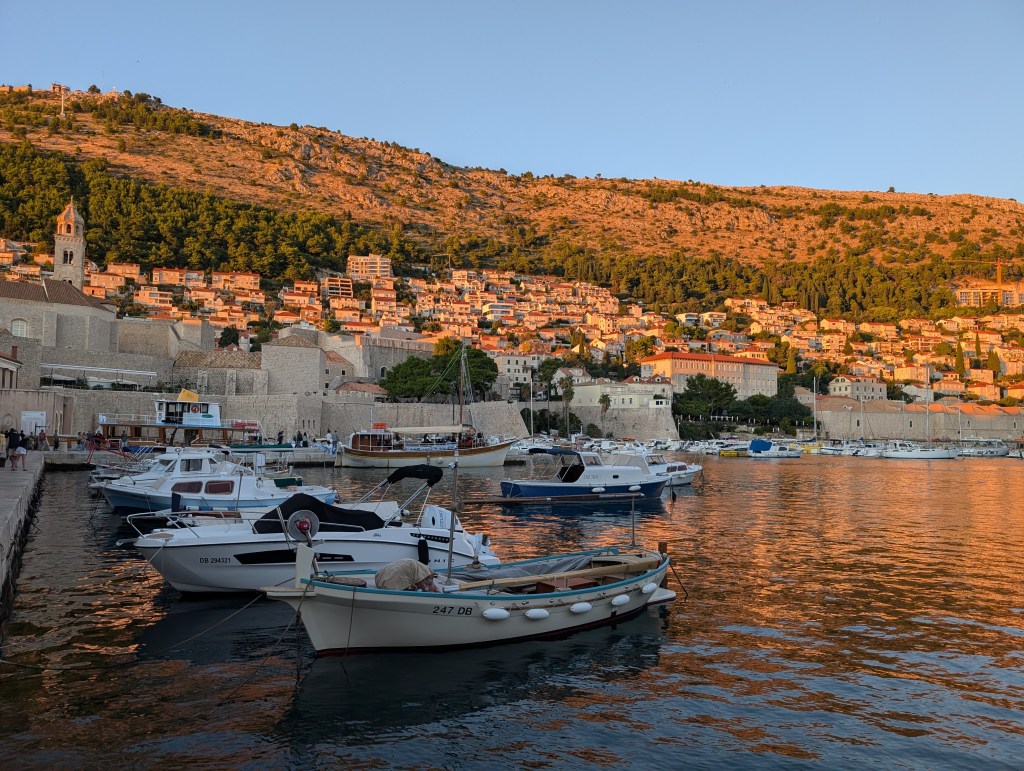
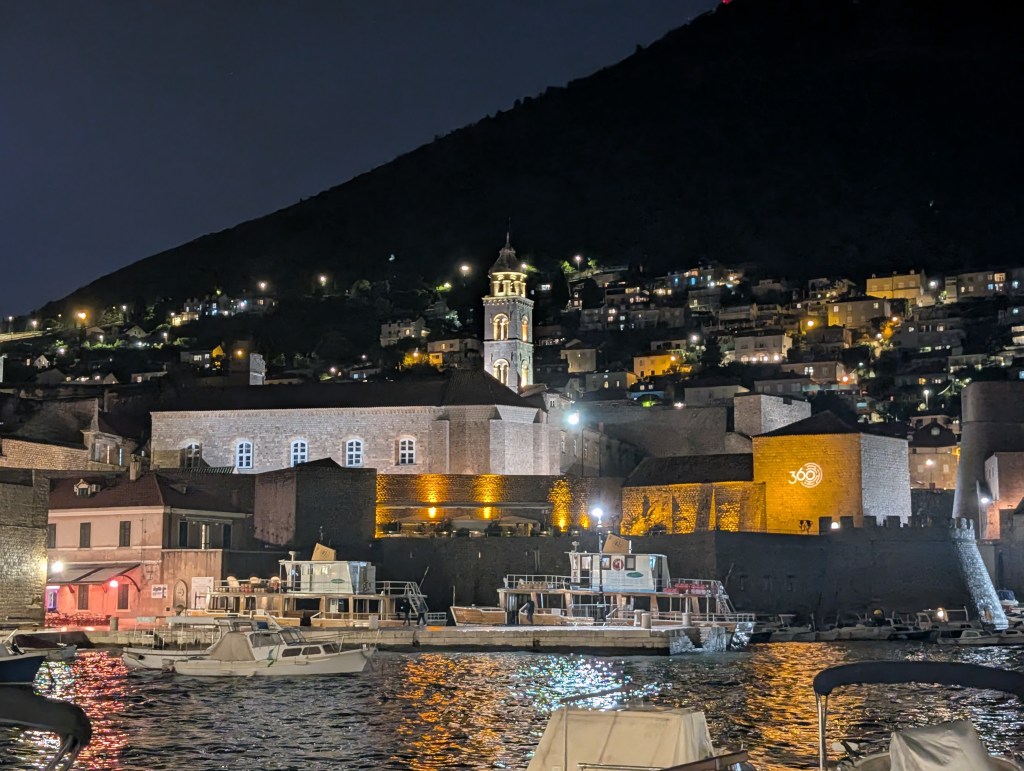
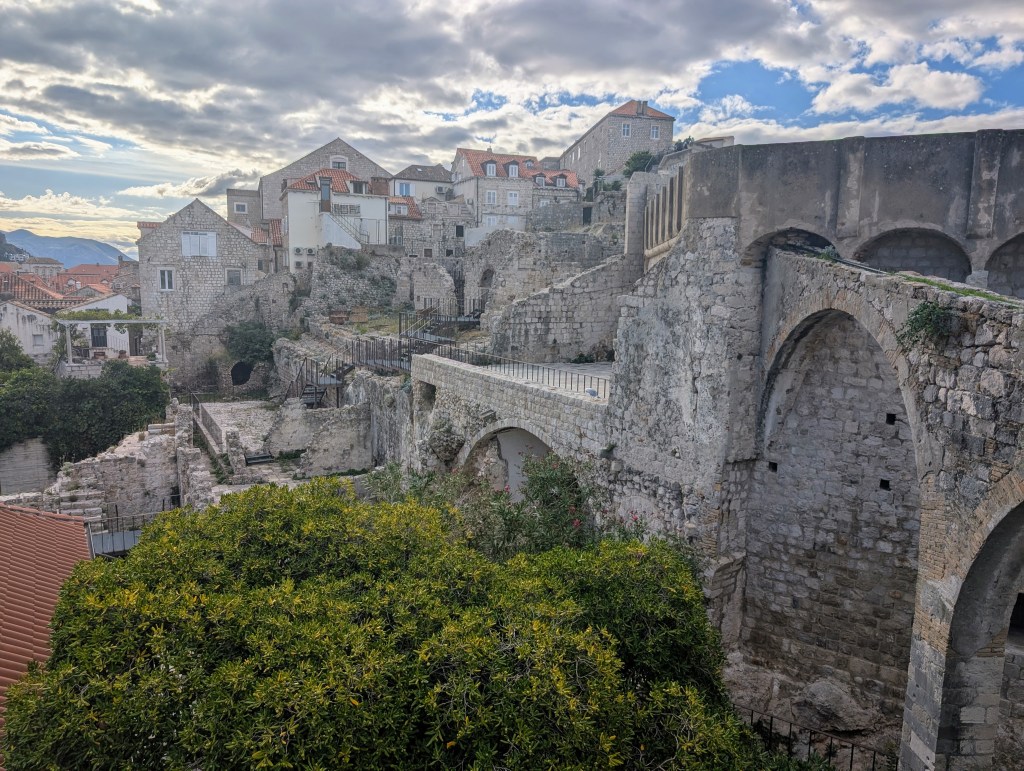
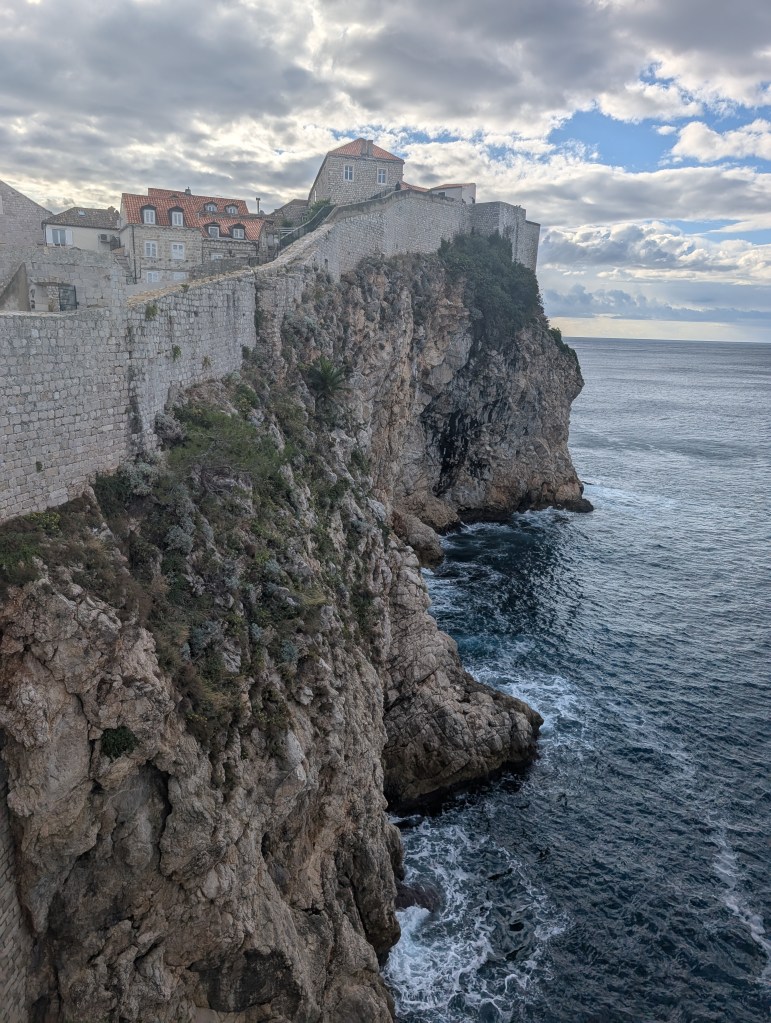
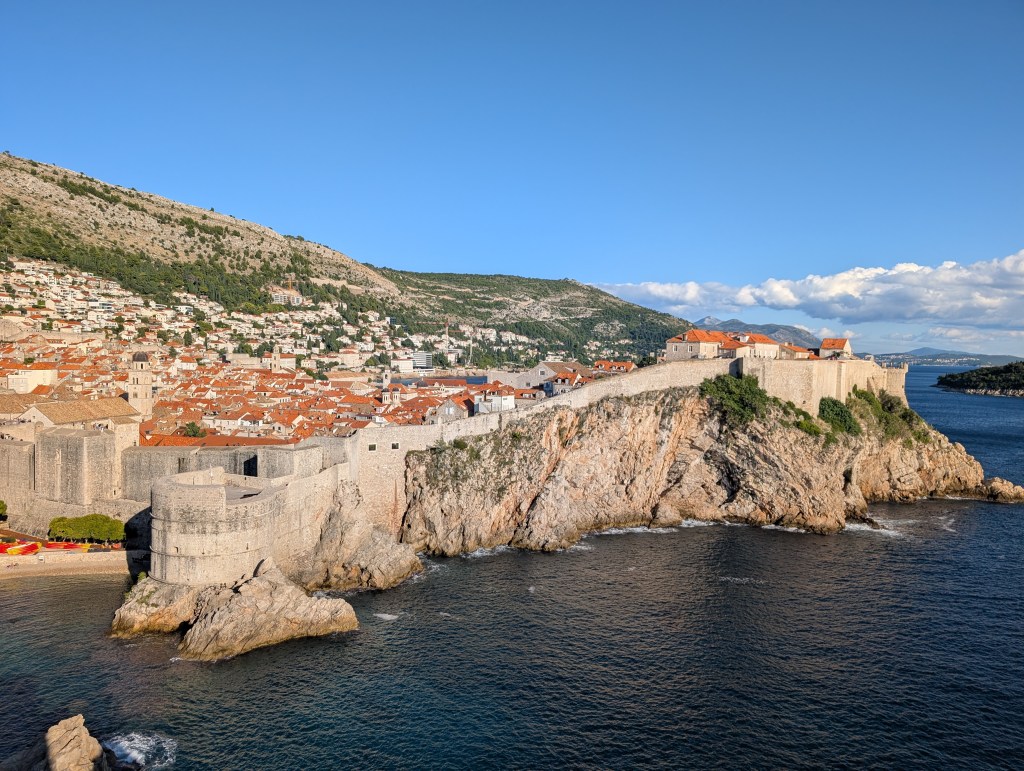
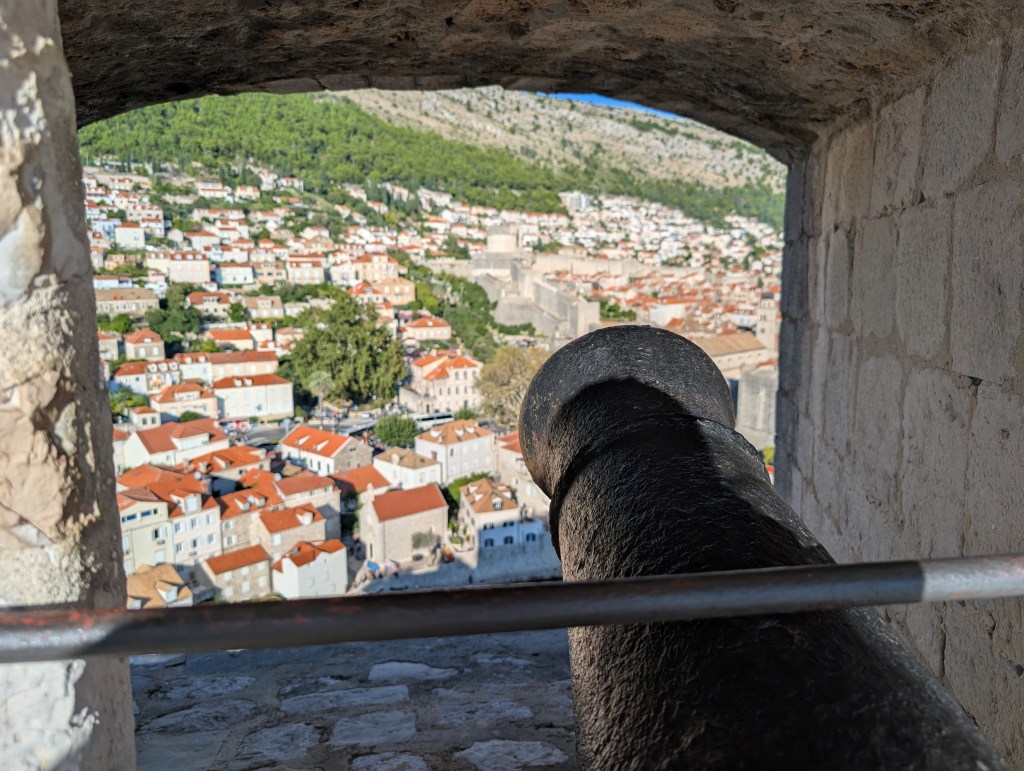
The Dubrovnik Walls were built up to 25 meters high and 6 meters thick with multiple layers to protect the city from cannonballs and attacks from the Venetian empire. Walking the walls is one of the best ways to take in the entirety of the old city – from its red rooftop architecture to the hidden courtyards.
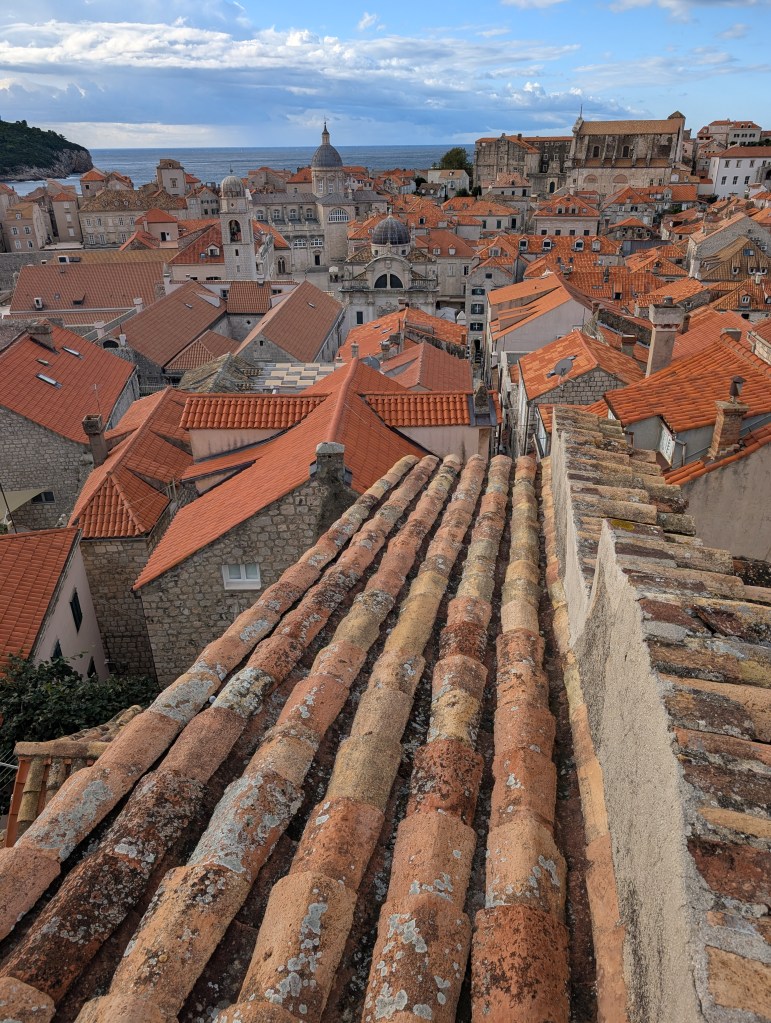

The price to climb the walls is steep – 40 Euros (2025) – but entry is included in the Dubrovnik City Pass card, which costs the same (40 Euros) and includes several other museums and historic sites in the city. However, if it is raining or too windy, they will close access to the walls, so make sure the weather will cooperate before purchasing. Everything I visited (and will talk about) was either free (all churches) or included in the City Pass.
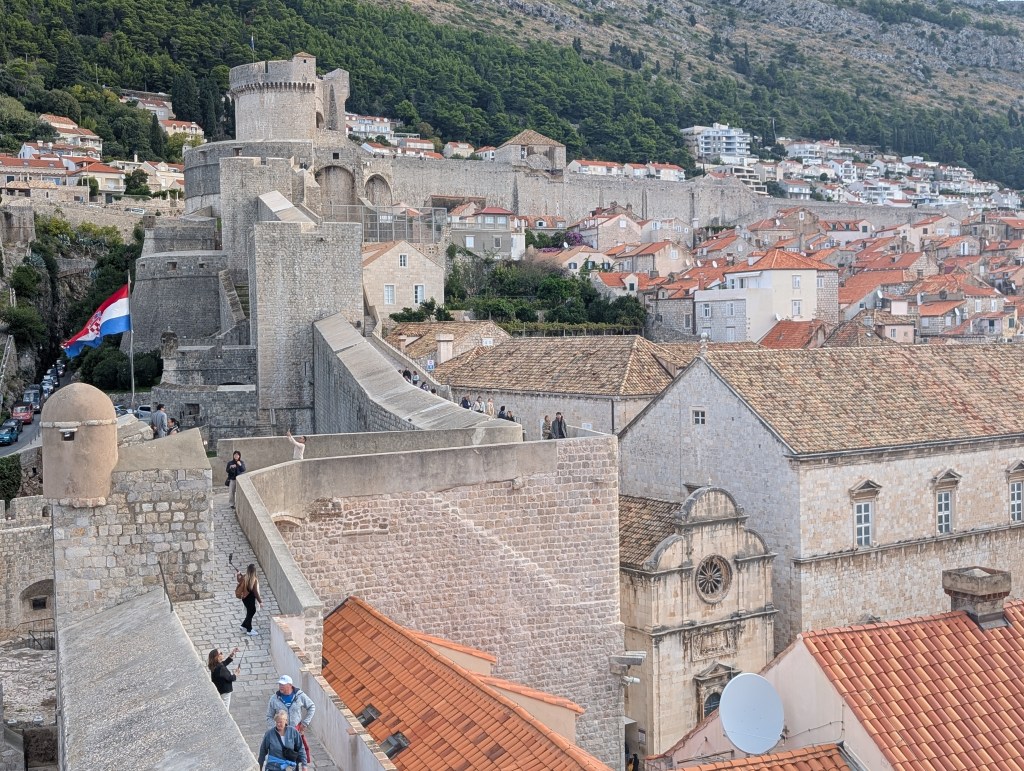
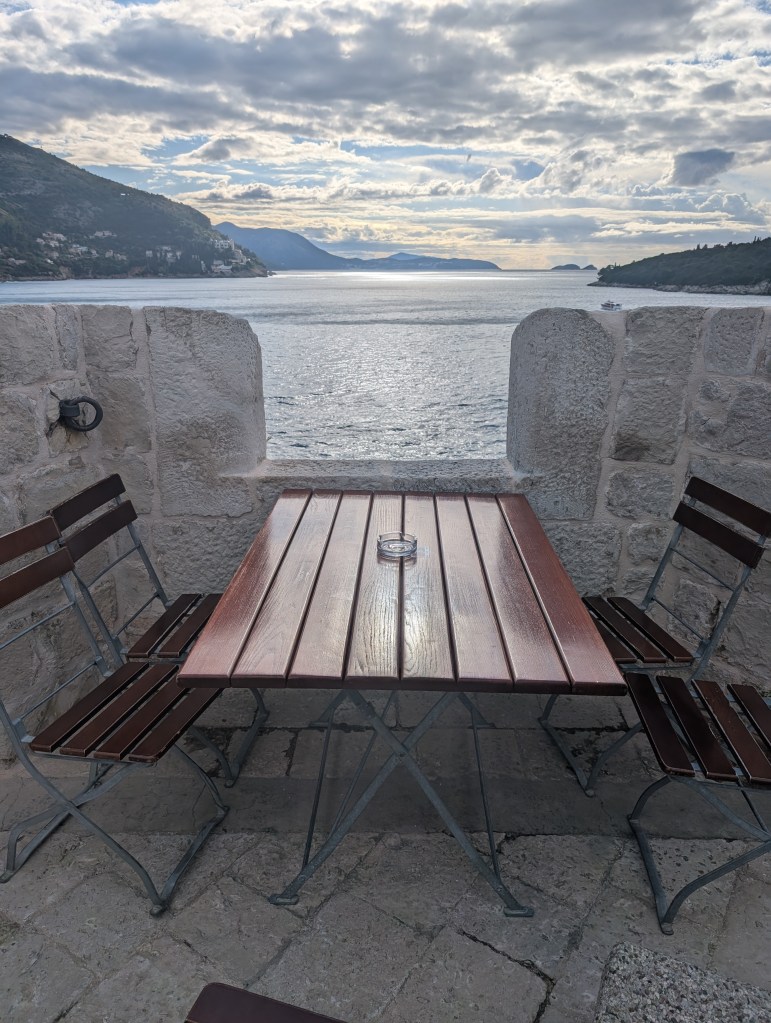
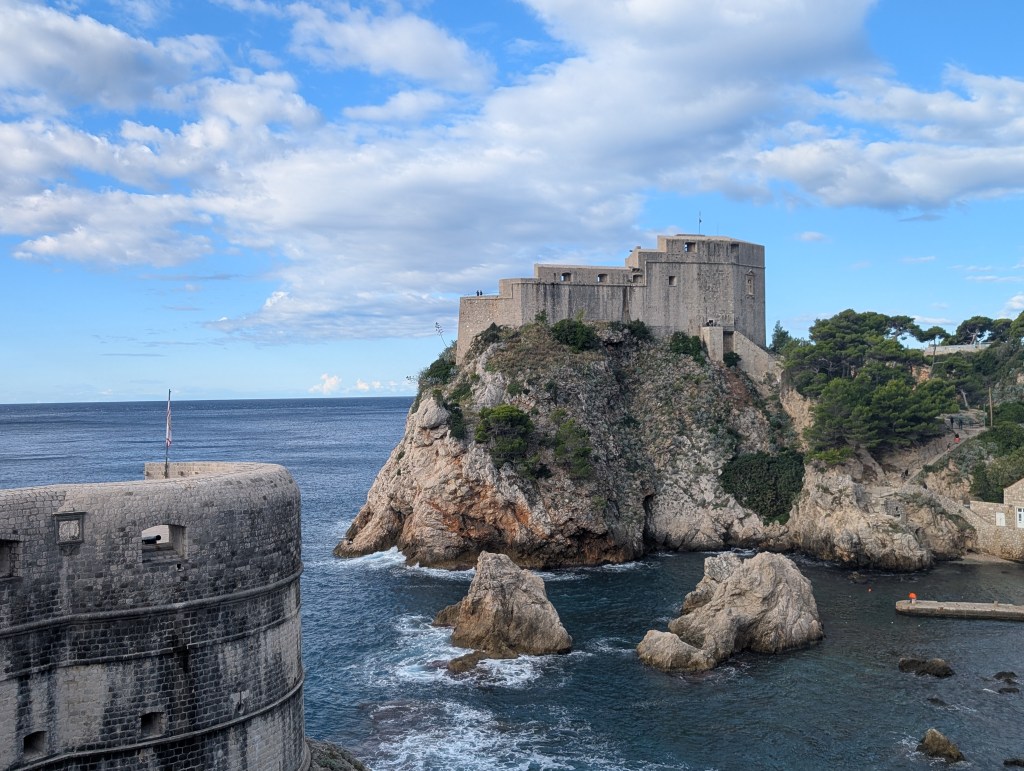
I started my morning walking the 2 km and 1080 stairs of the 13th century Dubrovnik Walls – I entered near the Ploce Gate. It took about 90 minutes to walk around, up, and down the towers, bastions, fortifications, turrets, drawbridges, and turrets set within the wall. Along the way I enjoyed views of Mount Srđ, Lovrjenac Fortress (which I visited later in the day), Lokrum island, and the historic houses of the old city. Along the coast there is a small cafe (Caffe on the Wall) to grab a drink or snack. There is no shade so be sure to wear sun protection and bring water for the walk.
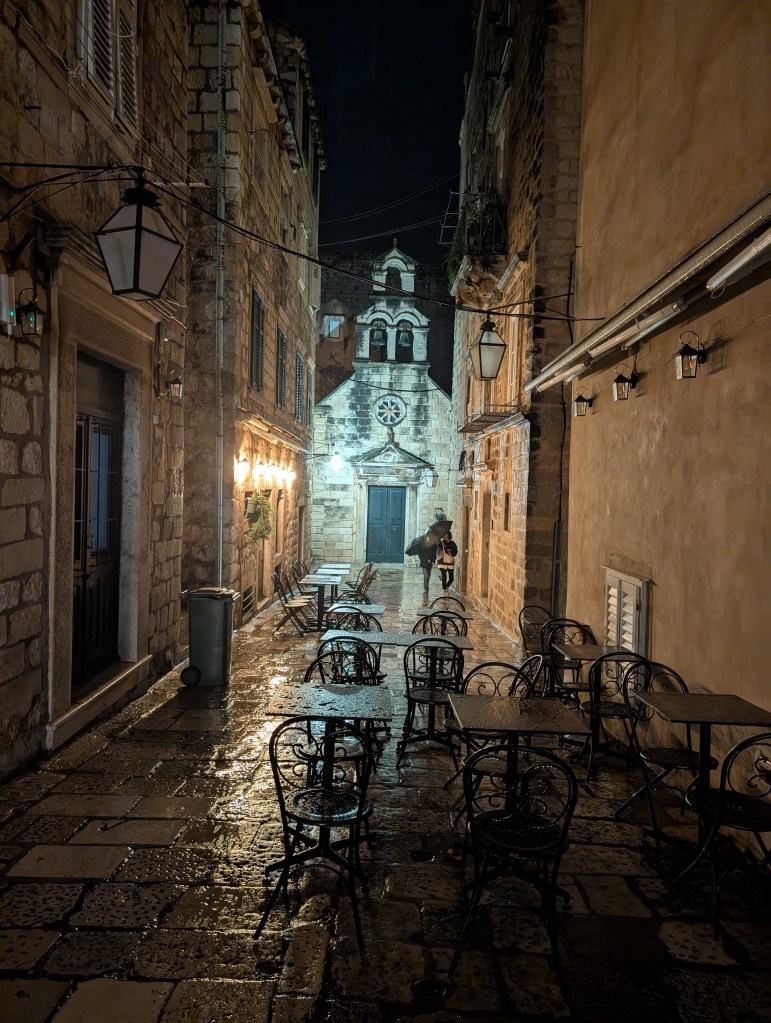
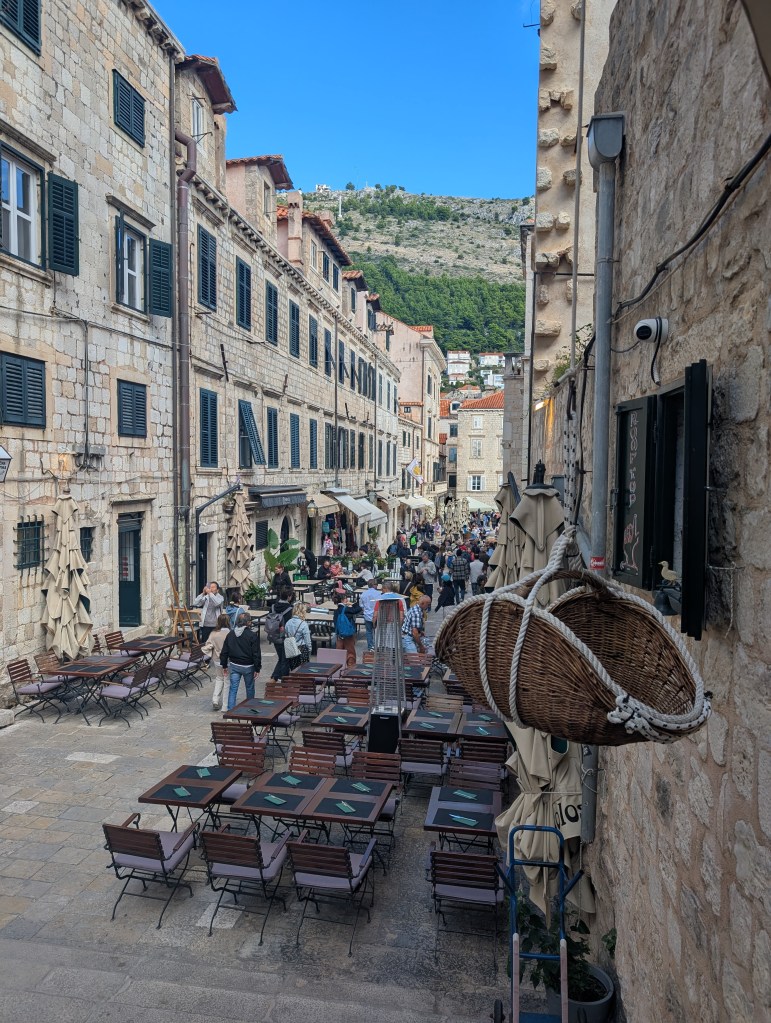
After getting a sense of the city from above, it was time to zoom in and walk around the limestone alleys of the pedestrian old city. I participated in a free city walking tour which gave me a nice overview of the city’s cultural and political history as well as some of the famous streets and buildings in the city.
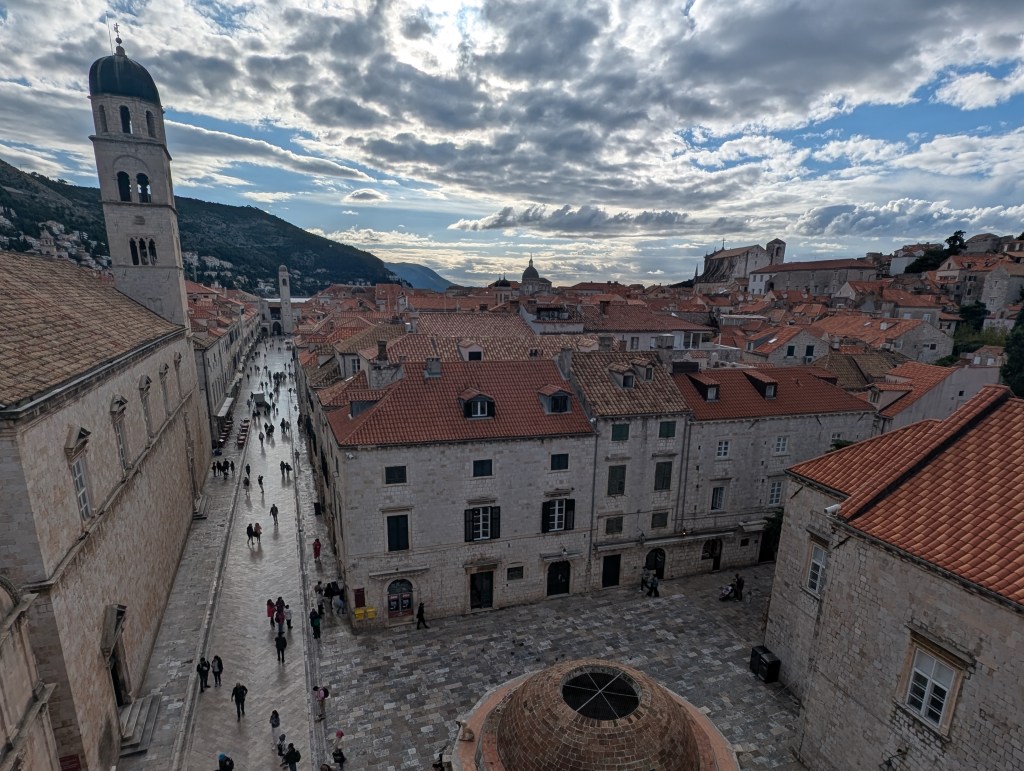
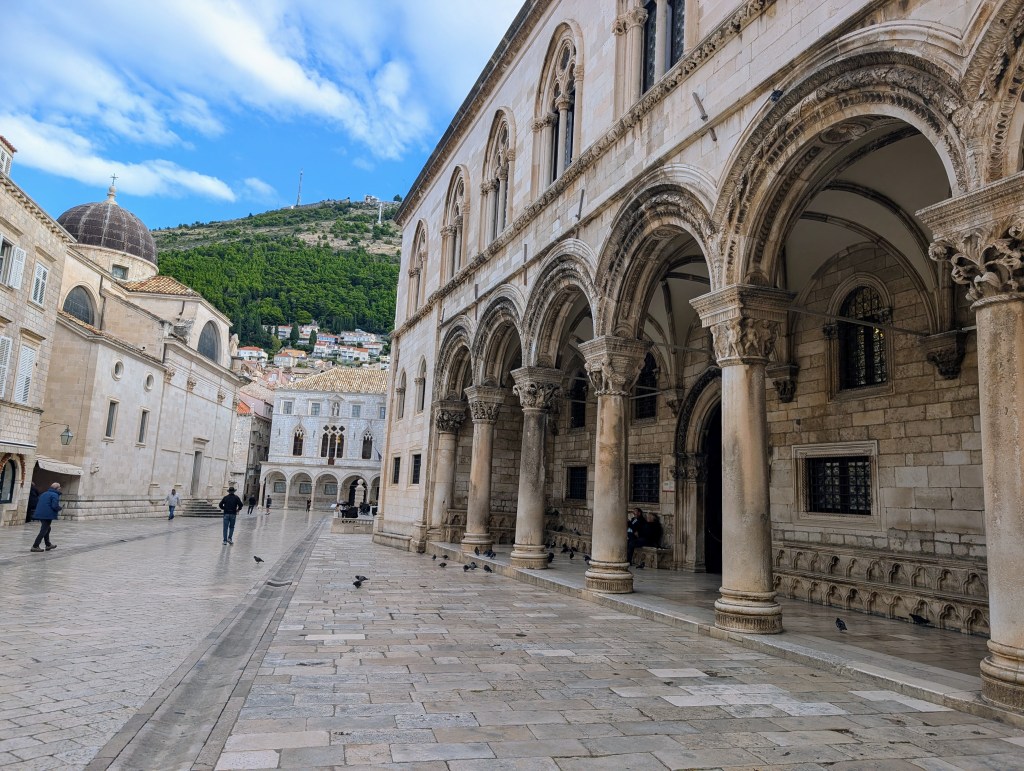
The city has had a turbulent past. From natural disasters to political upheaval, the city walls are just one way that Dubrovnik has tried to protect itself.
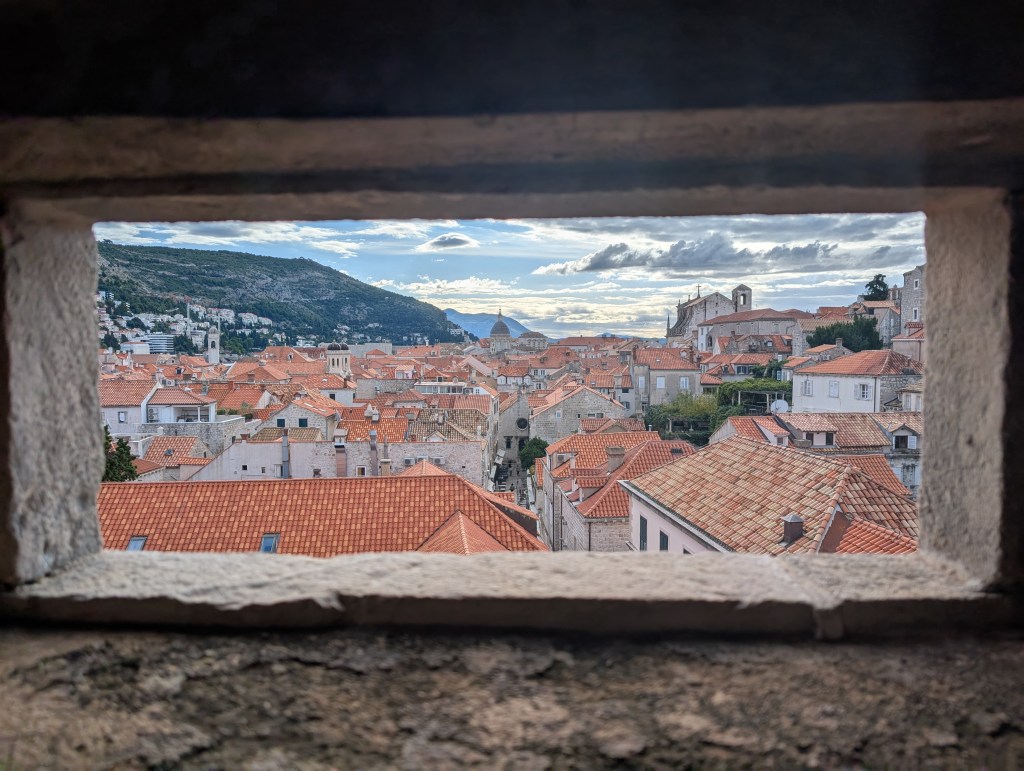
Supposedly warning the city of an upcoming Venetian attack, Saint Blaise has been patron saint of the city since the 10th century. His likeness can be found on the city’s flag, glowing in glow and silver atop his eponymous church, and 23 other statues throughout the city. Several of his statues show him with the city in his hands.
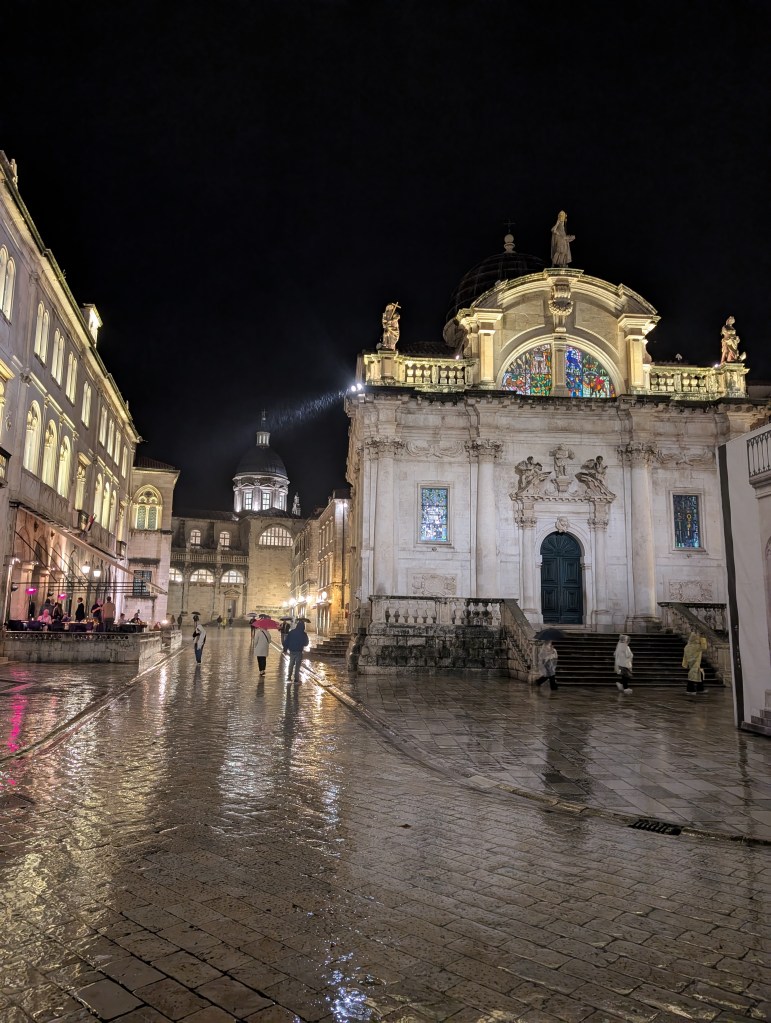
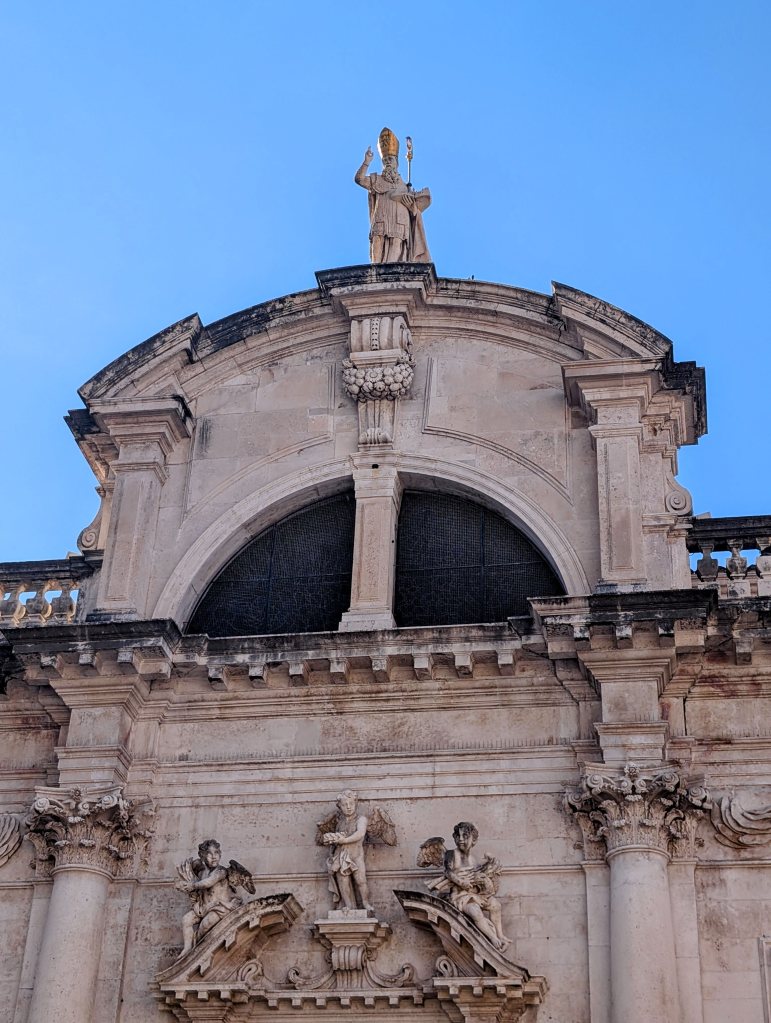
Dubrovnik was built on a fault line, so earthquakes have shook the city throughout its history. The Church of St Saviour was built in gratitude for the city being spared from the 1520 earthquake and to protect the city from future quakes. While the city has still suffered from earthquakes, the fact that the 1520 church remained largely intact through the largest earthquake in the city’s history (1667) and only suffered minor damage from the 1991 bombing gives the city hope for its future.
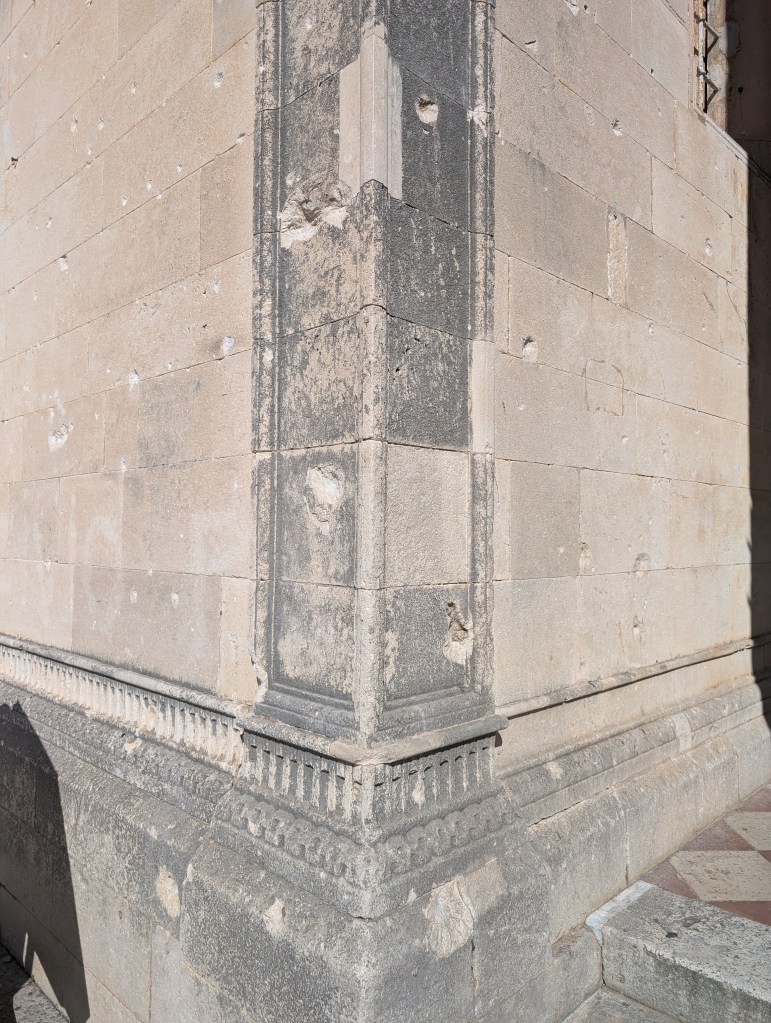
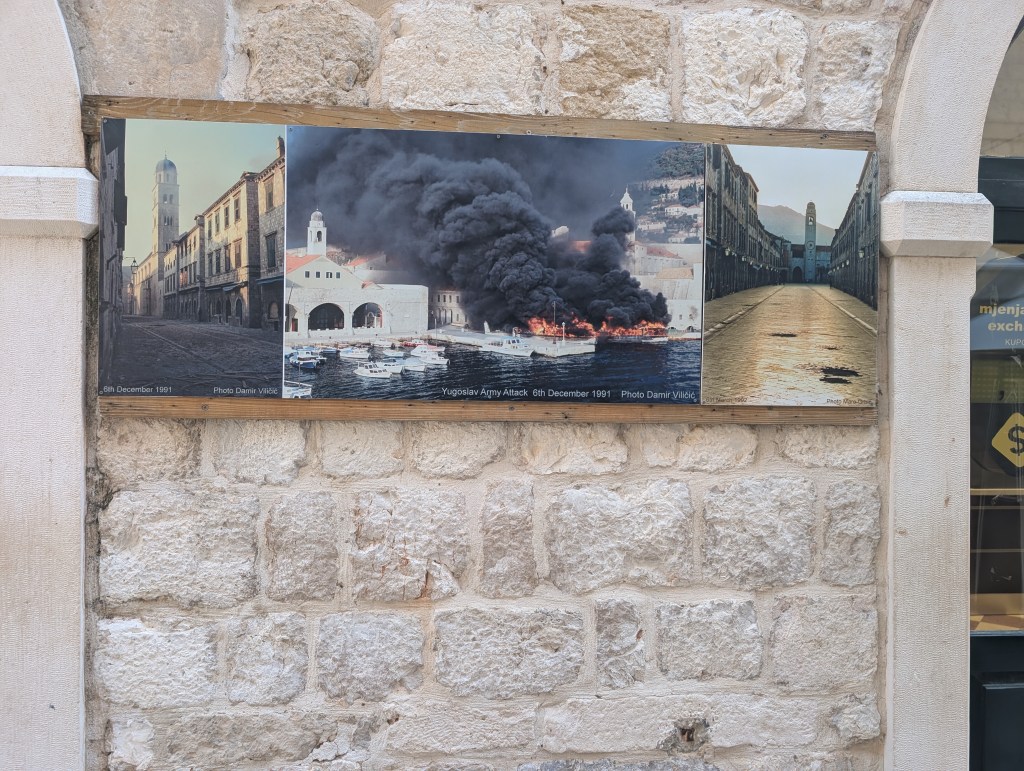
In 1991, Dubrovnik fought for their independence from the former communist Yugoslavia. The Yugoslav army’s attack damaged 60% of the city’s architecture. While the city has worked hard to rebuild and heal, vestiges of the bombings are present throughout the city. From one local’s photographs and account on the side of his home to shrapnel holes on the side of the Church of St. Saviour, ruined courtyards on the outskirts of the old city, and a photography exhibit within the Rector’s Palace, the city has healed but hasn’t forgotten.
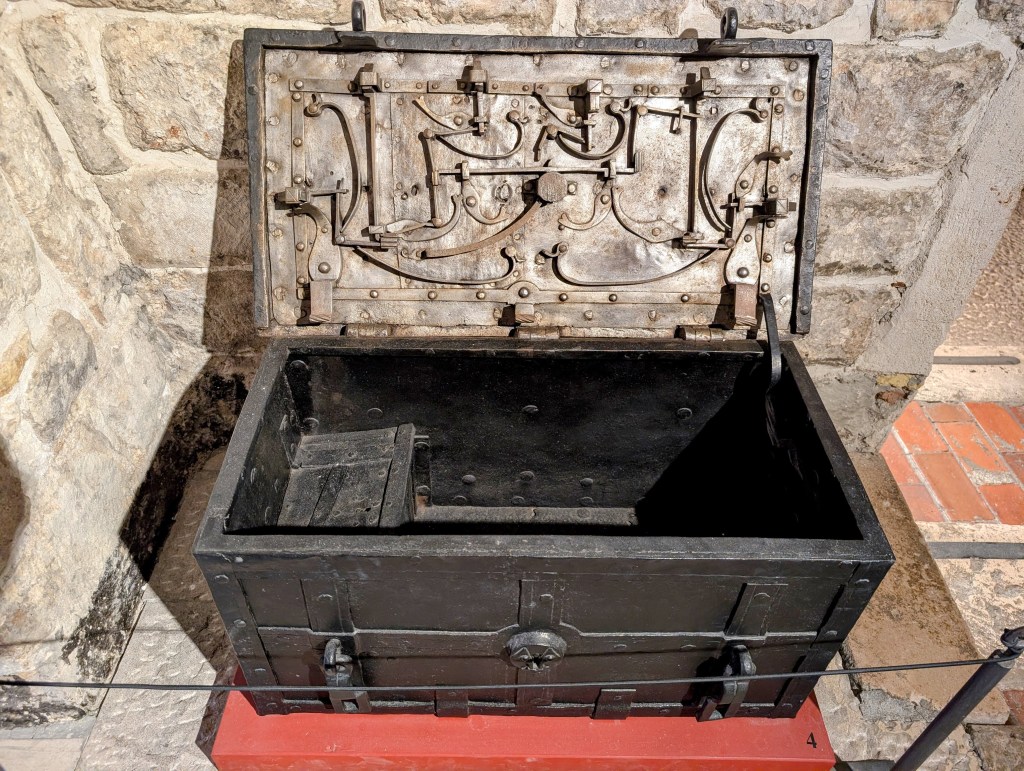
The Rector’s Palace focuses on the political history of the Dubrovnik Republic and the cultural heritage of the city. Set in the Gothic-Renaissance former administrative seat of the city, the museum features a large collection of coins, furniture, and – my favorite exhibit – a series of chests with intricate lock systems.
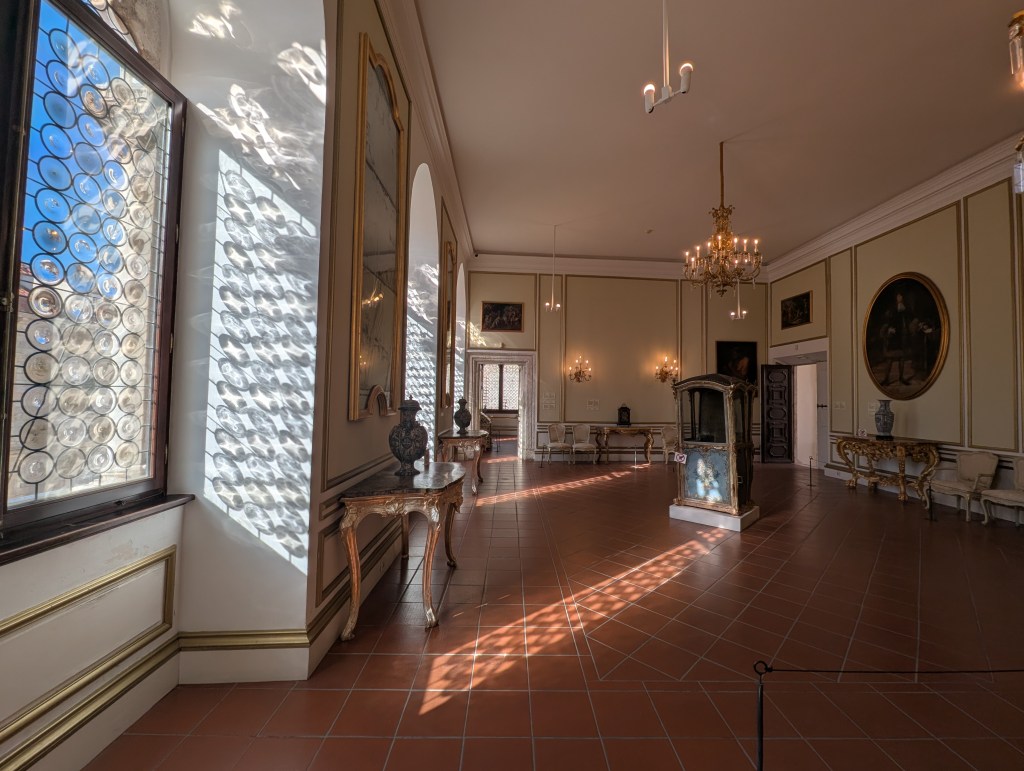
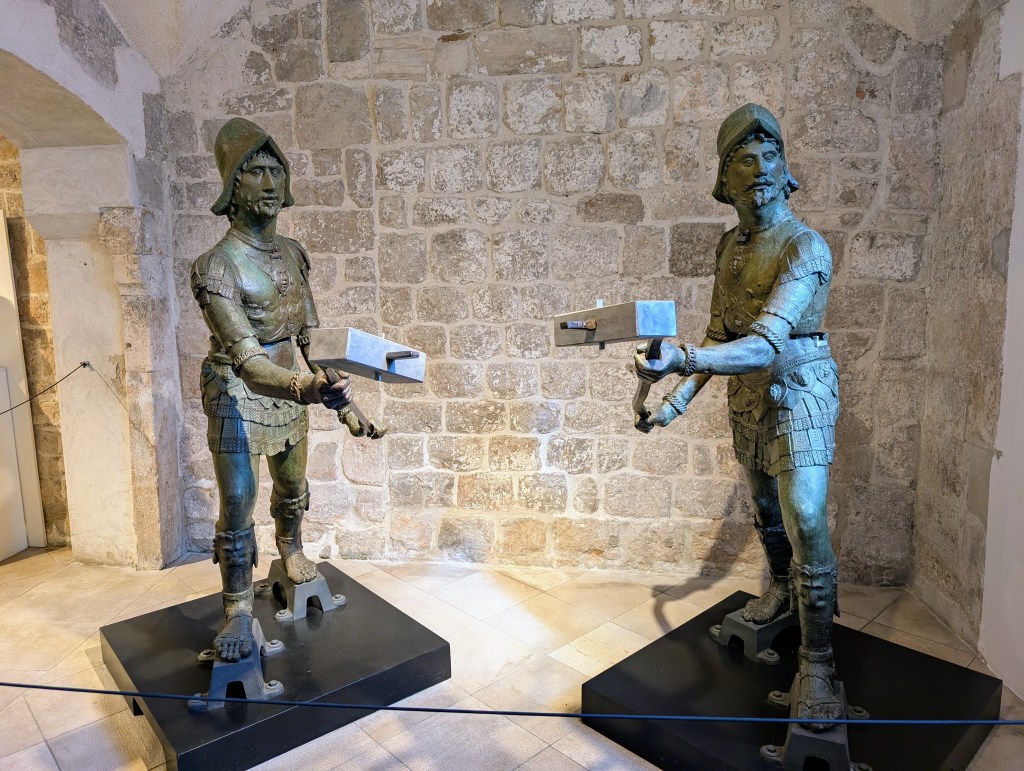
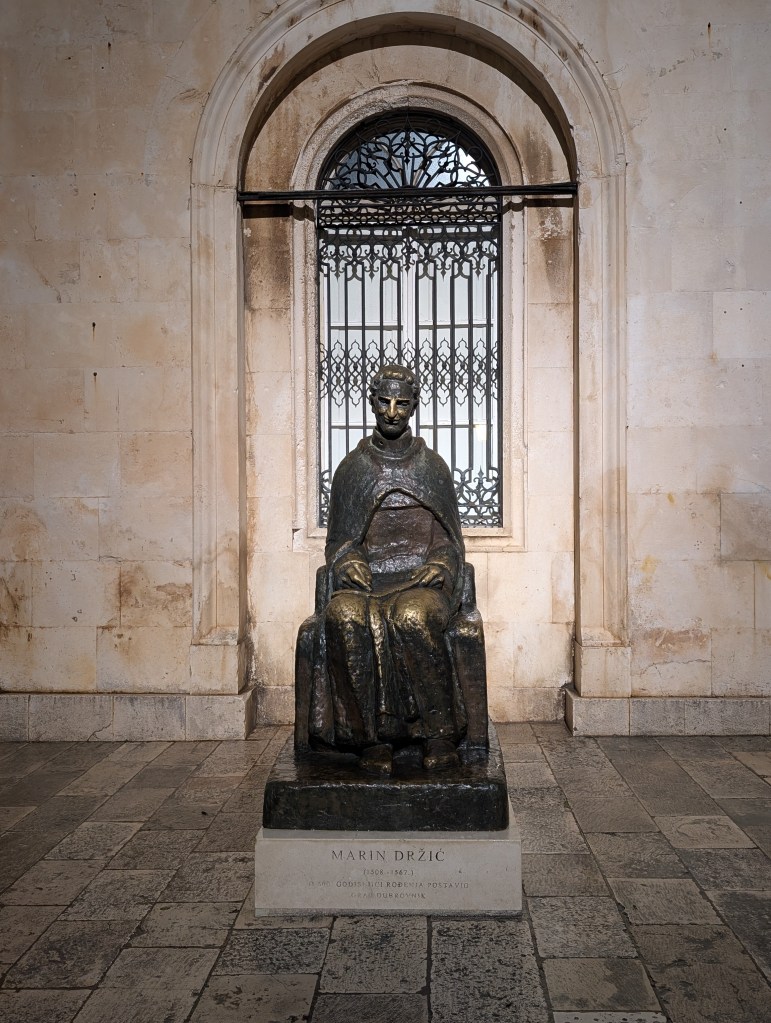
The city also honors its cultural legacy through the statue of Croatia’s Shakespeare, Marinin Dzric, outside of the Rector’s Palace and their national poet, Ivan Gundulić, in the market square.
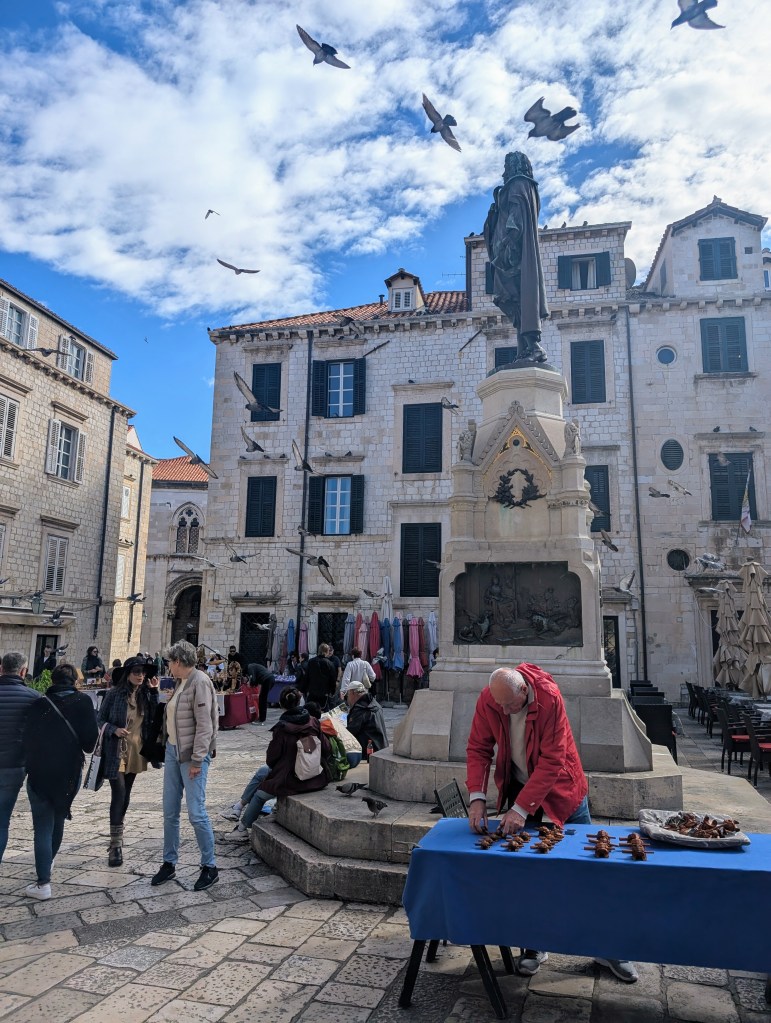
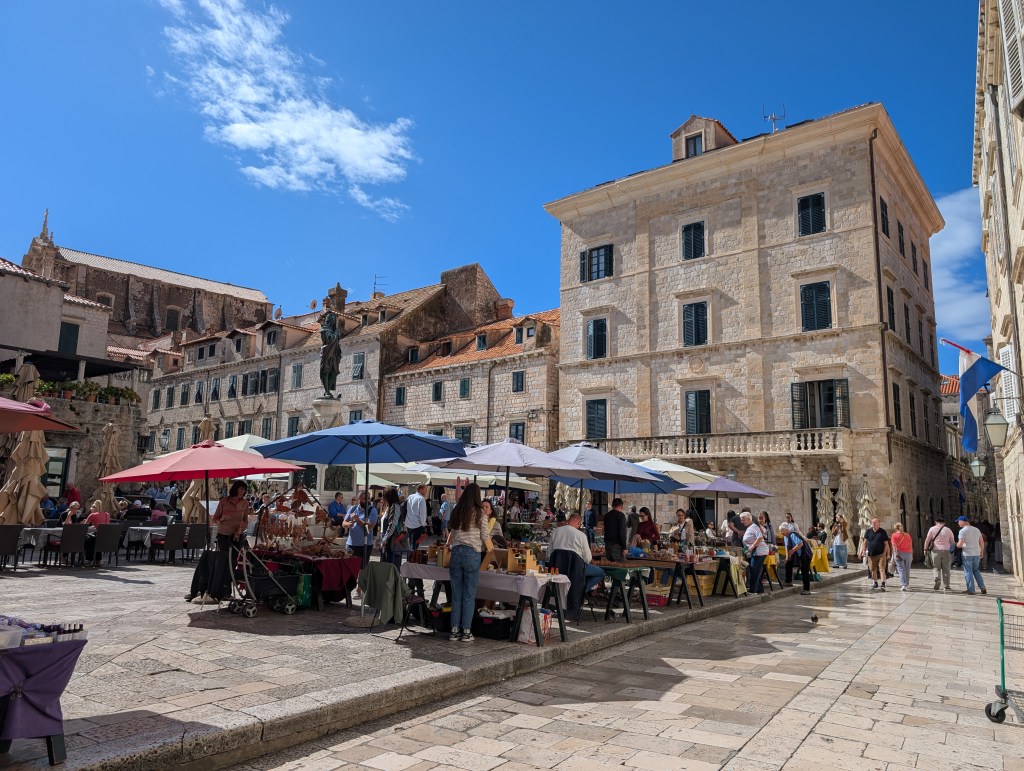
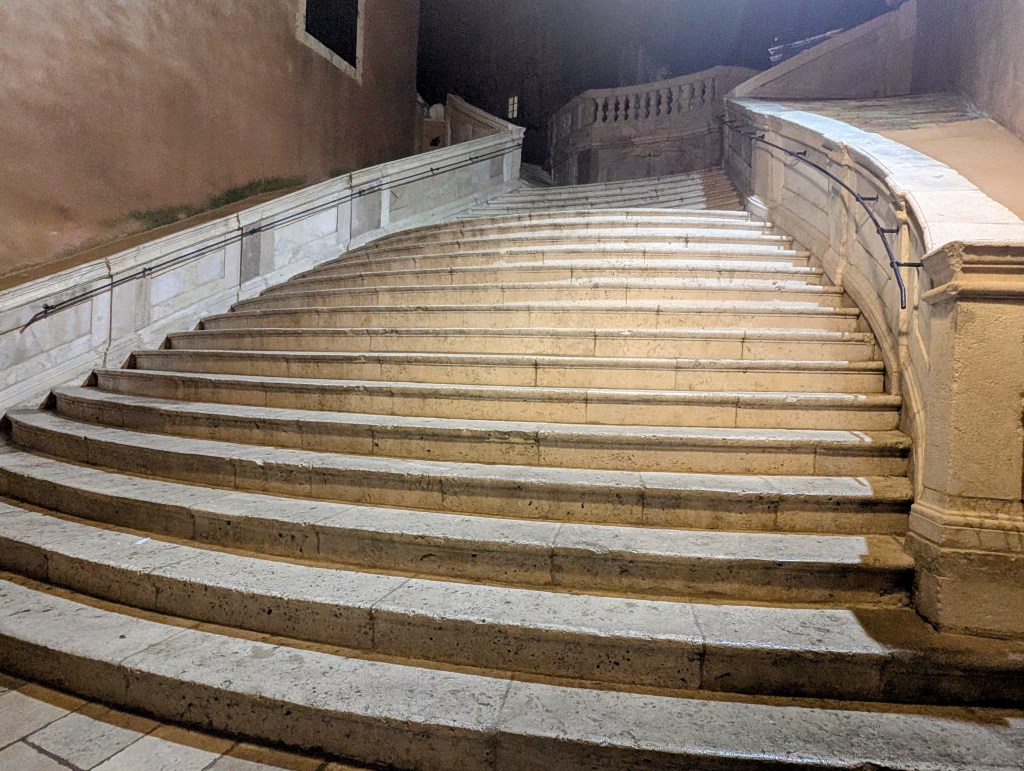
At the backside of Gundulić’s square is the most famous Game of Thrones location in Dubrovnik: the Jesuit Stairs. This large Baroque staircase connects the lower main streets of the old city with the Church of St. Ignatius. Beyond the church, ruined stones and buildings are reminders of the 1991 bombings.
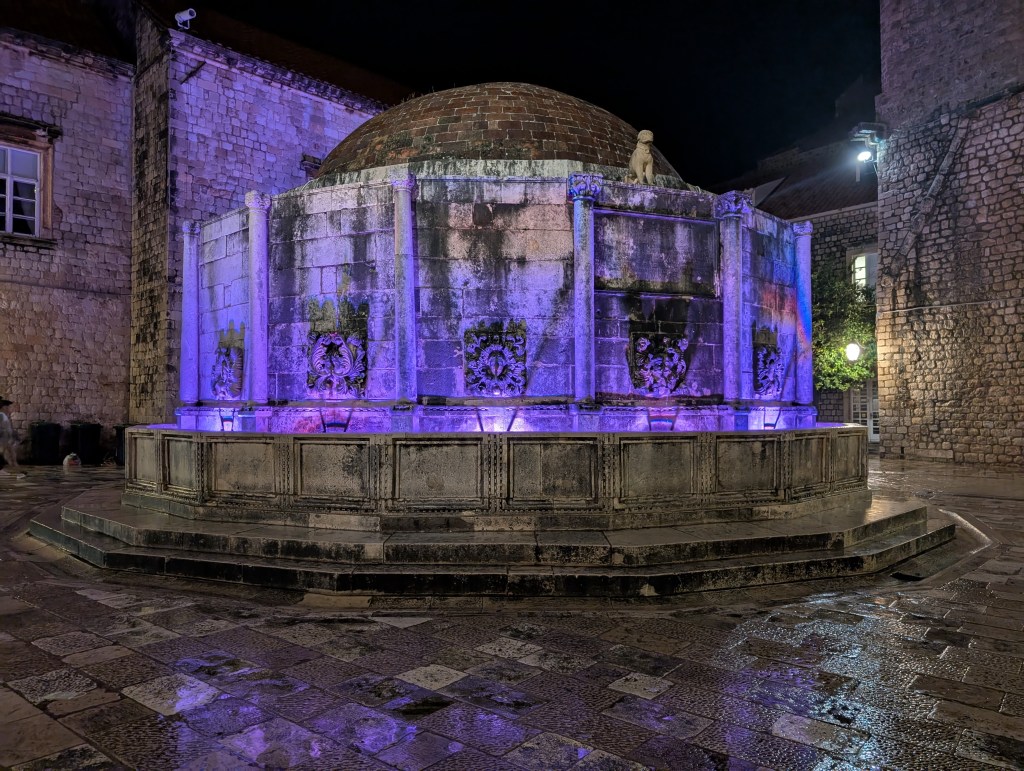
Near the main entrance to the old city, Pile Gate, the large octagonal Onofrios fountain stands with sixteen faces. This was built as the main water source for the city in 1438 and still provides drinkable water today.
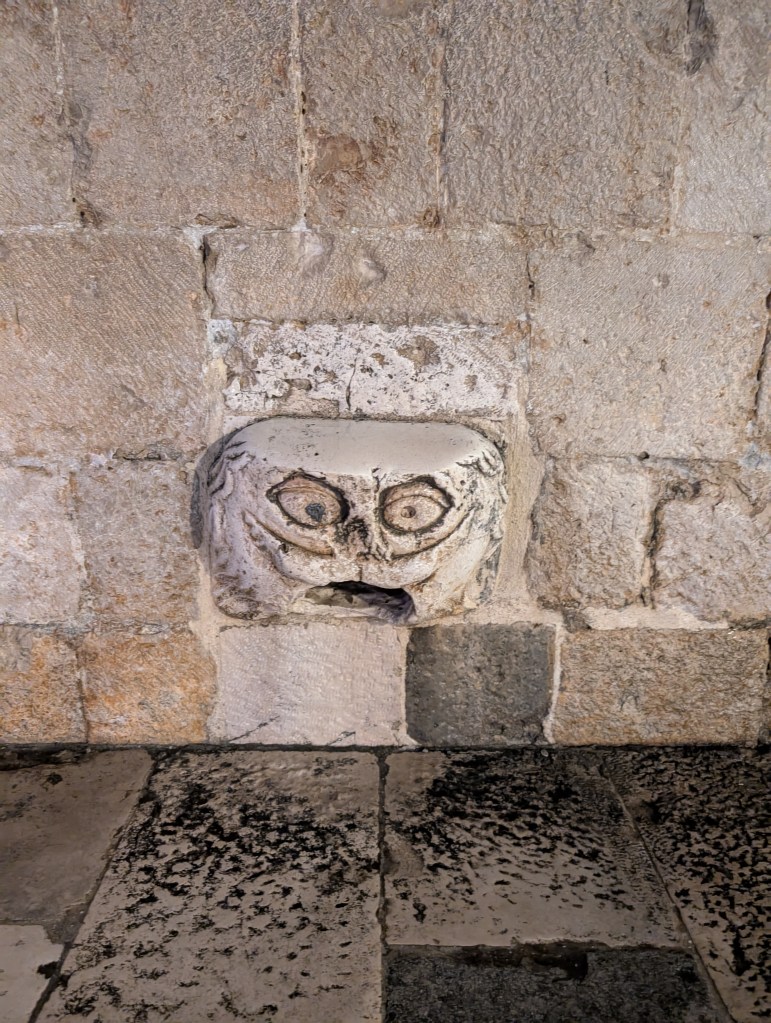
Across the way, Dubrovnik Maskeron, a small stone step with a carved gargoyle face, protrudes from the Church of St. Salvation. Legend has it that if you are able to stand on the stone while taking off your shirt, you will be lucky in love.
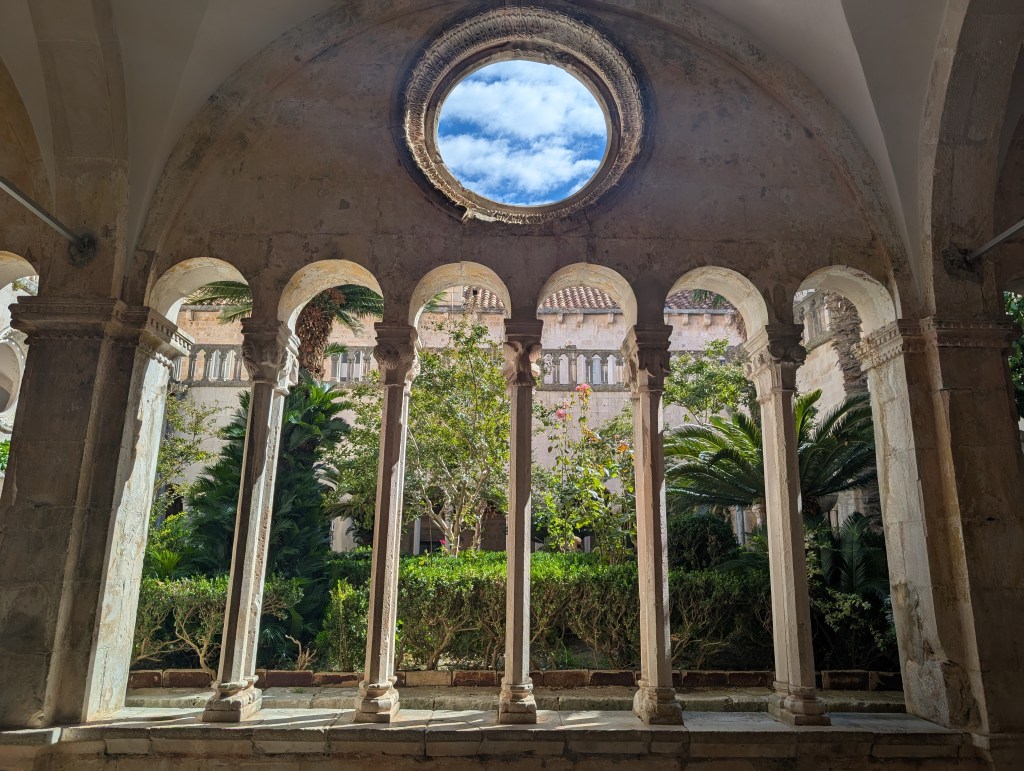
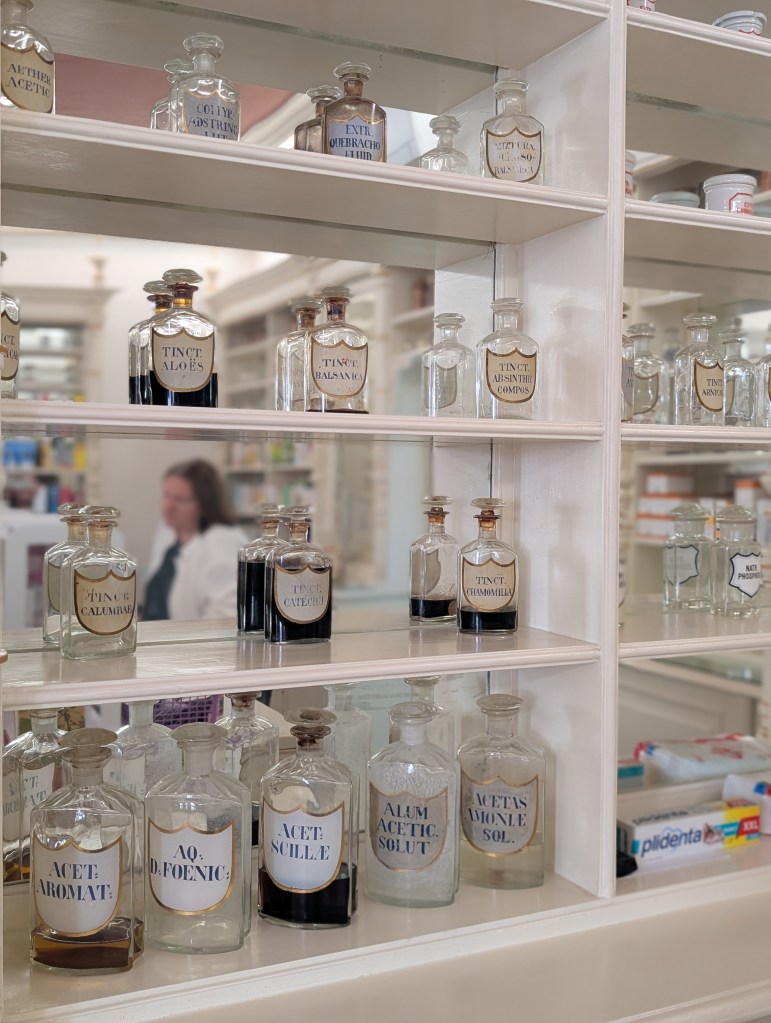
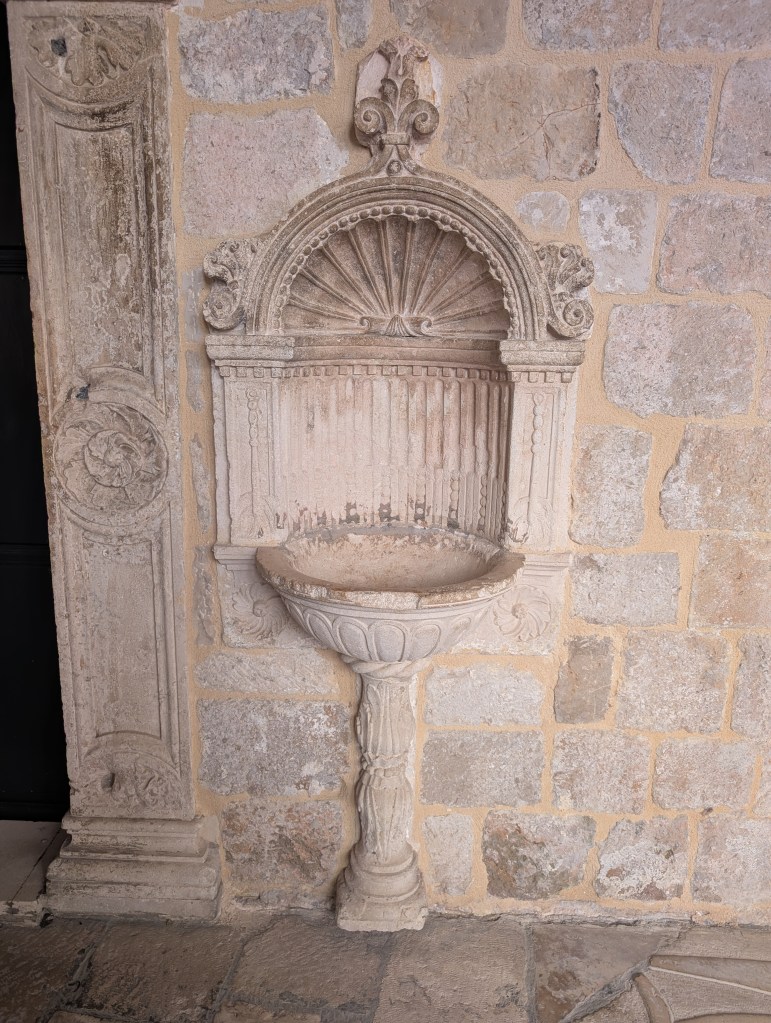
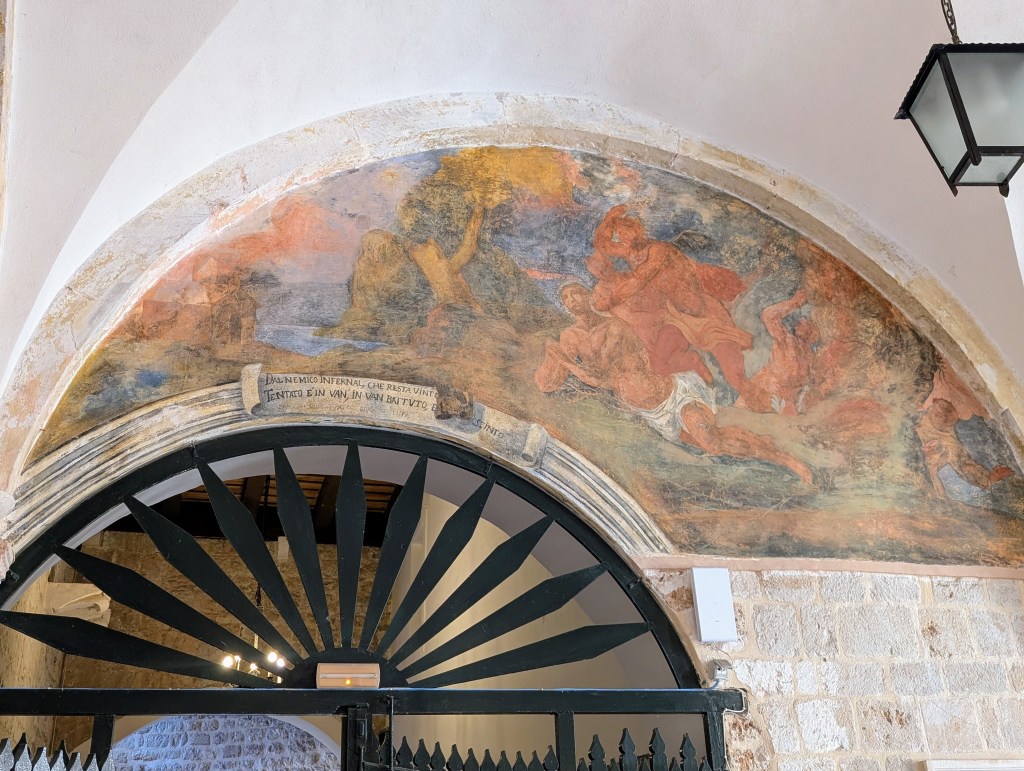
Next to Dubrovnik Maskeron is the entrance to the Franciscan Monastery. This 14th century church, pharmacy and monastery was one of my favorite spaces in the city. The beautiful light filled cloister in the middle is surrounded by fresco paintings and arched doorways. The Old Pharmacy is still functioning with original glass vials lining the wall. The small adjoining museum featured chalices and historical documents.
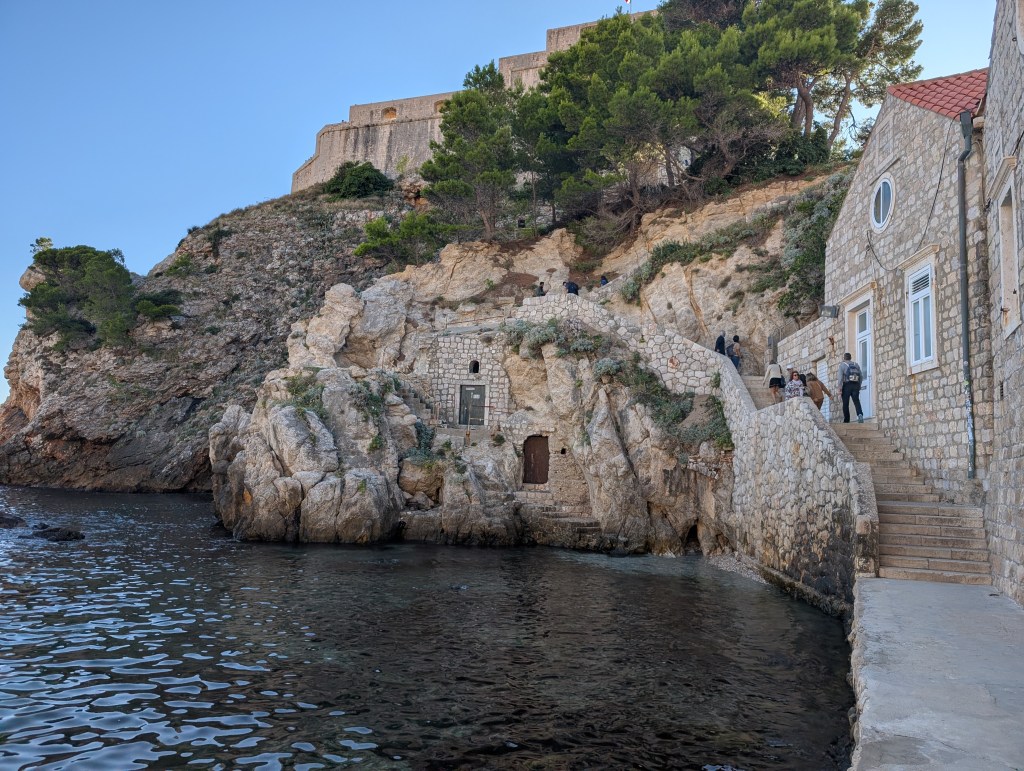
After wandering around the city alleys and up and down the stairs, I decided to check out the Lovrjenac Fortress just outside the city walls in the Pile district. Set atop a 37 meter rock face, it’s a climb to reach the fortress. The interior of the 16th fortress is bare, but offers nice views of Dubrovnik’s old city and a small beach below. This is another of the many Game of Thrones locations within the city for those who are interested in imagining themselves within the show.
Game of Thrones franchise is one reason why Dubronvik has become such a tourist hot spot, and while I thought the city was beautiful, it’s hard to see the havoc that over tourism has done to the city. While there was once 7,000 residents of the old city, today they are less than 700. Locals have been displaced to make room for short term rentals. As a result, the restaurant and shopping scene of the old city has become just a tourist shell. I don’t know what the answer to this is. As one of the tourists, I try to grapple with the balance between maintaining local culture and providing resources for visitors that cities like Dubrovnik deal with.
 Mac On the Map
Leave a comment