
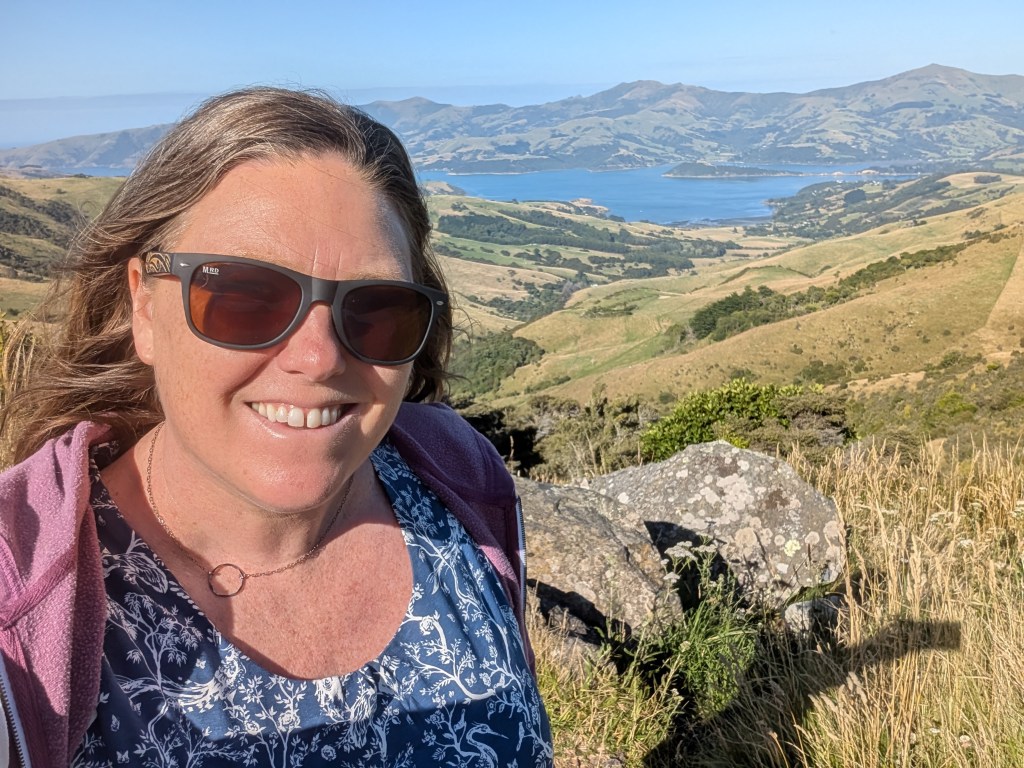
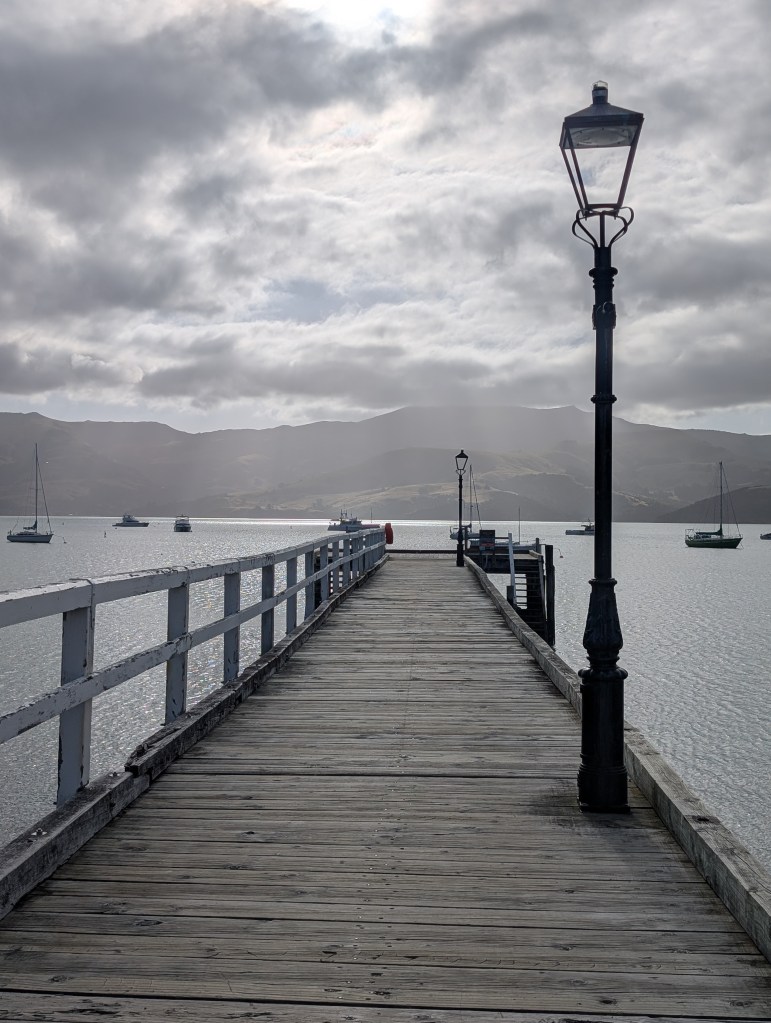
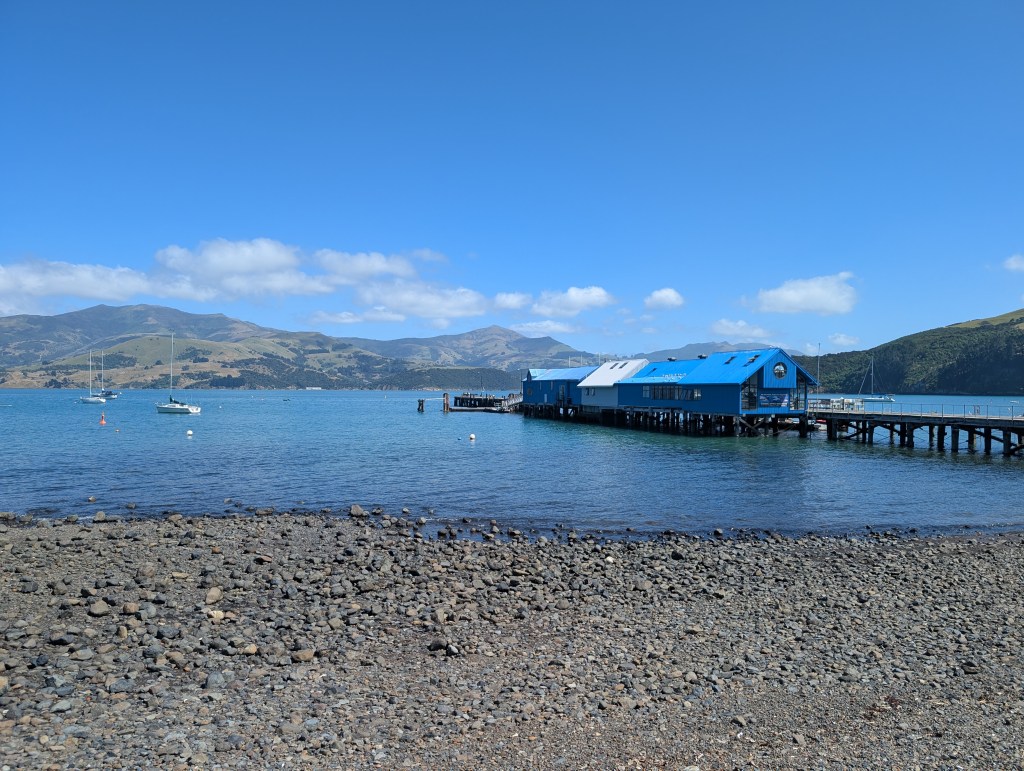
My first stop on the South Island of New Zealand, Akaroa grabbed my heart with its first stunning vistas along the steep and windy road down to the harbor. Only an hour and half from Christchurch, most people visit the town for just the day, but I happily booked two nights in this charming harbor town – in hindsight, I wish I had booked more. Akaroa means long harbor, and with 10 miles of coastline, formed from a long ago volcano crater, it is a fitting name.
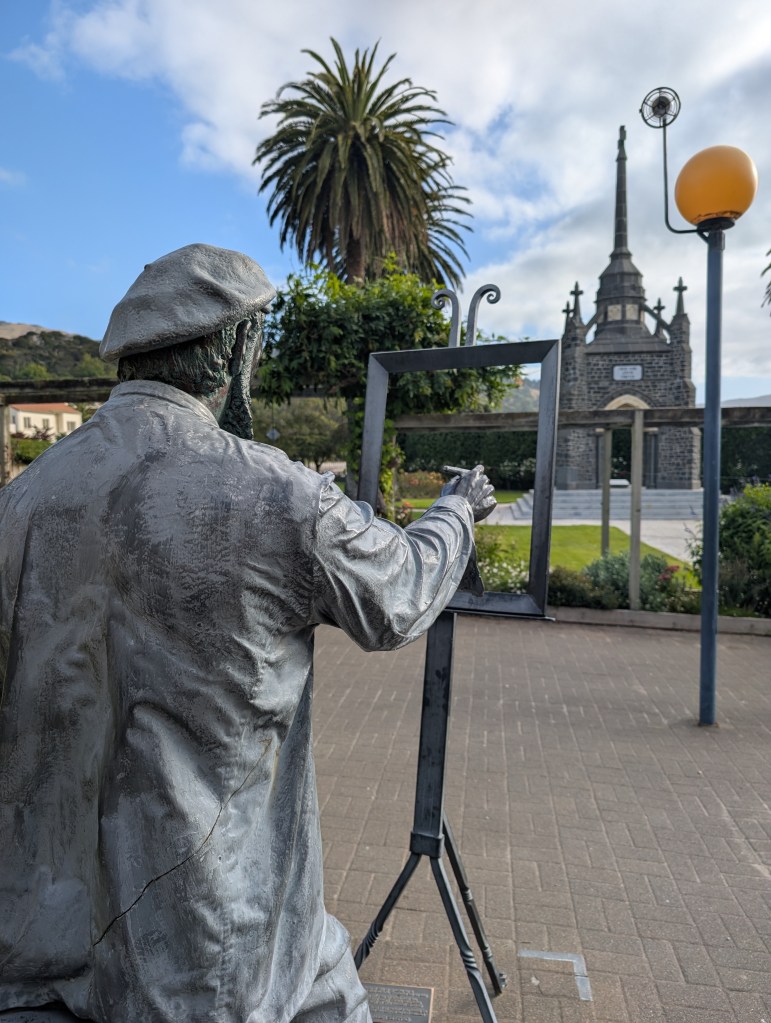
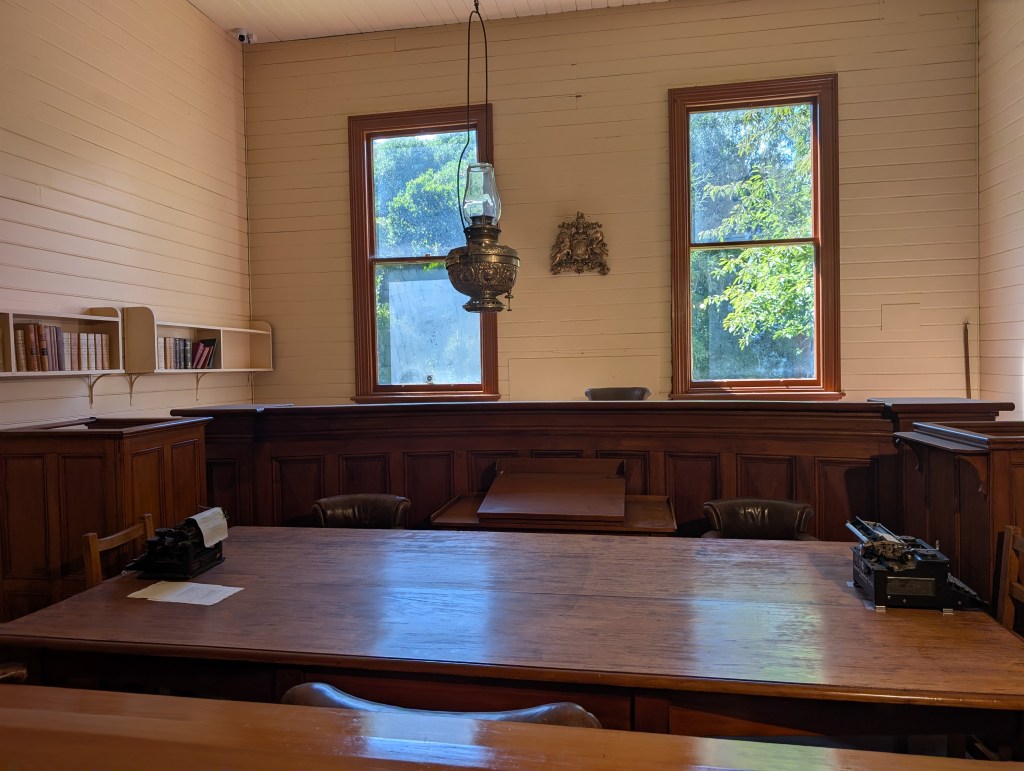
The French settled here in the 1840s: the street names, cuisine, and architecture showcase this history. To learn more about the French’s influence on the area and its agriculture history, the Akaroa Museum located in the middle of the first section of the town is a nice stop. Besides artifacts and informational plaques, the museum is also connected to the oldest house in town, Langlois-Eteveneaux cottage, and the Akaroa Court House. I was impressed by the extent of this small town’s collection.
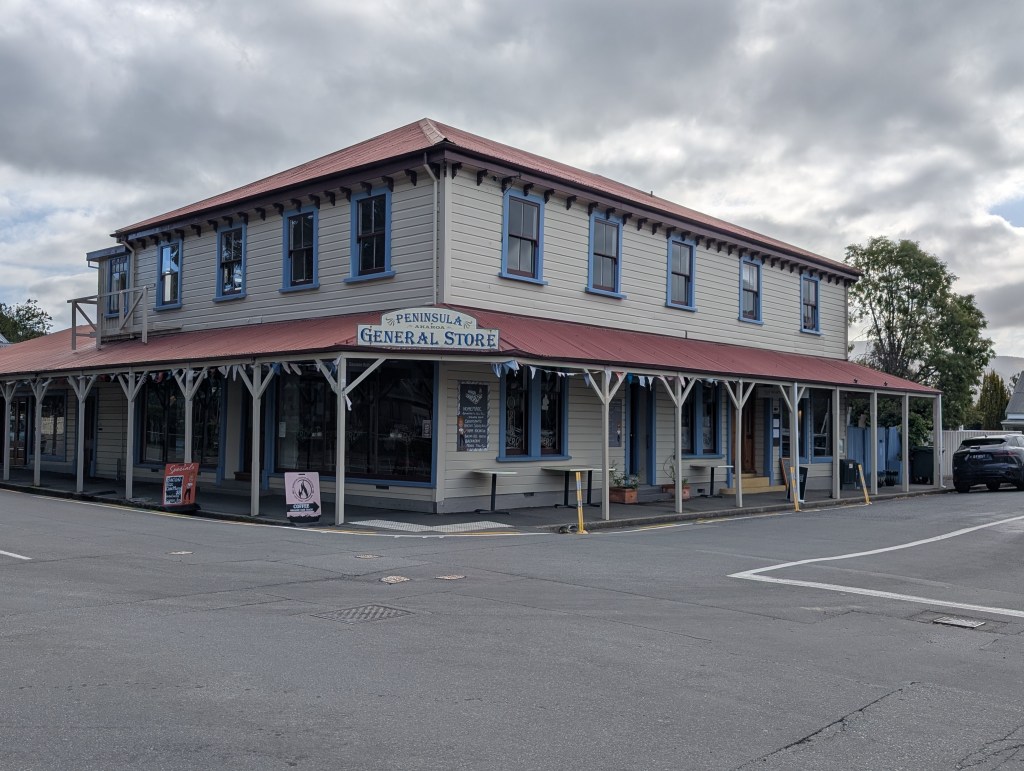
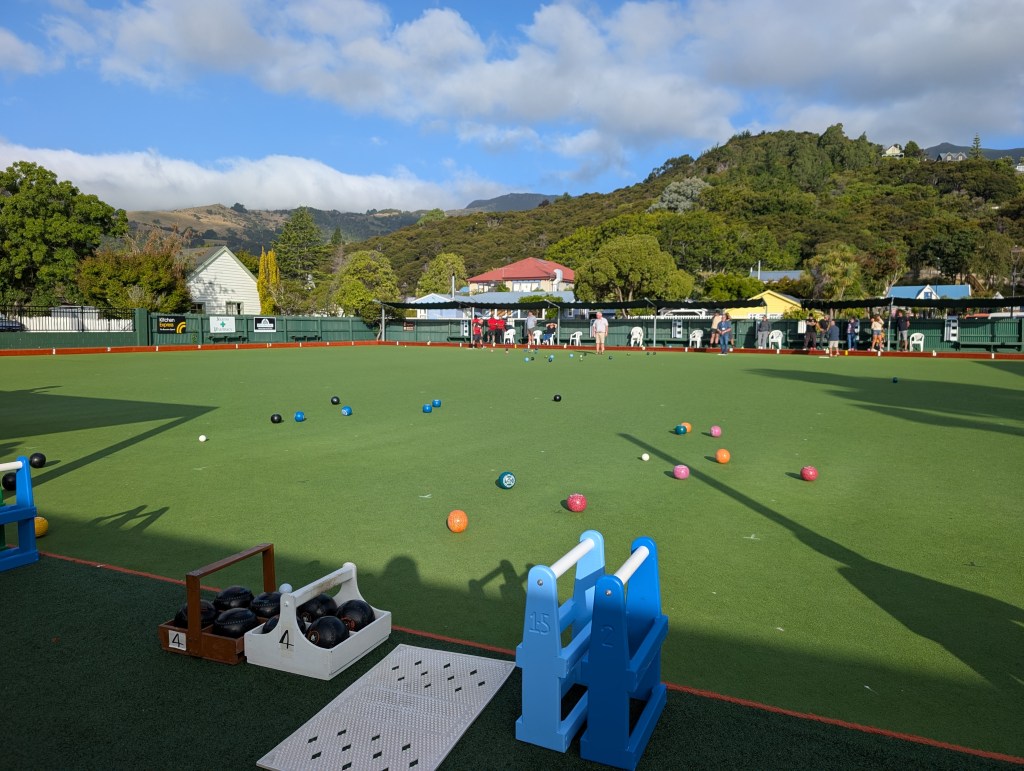
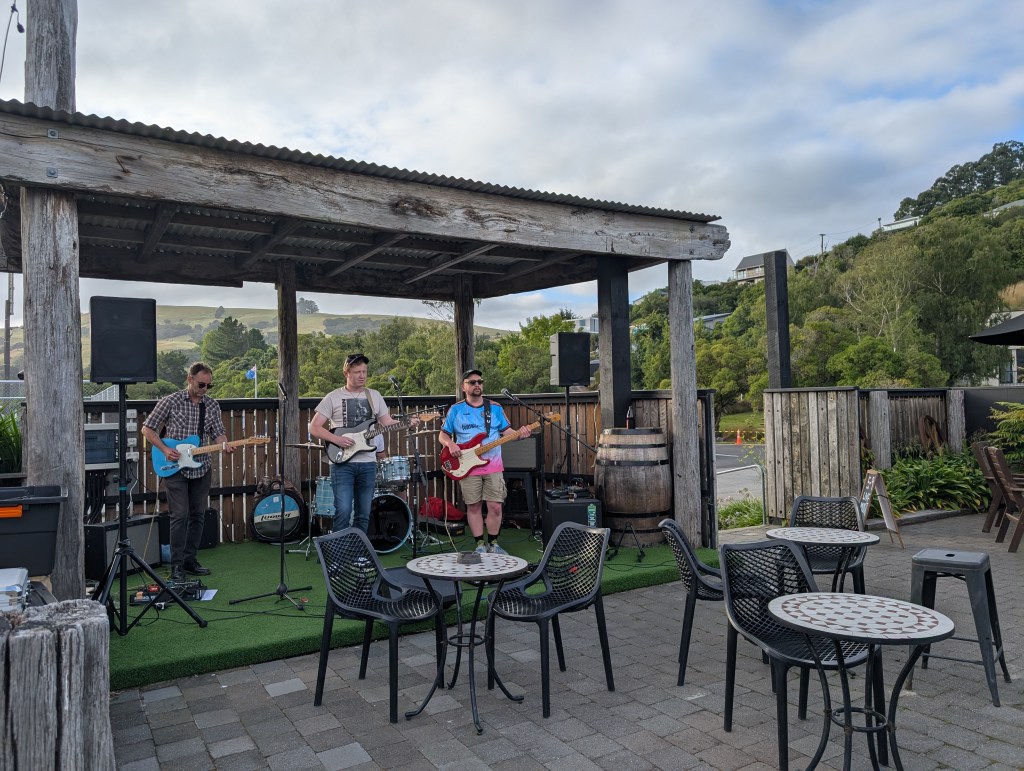
I arrived on a Friday evening in the late summer when the weather was milder, but the town was still bustling with activity. Walking around the town, I came across the Akaroa Bowling Club’s Twilight bowling tournament, drinks and dinner harborside, and live music at the Grand Hotel.
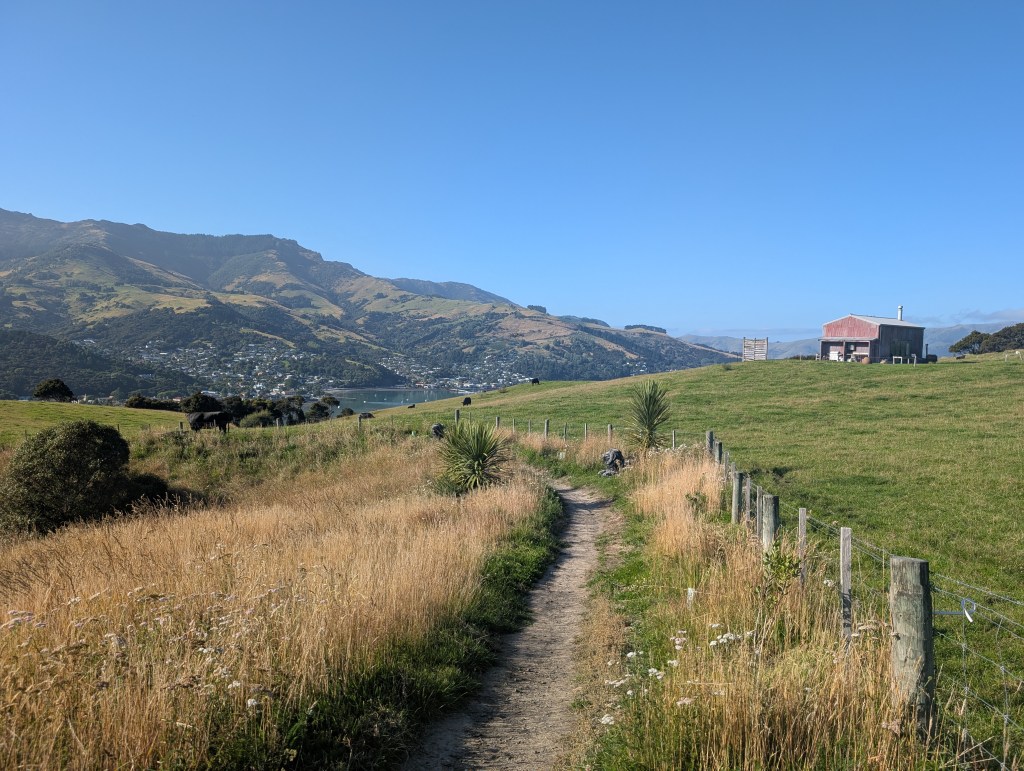
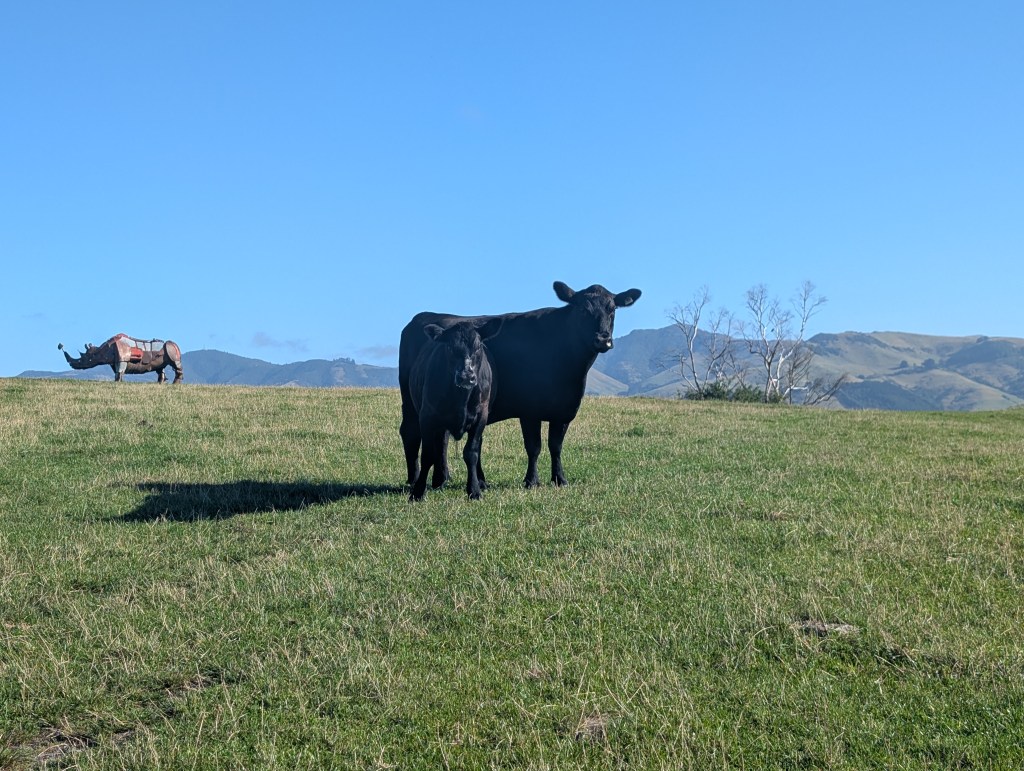
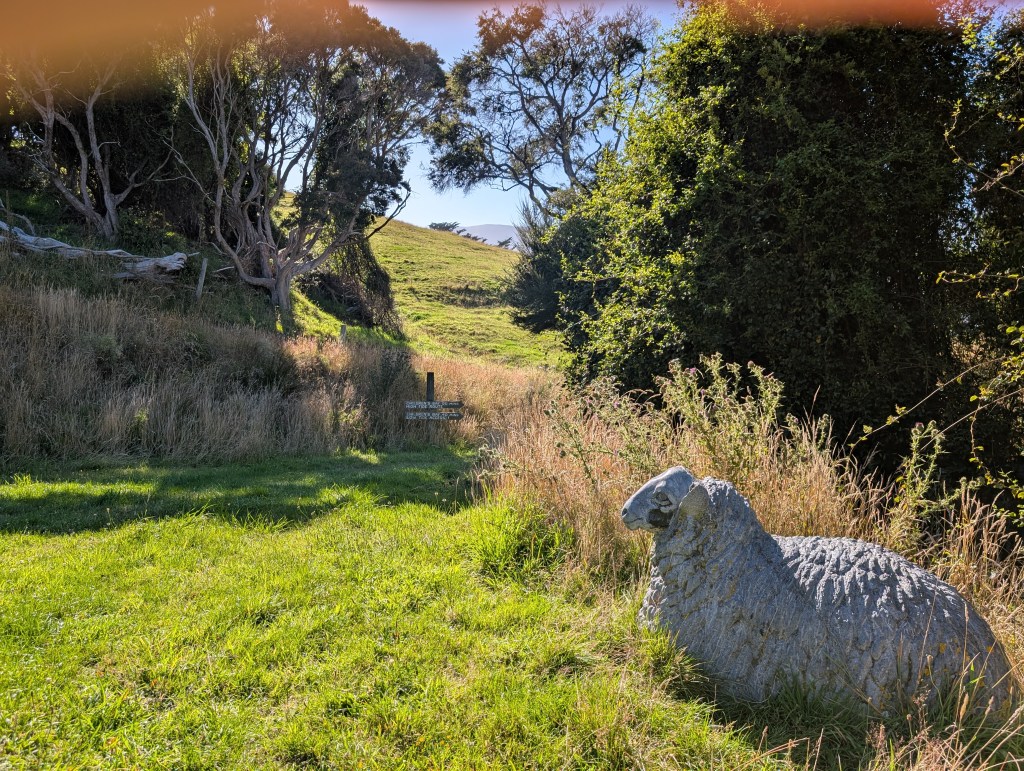
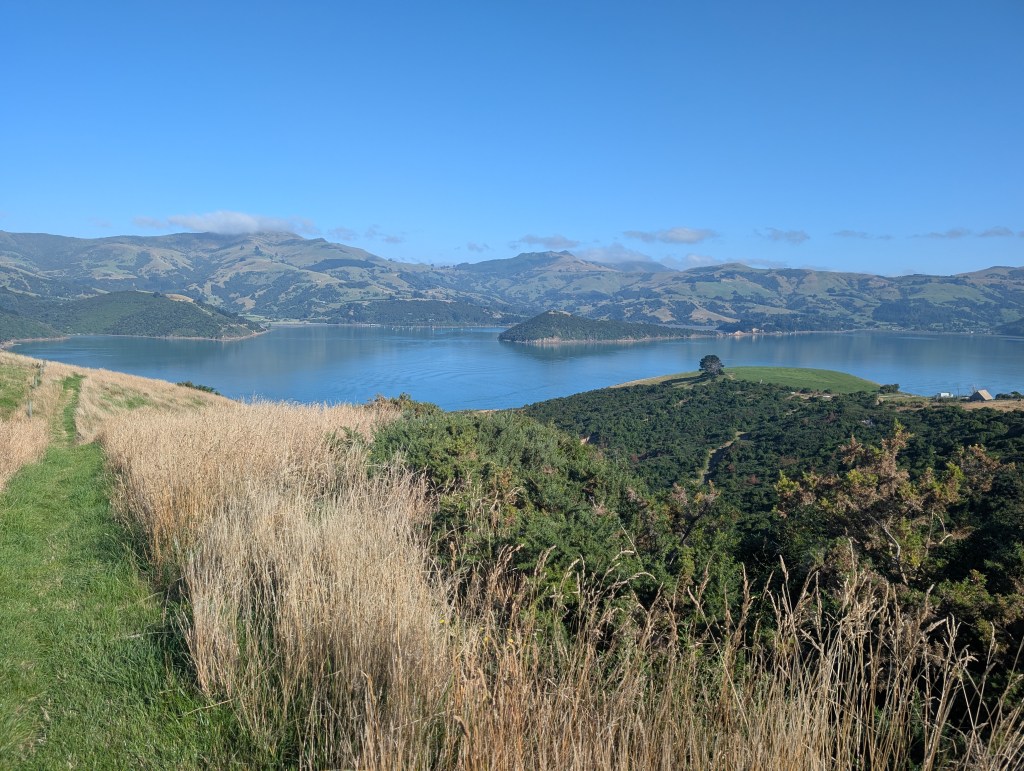
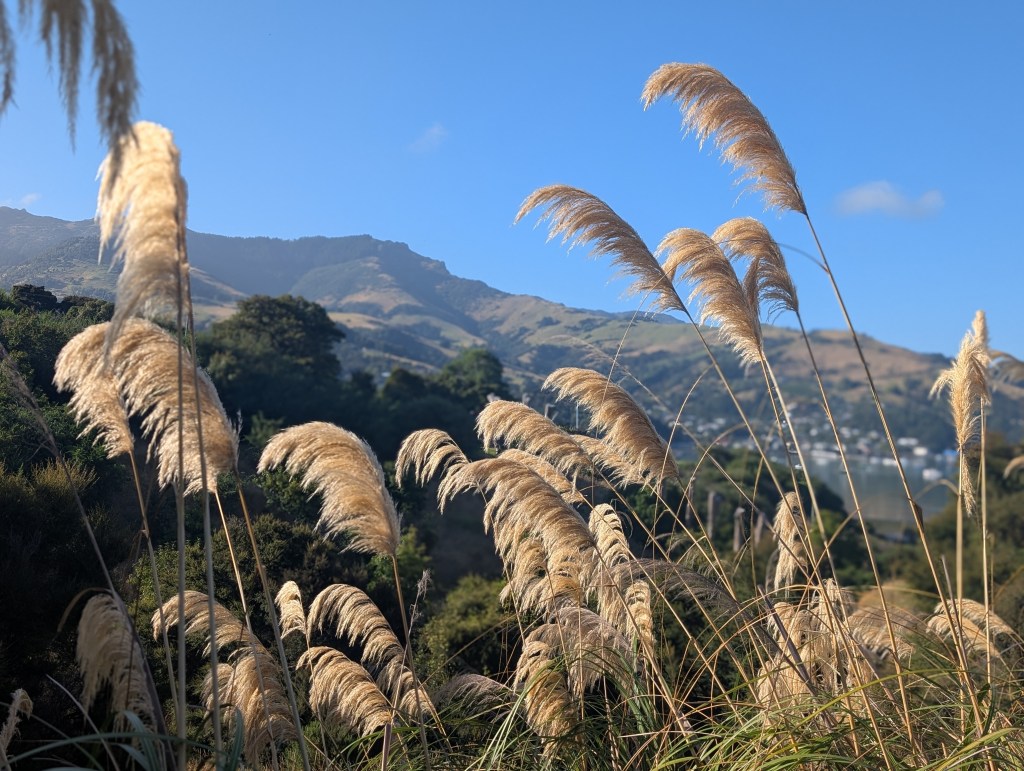
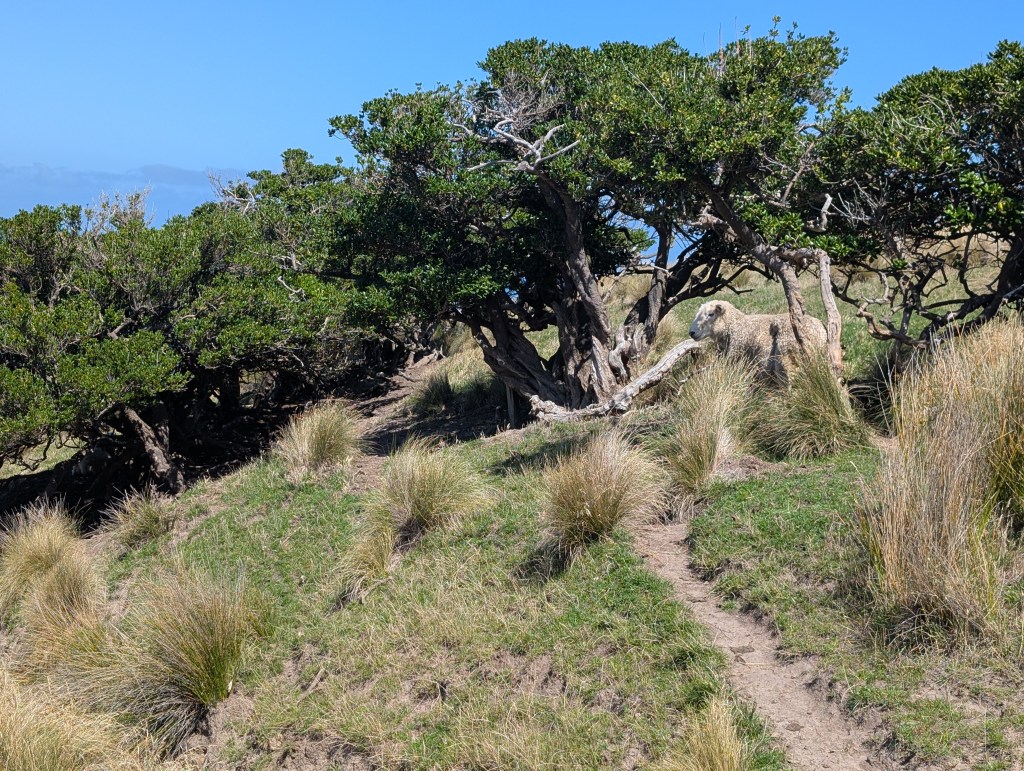
Saturday morning, I started with a hike my lodging host recommended to me from the collection of Akaroa walks: a great hike around Children’s Bay. While there are parking spots at the trailhead, I was staying close enough to walk there from my lodging. Besides impressive views of bay, mountains, and farmland, the hike also featured some live animals and animal sculptures. I enjoyed finding a random crocodile or sheep nestled into the side of the trail and watching the grazing cows stare at me as I walked through their paddock. The first half of the 3.5 mile loop is well maintained, but the 2nd half felt like walking through chest height grass – luckily, there are no deadly snakes or ticks here to worry about.
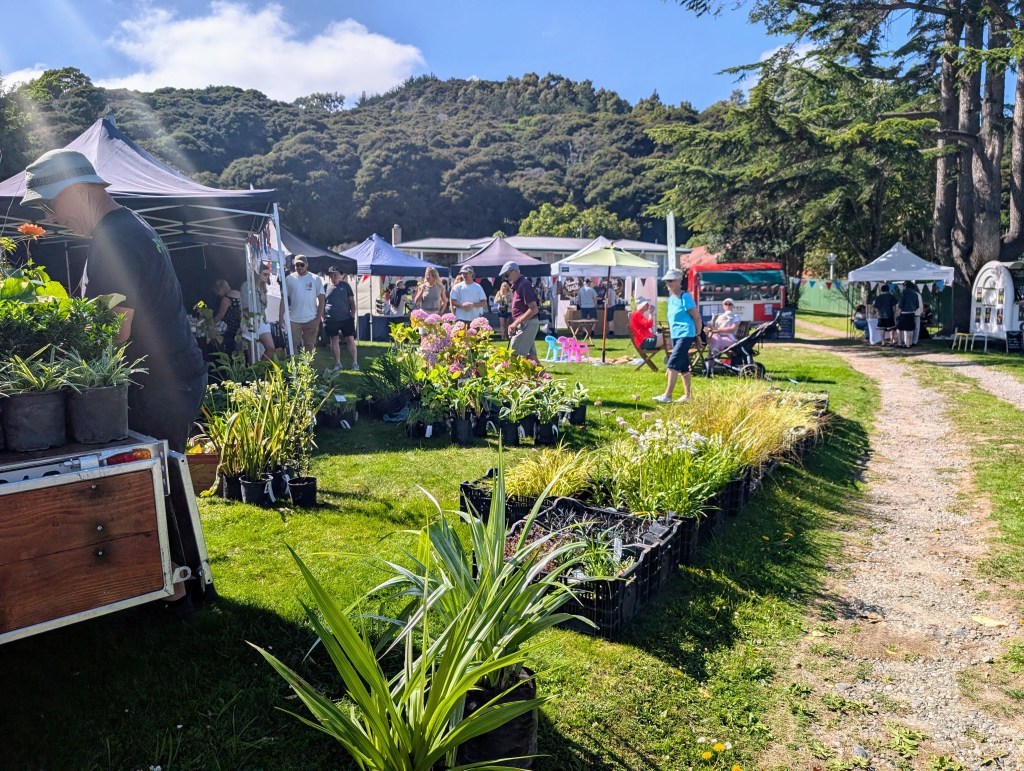
I got back to Akaroa in time to enjoy a quick stop at Saturday’s farmer market. Held in the front lawn of St. Patrick’s Church from October to April, the market features about 10 stalls offering crafts and food items. While I was hoping for some fresh produce, I still enjoyed browsing the local products. Additionally, the tables and games set up in the middle added a nice sense of community.
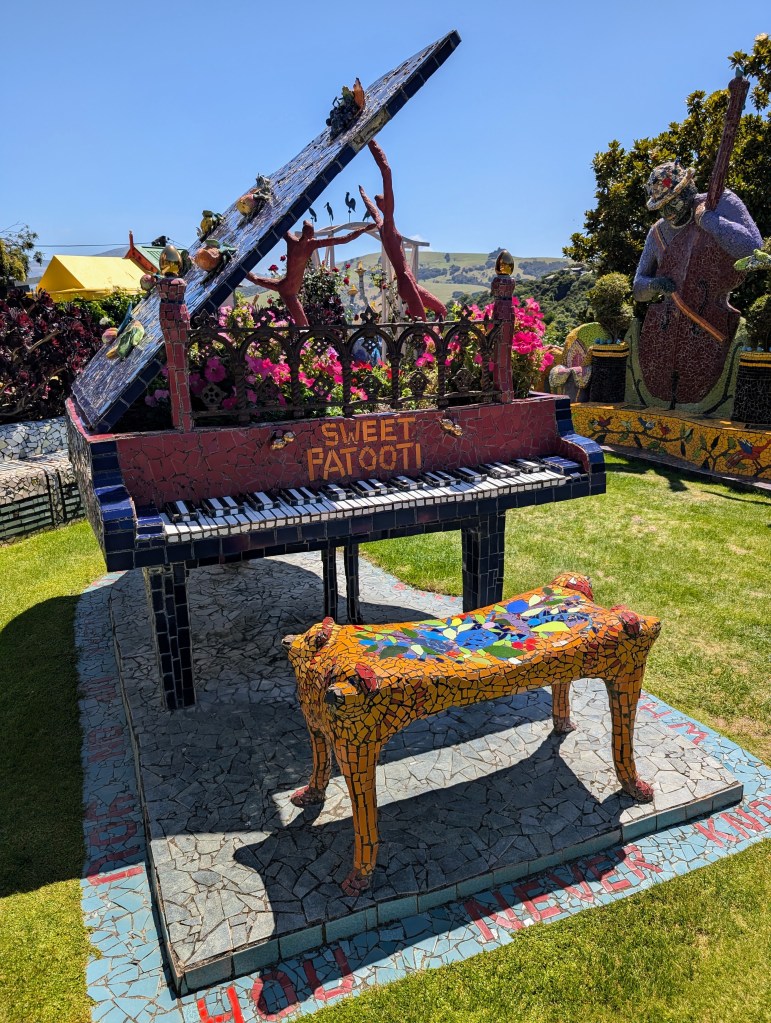
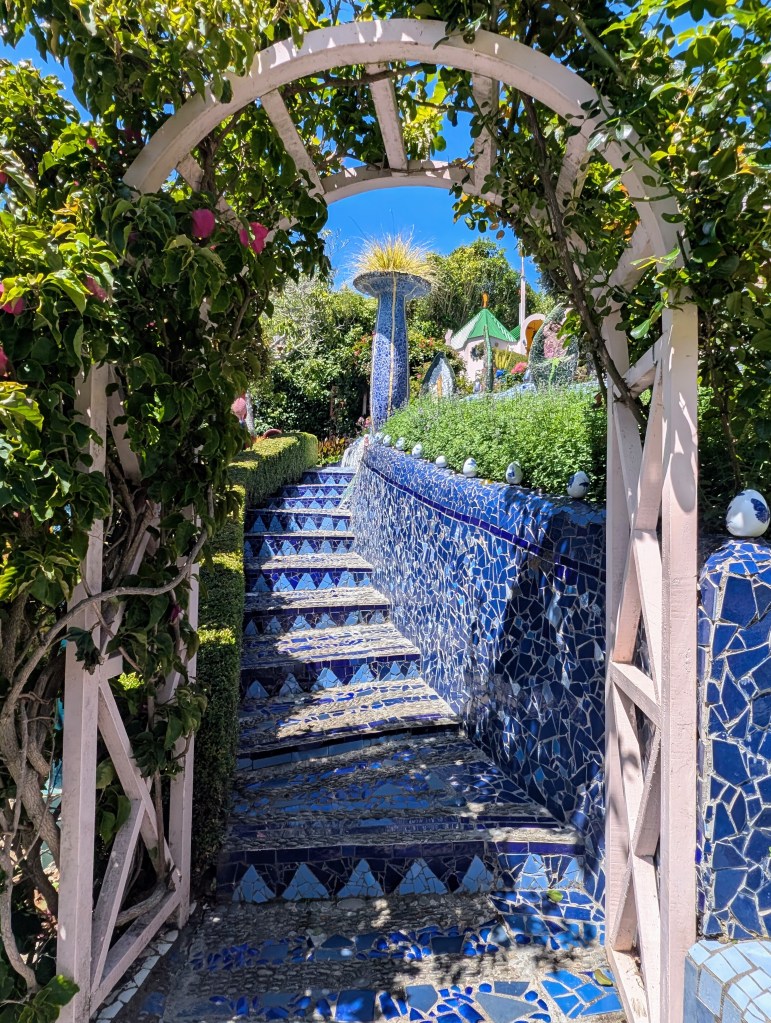
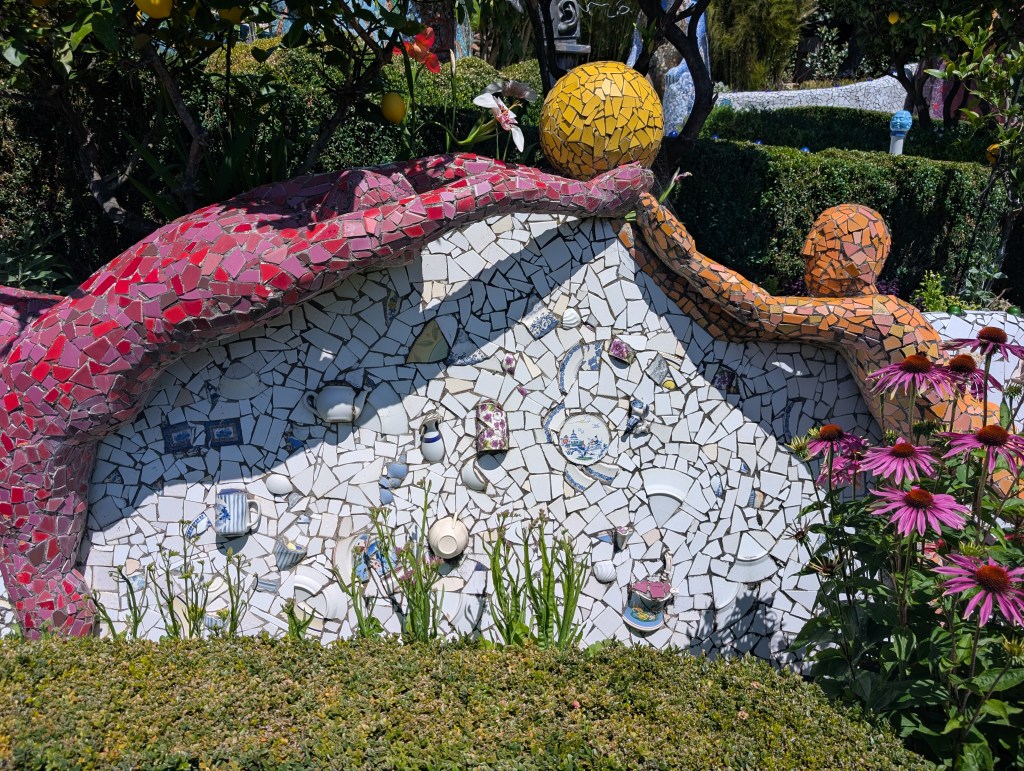
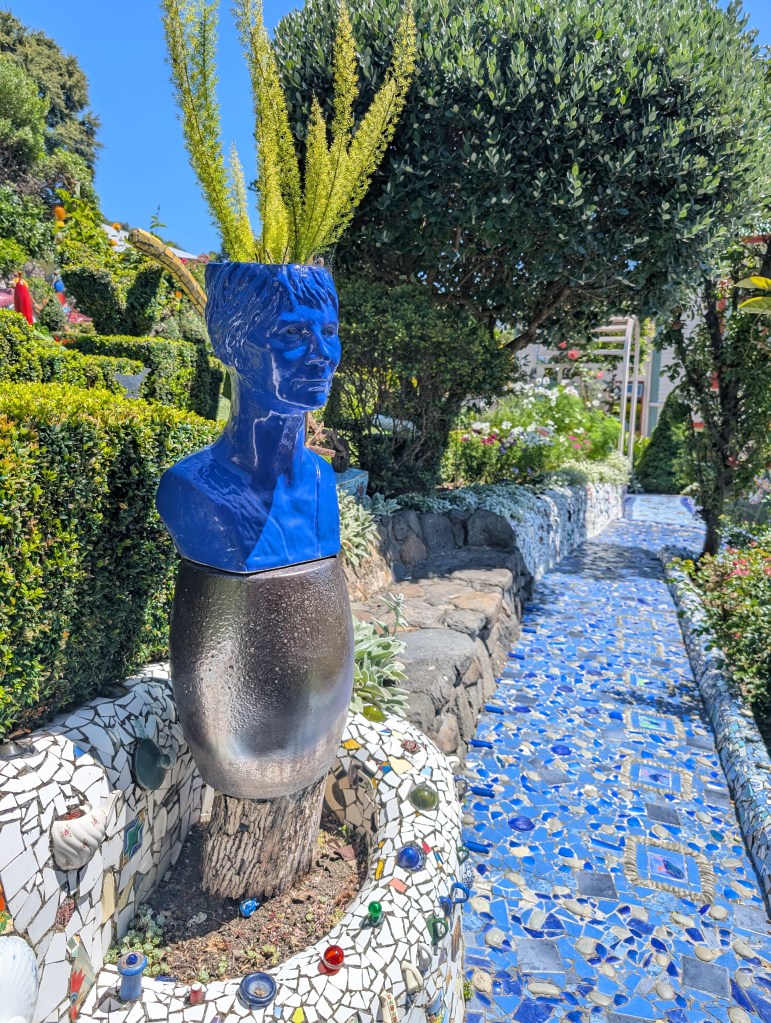
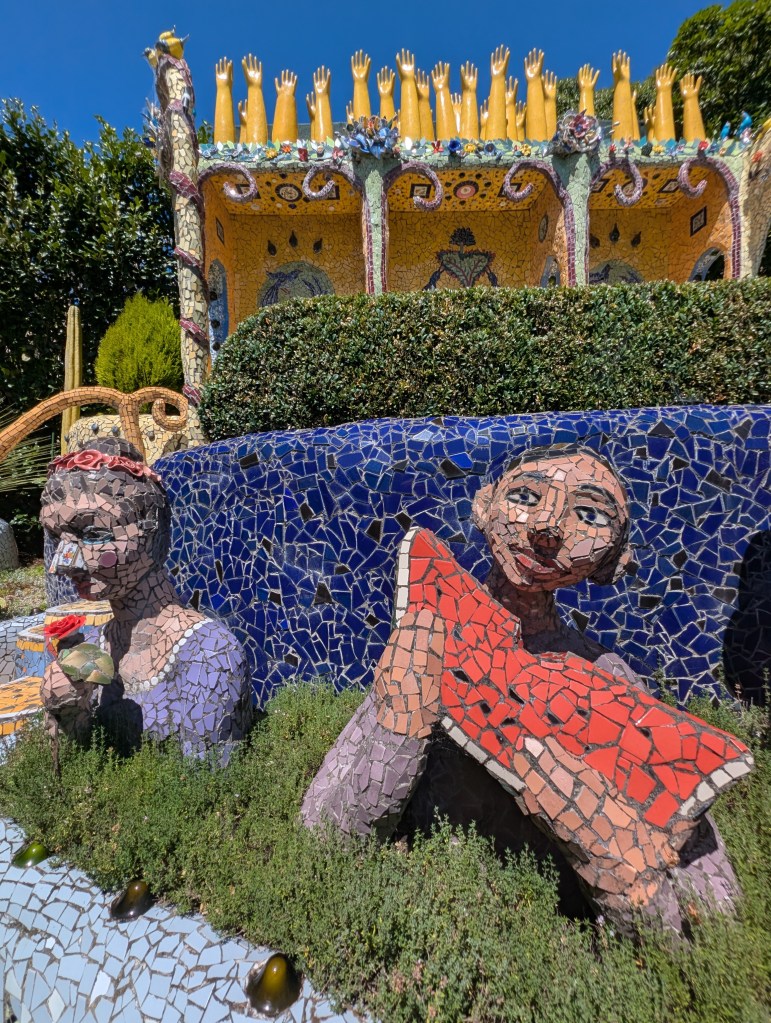
After browsing the shops, checking out the museum, and grabbing lunch, I got in my car for my afternoon adventures. The first stop was The Giant’s House. The gardens represent 22 years of artist Josie Martin’s intricate and thoughtful garden design. Inspired by pieces of china she found embedded in her garden, she decided to embrace the art of mosaic and blend it with her own background in horticulture and art. The extensive tile mosaic sculptures enchanted me from the first step through the archway. Whimsical and creative tableaus were up every staircase and tucked inside every corner. Human sculptures showcased Martin’s background in figure drawing, and the colorful designs represented her own quirky sense of style. There is also a small cafe on site, The Artist’s Palate, offering drinks and an assortment of baked treats. Some people were having a high tea in the mosaiced courtyard, and I was thinking that would be the perfect way to spend an afternoon.
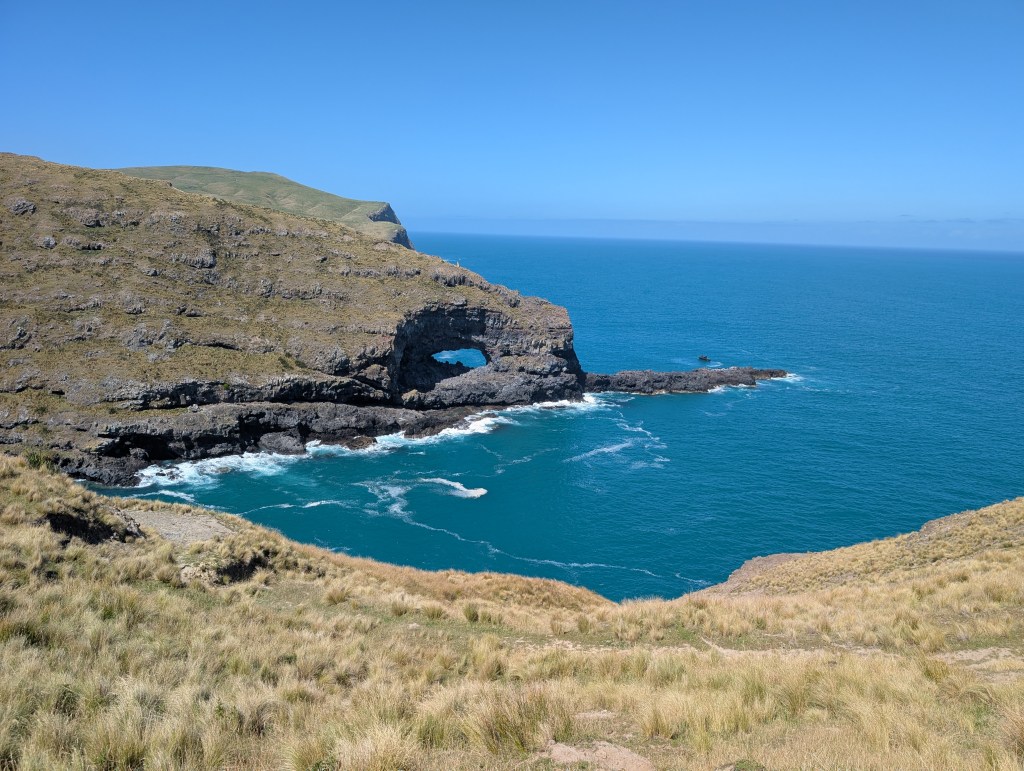
The next part of the day was the trickiest as I made my way up and down the mountain road to Akaroa Head Preserve (only possible with a 4WD car). The hike from the carpark to the lookout was short but a steep decline and what one hikes down, one must hike back up. I came here for two reasons: to see the dramatic coastline and to see Hector’s Dolphins. These are the smallest species of dolphins, which are native to this area; since I didn’t have time for a full boat tour, I was told the best way to see them was to get up high and look down over the ocean. Sadly, I didn’t see any during this visit, but the sweeping views of the ocean and cliff face still made the trek worth it.
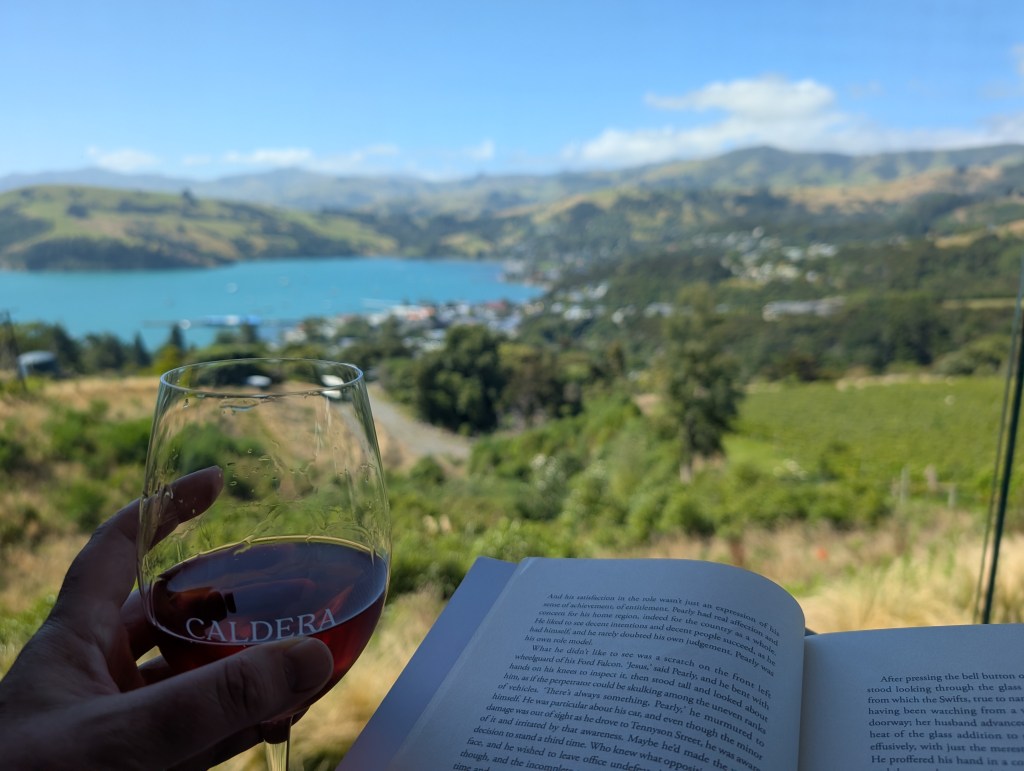
On the way back into town, I stopped at the Caldera Winery for a glass of one of their house wines. Little did I know that I was also in for an amazing view. The glass fronted open air balcony and restaurant gave unobstructed views of the harbor. Paired with a comfy chair and a good book, I couldn’t have asked for a better way to spend a late afternoon.
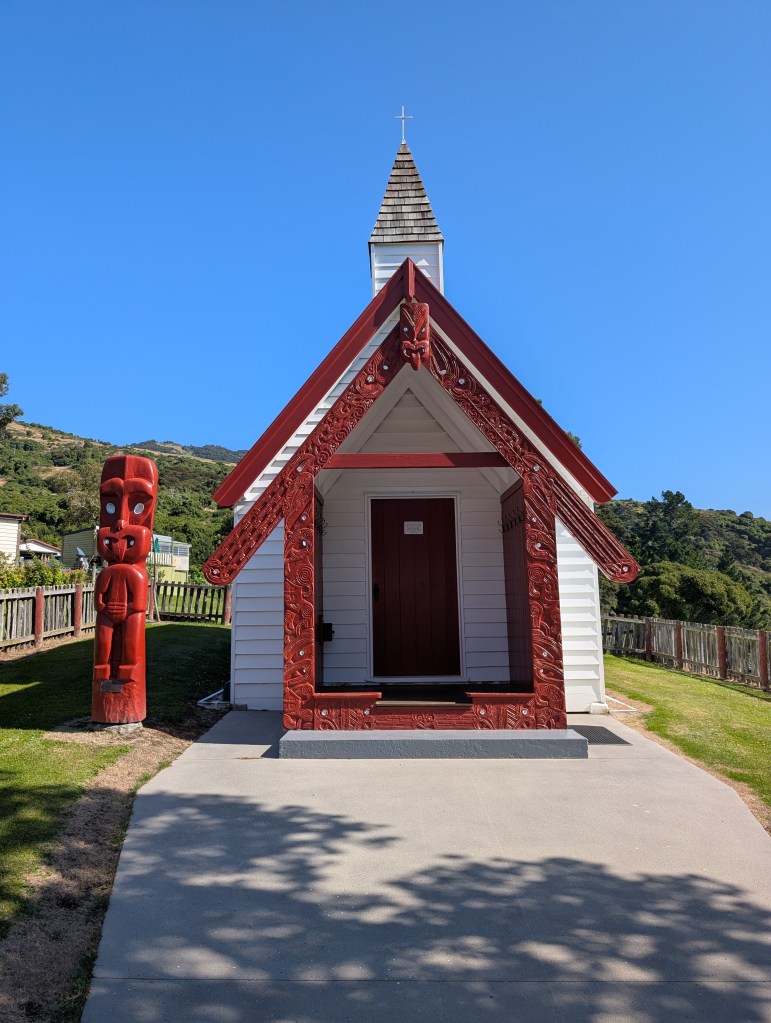
I ended the day with a stop at two important Maori cultural and historic sights.
Built in 1878, the Ōnuku Church is the only remaining Maori church on the Banks Peninsula and a reminder of their historic presence in this area.
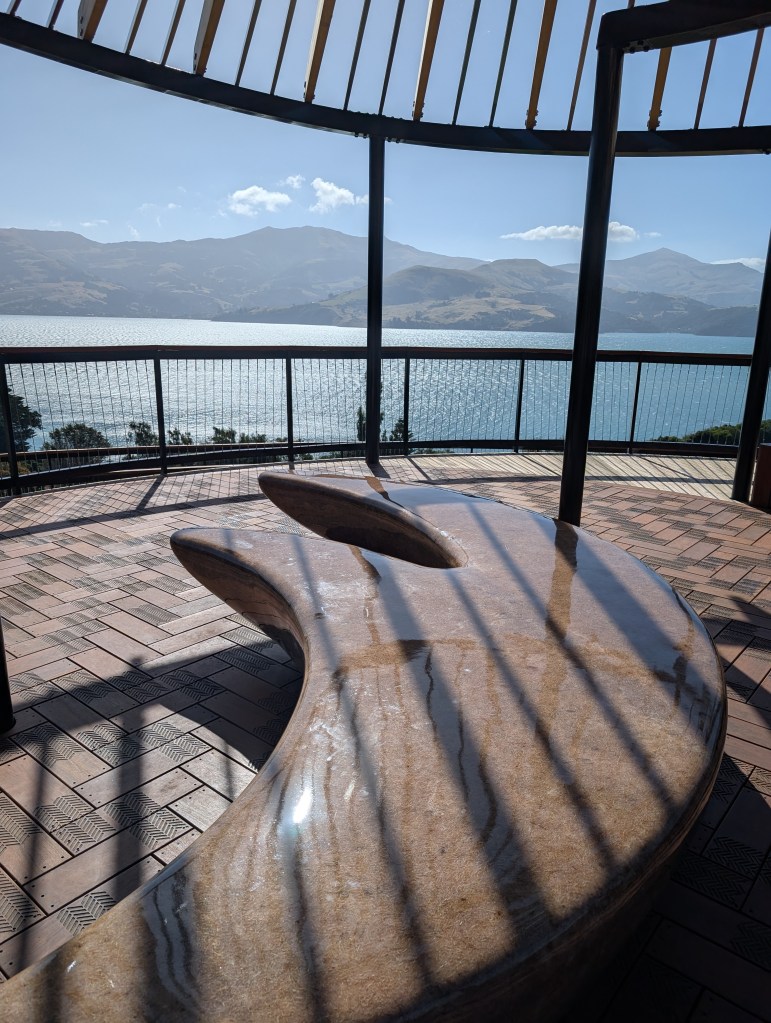
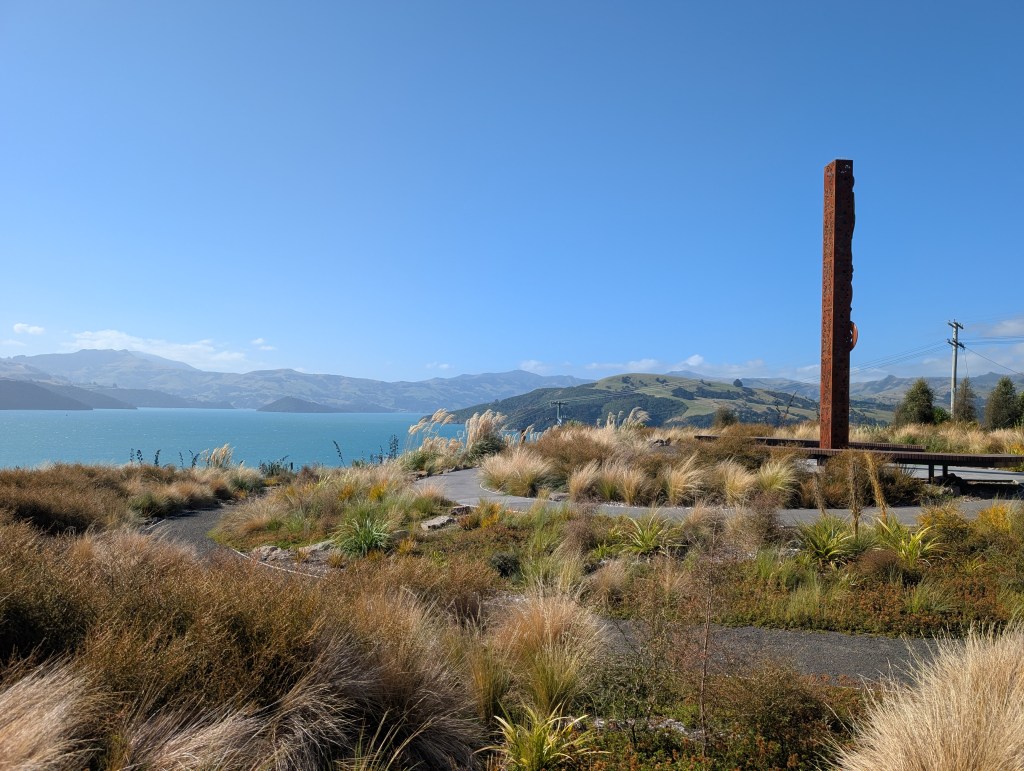
In the final stages of building, Takapūneke Reserve will be a place of reflection and discovery. Once a popular trading post for the Ngāi Tahu, the story of the land changed in the 1830s with the Brig Elizabeth massacre. For centuries, the area had been neglected, but starting in the early 2000s, it has been reclaimed and declared sacred by the Maori.
 Mac On the Map
Leave a comment