
As soon as I landed in Greece, I made my way by train and ferry to the island of Paros. I’ve been wanting to visit Greece forever, and like most Americans, when I think of Greece, I picture the striking white and blue architecture set against the ocean side. Paros perfectly matches that Greece dream.
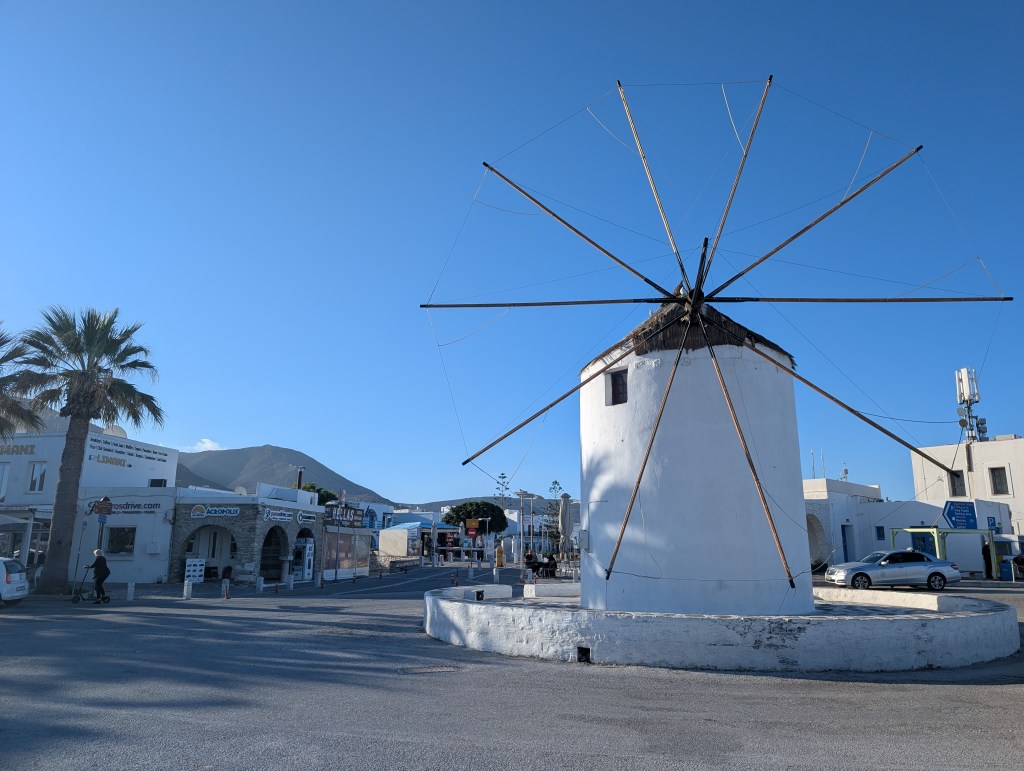
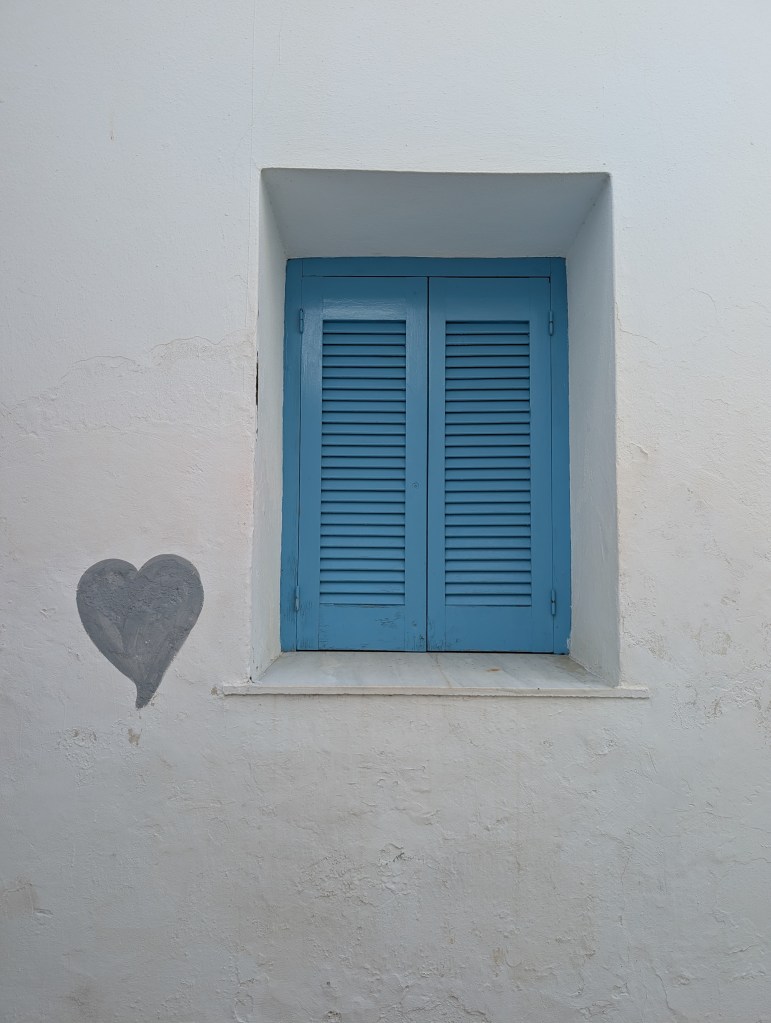
As one of the Cyclades islands, Paros is an easy 4 hour ferry ride from Piraeus port in Athens. Paroikia’s old town is just to the right of the ferry dock. I arrived late on a Friday night in October when the narrow cobbled paths through the old city were quiet and atmospheric. I was happy that Google Maps was able to navigate me through the maze of streets to my lodging.
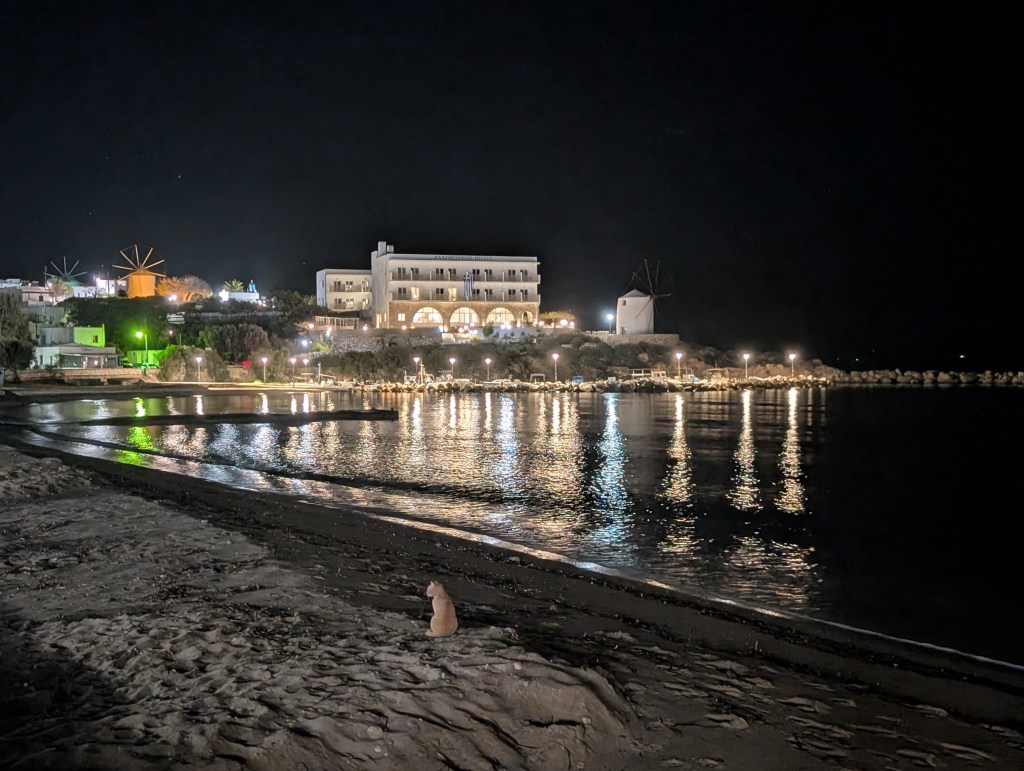
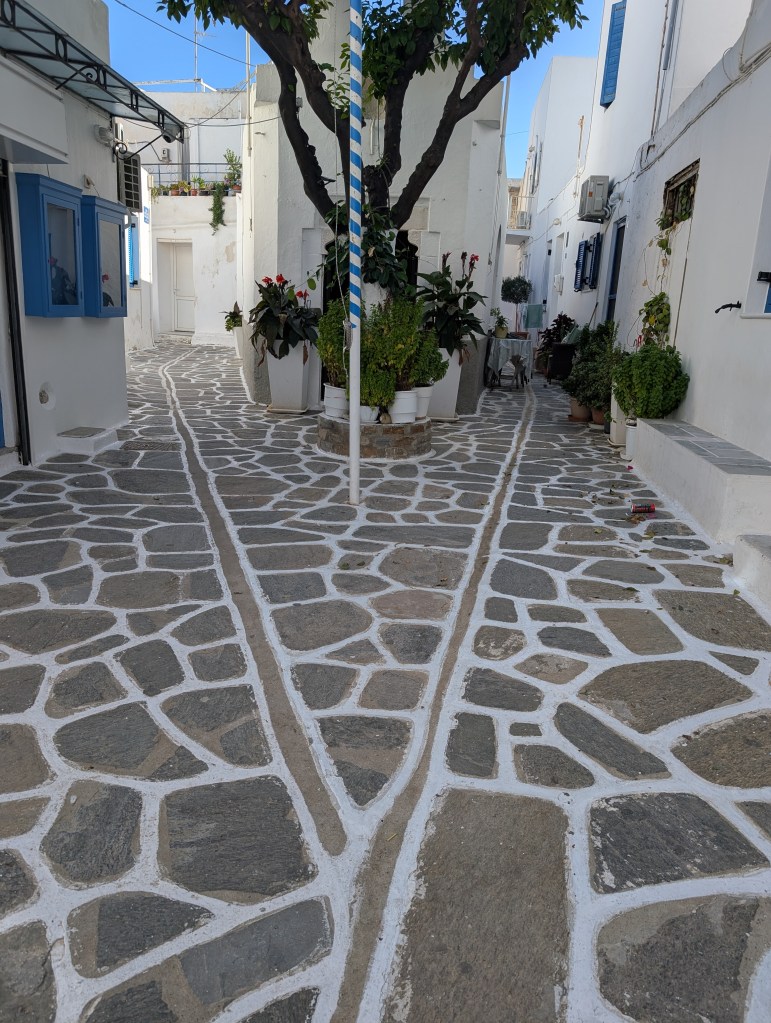
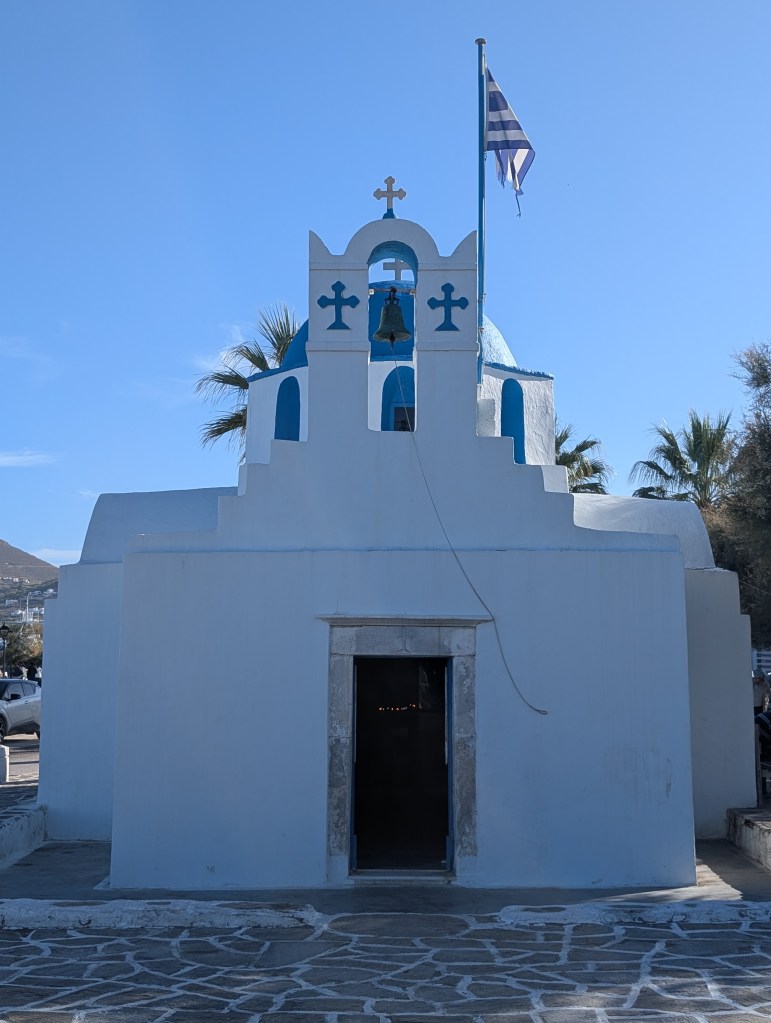
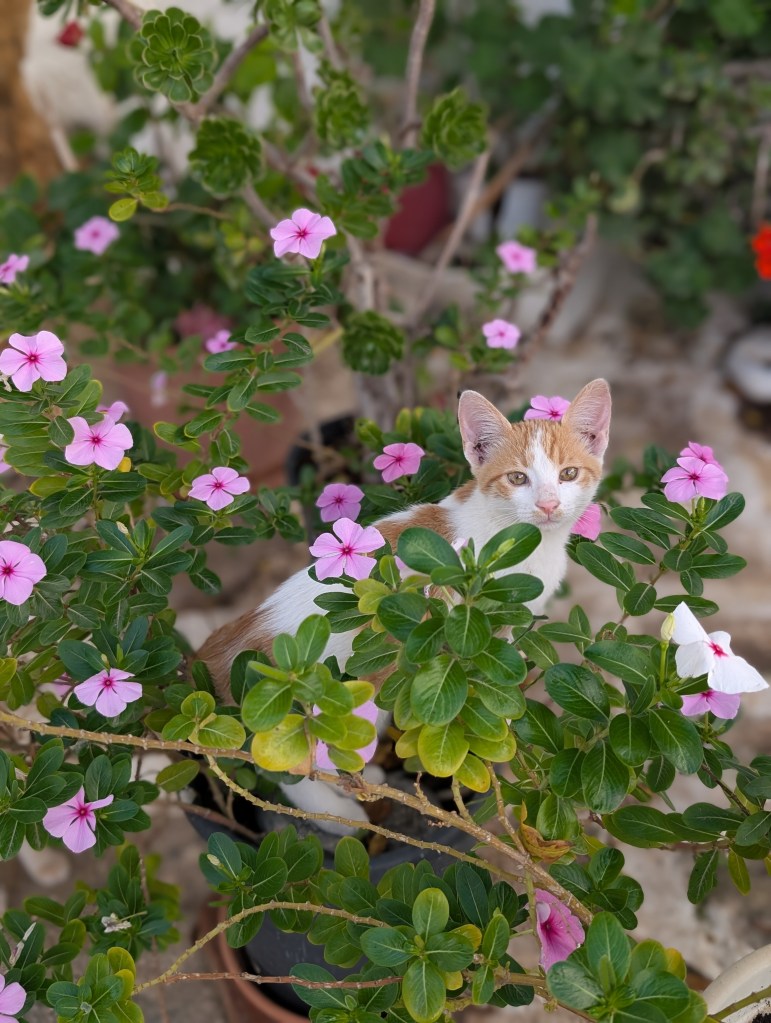
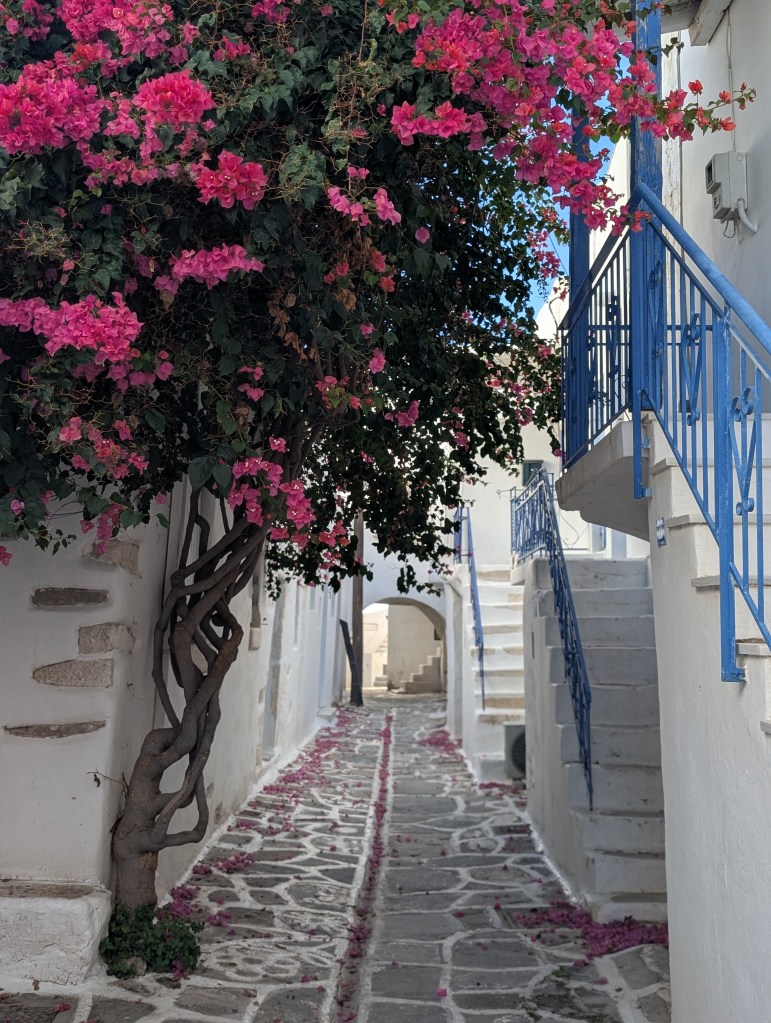
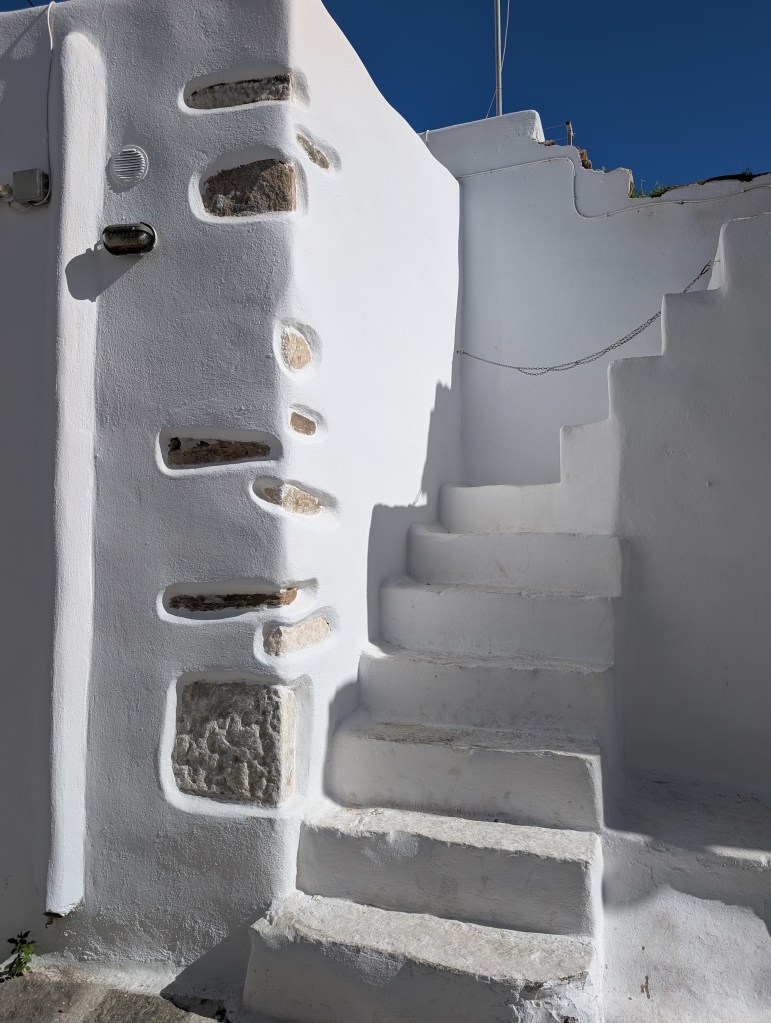
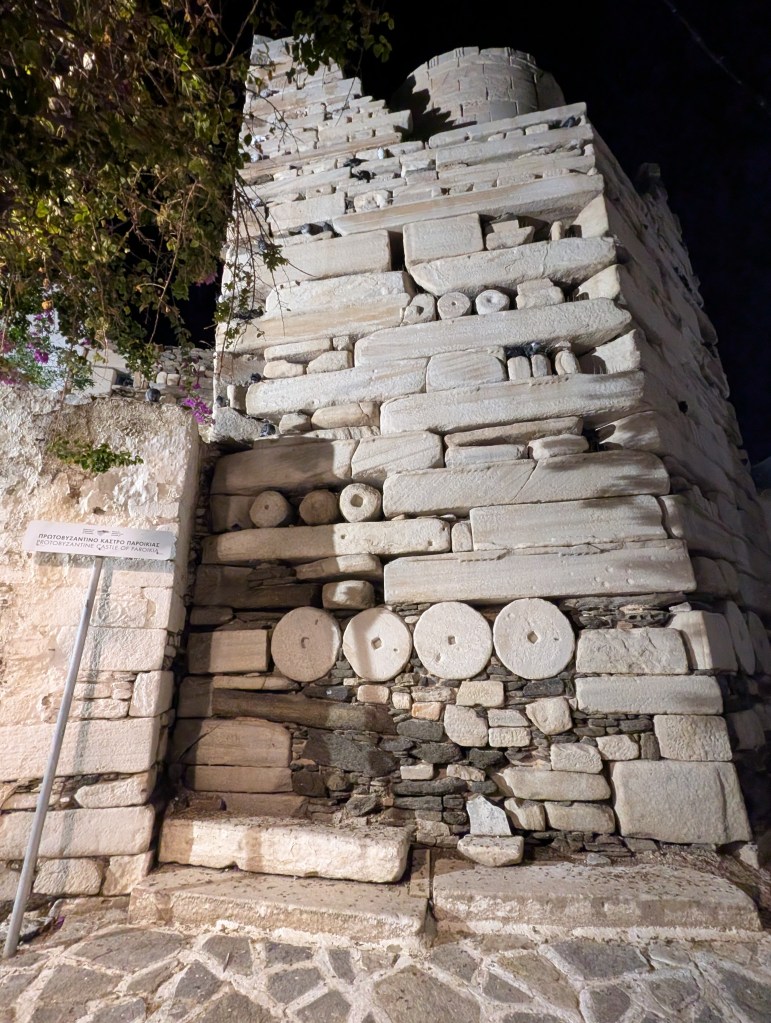
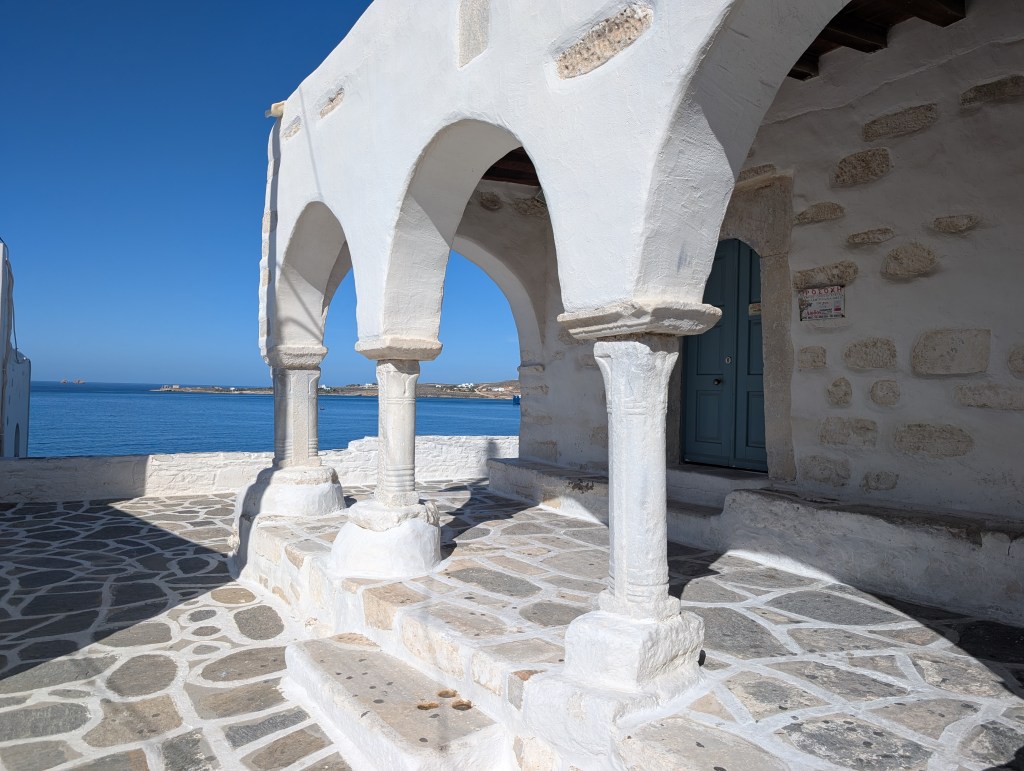
Even after four days on the island, I still got lost within the labyrinth of Paroikia, but that is part of the charm of these Greek towns. Curved archways, resident cats, vibrant bougainvillea, hidden doors surprised me around every corner. As I roamed around the town I found tiny churches (there are around 450 churches on the island) and remnants of a 13th century Frankish castle. Climbing up staircases brought me to harbor and beach views.
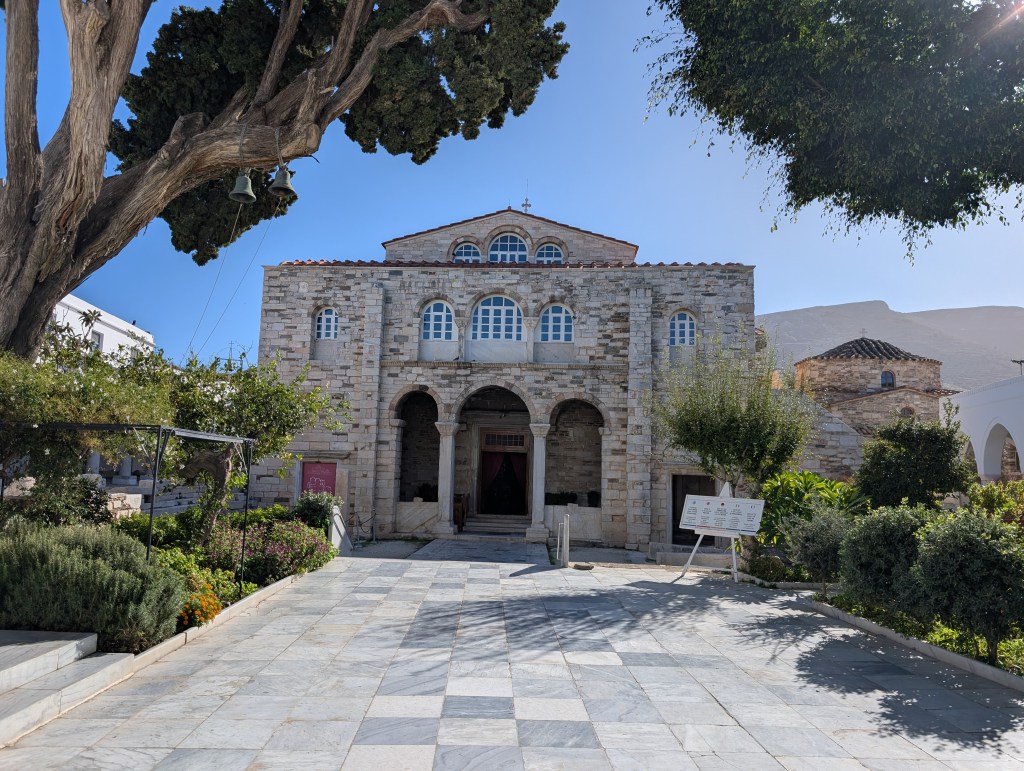
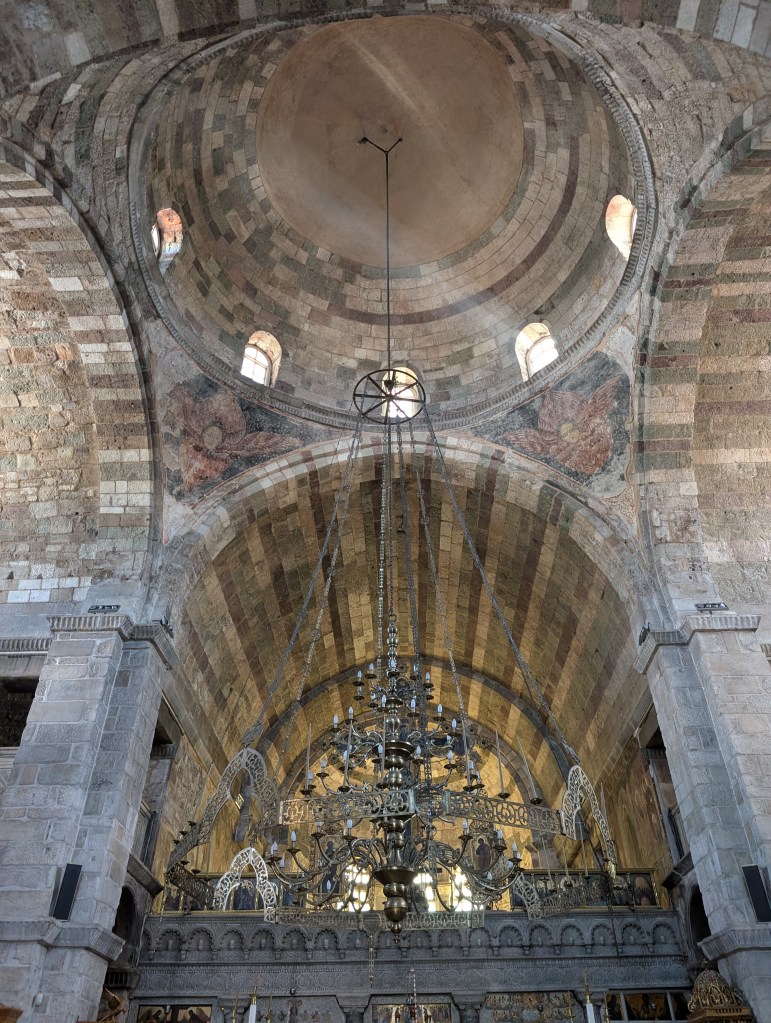
Near the main square, the Church Complex of Ekatontapyliani (Church of 100 Doors) represents one of the greatest Orthodox shrines in the Aegean. First constructed in the 6th century, the complex has grown and been restored throughout the centuries. Today, the expansive courtyard and impressive interior stone work stand out amongst the other white and blue churches.
While there is a small beach in front of the old town, most people walk left past the ferry dock to the narrow Livadia Beach. However, with the road running right behind it, I decided to keep walking to the smaller Paralia Parikia. Here a few restaurants line the beach and offer sun loungers and umbrellas in exchange for spending a certain amount of money at the restaurant. Since I was there during the off season, it was easy to reserve one of these loungers for the afternoon, but I’m assuming it would be a lot busier during the high season.
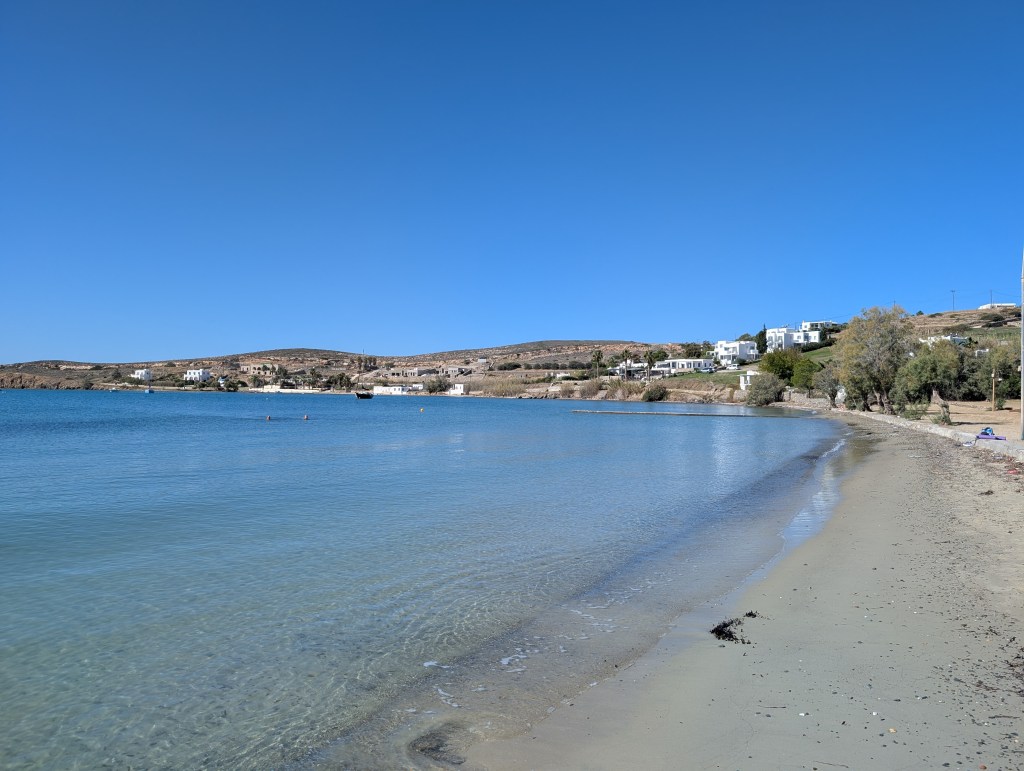
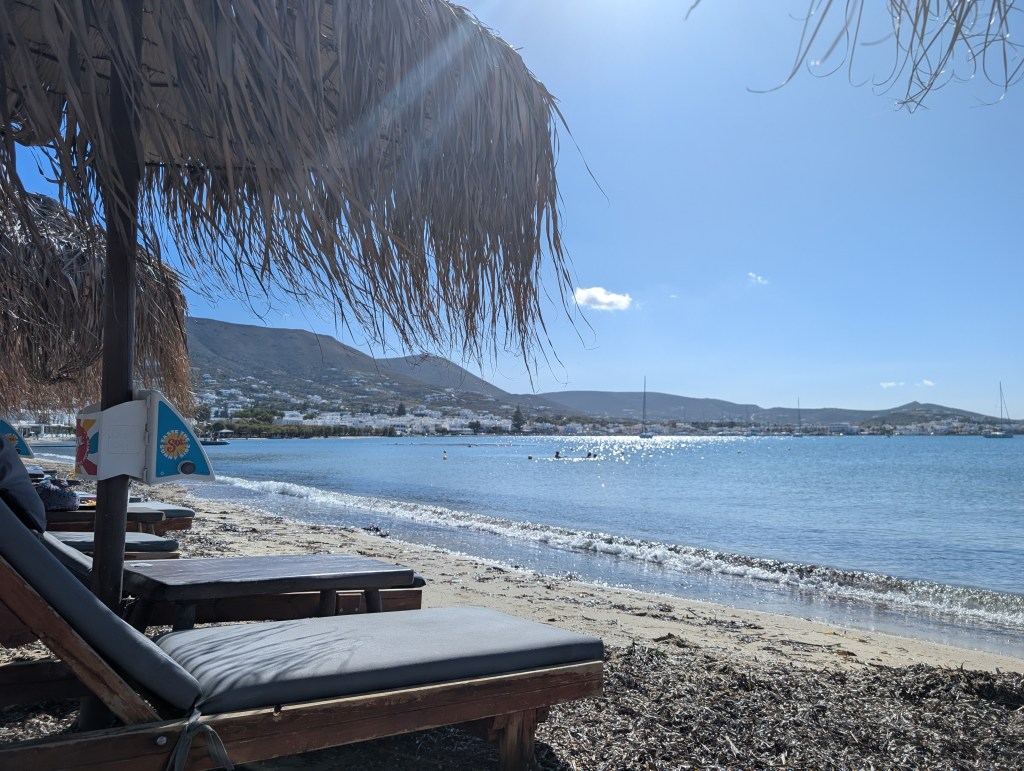
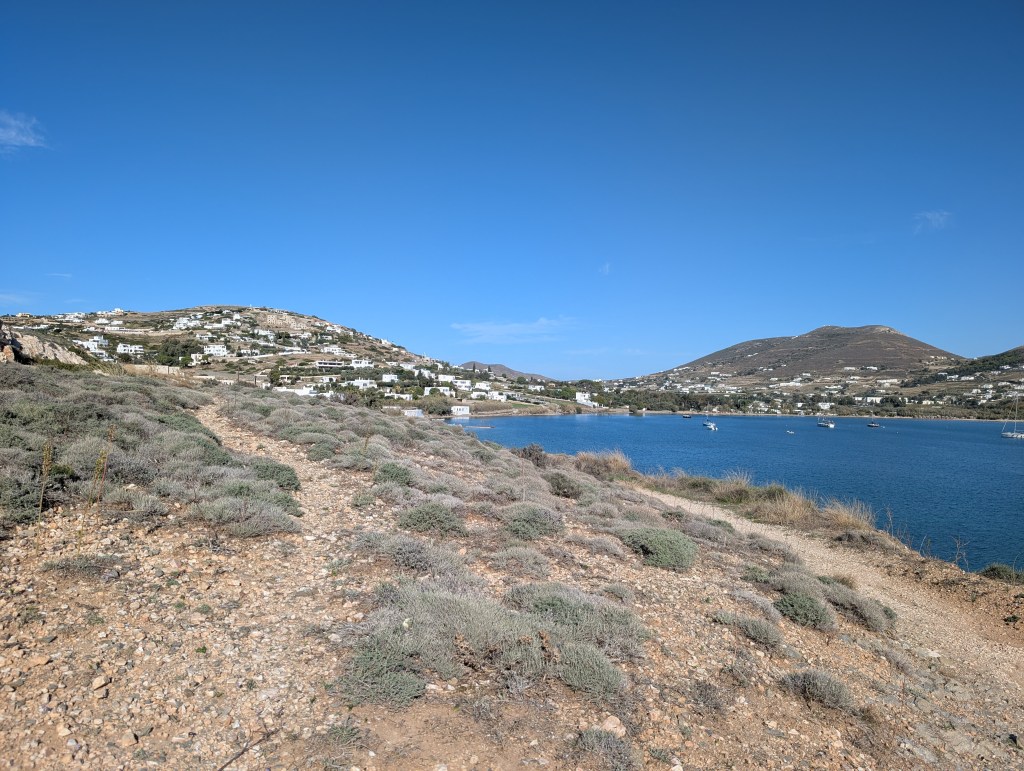
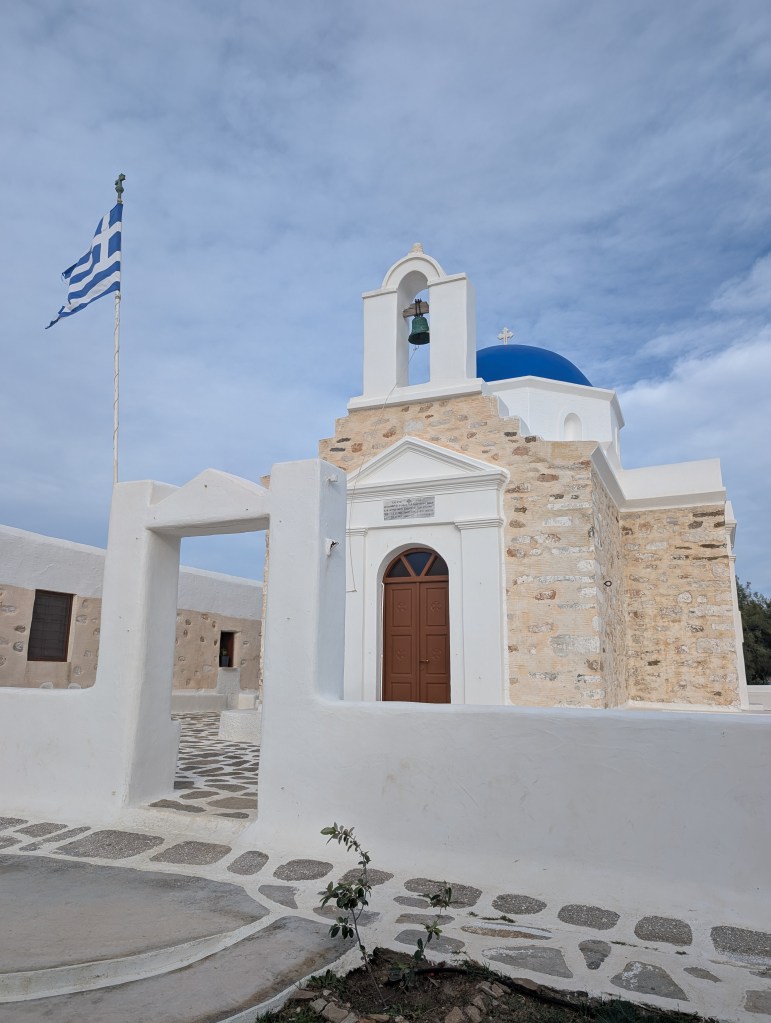
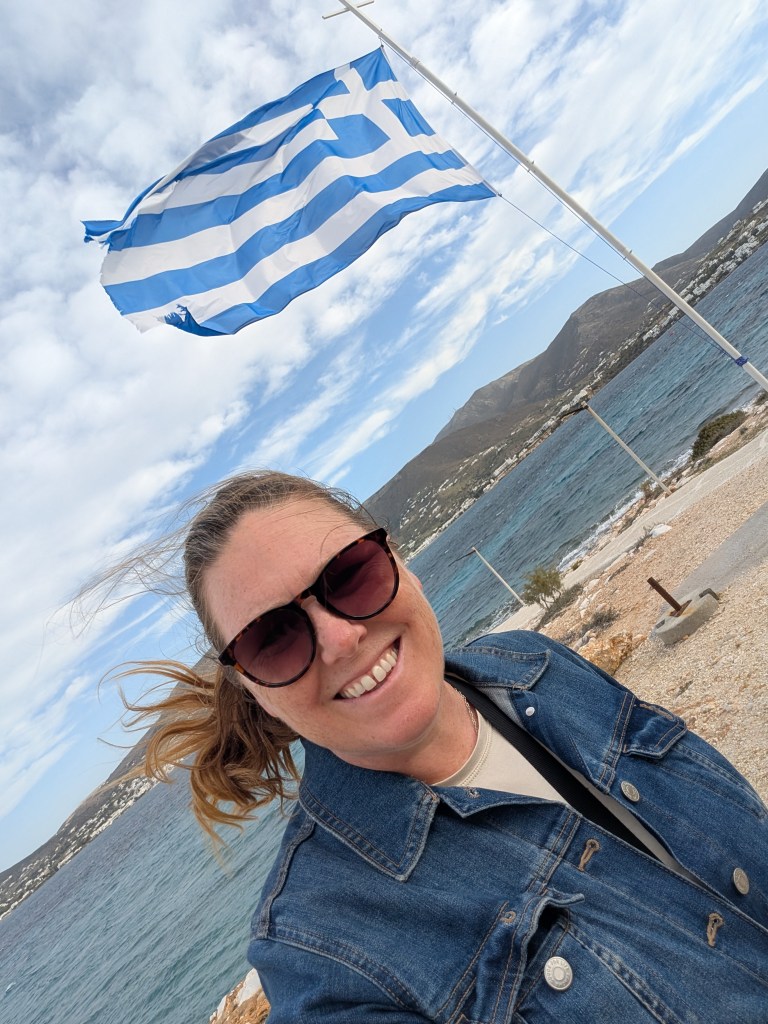
After enjoying the shallow and cool water and relaxing under the shade of the umbrella for some time, I decided to stretch my legs and walk along the coast to the the blue domed Church of Agios Fokas. While I lost the path and decided to turn back that day, I did drive to the lighthouse the next day to feel the wind and take in panoramic views of Pariokia’s harbor.
After a day of exploring Paroikia on foot, I rented a car for a few days of exploring the rest of the island. My first full day I spent encircling the island.
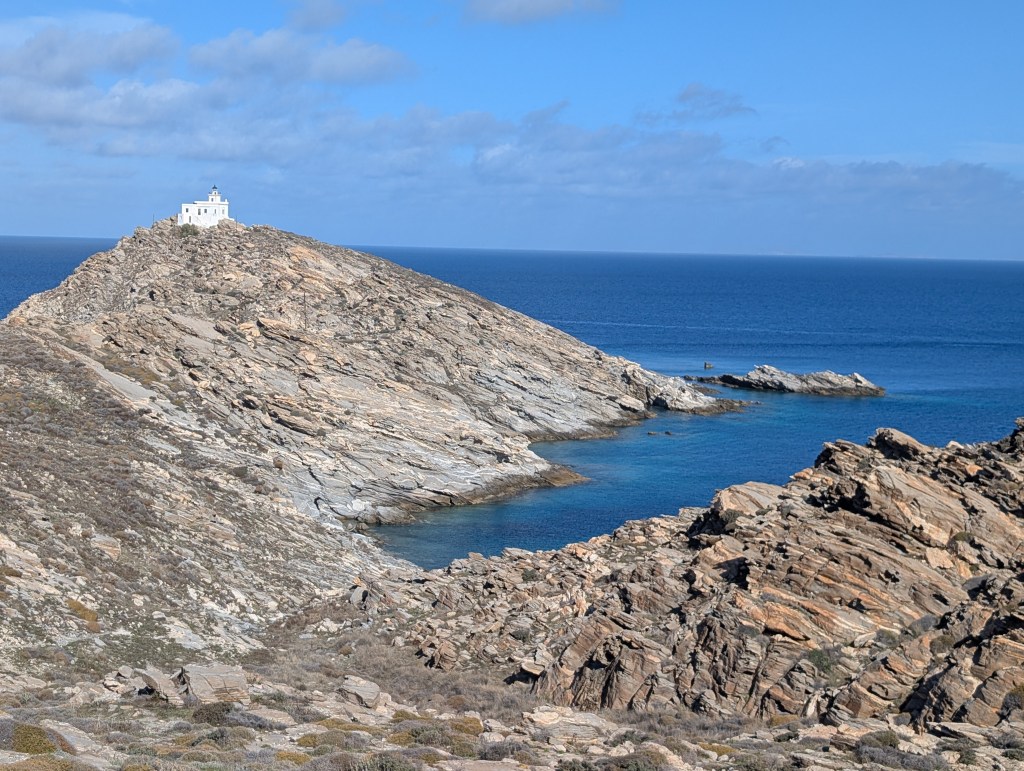
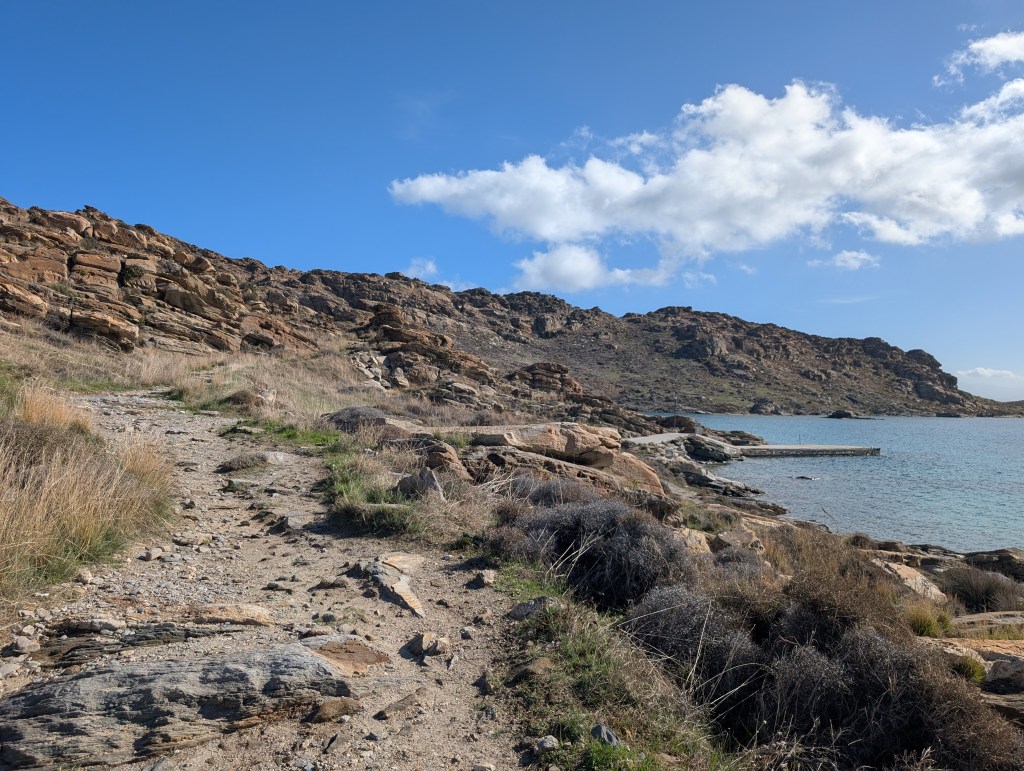
I started with a morning walk at Paros Park. The narrow path through the rocky coastline along the peninsula leads to a lighthouse. There is also a small harbor beach (Katholiko beach) where people were launching kayaks set below the blue domed St. John of Deti monastery.
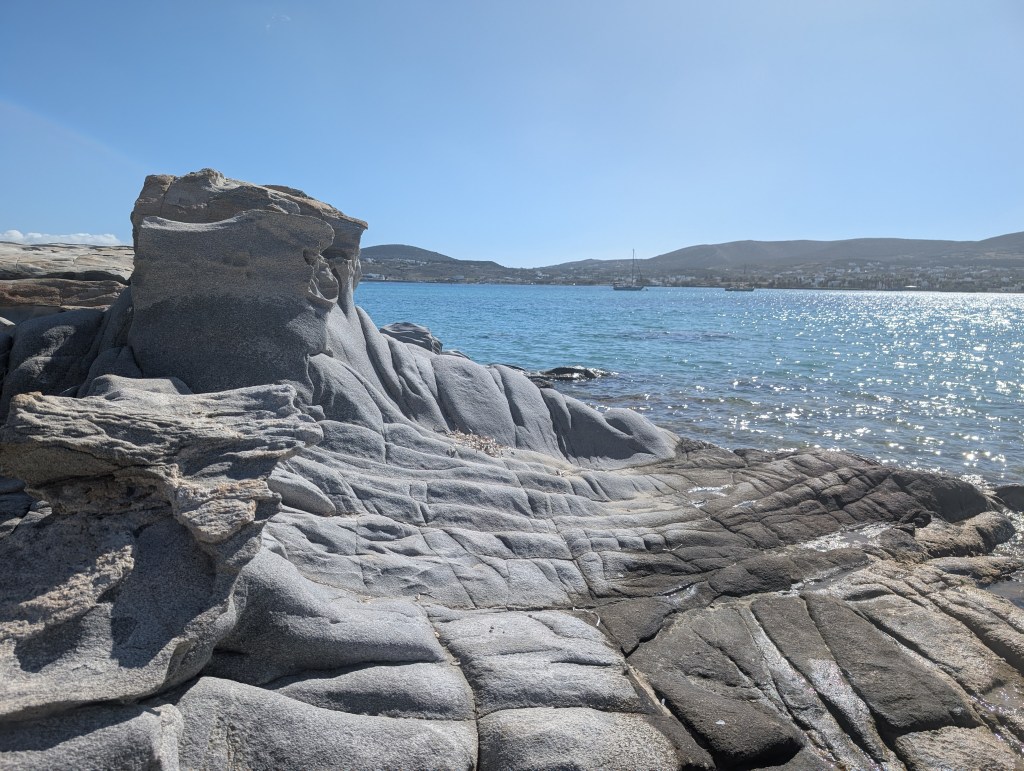
Next was a quick stop at Kolympethres Beach to admire the well worn granite formations that create a series of small cove beaches.
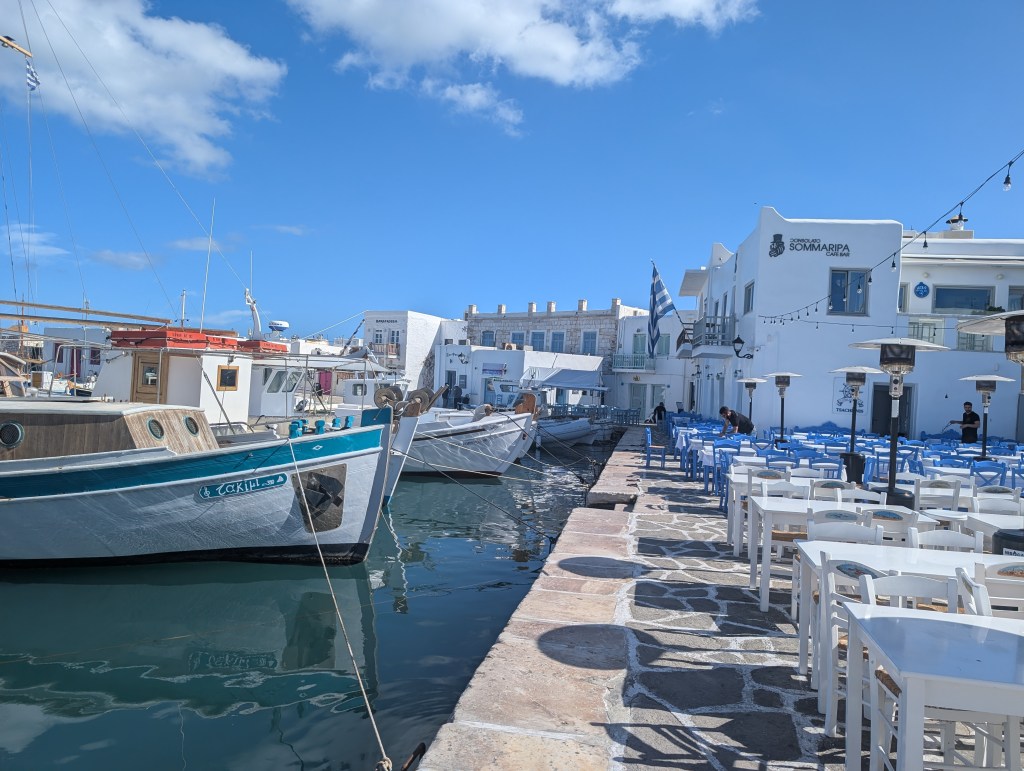
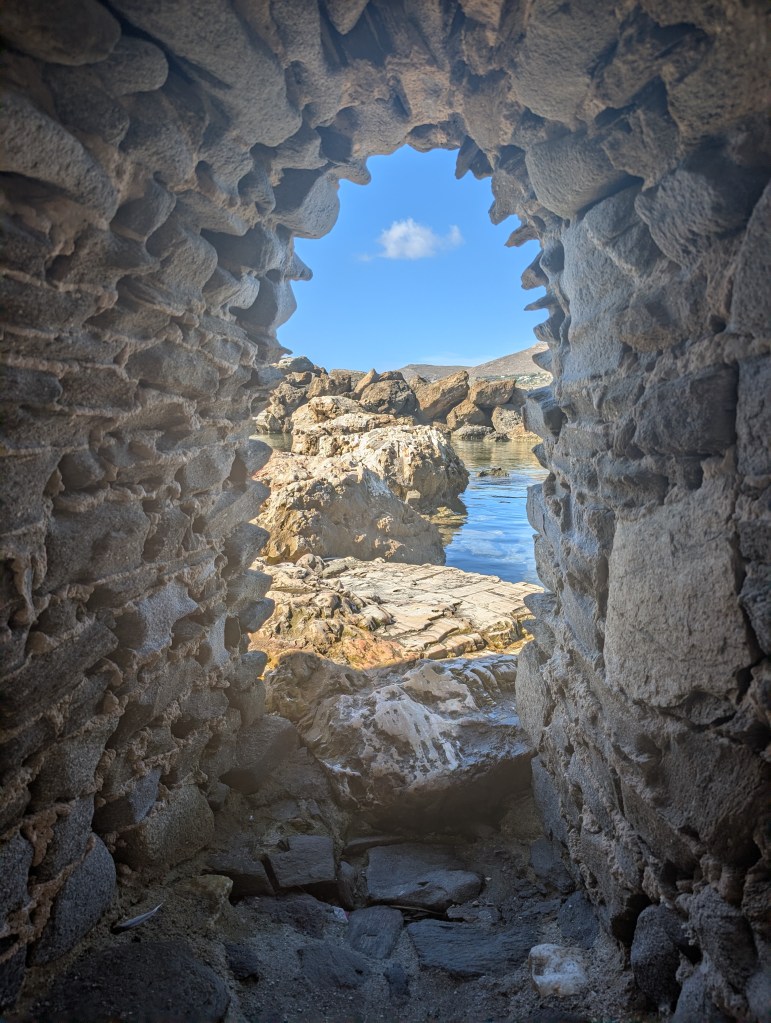
Naousa was my lunch stop for the day. This is the other large town on the island, and somewhere I had debated staying when I was planning my trip. While the town does offer some cute side streets and some good restaurants, I found Paroikia more charming as a whole. Naousa is more of a harbor town with boats moored right off the shore. The ruins of a Venetian castle (a fortress built to protect the harbor) still stand and can be accessed by walking along the breakwater. Before leaving the town, I made sure to walk up the hill to the Faneromeni (Panagía) Church for a bird’s eye view of the town.
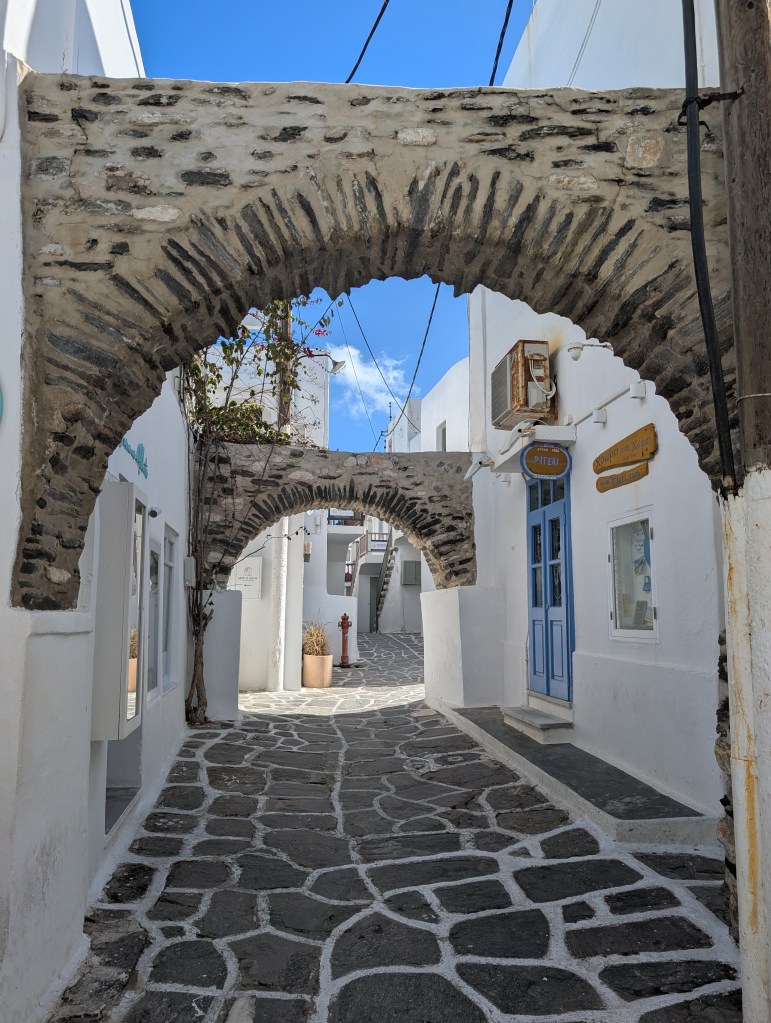
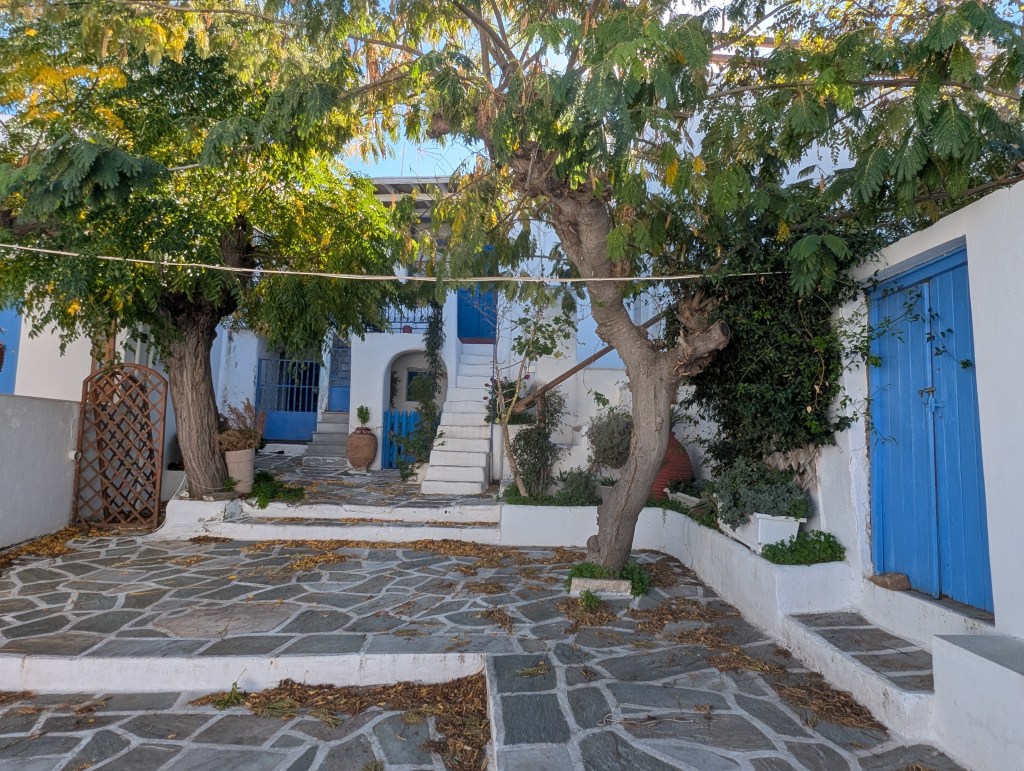
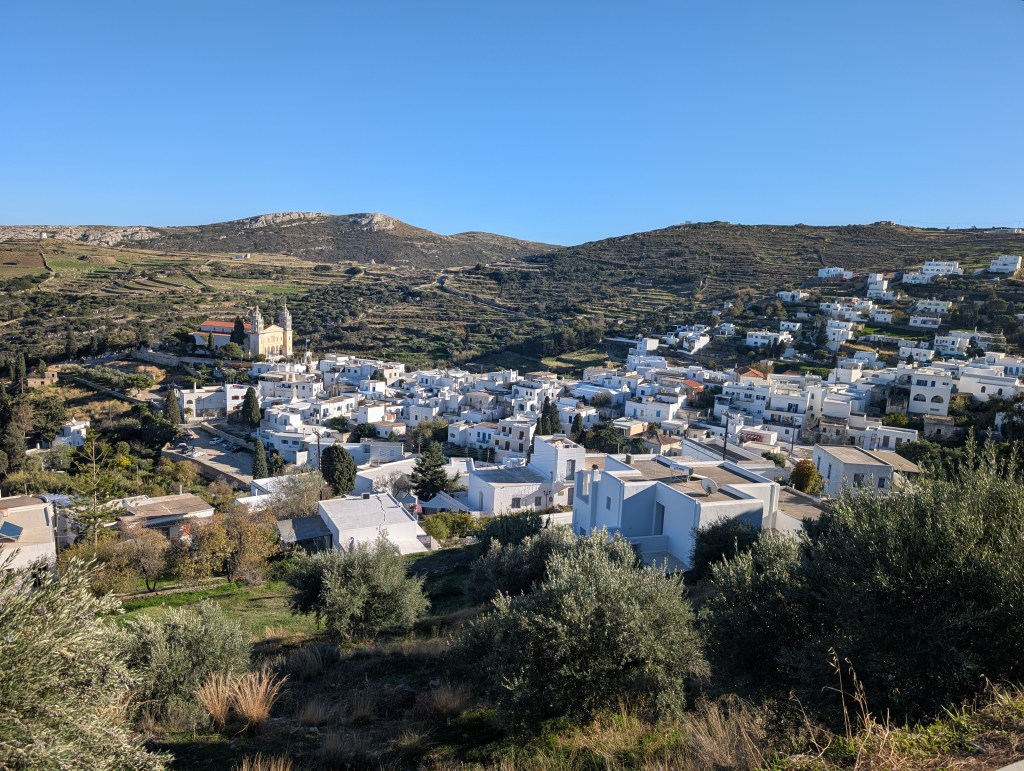
From here I headed inland to the traditional town of Lefkes. Built in the mountainside 350 meters above sea level, walking around Lefkes takes some calf muscles. Once the medieval capital of the island, the town offers a maze of cobblestone streets and impressive views of the island. Some parts of the town were a little more run down than the other places I had visited, but these moments made the place feel more lived in than the more touristy coastal towns on the island.
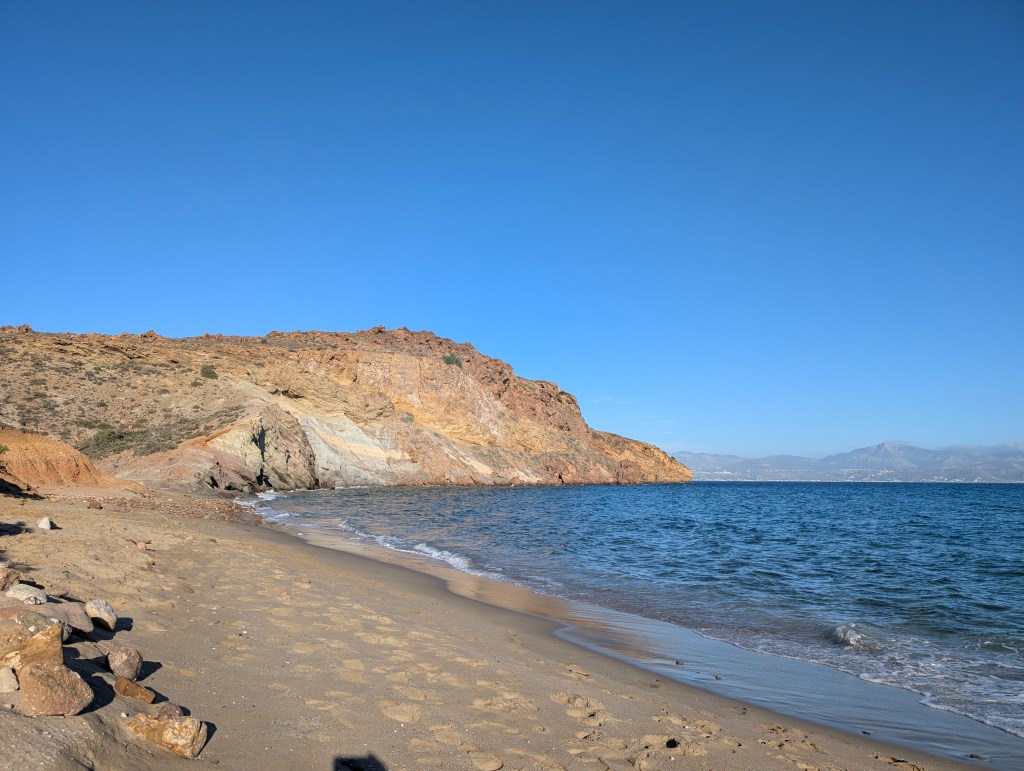
Now that it was afternoon, it was time to find a beach to swim in. On the eastern side of the island is the more remote Kalogeros beach. Known for its natural clay deposits, the beach becomes a personal spa day. I didn’t know until talking with someone at the beach that in order to make this happen, you have to bring your own water and forge for the clay off the cliffs behind the main beach. If I came back, I would be more prepared to fully enjoy the spa elements of the beach. While the water at the other beaches I had stopped at were sheltered and calm, this beach was more exposed to the vast ocean, thus windy with more surf, but that wasn’t going to stop me from taking a refreshing swim in the water.
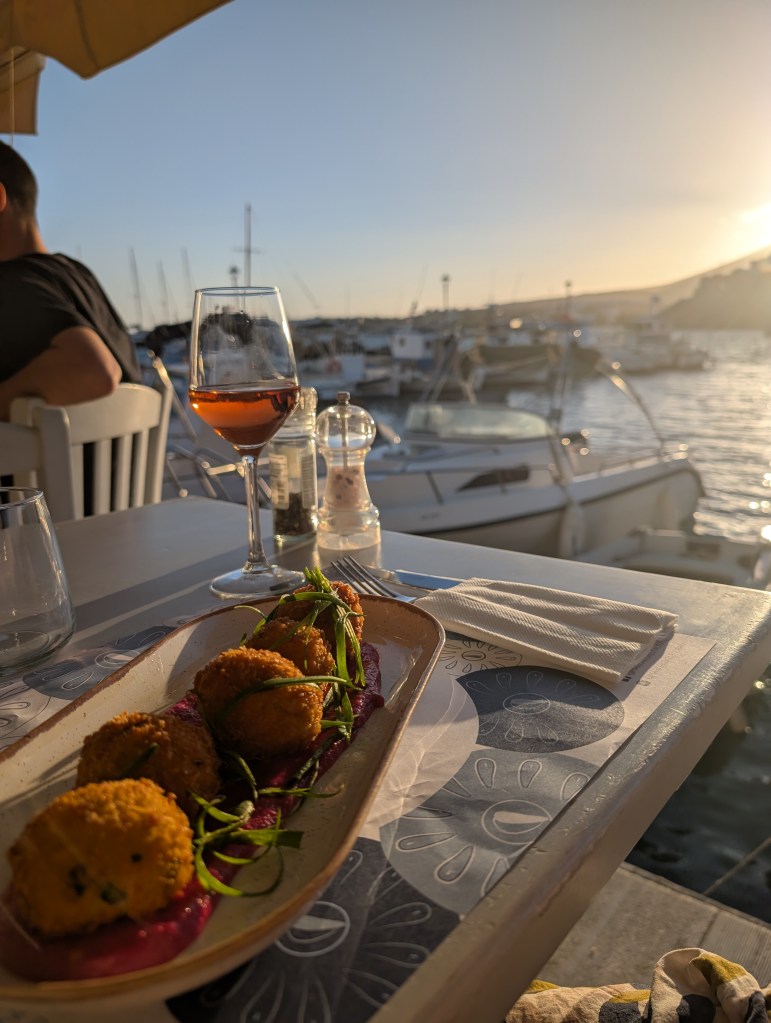
I ended the day with stops at two smaller fishing villages. The first was Piso Livadi. The east side fishing village consists of a handful of restaurants lining the jetty out to the point. I ordered a drink and appetizer and grabbed a harborside table to take in the sunset.
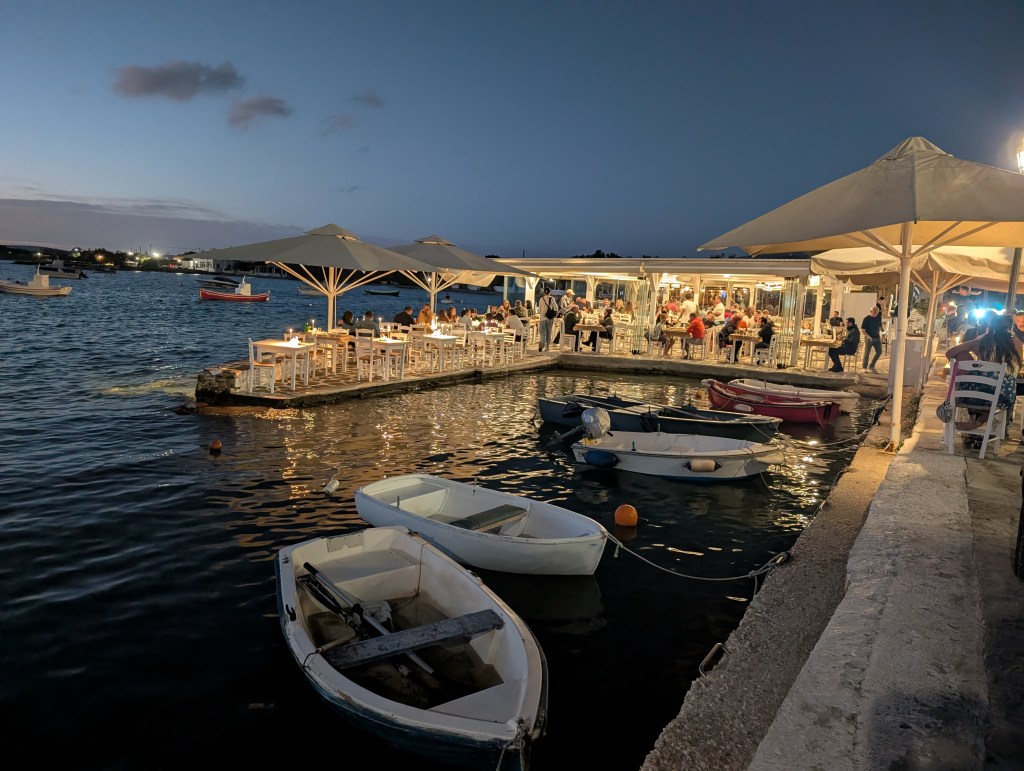
My host had mentioned that her favorite restaurants were in Aliki, so after the sun set, I ended my day with a nice fresh seafood dinner at one of the harborside tavernas. While it was dark, I could see that Aliki also has a small beach that you could enjoy watching the boats come in and out of the harbor from.
 Mac On the Map
Leave a comment