
The French District in Charleston is full of historic charm. Grand houses, iron gates, manicured gardens, pastel colors, and fig covered walls. However, my favorite places to explore were the numerous alleys throughout the city.


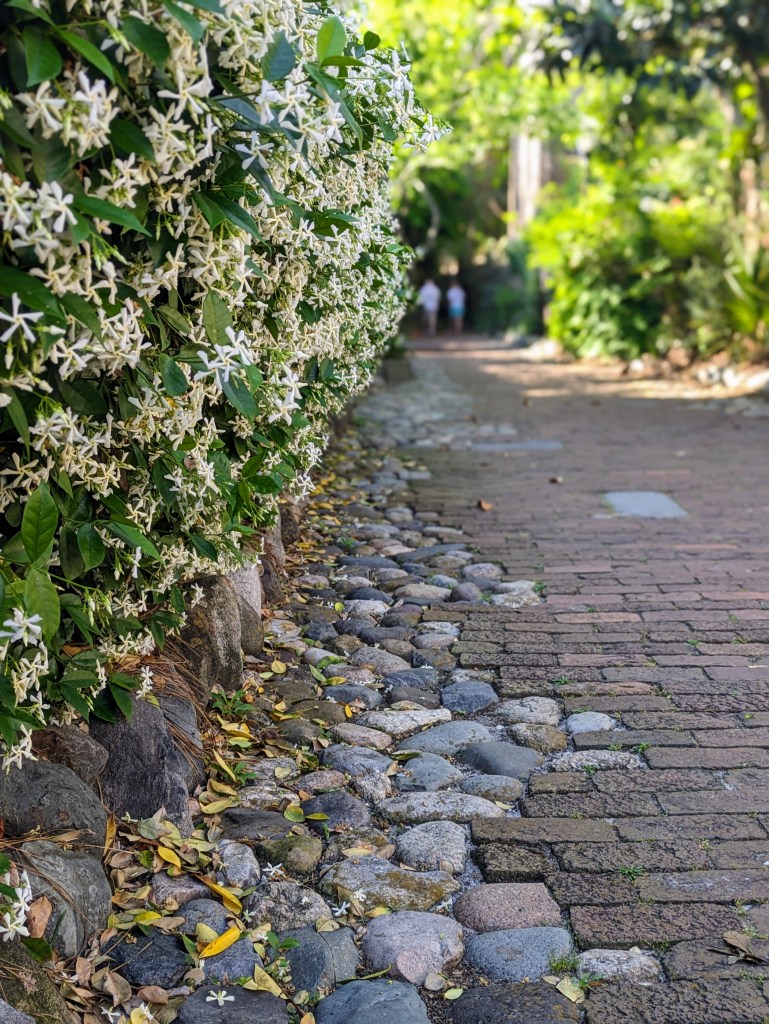
One of the more picturesque alleys is Philadelphia Alley. Set between Queen and Cumberland Streets, Philadelphia Alley has gone by many names: originally called Kinloch’s court (1776), by legend deemed Dueler’s Alley, and renamed Philadelphia Alley to honor the city of Philadelphia’s help in rebuilding Charleston after a fire in the early 1800s. The already narrow Philadelphia Alley is made even snug with the flowering shrubs, trees, and private gardens along either side. The well-worn brick pathway in the center merges into cobblestones on the edge. A long brick wall on one side separates the alley from St. Philip’s churchyard, while the other side is a series of private residences with unique gates and entryways. Light filters through the trees to cast shadows and deepen the color of the houses. While I visited during the day, I can imagine that the nighttime ambiance is just as quaint with the gas lamps stationed throughout the alleyway.

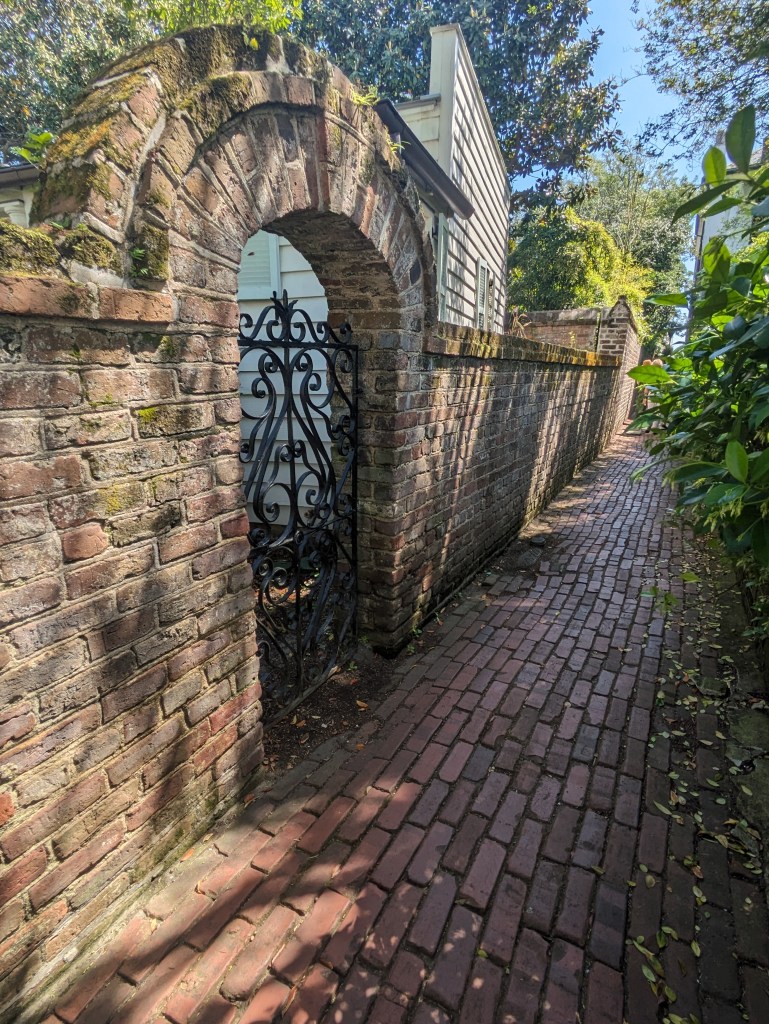
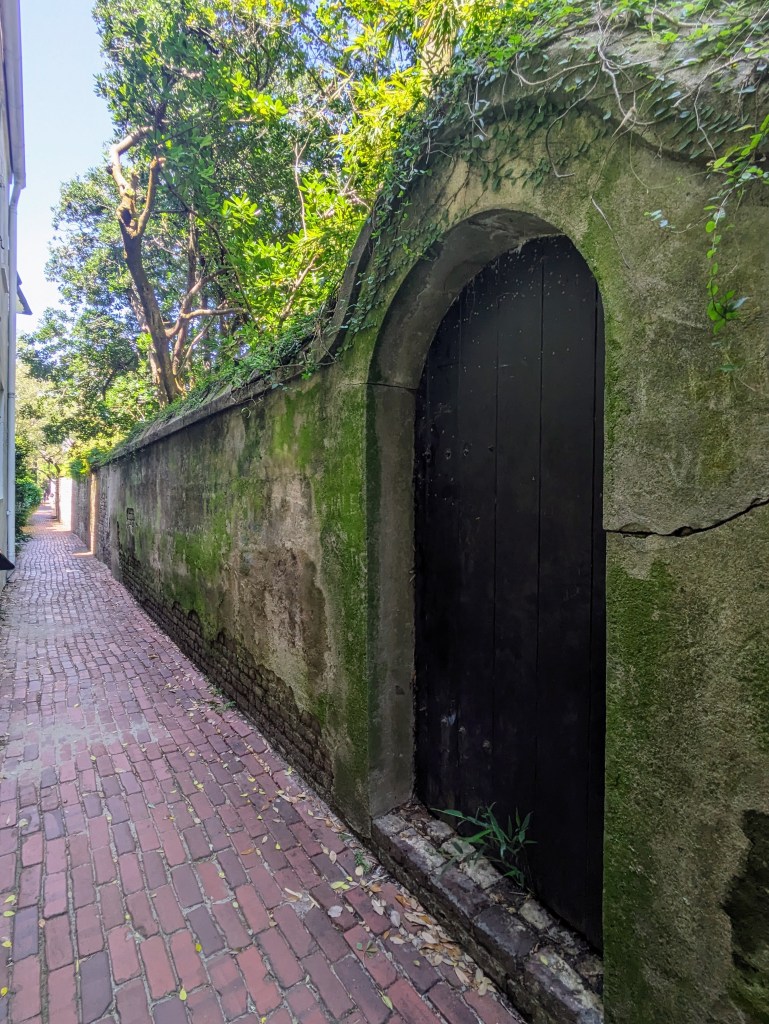
Between Church and East Bay streets is Stoll’s Alley. Named after blacksmith Justinus Stoll (1745), Stoll’s Alley has two identities: near Church Street the wide cobblestone pathway makes it feel more like a narrow street, but the East Bay side narrows to just a five foot width with a brick walkway and a high brick moss covered wall on one side. An arched gateway and classic ironwork gate by famed blacksmith Philip Simmons breaks up the expansive brick wall. Actually, this alley features four of Simmons’ earliest commissions.
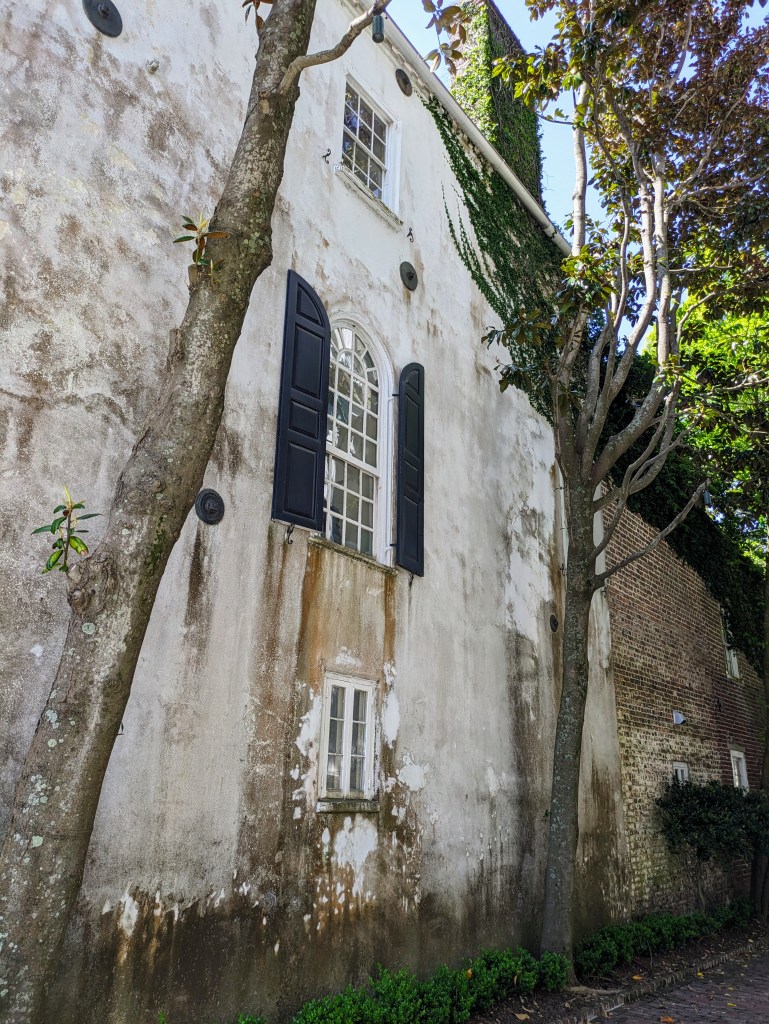
The cobblestone walkway of Longitude Lane caught my attention right away. Situated between Church and East Bay streets, it was named Longitude Lane – even though it actually runs east-west (Latitude) – as a nod to John Harrison’s marine chronometer, which helped solve the longitude question (1762). See link for the complete story. Charleston used to be a walled city, and this lane is one of the original streets from that time period. Almost all of the private entrances off of this lane are surrounded by moss-covered archways and charming doors, which made me think of one of my favorite childhood books, The Secret Garden.
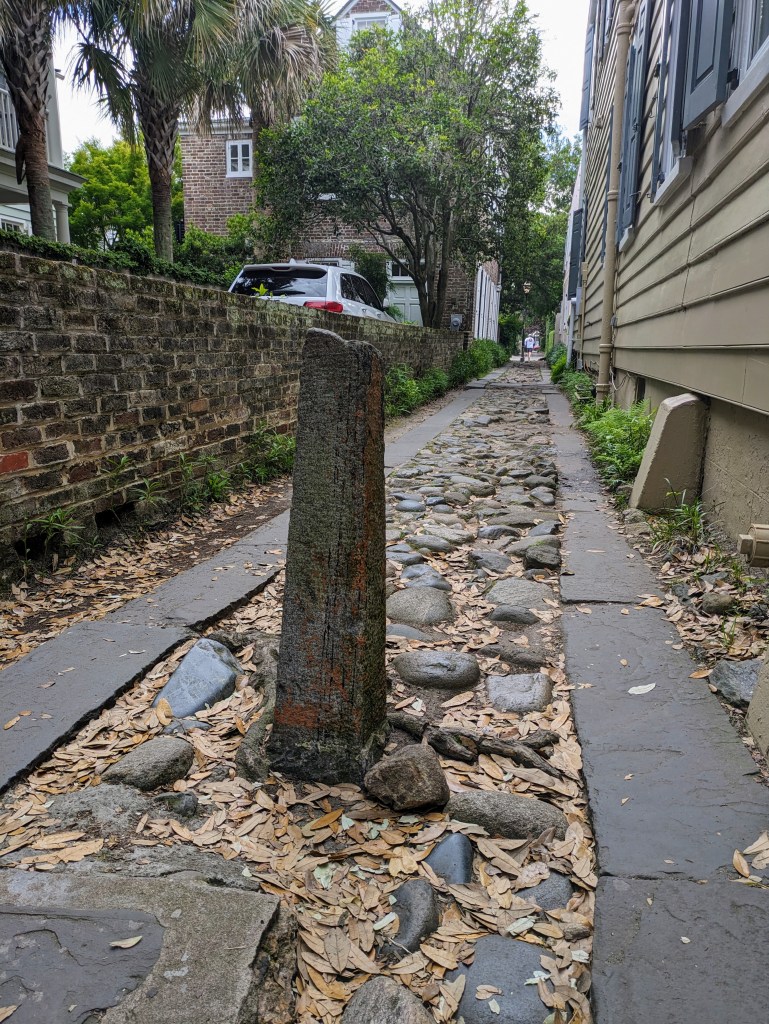
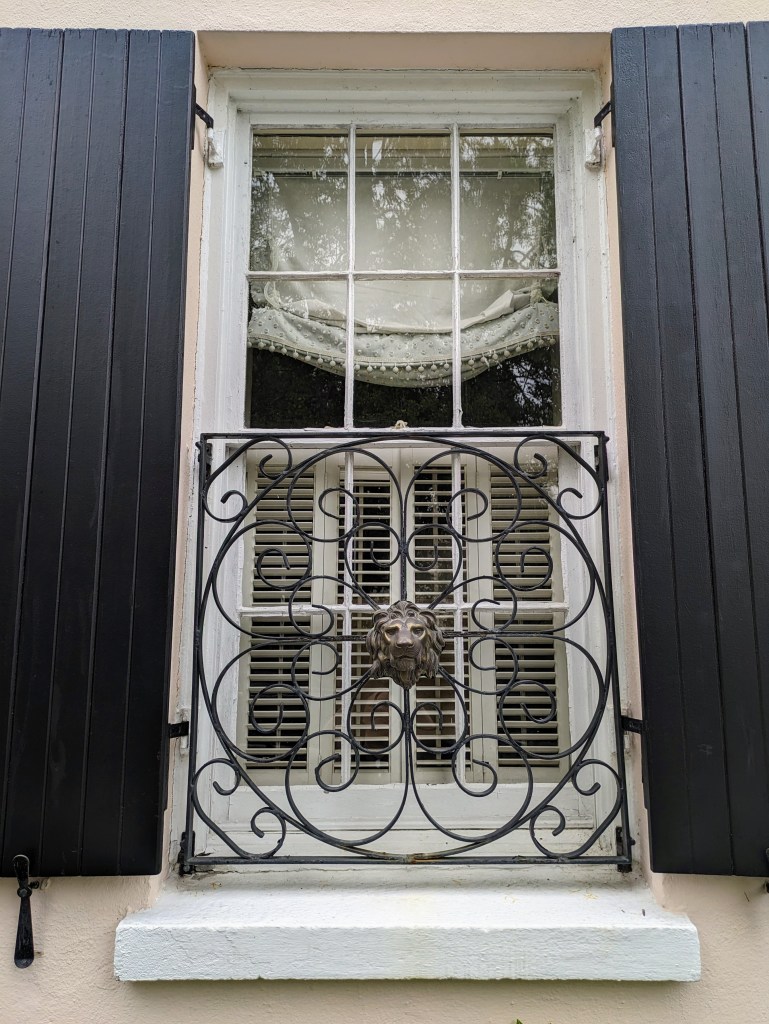
Bedons Alley (1733) runs between Elliott and Tradd streets. Named after merchant George Bedon, the buildings in this alley have been through a lot. They have had to be rebuilt after not one but two devastating fires in the late 1700s. While the buildings once served as warehouses and outbuildings, they are now all private residences. I was drawn to the tall narrow trees, ornate ironwork window gates, expansive brick driveways, and oyster cluster gate posts featured in this alley.

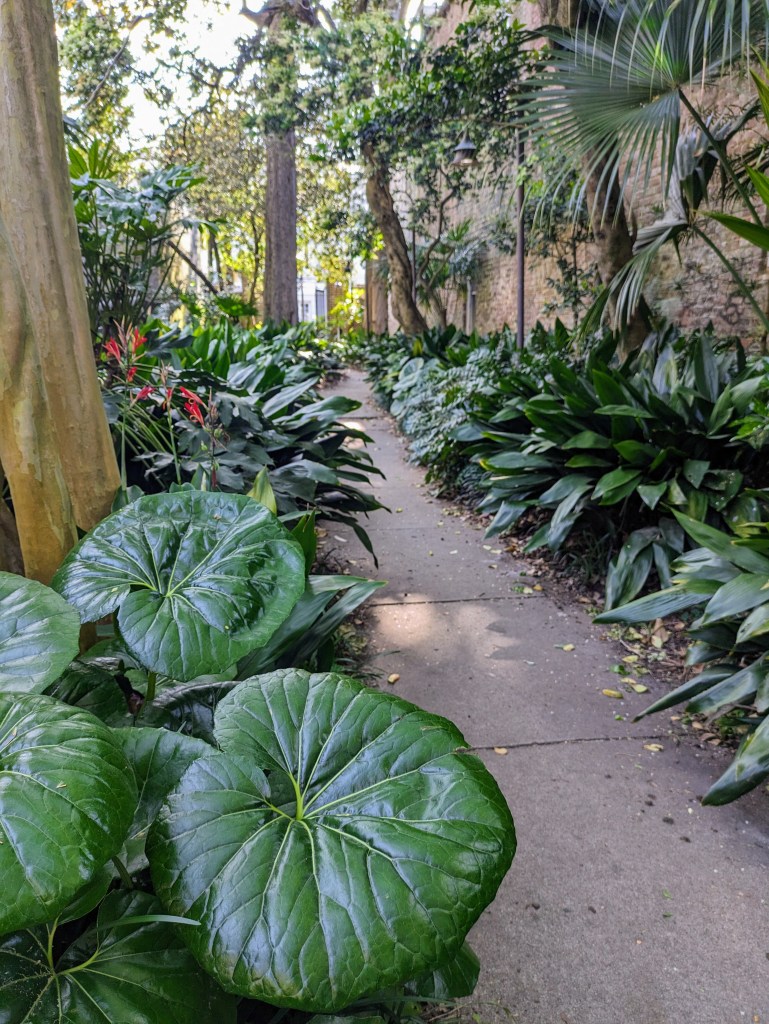
The Gateway Walk isn’t actually an alley, but it is a beautiful hidden path in the city. The Garden Club of Charleston, who sponsors the walk, describes the experience as follows: “Through handwrought gates alluring paths lead on to pleasant places, where ghosts of long-forgotten things have left elusive traces.” This description sets the atmosphere of the walk as the path meanders from graveyards to side alleys. The Gateway Walk starts in the graveyard of the oldest Unitarian Church in the south (1772). At first I was surprised by the overgrown headstones and lush greenery of the graveyard, but I later found out that this treatment aligns with the church’s belief in the web of life. After leaving the graveyard, the path continues through more manicured gardens and sculpture lined walkways. The walk goes through the Gibbes museum courtyard and ends at the Philadelphia Alley.


 Mac On the Map
Leave a comment