
Quebec City makes you feel like you’re in France. From the food to the language, the city stays true to the essence of its motherland. I took French in high school (over 20 years ago), and while I was surprised by how much French I remembered, I was also happy that most people there speak English as well.
Quebec City’s old city especially made me feel like I was in Europe. From the cobblestone streets to the cafes on the squares, the city transported me to a world of croissants and coffee, churches and art, cobblestones and stairs.
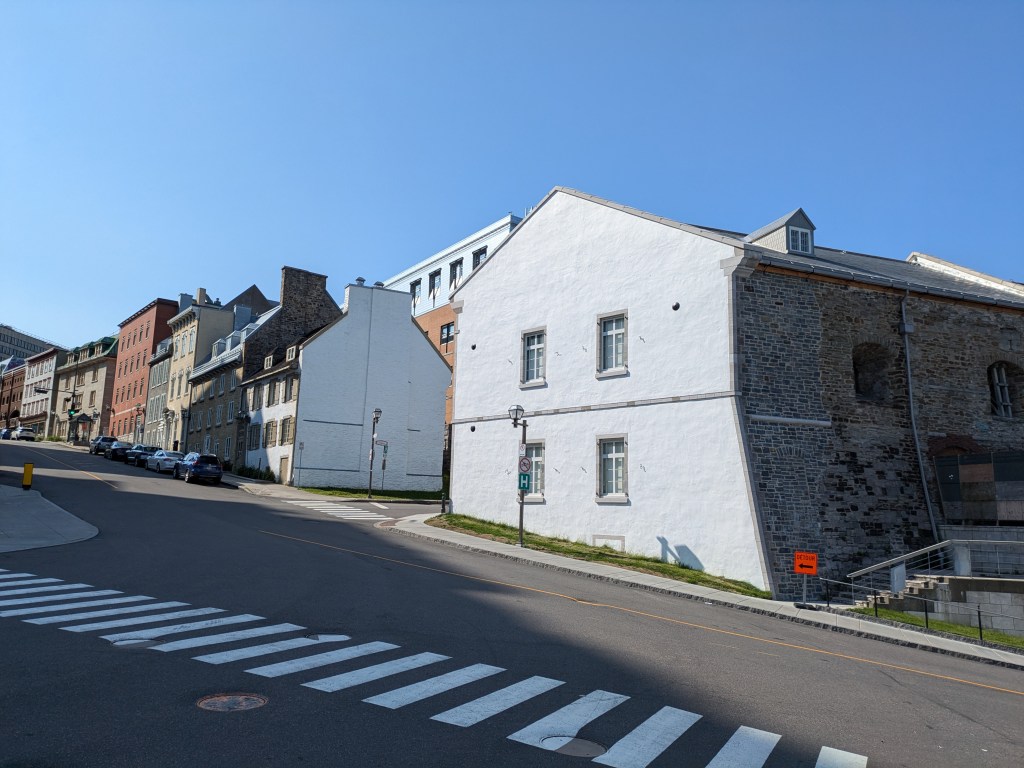
My friend and I stayed in the Saint-Jean-Baptiste neighborhood of the city. This allowed us to walk everywhere during our stay, but I will caution that walking around Quebec City means having to climb many hills and stairs.
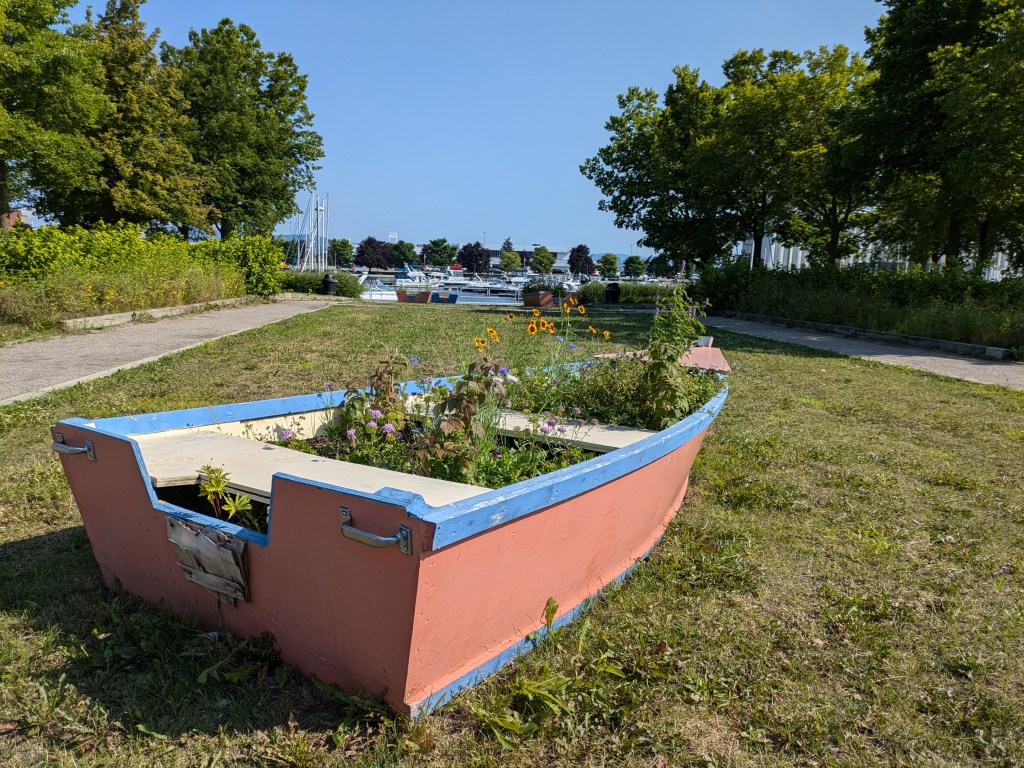
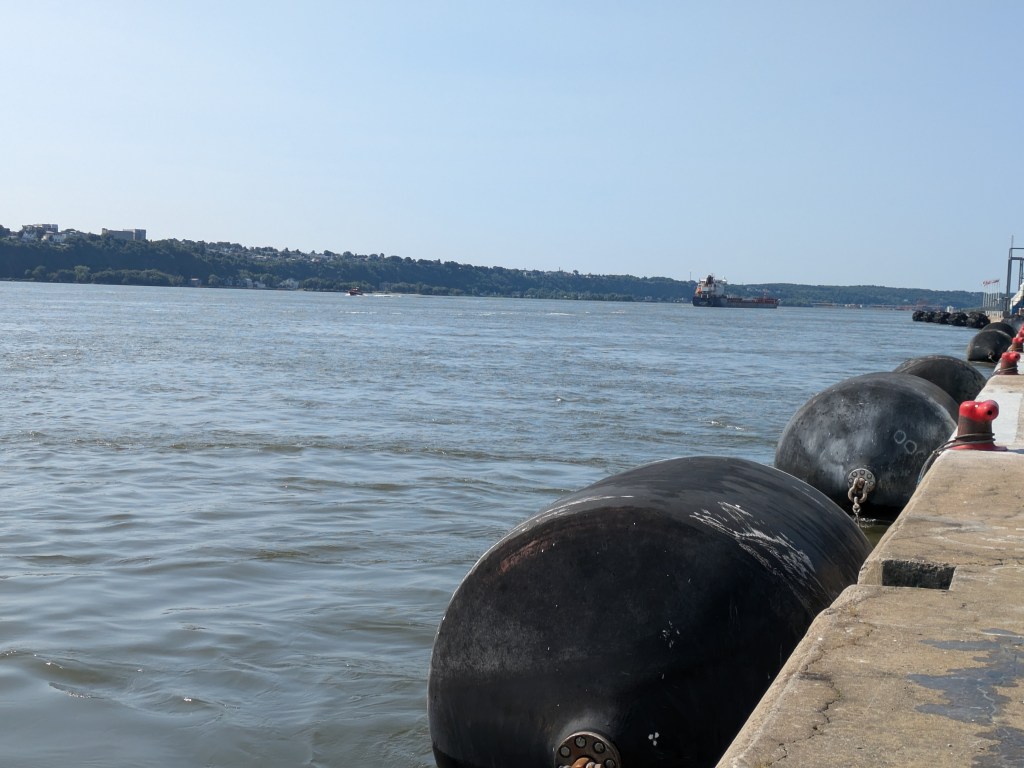
We started out our first day making our way down to the Old Port section of town. Here there was a community garden, access to the harbor, and some nice activity areas along the harbor. While I wouldn’t say this is an essential area to visit, I did enjoy walking past the Naval Museum to the park beyond where we could watch the boats entering the harbor and take in the iconic sculpture (canot à glace) that honors the ice canoeing races that happen every winter in this location.
As soon as we entered the lower part of Old Quebec, the charm hit me right away. The cobblestone streets, stone facades, second story window boxes, and painted shutters transported me back in time. As the only city in North America to maintain the original gates, bastions and ramparts from the 1700s, Old Quebec gained a spot on UNESCO list of World Heritage Sites, which will help it maintain its history and charm for future generations.


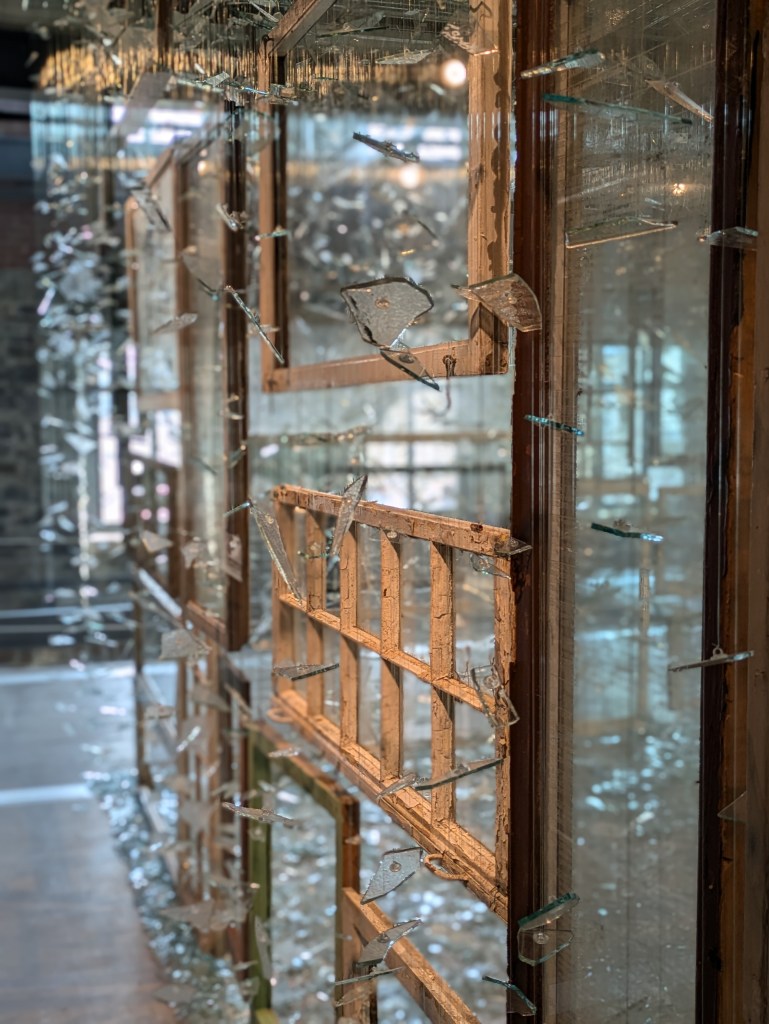
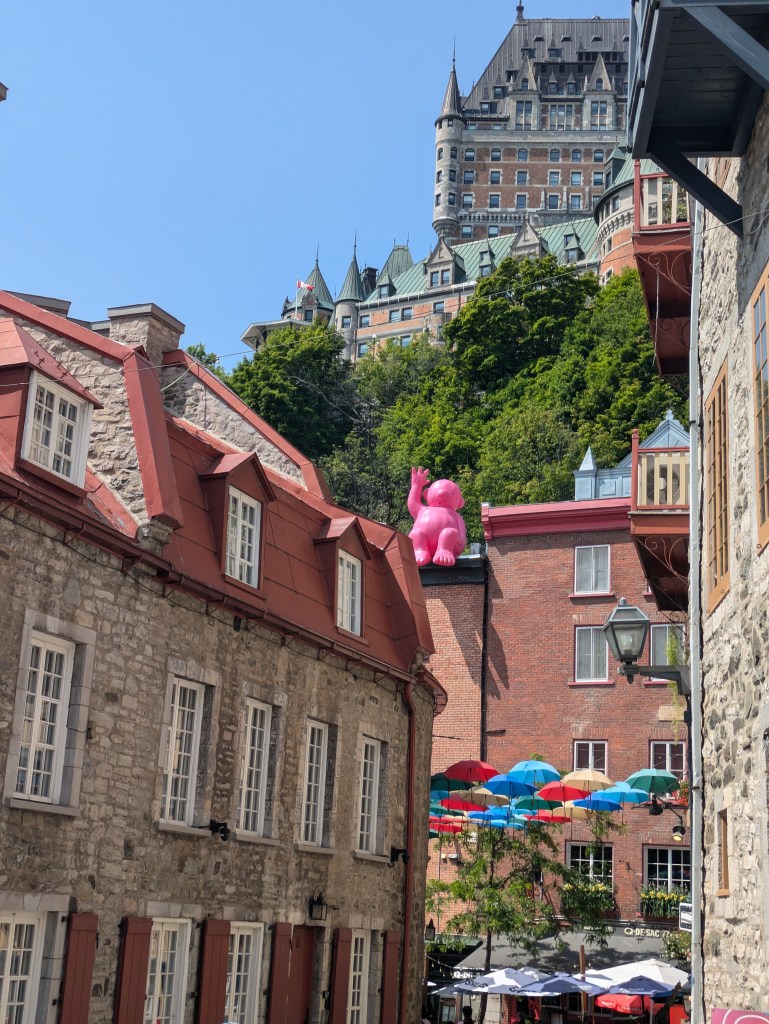
Old Quebec is filled with small galleries, tourist shops, cafes and churches. When we were visiting, the city was featuring Phillippe Katherine’s Le Mignonisme installation; the handful of iconic Mr. Pink sculptures looking out from the tops of buildings, trees, and staircases were delightful surprises throughout the city. The playful bright pink pieces were intended to make people look up and enjoy vistas they might have otherwise missed. The same artist was featured as one exhibit in the free modern art gallery, EXMURO Aire publique. The museum features three floors of exhibits, which range in tone and scale. While we were there, they were featuring an sobering exhibit about the impact of genocide against First Nations, an immersive, sensory-rich room full of pillows and whimsy, and a hanging fragmented glass installation representing the history of Place Royale. Each floor is only one room, so the whole museum is an easy addition to a visit to the famous Place Royale plaza.


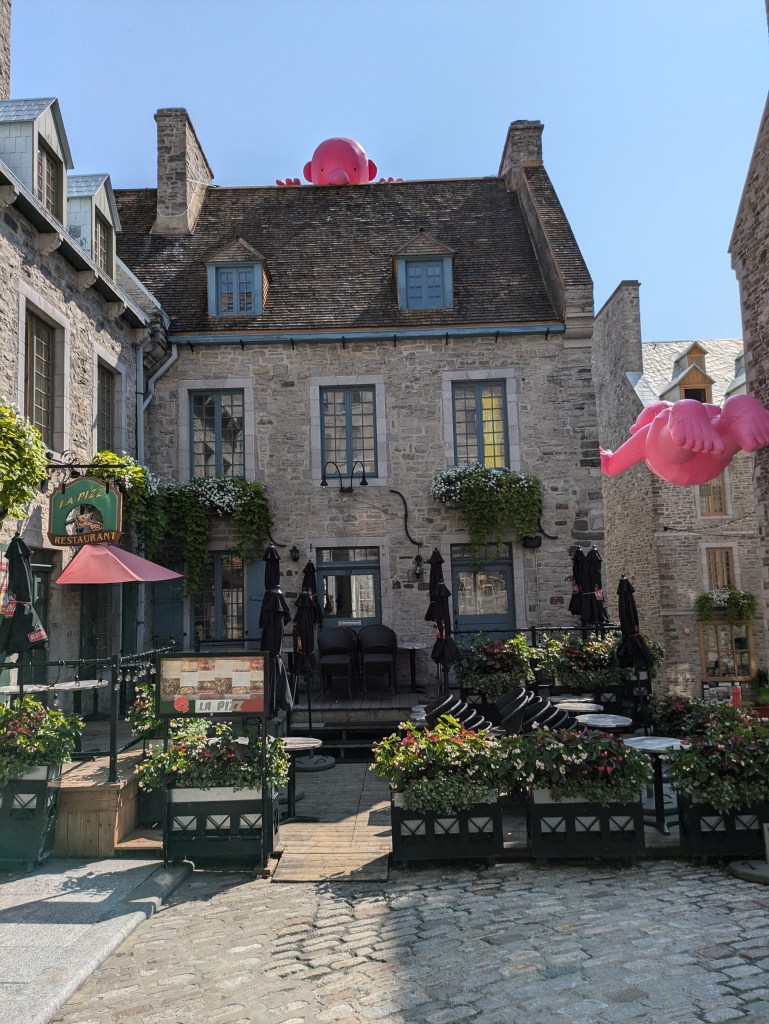
Place Royale plaza was one of my favorite stops during our day. Here, I really felt like I was in France. The small plaza offered three dining options each with outdoor courtyards looking out over the square. We grabbed a coffee and pastry at Cafe La Maison Smith Notre-Dame, sat at one of the outdoor tables to recharge before continuing to explore the rest of Old Quebec.

Another whimsical site (and I think more permanent than the Le Mignonisme installation) in Old Quebec was The Alley of Umbrellas above rue du Cul-de-Sac. Even though these installations are becoming more and more popular, I still love the pop of color the umbrellas add to the scene and the filtered light they provide as you walk underneath them.

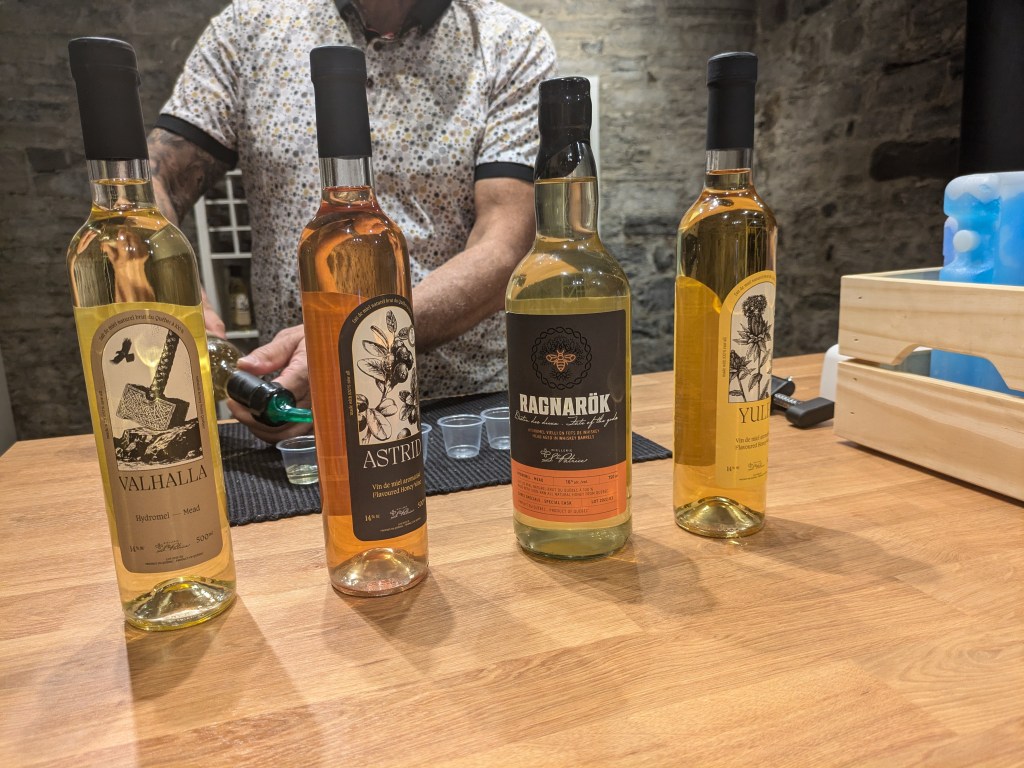
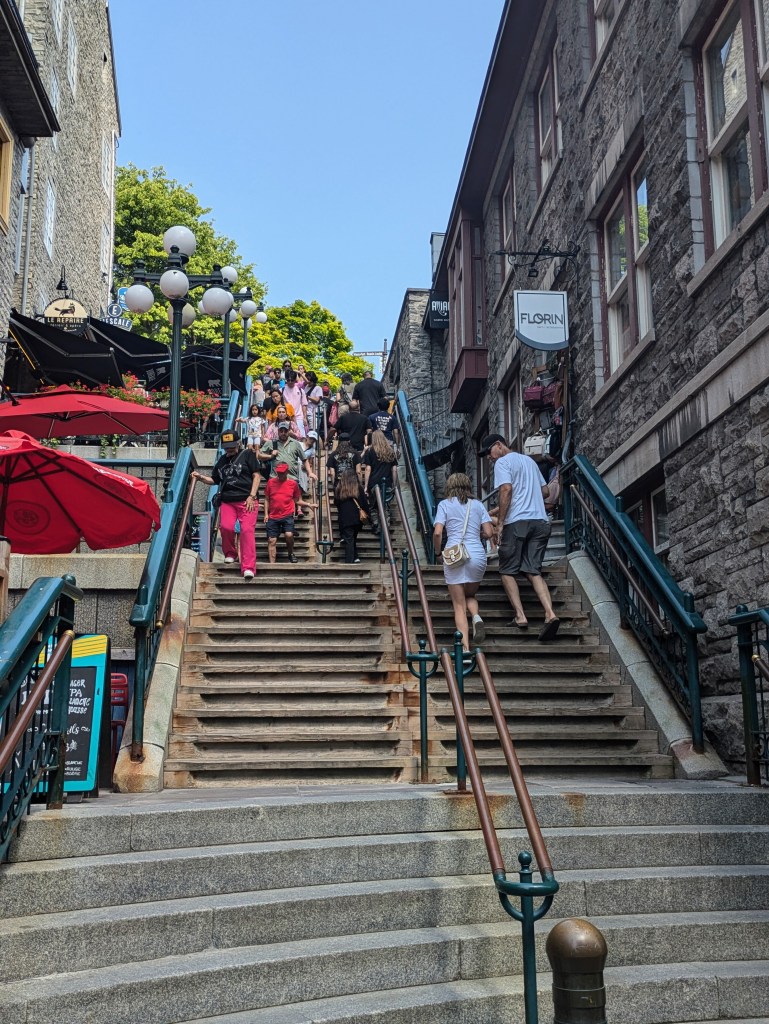
While we planned to take the funicular out of the lower part of Old Quebec, we still wanted to explore the oldest staircase in the city: Breakneck Stairs. 59 steep steps separate the lower and upper parts of the city, but the Breakneck Stairs also feature numerous small shops as well. About halfway up we found a shop that offered tastings of syrups, mustards, and mead. This was one of a handful of shops in the area that offered tasting of products made by local farms.

The Funiculaire du Vieux-Quebec has been in operation since 1879, making it the oldest in North America. While it allowed us to skip the steep climb up, it wasn’t as exciting as I had hoped it would be. The ride costs four dollars (and you need cash) for a very short ride in a single gondola packed with people. If it wasn’t packed with people, there would’ve been a nice view, but we weren’t able to experience that. Still, it feels like one of those things that you have to do just once.

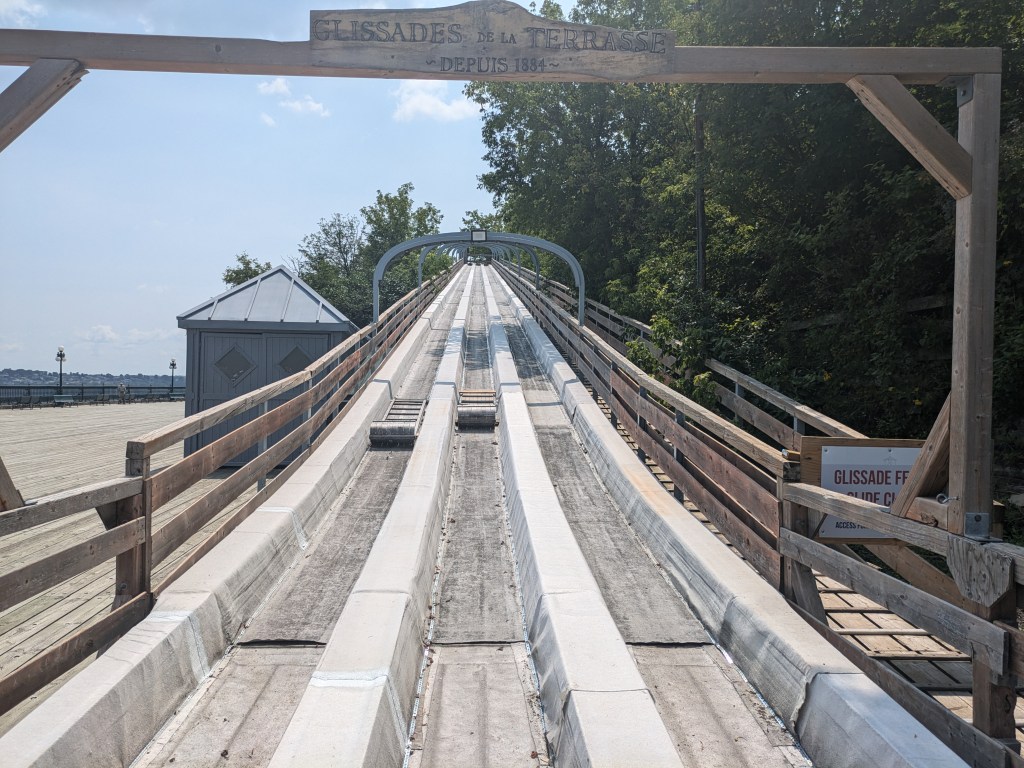
The Funiculaire brings you right into the heart of the Dufferin Terrace. Bustling with tourists, performers, and kiosks, this felt like the heart of the city. It is framed by the iconic Château Frontenac and the Samuel de Champlin monument. We walked along the terrace past the wintertime toboggan slide to the Governor’s Promenade.


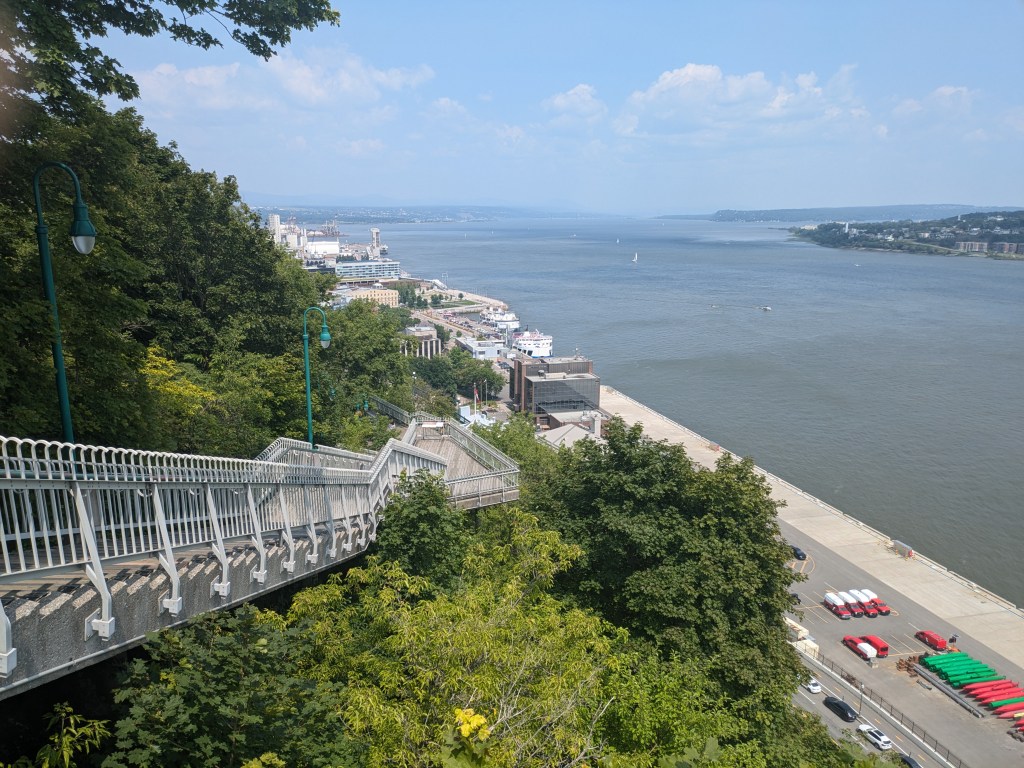
The Governor’s Promenade connects the Dufferin Terrace to the Plains of Abraham with a ½ mile wooden boardwalk that parallels the St. Lawrence River and skirts the outside walls of the Citadelle. With over 300 steps, this isn’t the easiest walk, but it does offer nice views of the river and the far bank. At the top of the promenade is a large gazebo to sit in the shade, catch your breath and take in the views.
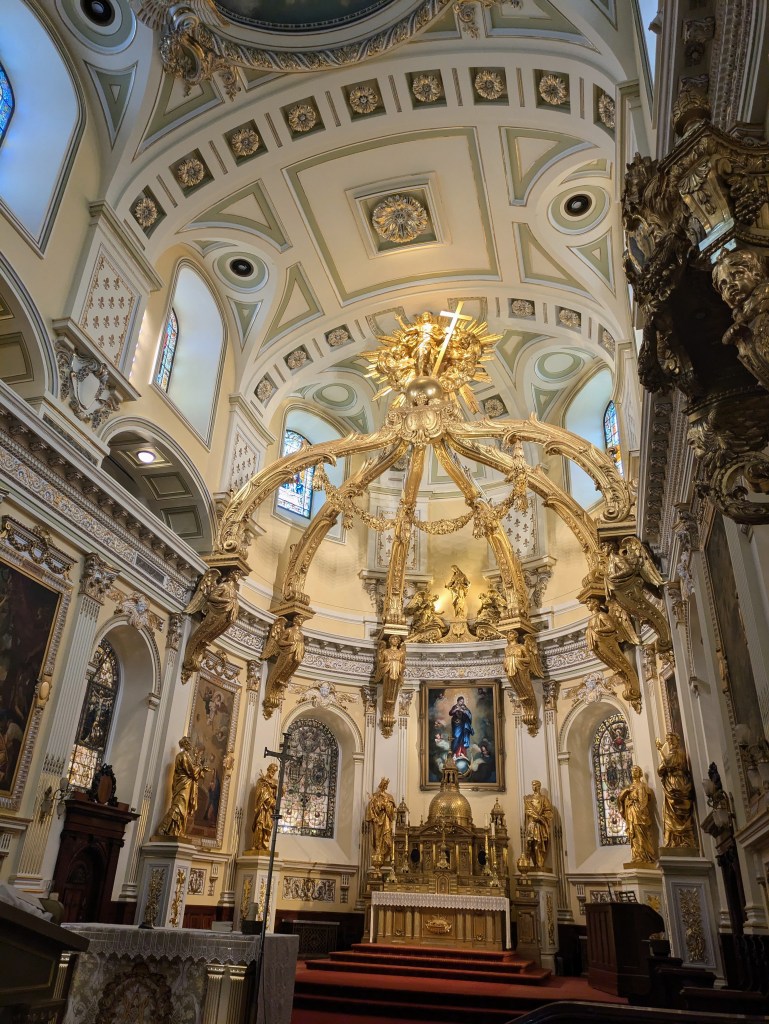
After walking the promenade, we made our way back to the center of the Upper part of the Old City to visit the grand Basilica. Built in 1647, The Notre Dame de Quebec Basilica was the first stone church in the city and is listed on the UNESCO heritage list. Since then it has been rebuilt twice after fires, but still maintains the old world charm. The inside of the church is grand; the ornate columns gilded with gold details draw your eyes up to the sky mural at the top. The shimmering gold work continues with an ornate baldacchino above the altar at the front of the church. To the side of the main church is an exhibit honoring the St. Francois Laval, the 1st bishop of Quebec. This church is a common stop for pilgrims, and even more so the year that we visited as it was declared a Holy Year by the Pope.

Every 25 years, the Pope declares a year of Jubilee. During these holy years, the Holy Door at the Basilica opens to the public. There are only seven Holy Doors in the world, and Quebec City is the only one in North America. The outside of the door is simply decorated with Jesus holding out his hands. One hand has been buffed to a shine by all of the patrons greeting him for entrance into a new and eternal life.

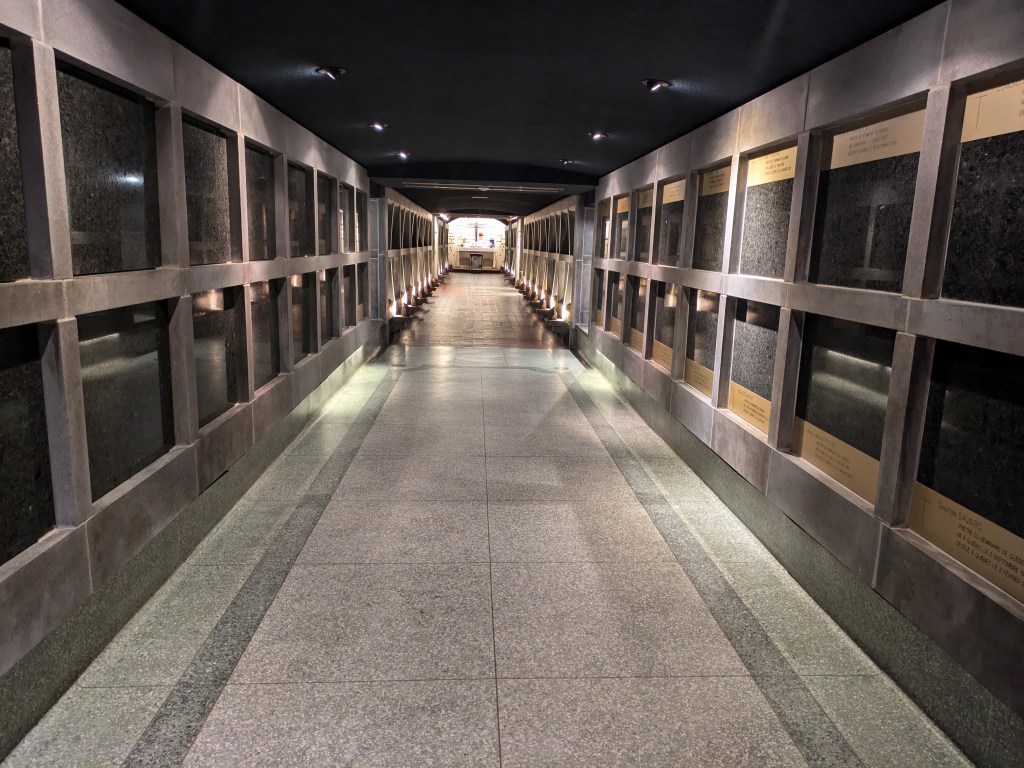
The Basilica also offers tours of its crypt for a small fee ($5 in 2024). The tours are private and led by one of the volunteers on sight. During the tour we learned about the members of the church that were buried there as the history of the church. At the end of the crypt is a beautiful adorned door that separates the crypt from the ongoing archaeology projects of the church.

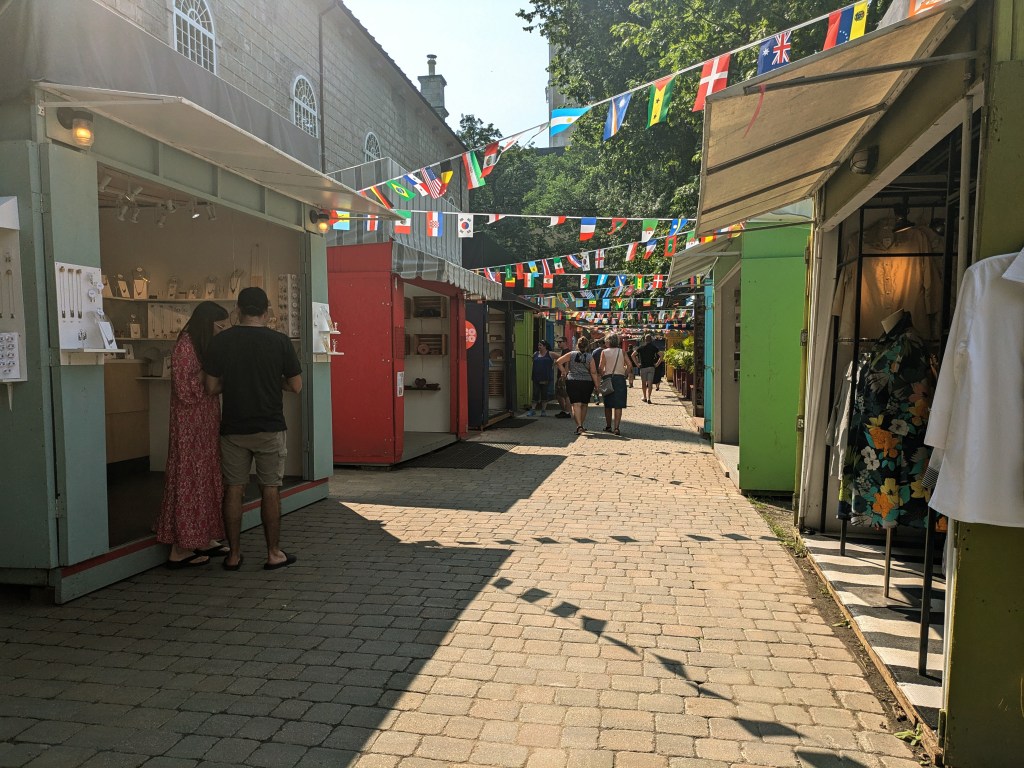
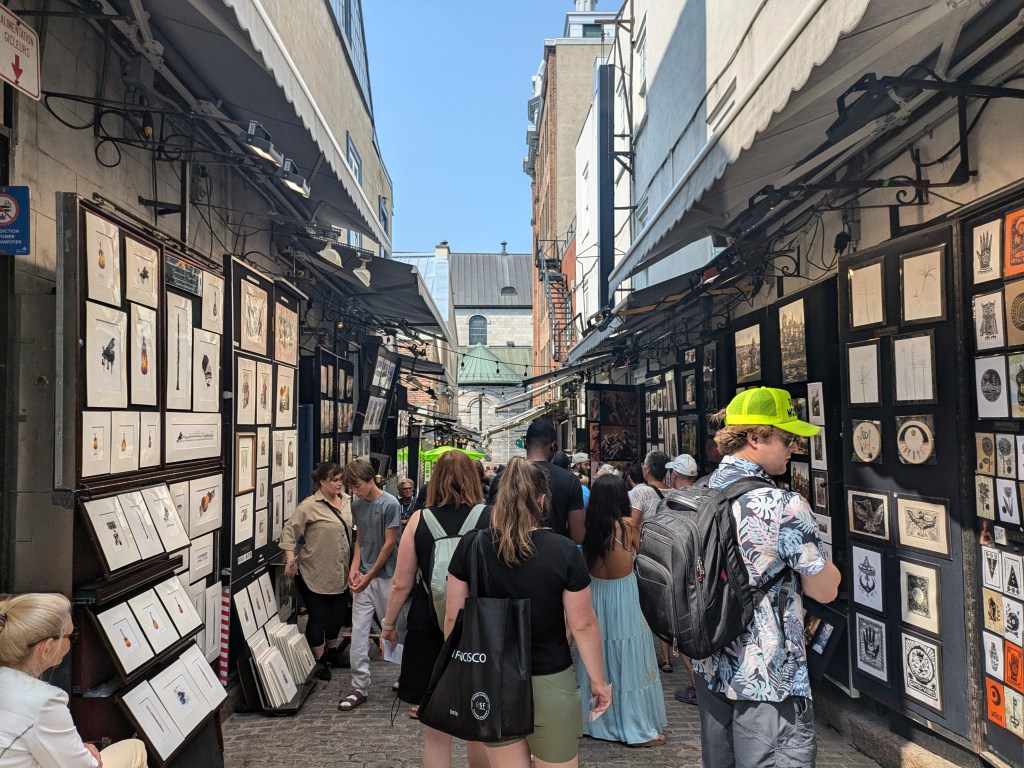
Just outside of the church are two artisan markets. Rue de Tresor is an alleyway that is flanked on both sides by local artists selling drawings, paintings, and photographs. This artisan alleyway has been around since the 1960s. While it was cool to see all the artwork, the alley felt a little too cramped for me. Just around the corner, the newer artisan market of Artisans de la Cathedral gives more space for each vendor and expands the local options with jewelry, candles, crafts, food products, and the like.
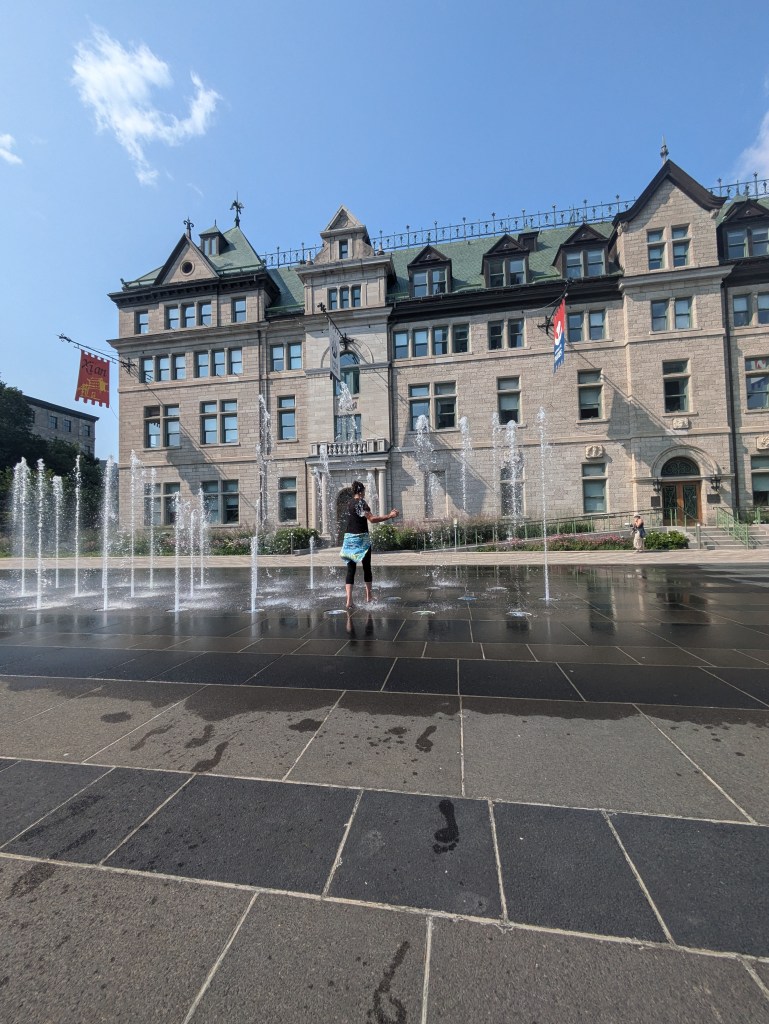
As we made our way back to our lodging, we came across the fountains outside of Quebec City Hall. It had been a hot day full of walking, so we took off our shoes and joined the little kids who ran through the fountain. It seems that some parents knew what they were doing as their kids sported swimsuits. With stone benches on one side and some small cafe tables around, this was a nice reprieve from the crowds of the rest of the Old City.
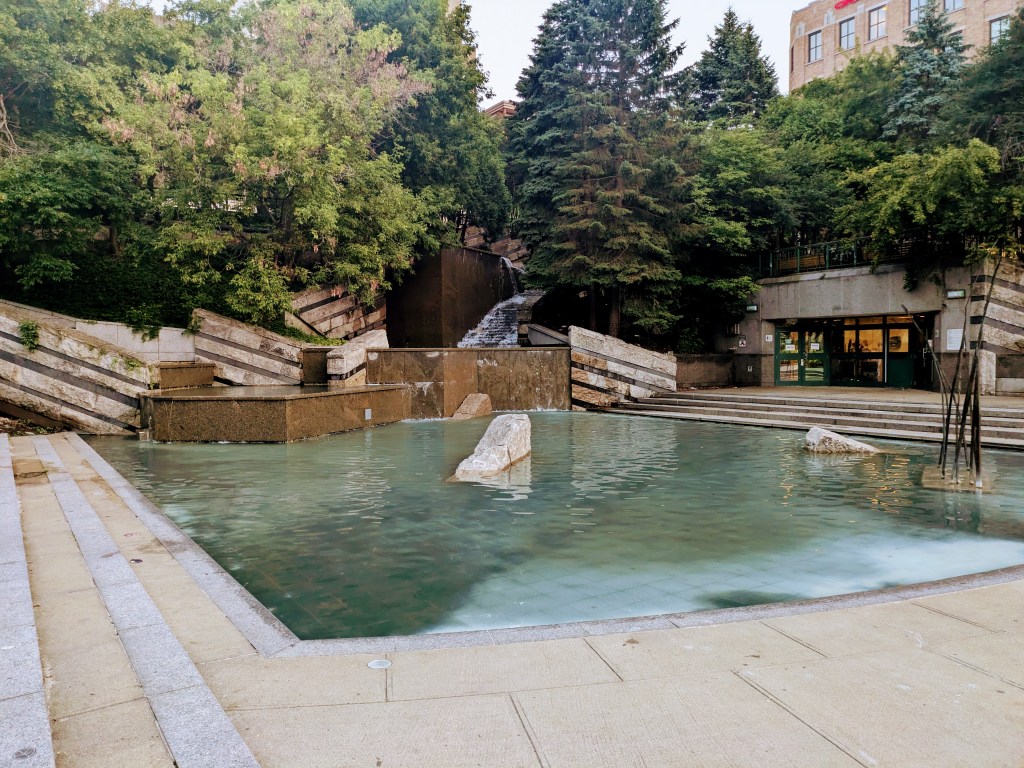
There’s another lovely park with a water feature in the Saint-Roche neighborhood. The Jean Paul L’Allier Garden is named after a former governor of Quebec City. Man-made water features cascade into a shallow basin at the bottom. The walkways that cross the park are lined with colorful plantings. When we came across this park during an evening stroll, it was pretty empty, but I can imagine that it’s a popular place during a nice day.

 Mac On the Map
Leave a reply to Kelly Sheehan Cancel reply