
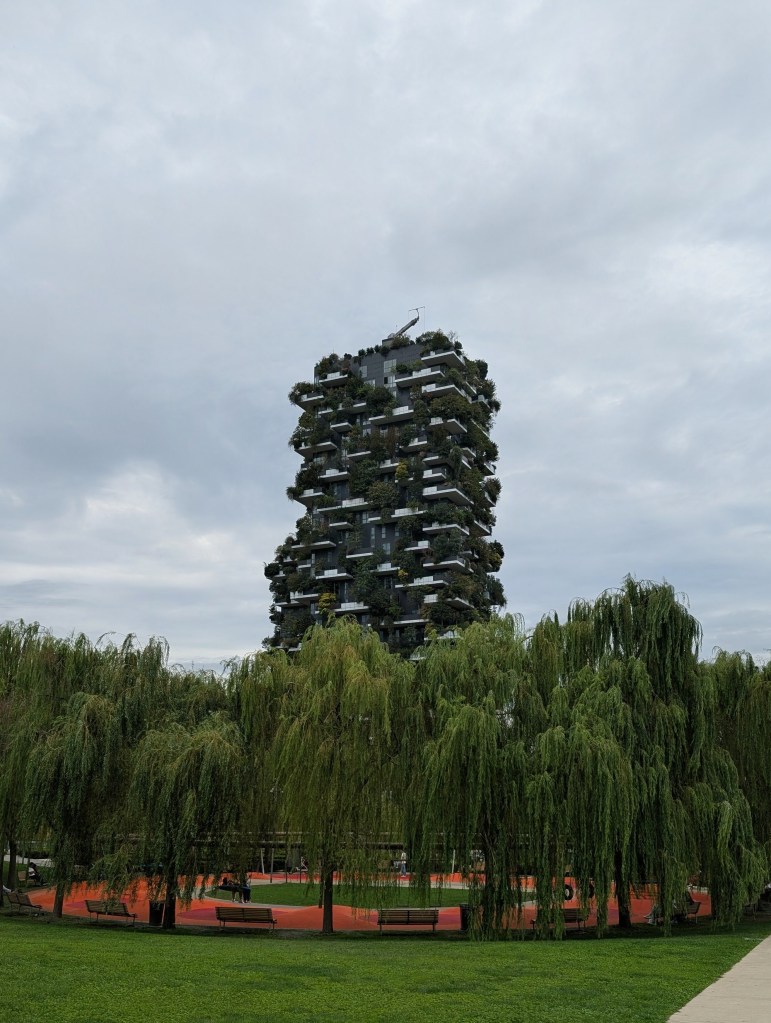
Milan is a city that feels as lived in as it does a tourist town. The old is mixed with the modern, the graffiti with the marble, the vintage trolleys with the bullet trains, the ecoliving spaces with the historic architecture.
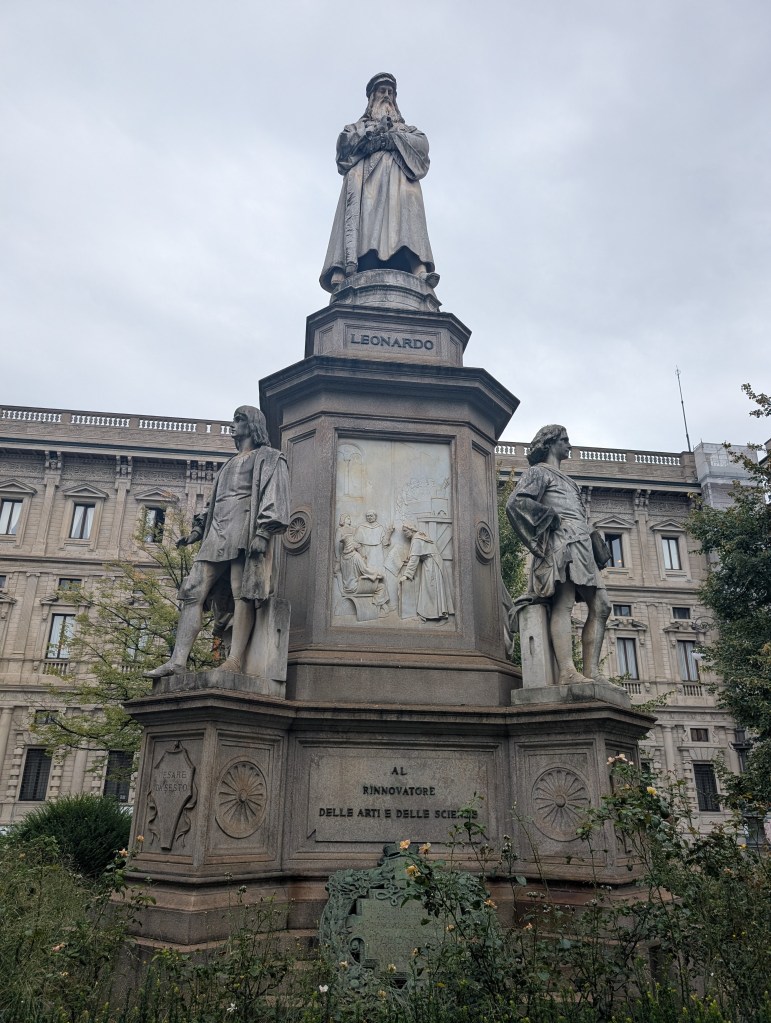
In the center of the city stands the impressive Duomo di Milano (Milan Cathedral). This was one of the places I planned out ahead of time by buying a ticket to not only enter the cathedral but to also climb up to the rooftop terraces. As soon as I entered the doorway, it was time to start climbing the stairs. Around and around, up and up. I had no idea how many stairs we would have to climb, but I definitely wouldn’t suggest this for someone who is out of shape; however, if you can climb them, the experience is worth it.
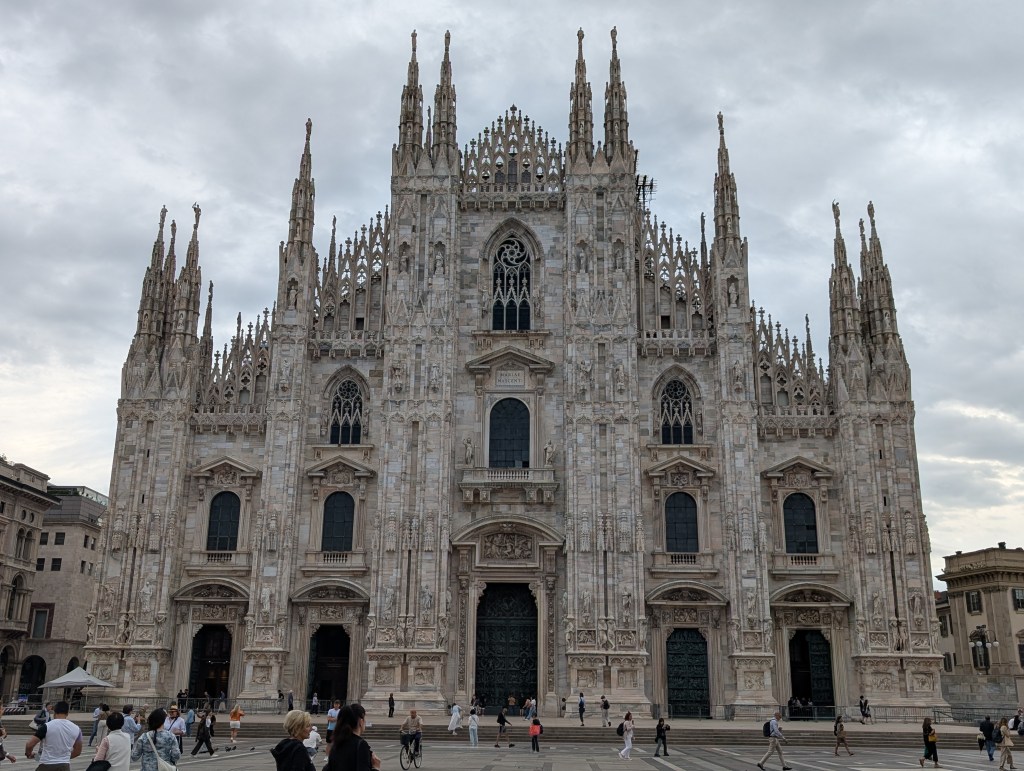
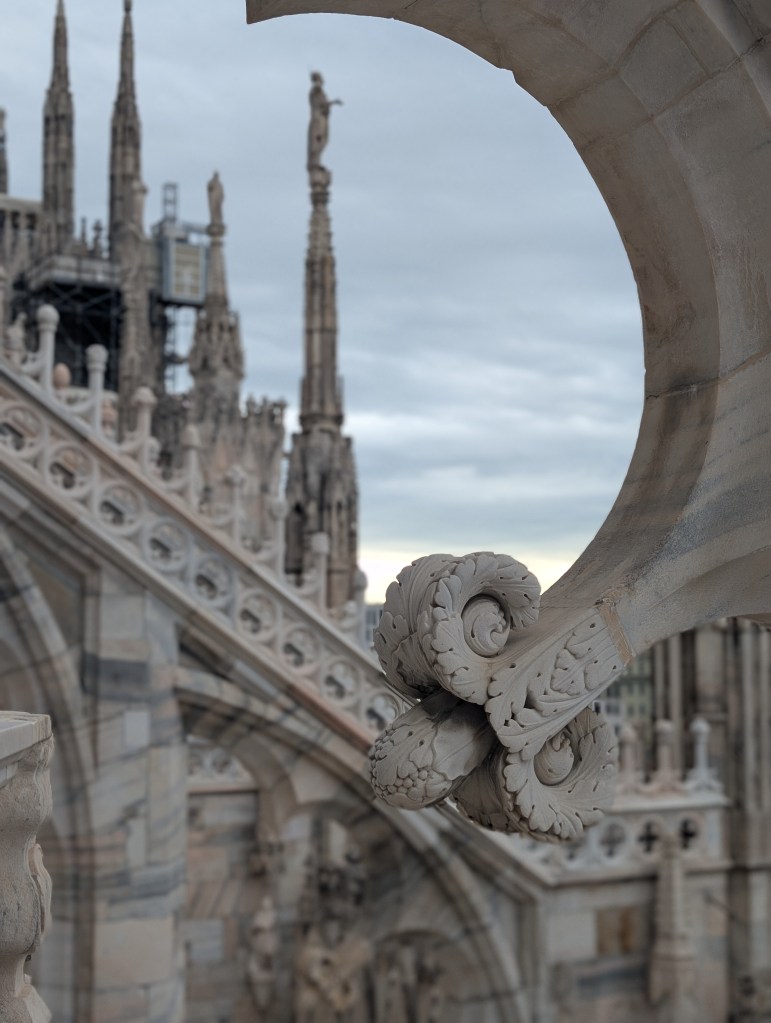
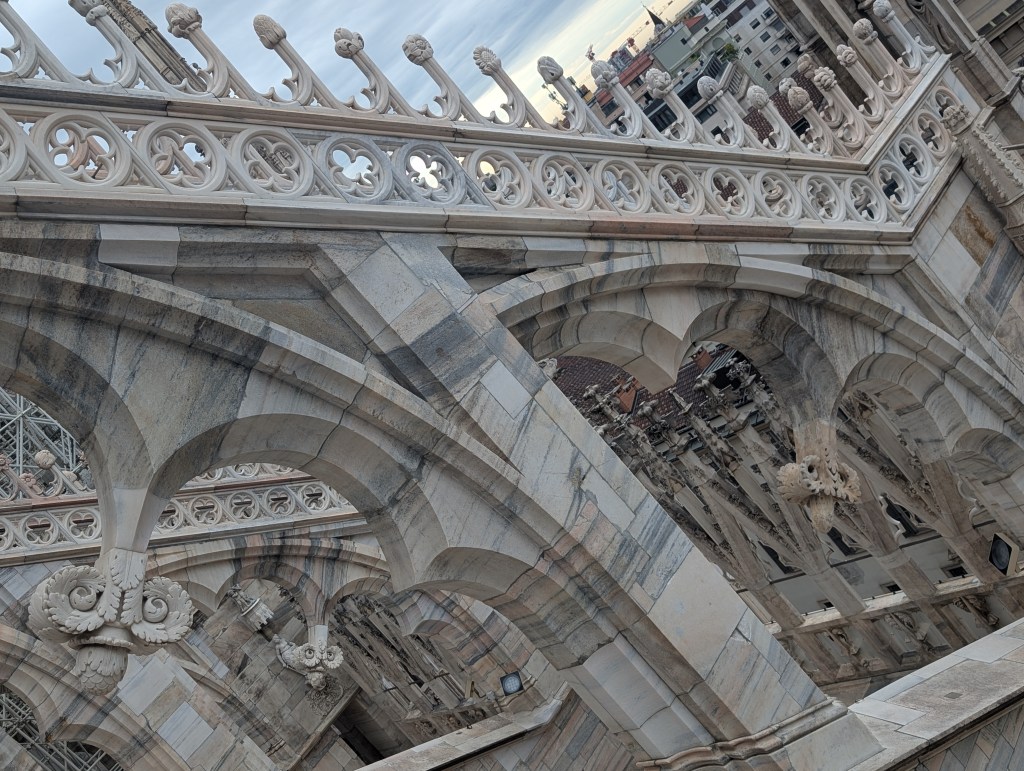
It’s one thing to look up at all the intricate Candoglia marble sculpture work from the plaza, but it’s another to be eye level with the individual details. Each sculpture has its own personality, expressions, and story. The spires and archways frame each other. The city looks miniature from above.
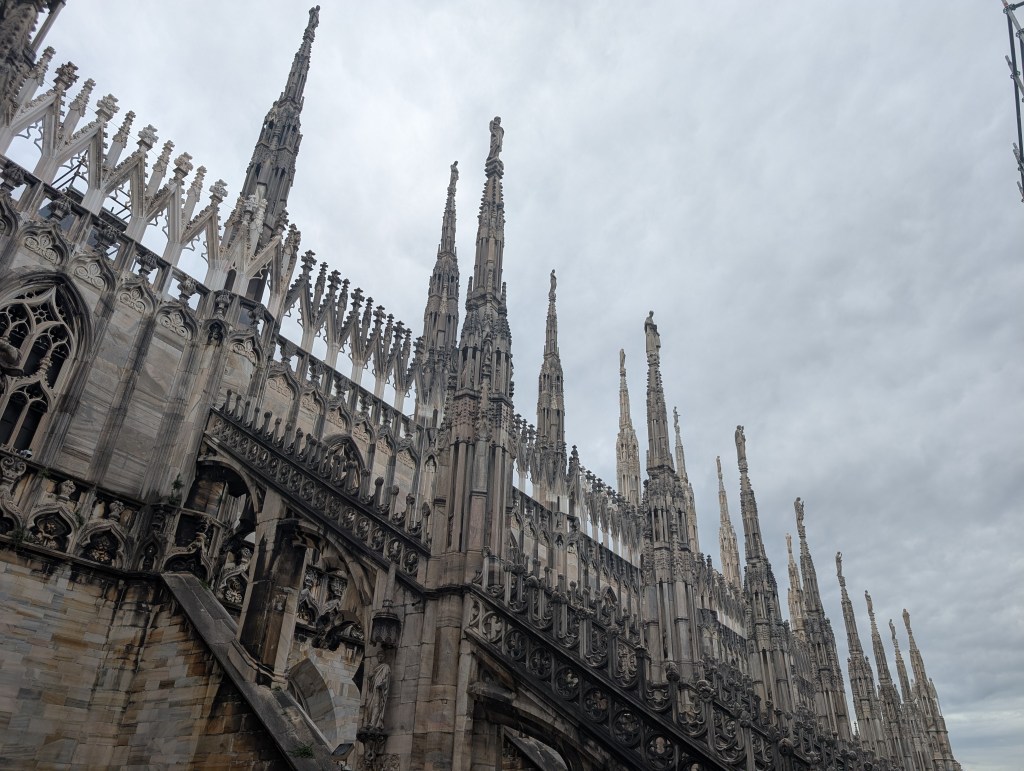
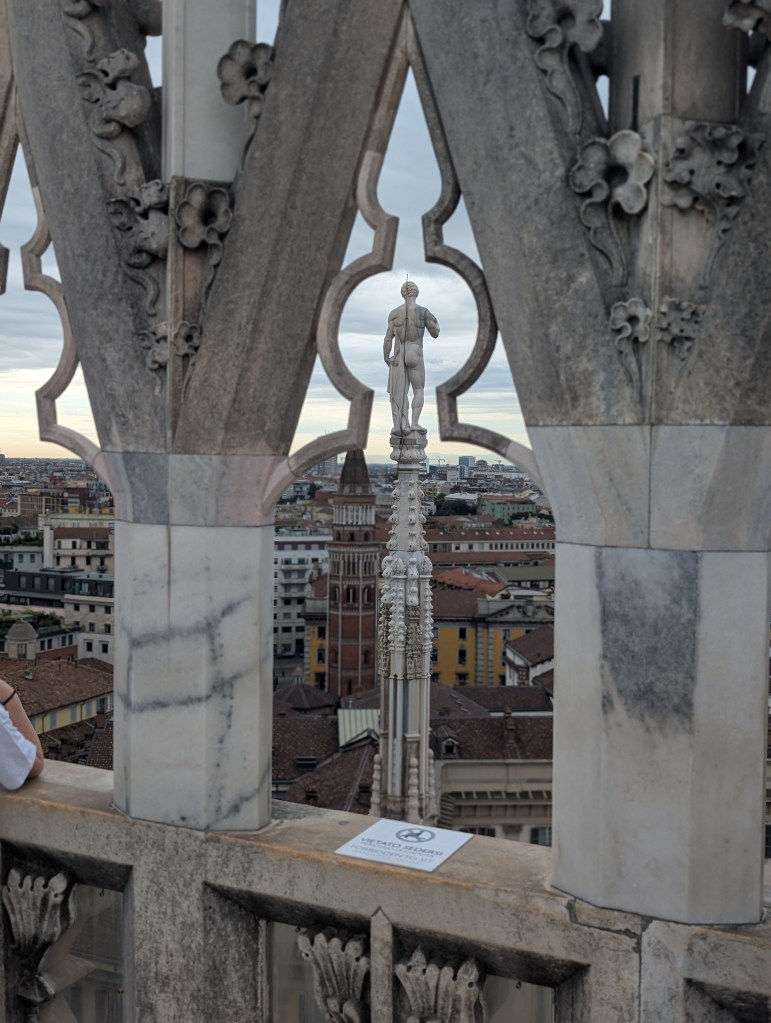
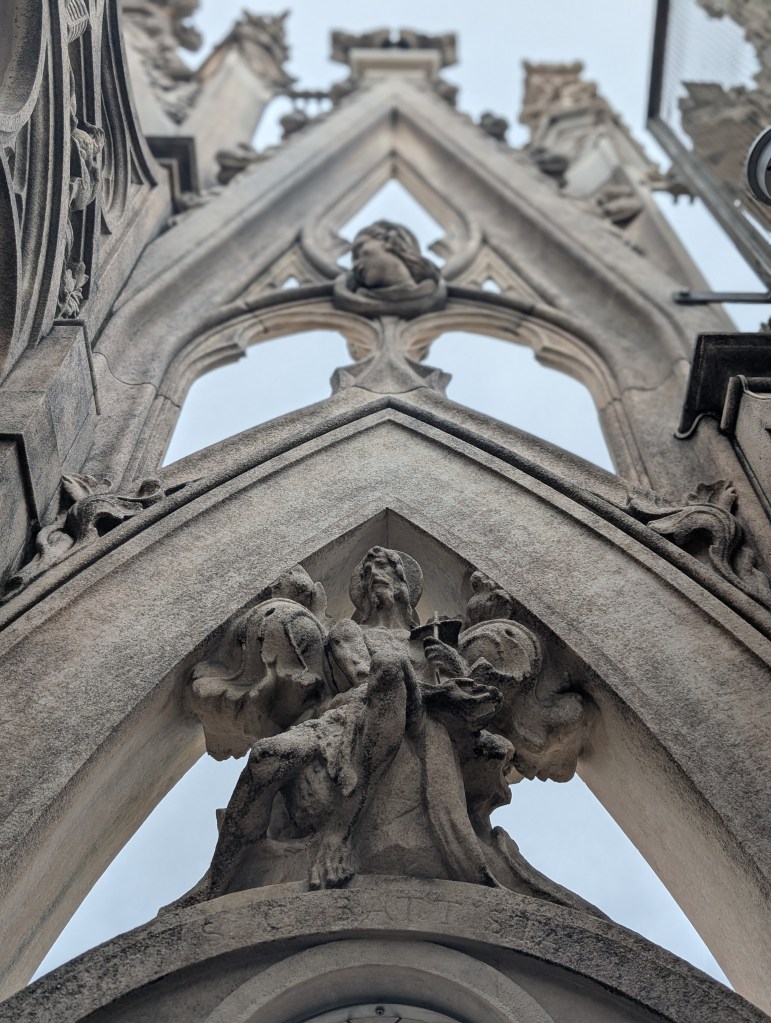
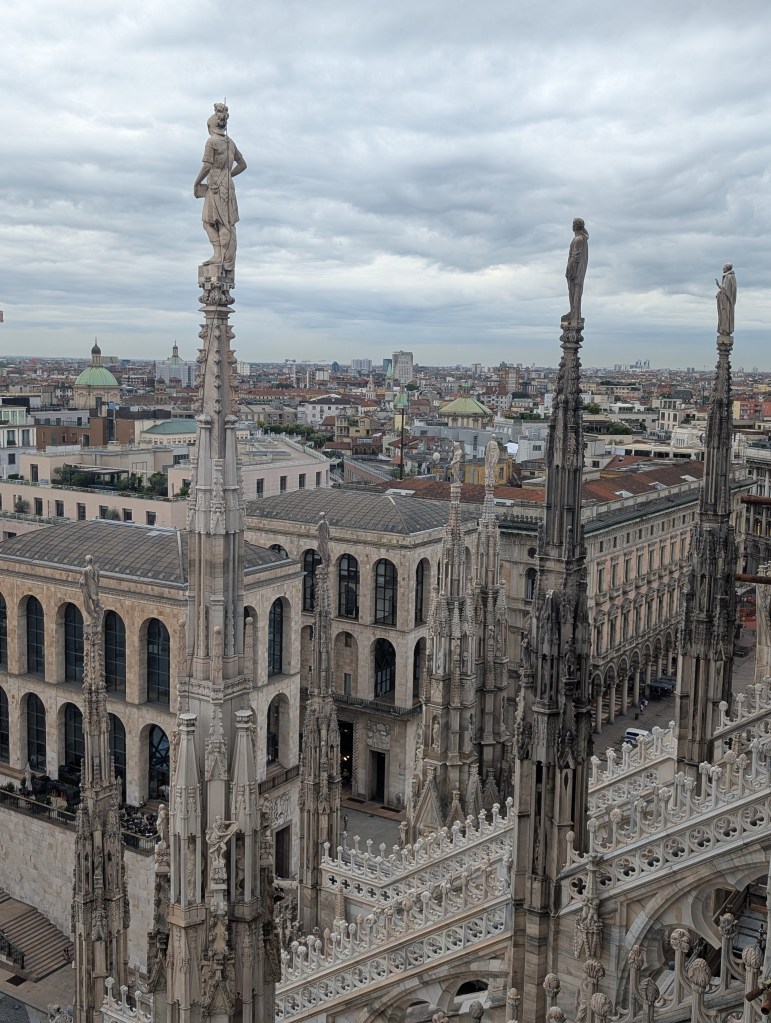
There’s three parts of the rooftop terraces, and even though there was some restoration work being done during my visit, there was no shortage of beautiful moments to take in.
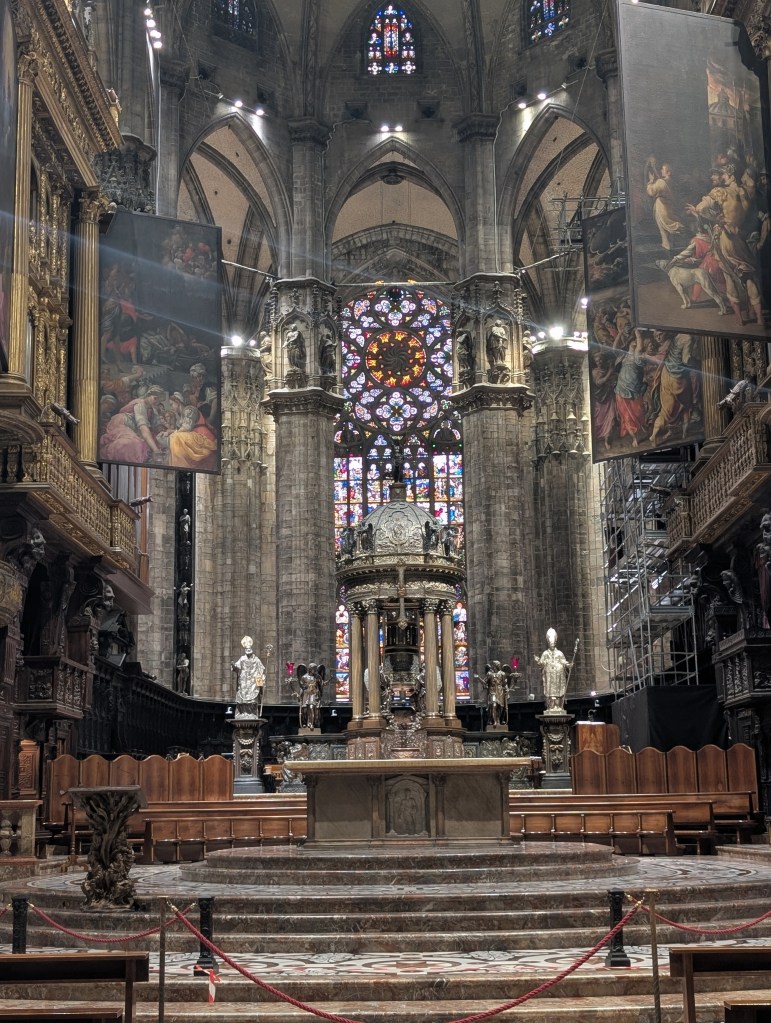
I exited the rooftop staircase into the Duomo’s main level. While I’ve been to several European cathedrals at this point in my travels, this is the largest one I’ve seen. It’s hard to take in the grandness of the enamel painted glass windows, arched ceiling and center altar.

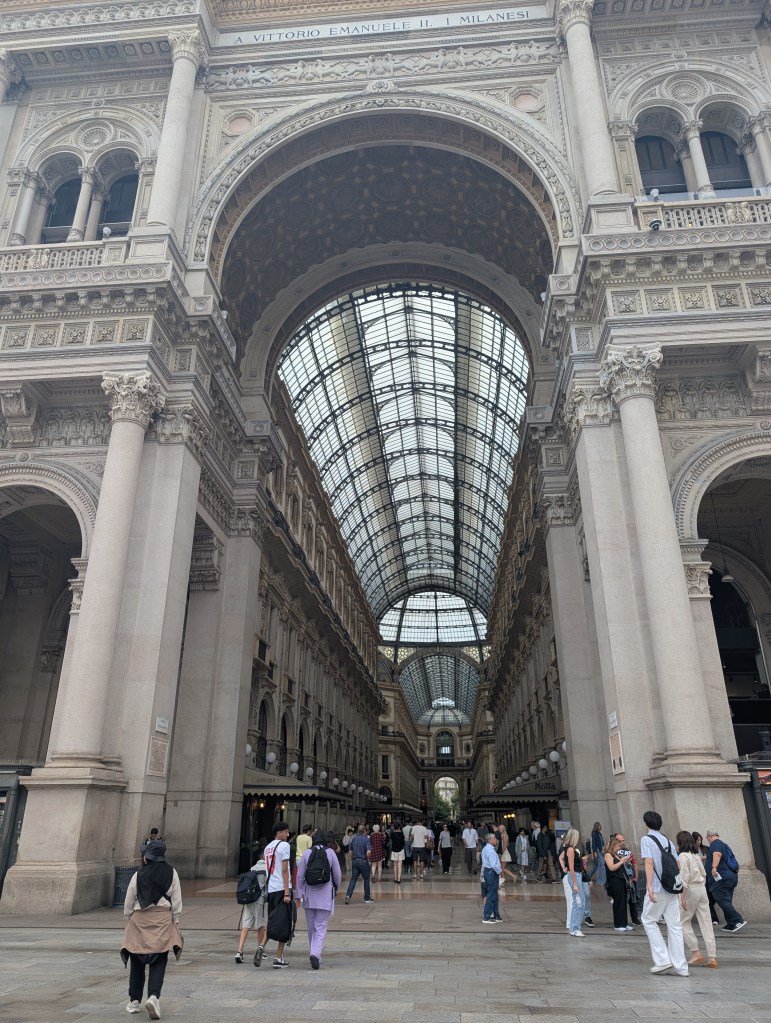
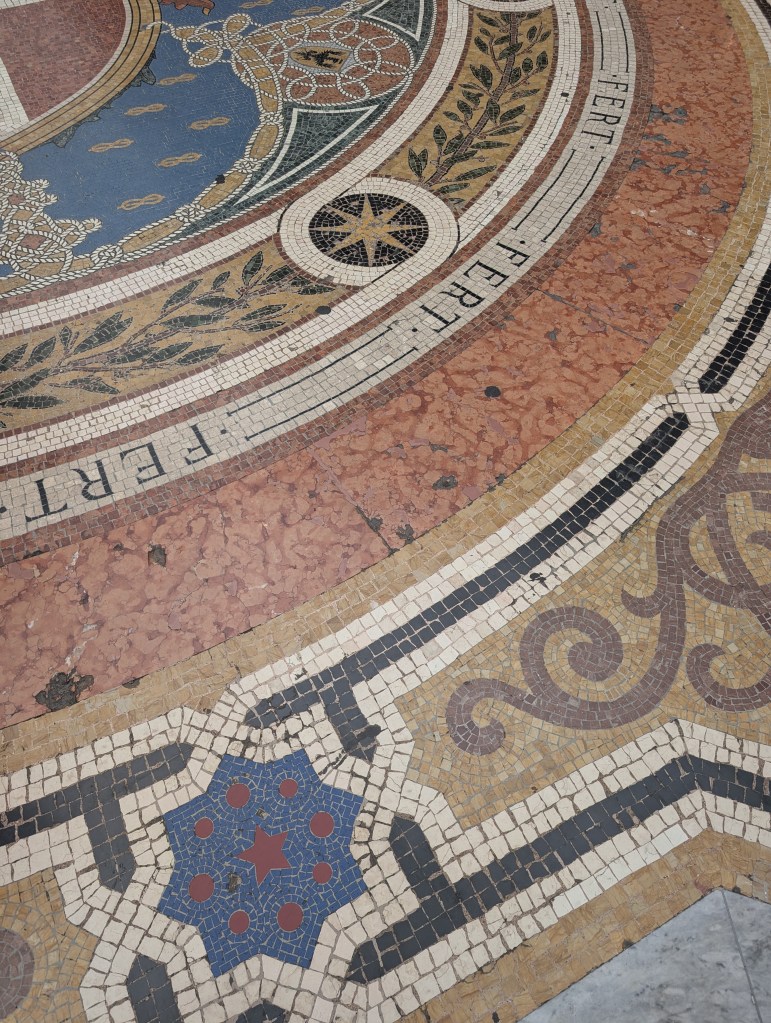
On one side of the Duomo plaza is the glamorous Galleria Vittorio Emanuele II. The large archway is decorated with twinkle lights and brand pendants The tiled floor draws you into the center of the glass dome. Exclusive brandname stores flank each side of the galleria for those who are in Milan to experience its fashion history.

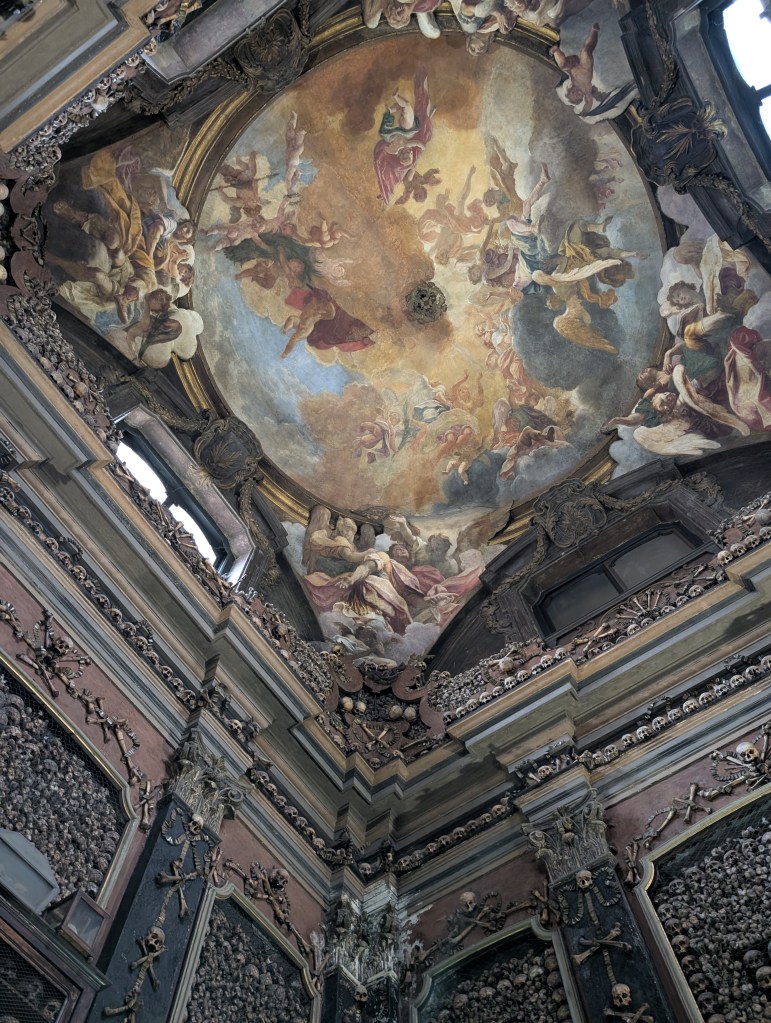
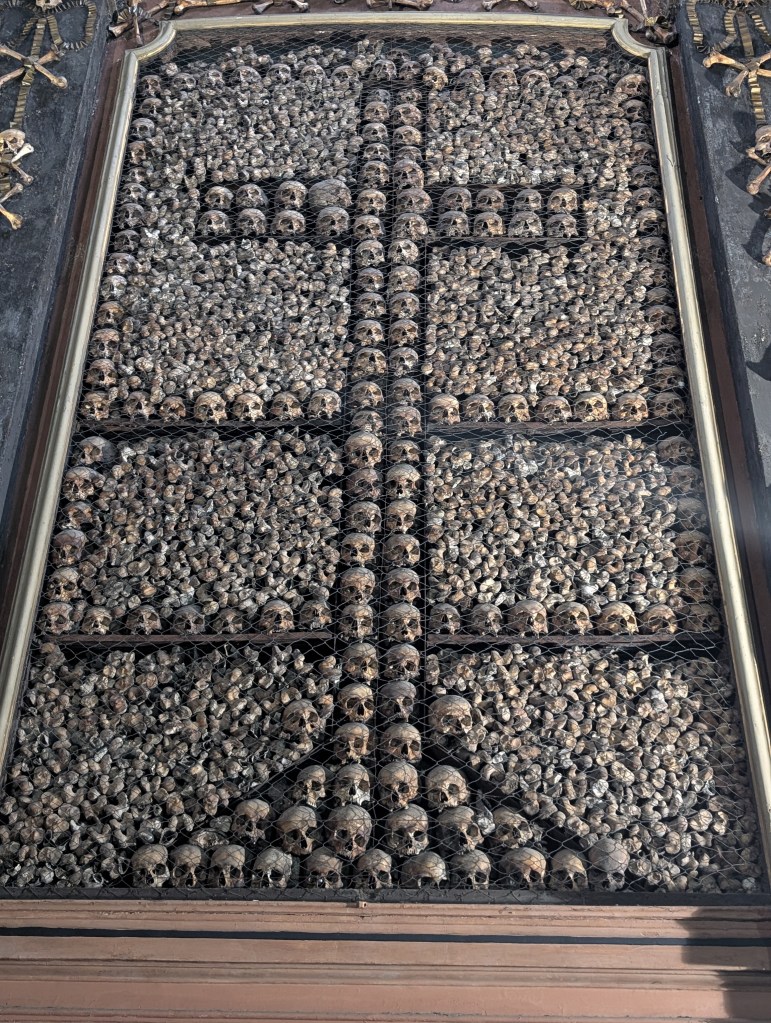
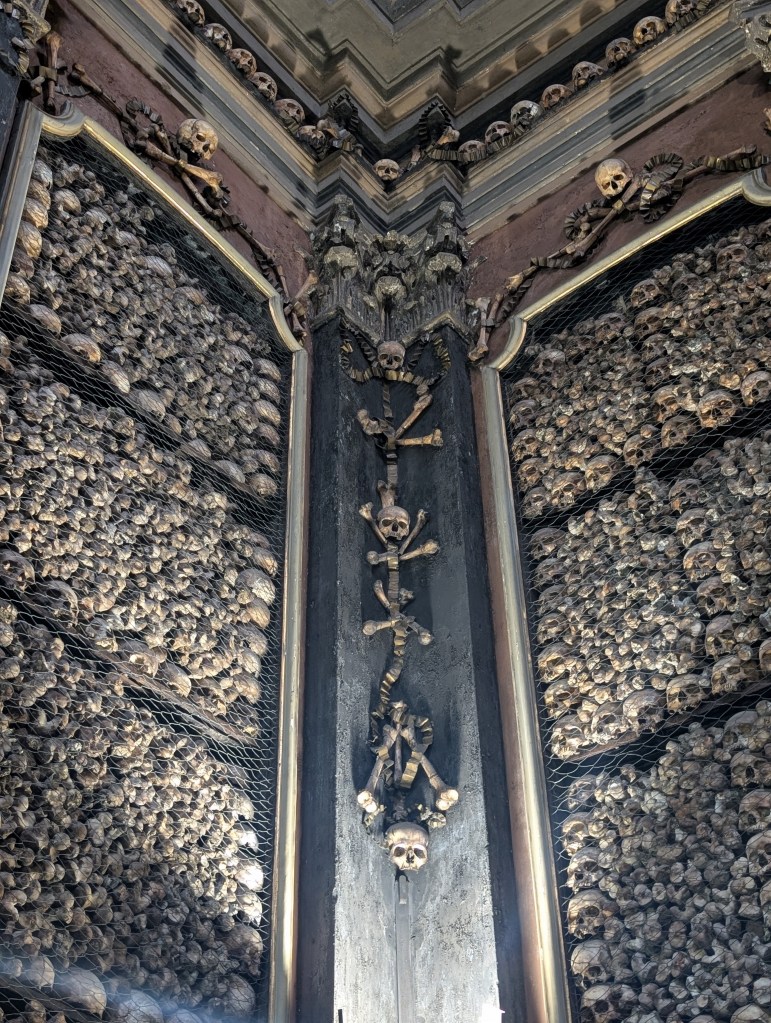
Nearby is the darker and more mysterious Santuario di San Bernardino alle Ossa. The main church is subtle but the santuario is another story. Once a cemetery for a hospital, the sanctuary had to exhume gravesites when it ran out of room to house all the dead. Some of these skulls and bones – specially those of the poor and the punished – decorate the walls and joists of the space. The statue Santa Maria Addolorata sits at the center of the altar.
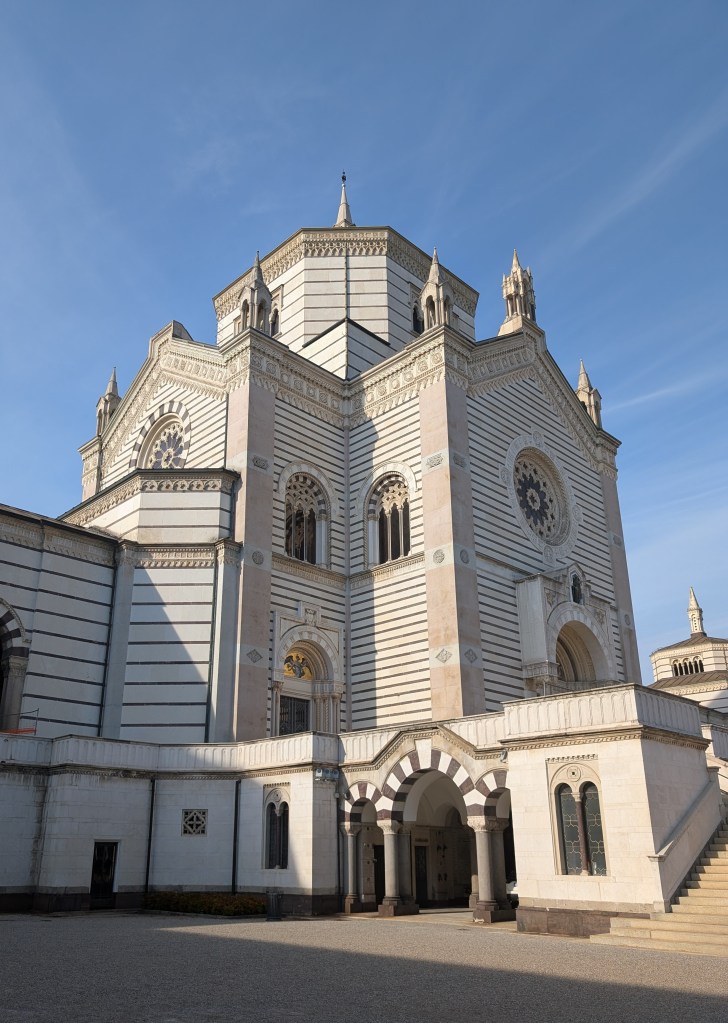
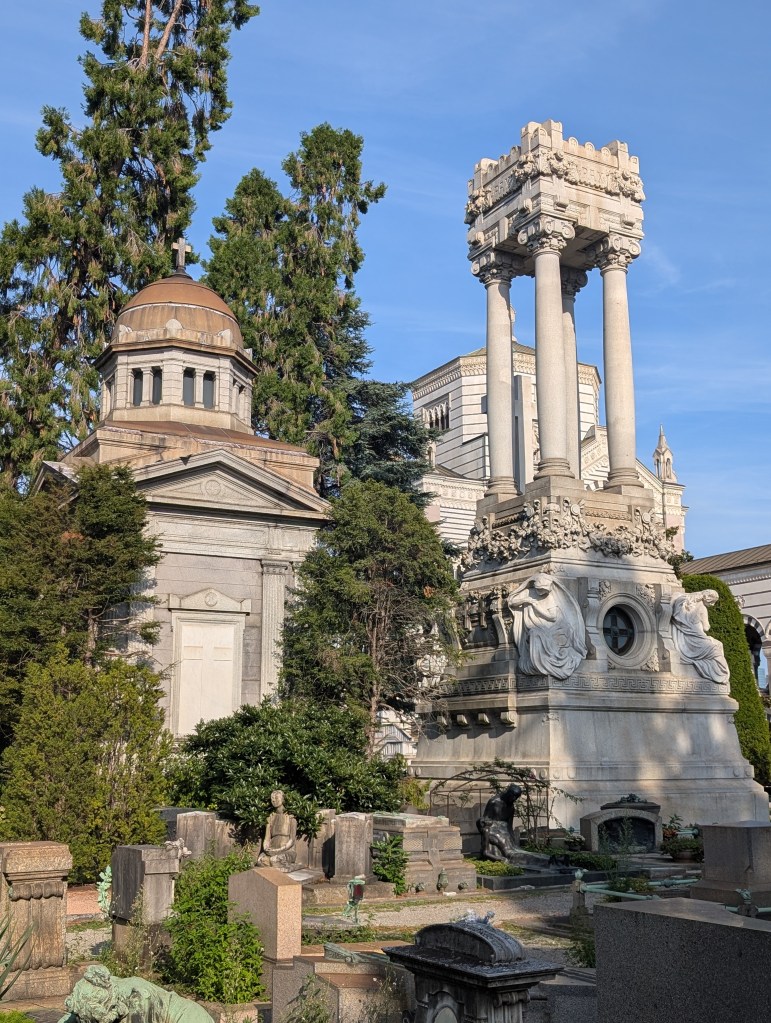
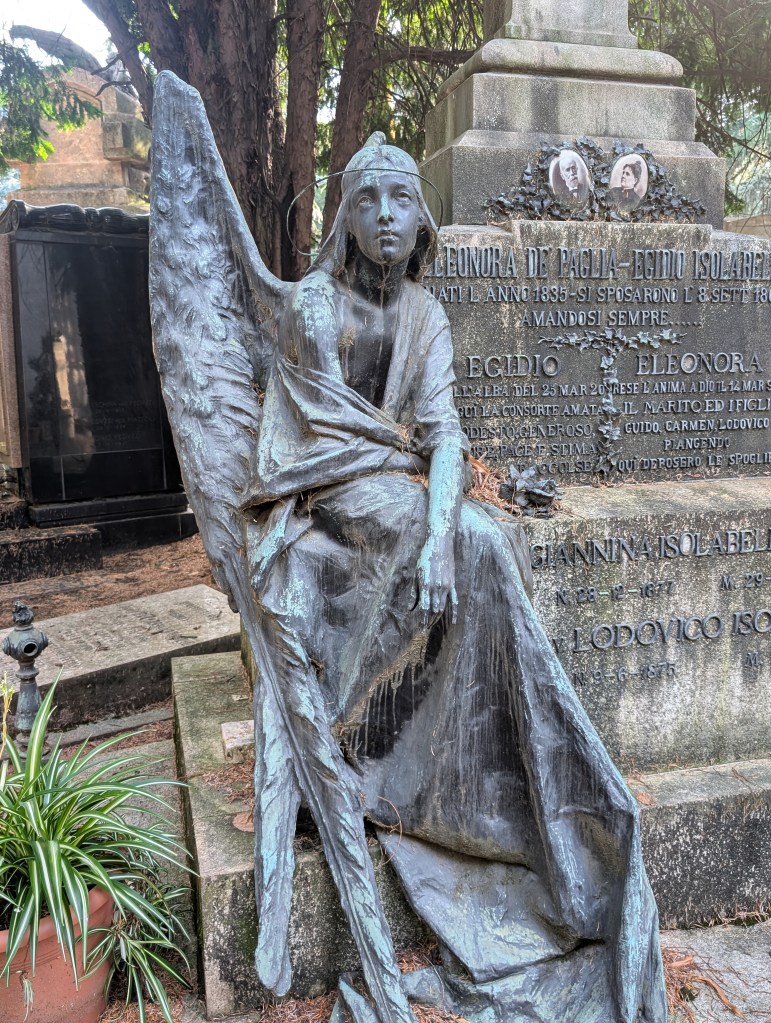
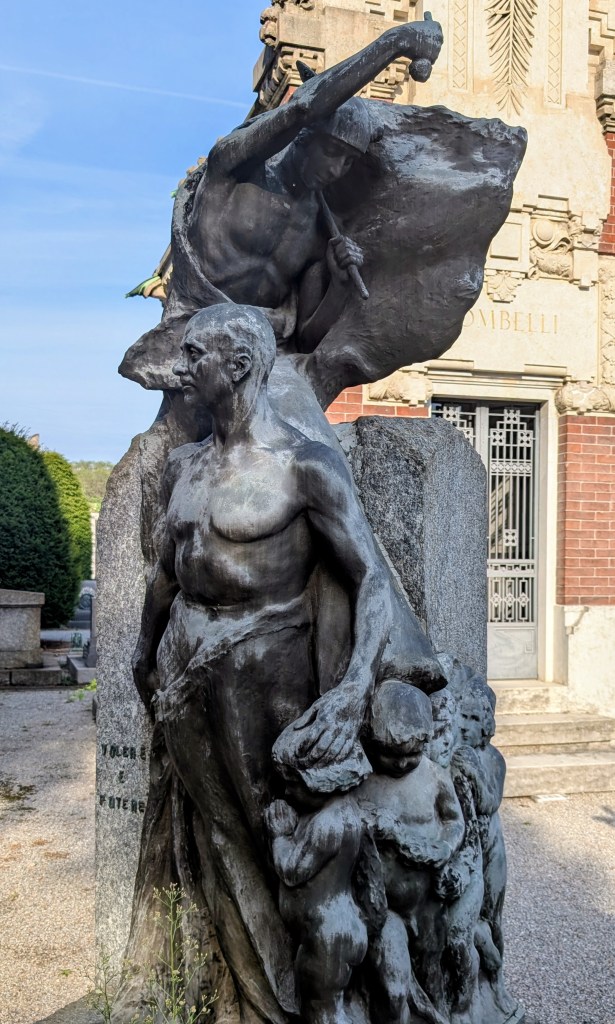
While Cimitero Mounmentale (Monumental Cemetery) is also a place to bury the bones of those that have passed, the large and expressive sculptures that adorn the gravesites create narratives and add stately beauty to the space. The city sees this space as the collective memory of the people who have made Milan home over the centuries. In the mid 1800s the city wanted to create one central cemetery to bring the people together and honor the deceased. The symmetrical design around a central courtyard creates a community feeling and as the cemetery has grown, the new sections have been thoughtfully aligned with the old. Even with separate entrances and sections for the different denominations, the central avenue connects the community. As the rest of Milan it is about the blending of people and time.

Close to the Cimitero Mounmentale is the Arco della Pace (Arch of Peace). Because of tumultuous times, the arch took thirty years to construct and in the end was designated as a commemoration for the European peace of 1815. As relationships between countries changed, the design elements did as well; for instance, the bronze chariot that once faced France was rotated to face the Castle Sforzesco as the relationship with France was on rocky footing.

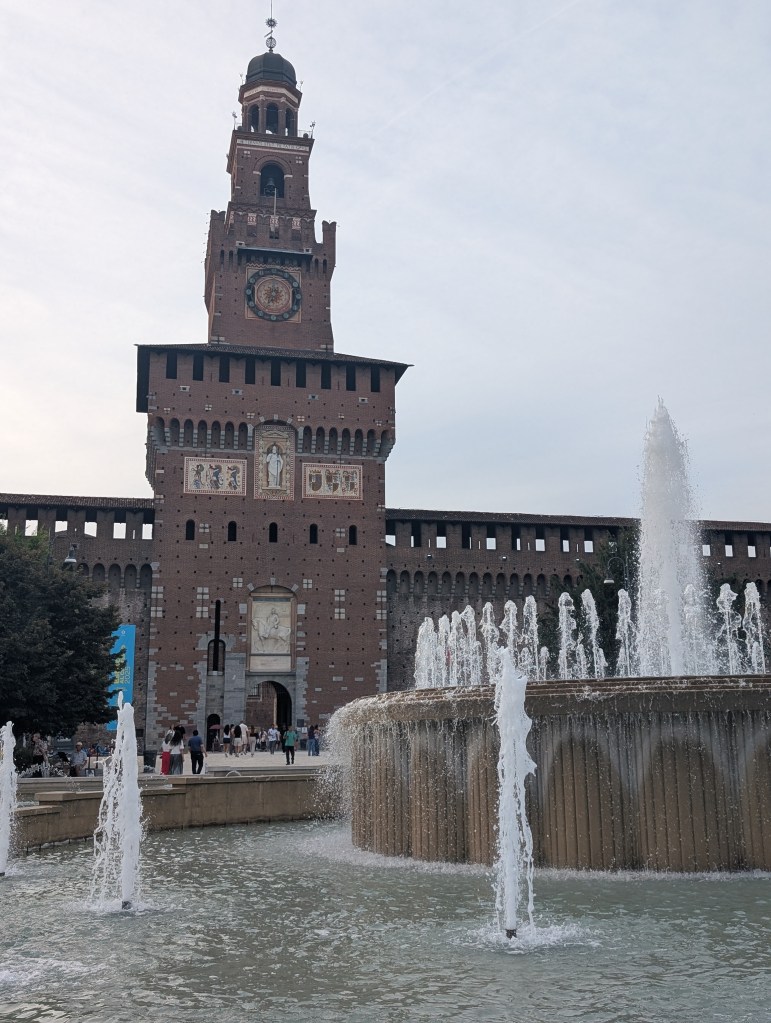
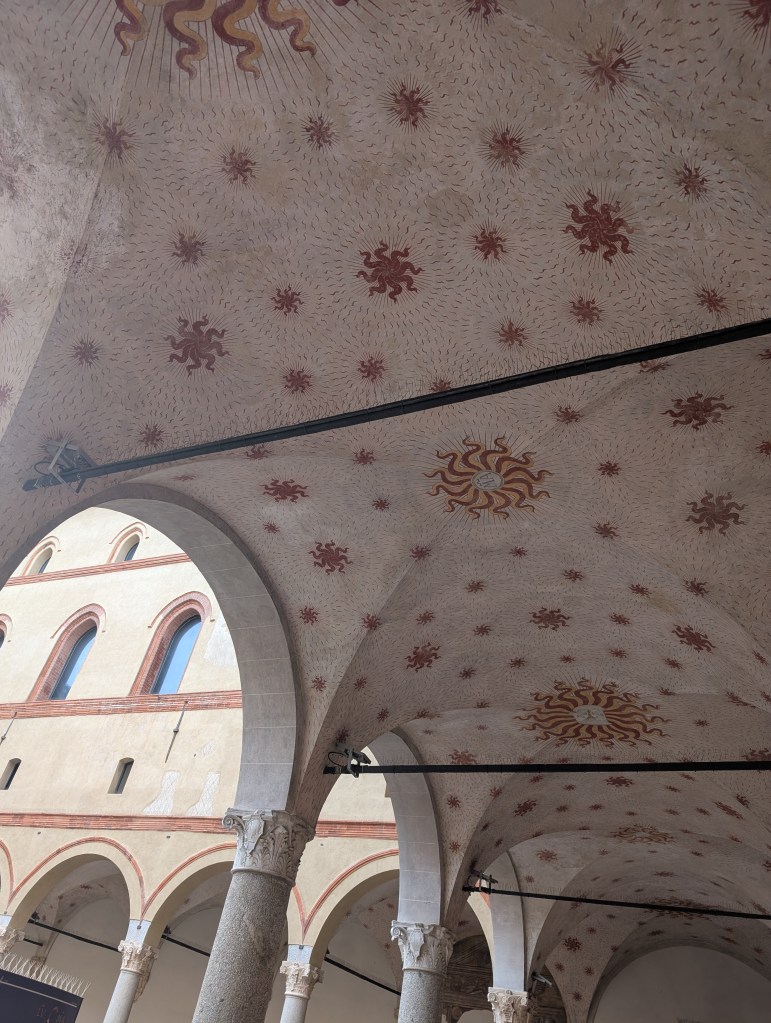
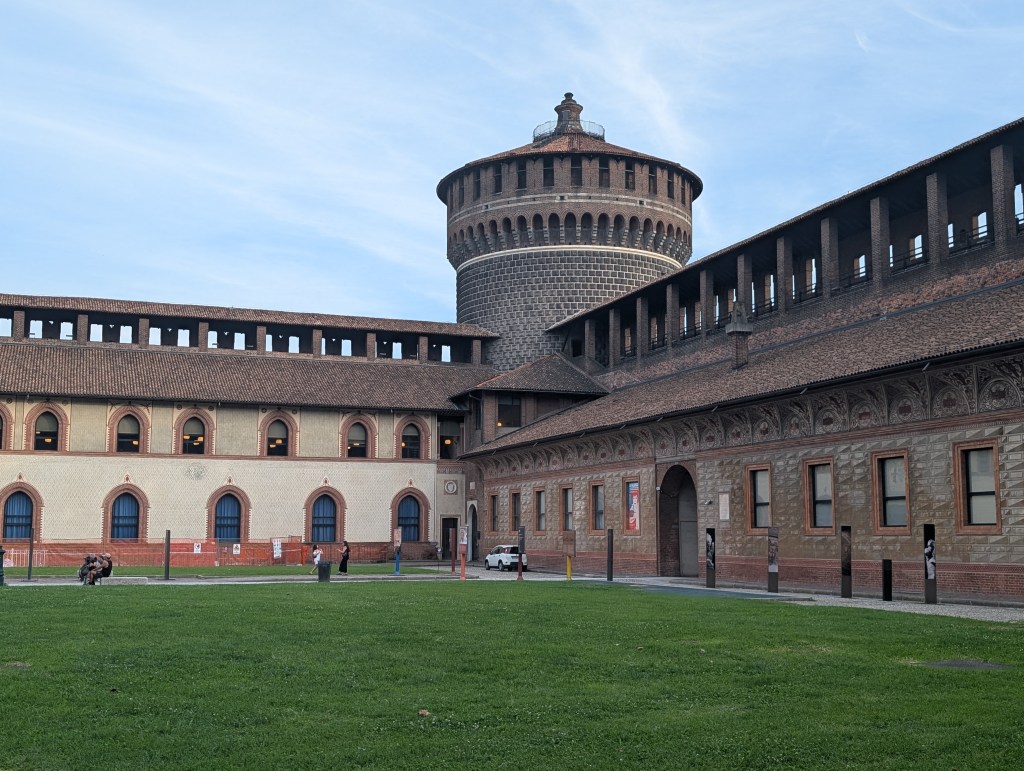
The Arco della Pace is at one end of the Sempione Park, which is a lovely green space for the city. At the other end sits the Castello Sforzesco (Sforza Castle). This medieval castle, built in the mid 1300s as a stronghold and residence for Galeazzo II Visconti, feels out of place in the city center. Under Francesco Sforza’s reign it was renovated to be an elegant castle, but after his reign was over, fell into disrepair and was used as a barracks by different countries until the end of the 19th century. While we didn’t get a chance to go into the Castle, the massive brick walls and elegant courtyards were nice to take in.
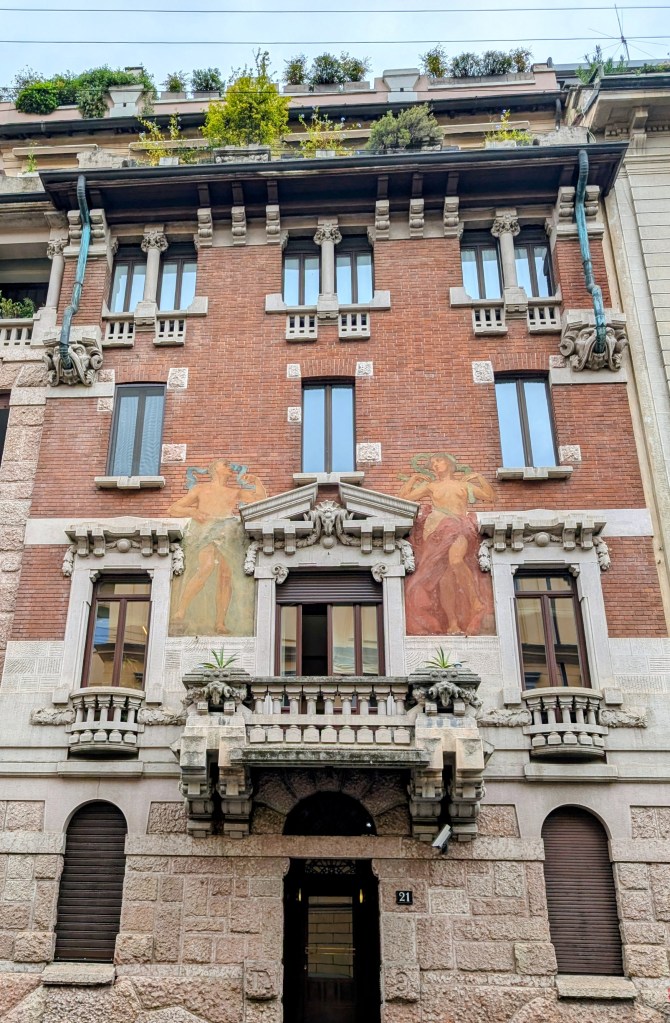
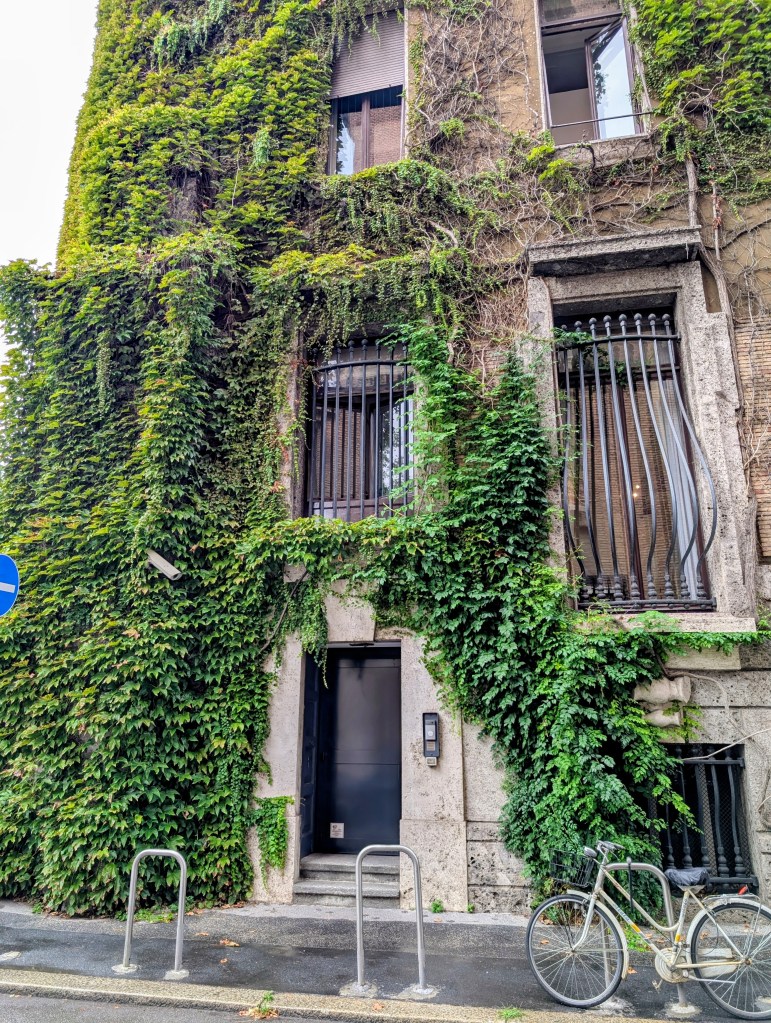
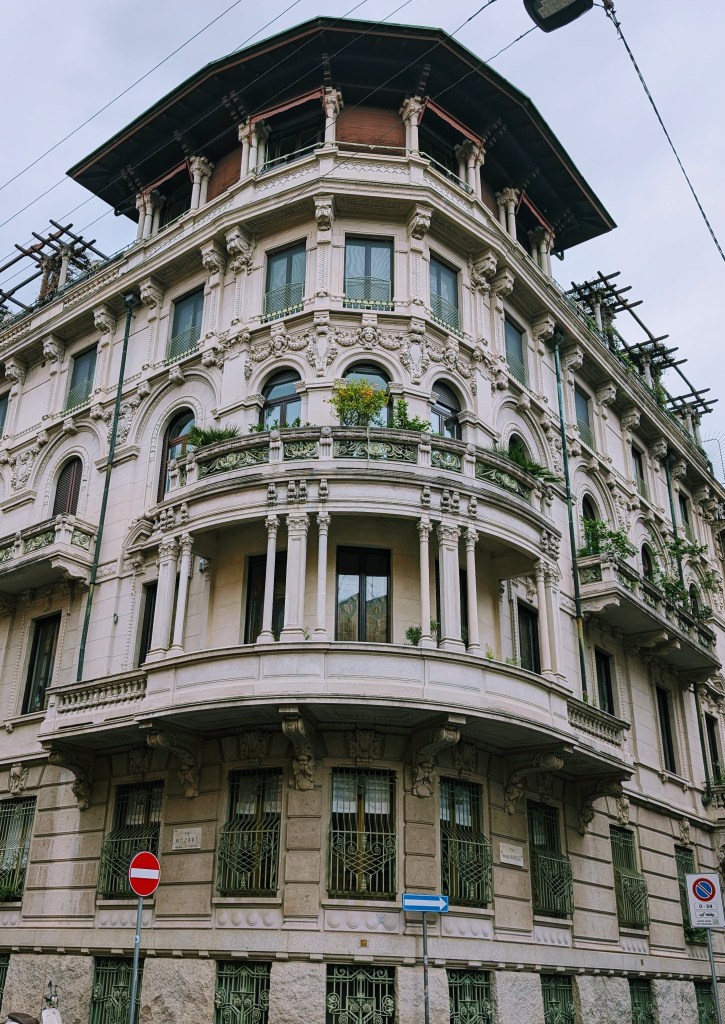
It makes sense that the silent district is more removed from the city center; still, it is worth a quick train detour to walk around the neighborhood to see the Liberty style, Art Nouveau, and Art Deco grand buildings. The area also offers a few quirky sights: Villa Invernizzi’s resident pink flamingos, Villa Mozart’s ivy covered facades, Palazzo Sola Busca’s ear inlay, and Berri Meregalli’s shimmering tile work.


Night time along the Navigli canal offers all the restaurants and bars one could want. While the graffiti and trash around the edges took away from the beauty of the scene, the individual vibes of each eatery created a vibrant and festive scene.


 Mac On the Map
Leave a comment