
Plitvice Lakes National Park is Croatia’s largest and most famous natural wonder, so even though it’s about a two hour drive over the mountains and through the rural towns of inland Croatia, tourists still flock to the park.
Declared a national park in 1949 and a UNESCO World Heritage Site in 1979, Plitvice Lakes is also the oldest national park in the country. The park covers about 30,000 hectares, but the main draw for tourists are the sixteen lakes connected by cascading waterfalls that make up only 1% of the park’s landscape.
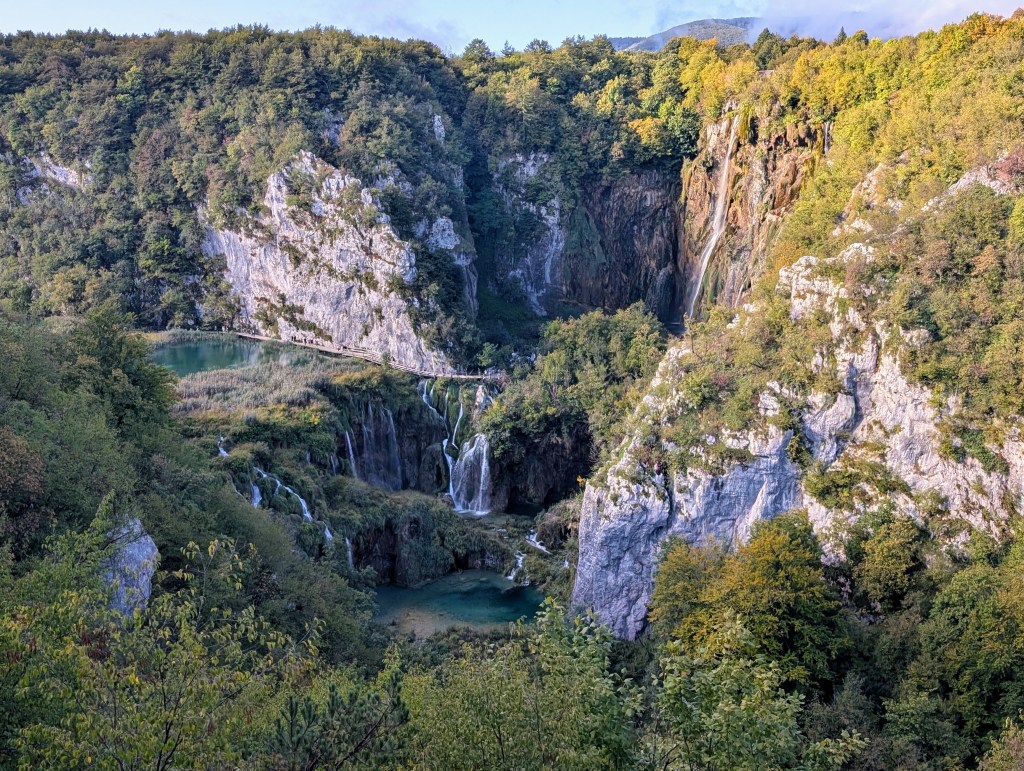
Entrance 1 leads directly to the upper observation deck with a breathtaking view of the largest waterfall in the park, the lower lakes canyon, and the boardwalks that bisect these. It provides a overview of all the beautiful vistas that await you in the park.
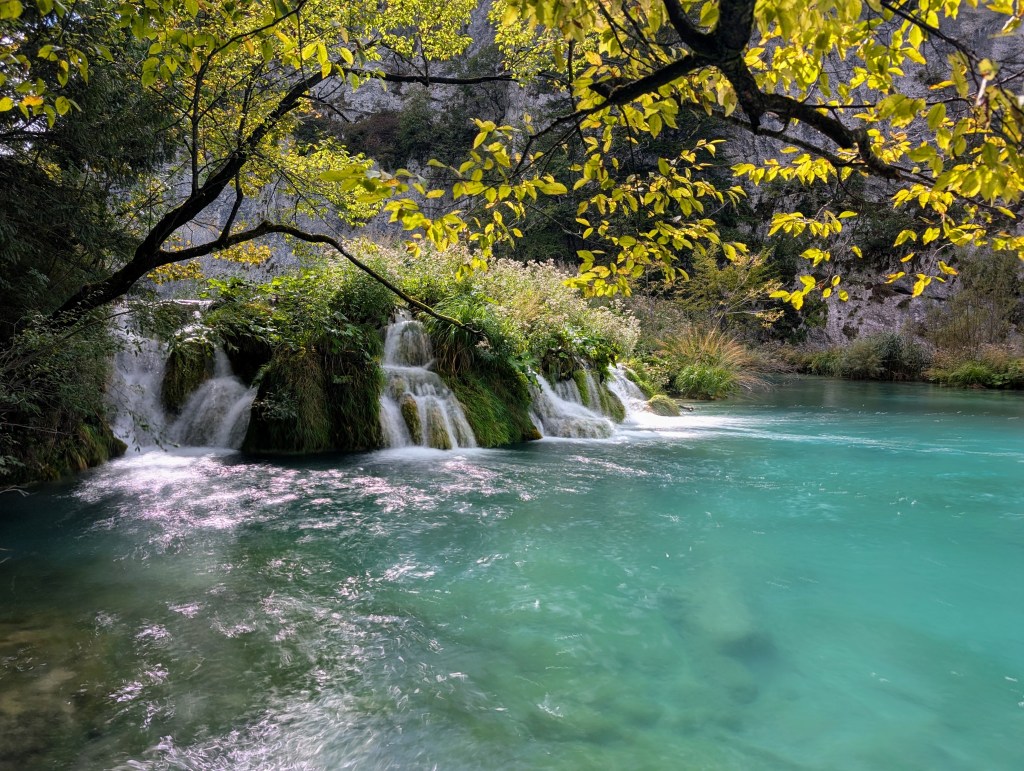
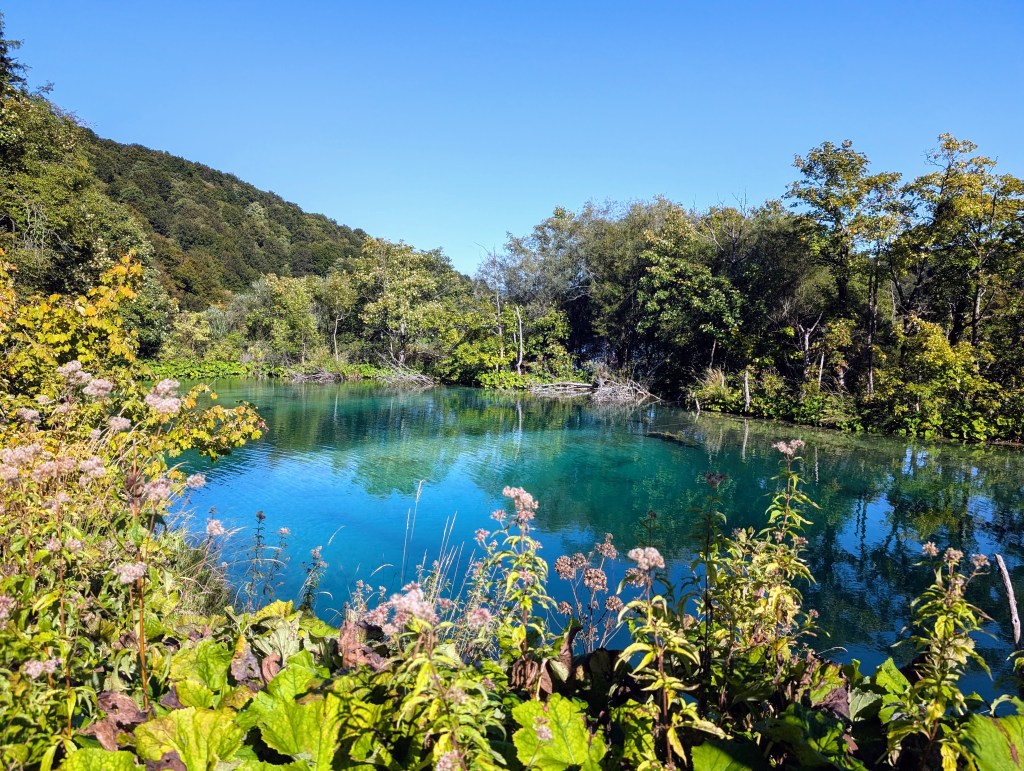
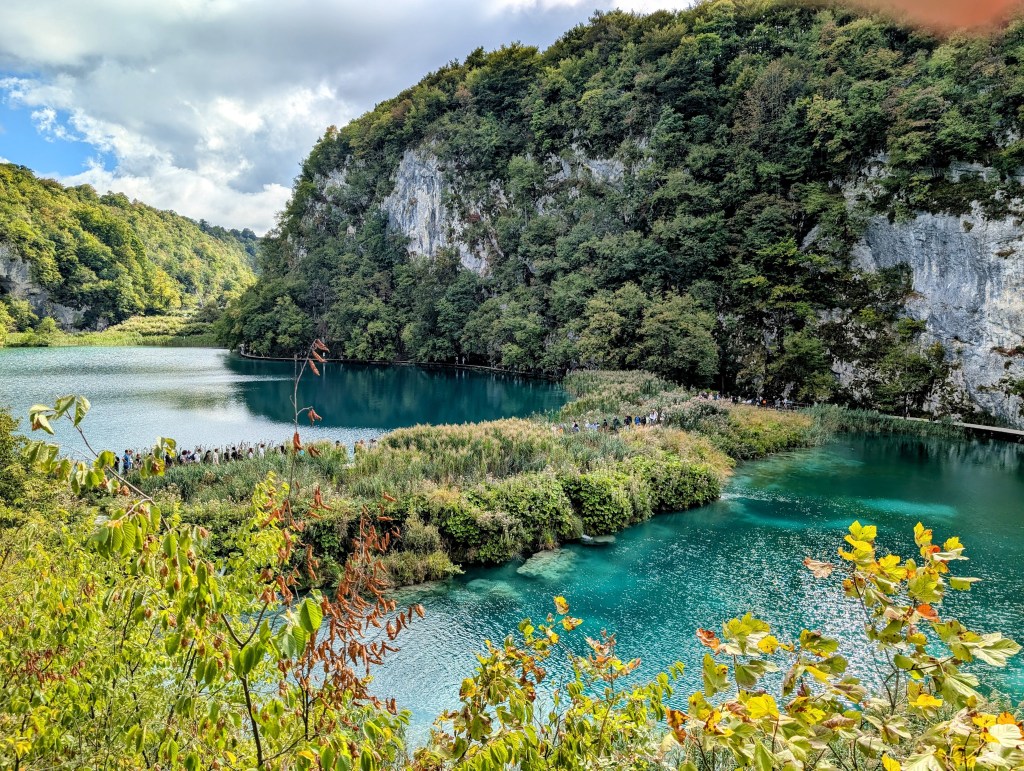
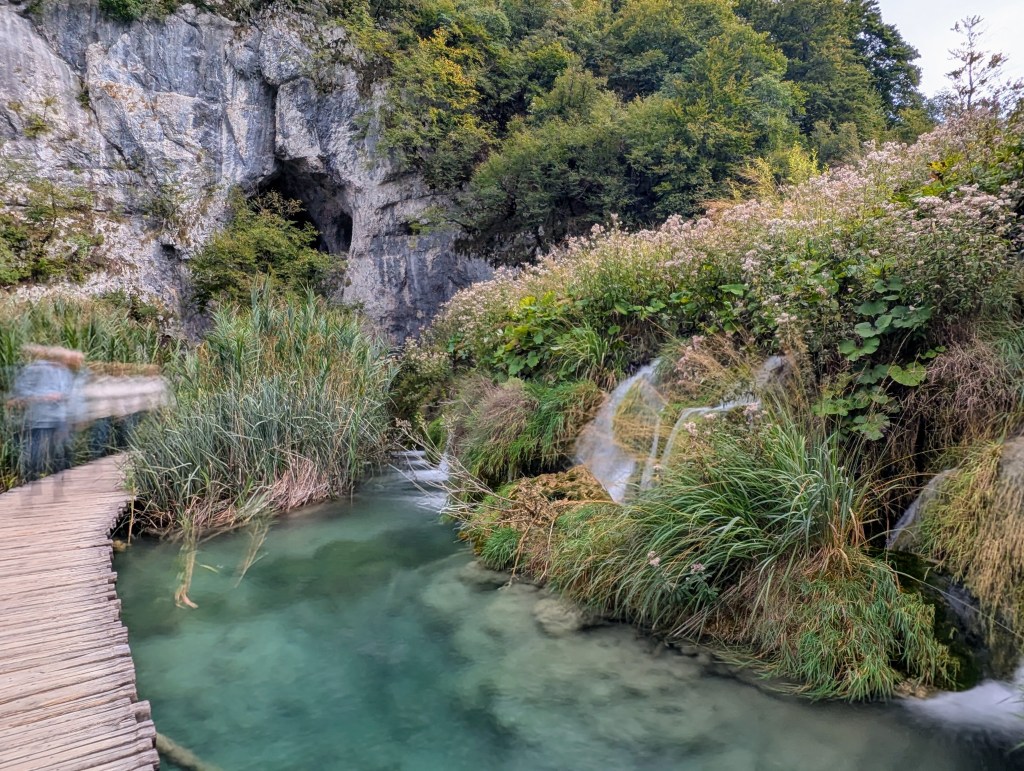
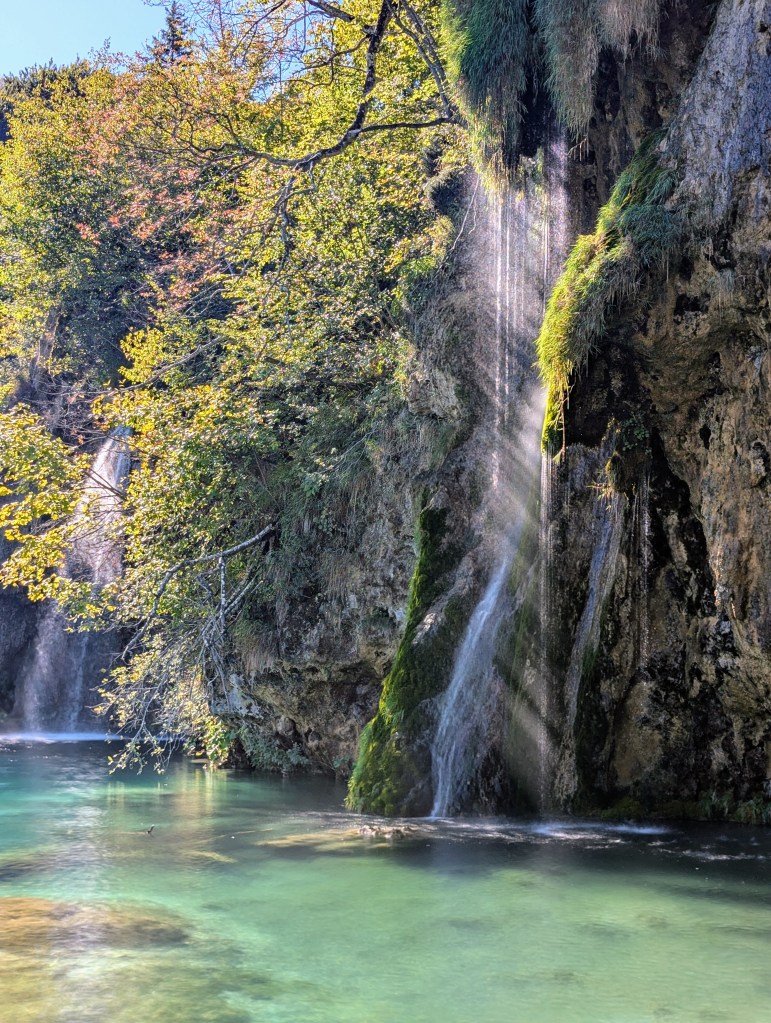
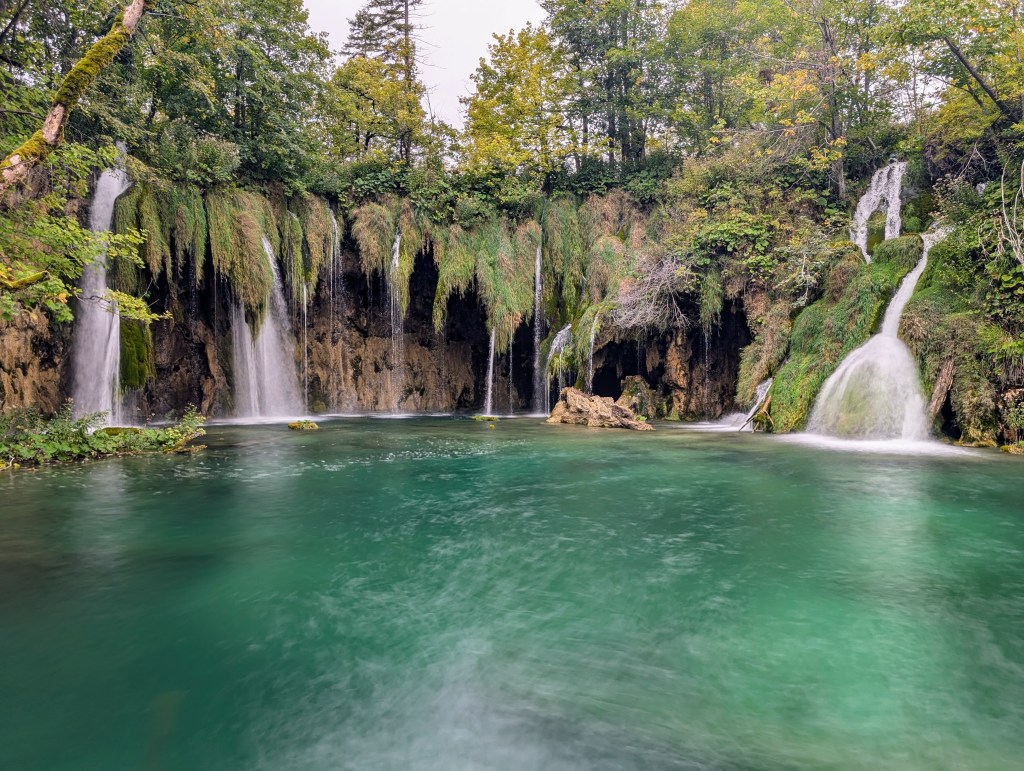
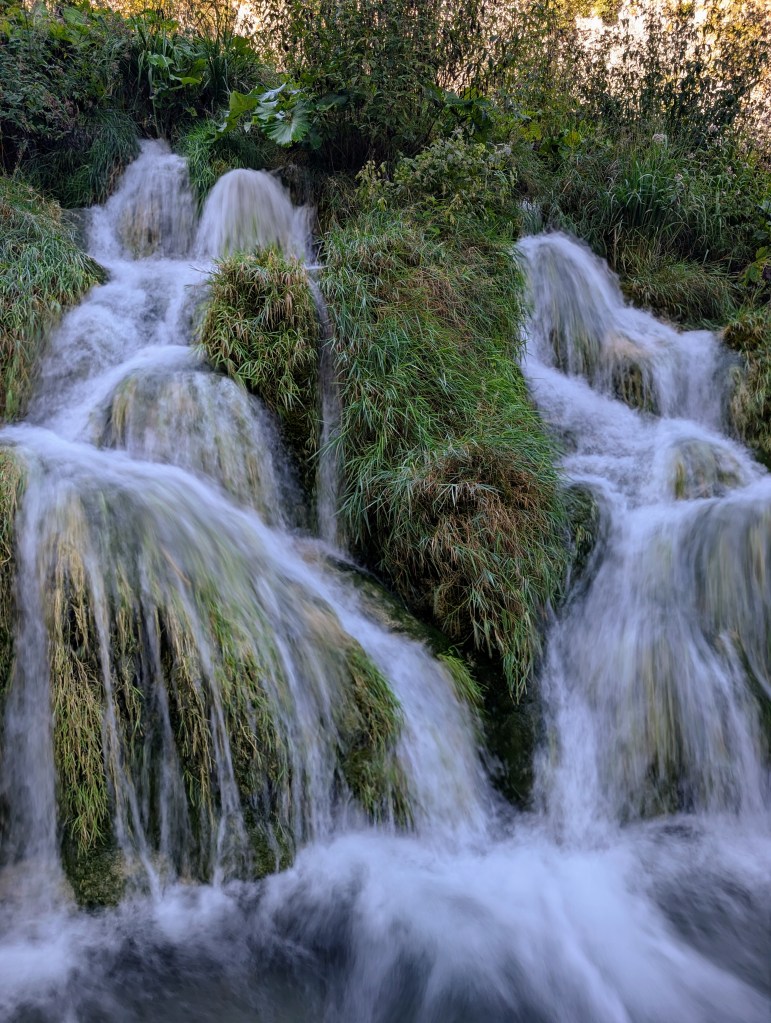
The vibrant turquoise waters of the lakes was one of the unique elements of the area. The minerals and gases of the local algae react with the water and sunlight to create this blue; however, the exact color of the water changes all the time as do the waterfalls. The vibrant spring greens of the foliage and the ever present sound of flowing water add to the immersive sensory experience. Even within the wooded sections, there are waterfalls cascading all around.
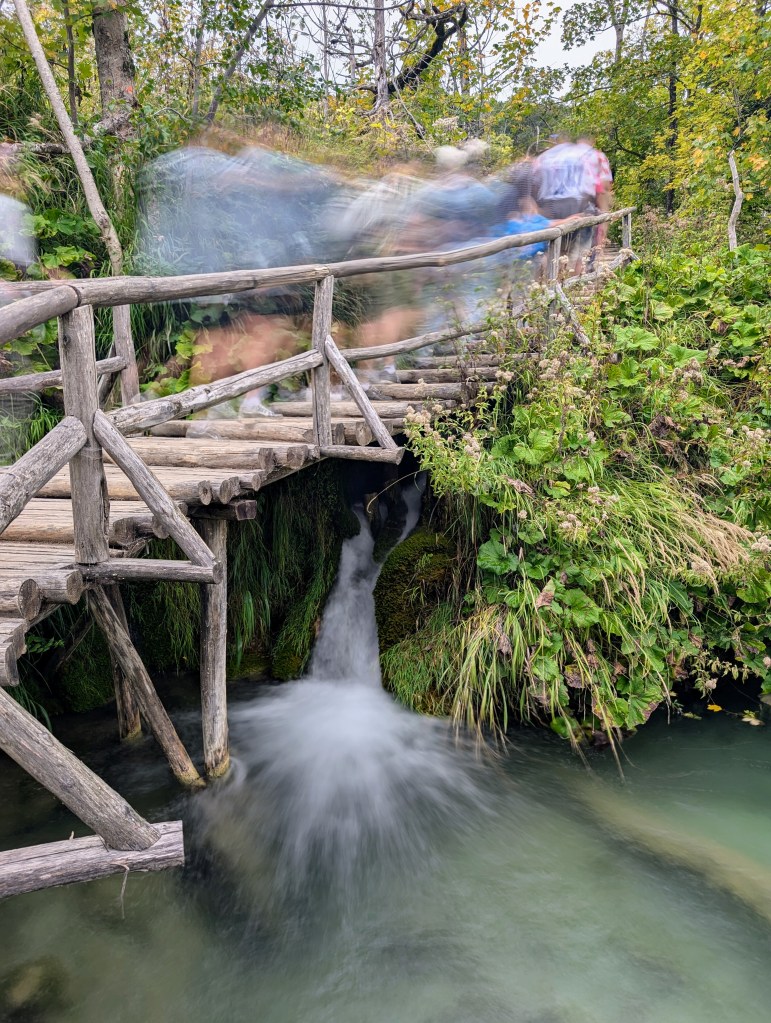
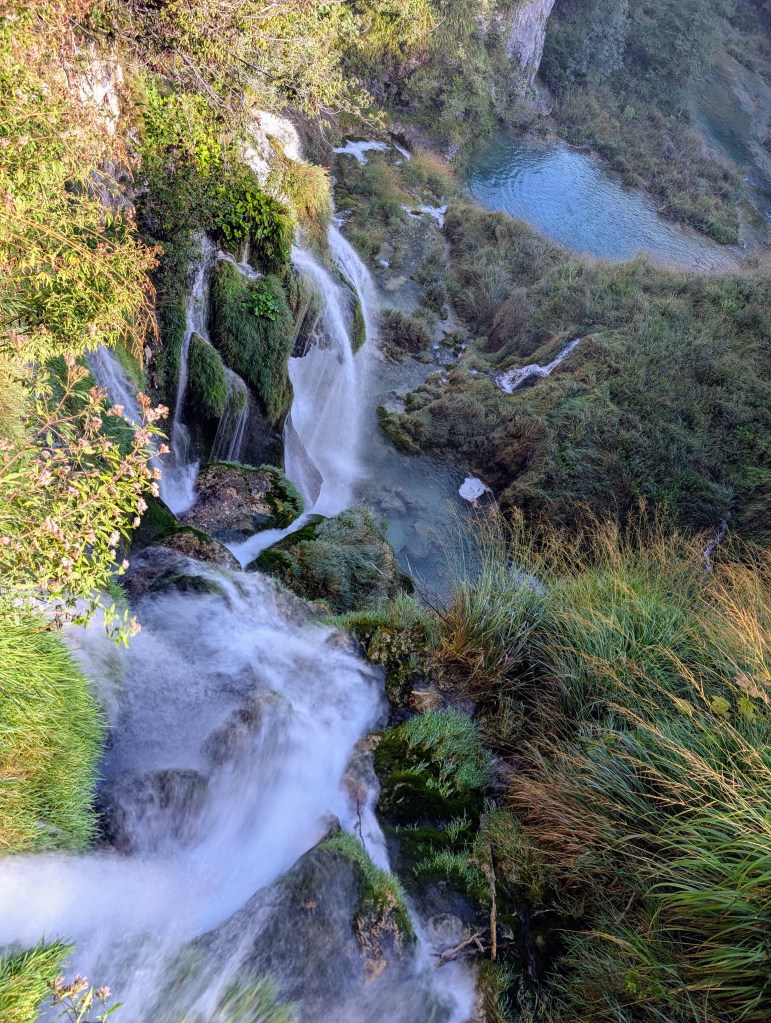
A unique feature of Plitvice Lakes is the travertine and limestone material of the rocks. Because these are softer stones, they are easier molded by water. However, as the rock erodes in some places, it grows in others, so the shapes and placements of the waterfalls here are forever changing.
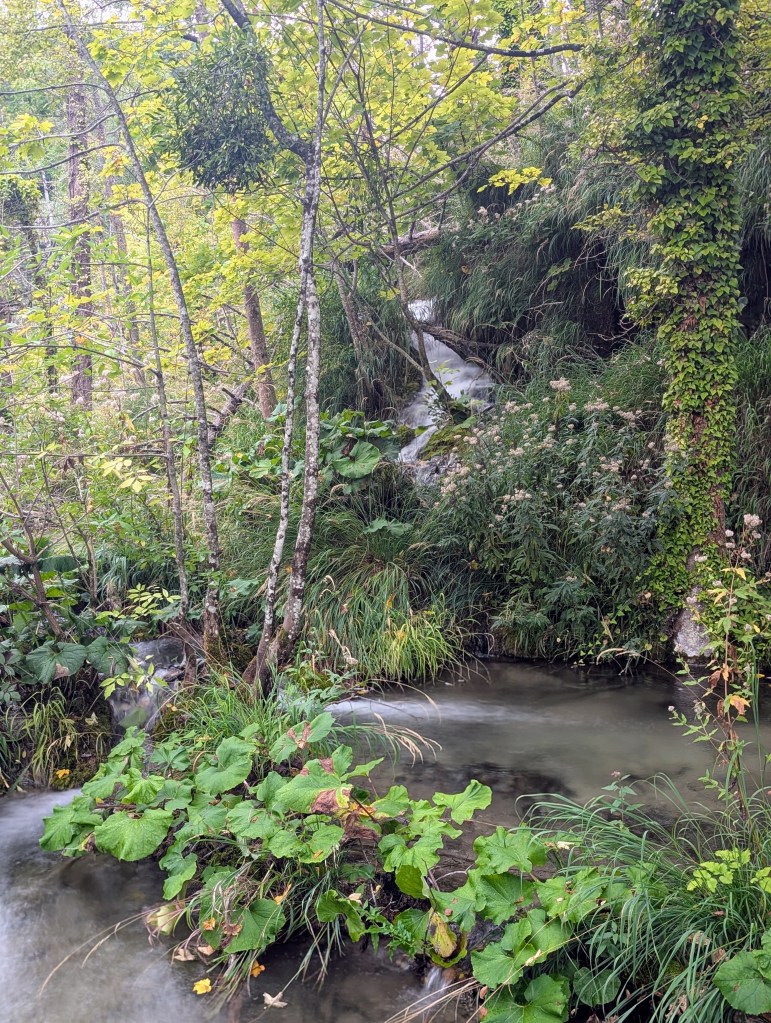
Because people are here to see these water features, the majority of the trails in the park are narrow wooden boardwalks that bring guests close to the falls. However, with large tour groups taking up much of the walking space, it is tough to navigate the trails. Even though I arrived at 9am on a weekday in September, it was crowded, and even more crowded as the day went on. So, it took some mental adjustment for me to learn to live within the crowds and focus on the beautiful backdrop around us – I actually completed part of the loop twice because I realized I didn’t really enjoy the scenery the first time around.
The park offers recommended routes to allow visitors to decide how far they wish to go and what they want to see. 4 trails begin at Entrance 1 and 4 from Entrance 2. For the most part, I followed route C for my itinerary.
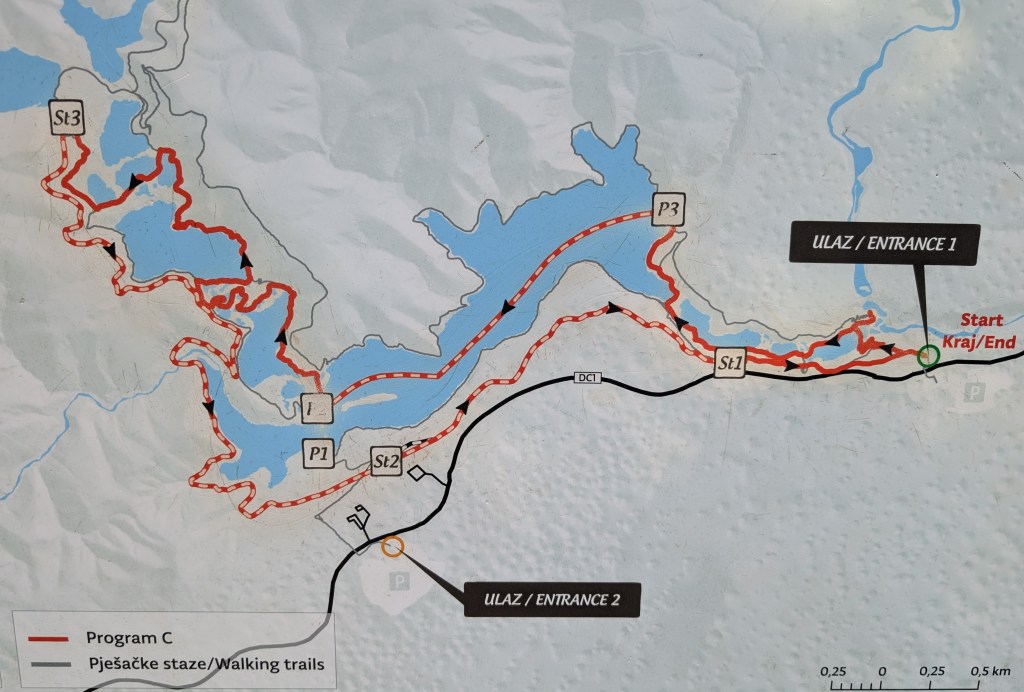
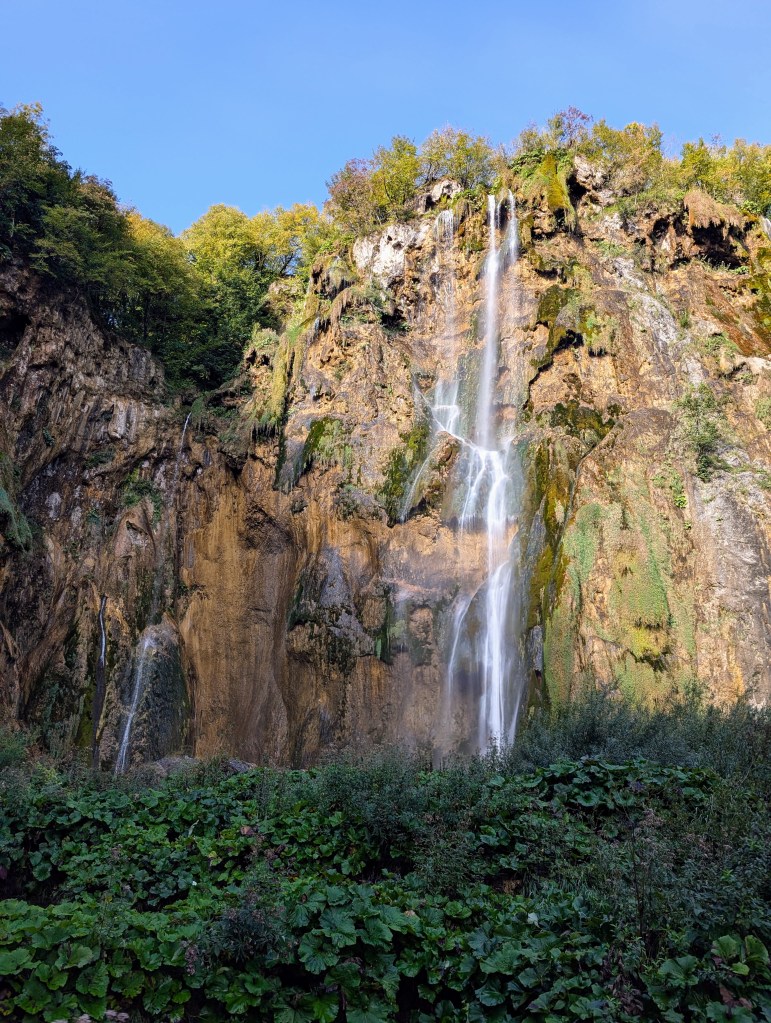
This route had me descend into the lower lakes canyon with a quick detour to the base of the Veliki Slap (Big Waterfall). Veliki Slap falls 62 meters to its foot and cascades another 25 meters to the Korana river. From there, I meandered across and alongside the lower lakes on the boardwalks. The tall reeds, rock faces, and caves on either side of the lakes provided other natural features to enjoy.

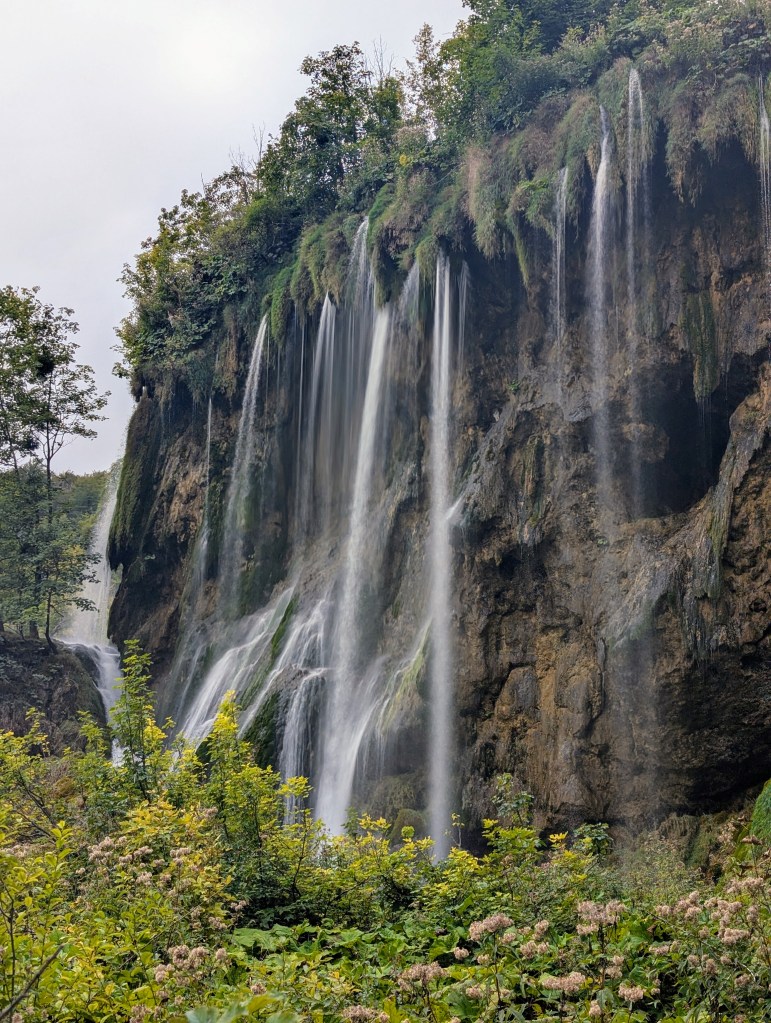
The route brought me to one of two concession areas where I boarded an electric boat to cross the Kozjak Lake to the base of the main attraction: three different sets of waterfall basins (Veliki Prštavac, Mali Prštavac, and Galovački Buk). Each of these offers multiple waterfalls splashing into the turquoise water below.
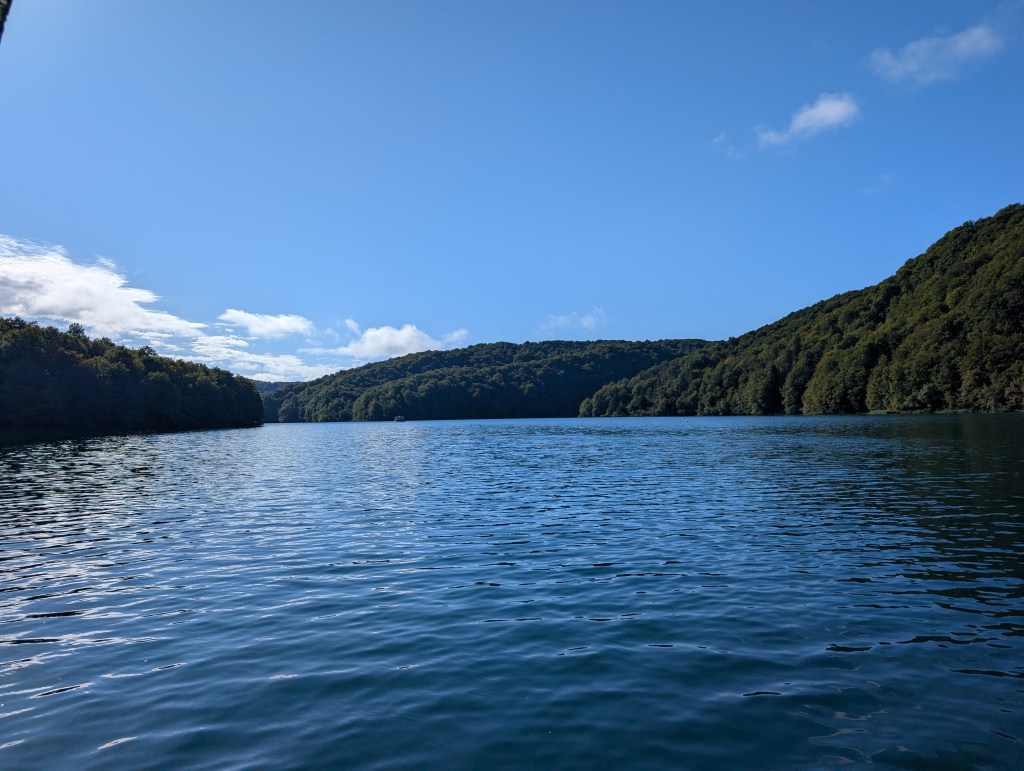
After this section, the crowd thins out as people head back to the entrances, but I continued to follow the trail around the upper lakes. Even though these lakes are connected to the others, they have a different origin story. They have been formed on dolomite instead of limestone, which created steeper shores and thicker forests. As a result, this section felt more like walking along lake shores back home with dirt packed trails and expansive lake views.

The end of the upper lakes trail brought be back to the Panoramic Bus spot #3. Buses run every 30 minutes from here back to Entrance 2 and 3. I thought that it would include panoramic views as the name suggests, but it mainly drove through the forest. My trail was supposed to have me take this tram all the way back to the starting point, but instead I took it to Entrance 2 and started a new loop from here because, as mentioned before, I realized that I really didn’t appreciate the busy area of the park as I hoped to.
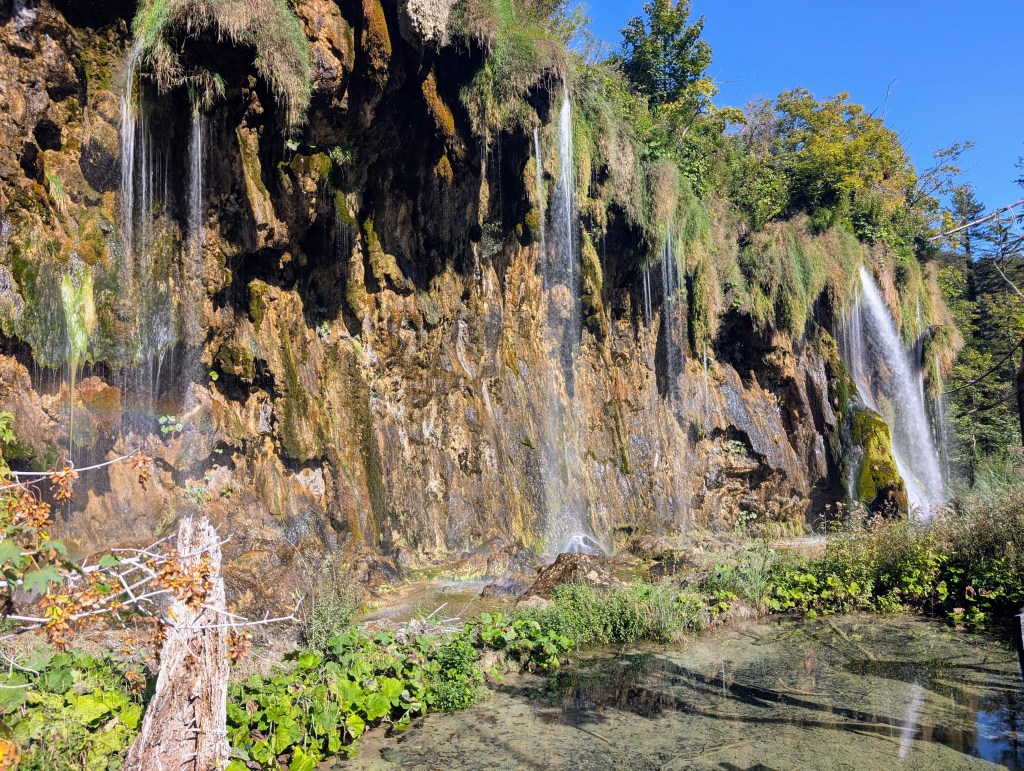
So, I retraced my steps through the main waterfalls and then back across the lake. When I arrived back at the concession area, I realized how much more crowded the park could be than what I experienced. I know that Croatia has been dealing with over tourism, and I know that national parks like this one suffer at the hands of human activity, so I hope they are able to figure out how to balance these crowds. One way that they have sought to preserve this beautiful landscape is to prohibit swimming (2006).
The park is beautiful and worth a visit, but if you’re able to arrive even earlier than I did (9am), you might have a better shot at enjoying the serenity of the stunning natural elements of the park without the stress of the tourist crowds. I would also suggest bringing your own food as the concession stands only offer basic options at a high price and the lines can get very long.


 Mac On the Map
Leave a reply to Ellen Hanley Cancel reply